Beginner Triathlon Guide: Your Complete Roadmap to a First Race
The whole beginner journey mapped in one place — decide, choose a race, get minimal gear, train, prepare and race — with the right guide for each step so it never feels overwhelming.
By Lotte
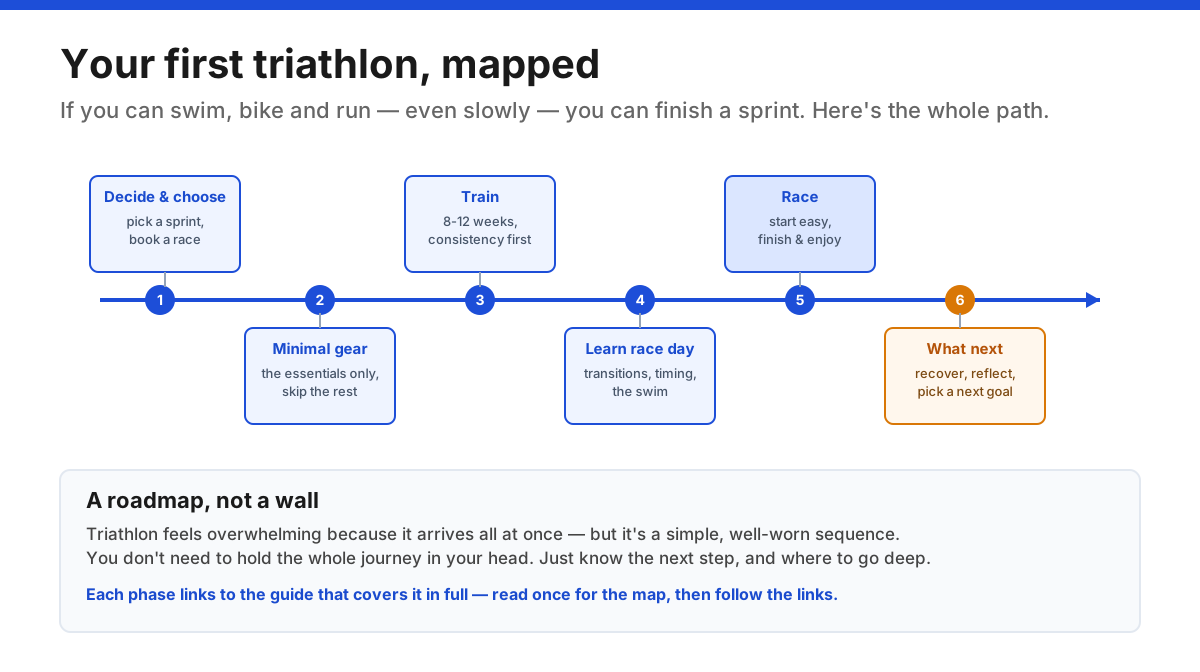
Triathlon feels overwhelming to a newcomer because it is three sports plus gear, transitions and race-day logistics all at once — but the path to a first finish is actually a simple, well-worn sequence. This guide is that path in one place: decide it's for you and pick a race, get the genuine minimum of gear, train for eight to twelve weeks with consistency over intensity, learn how race day works, then finish and enjoy it. Rather than repeating the detail, it maps the whole journey into phases and routes you to the dedicated guide for each step, so you always know what to do next and where to go deep.
Key takeaways
- 1If you can swim, bike and run even slowly, you can finish a sprint triathlon — you do not need to be fast, fit or own expensive gear.
- 2Start with a sprint (or a super-sprint), and pick a beginner-friendly race, ideally one with a pool swim.
- 3Buy only the genuine minimum — swimsuit or tri suit, goggles, any working bike, a helmet and running shoes — and upgrade later from experience.
- 4Train for roughly 8 to 12 weeks at 4 to 6 hours a week, with consistency mattering far more than intensity, and one weekly brick to rehearse running off the bike.
- 5This is the roadmap — each phase links to the dedicated guide that covers it in full, so the journey never has to feel overwhelming.
In this article
- 1Start here: the whole journey in one place
- 2Phase 1 — Decide it's for you, and pick a race
- 3Phase 2 — Get the minimal gear, and skip the rest
- 4Phase 3 — Train with consistency, not heroics
- 5Phase 4 — Learn how race day actually works
- 6Phase 5 — Race day: finish and enjoy it
- 7Phase 6 — After your first race: what comes next
- 8Common beginner worries, answered
- ⚖Your beginner roadmap at a glance
- ?Frequently asked questions
Start here: the whole journey in one place
The reason triathlon feels intimidating to a beginner is not that any one part is hard — it is that it all seems to arrive at once. Three sports, a bike you might not own, a wetsuit, transitions, a mass swim start, race-morning logistics: taken together it can feel like a wall. The single most useful thing to understand is that behind the wall is a simple, well-trodden sequence that thousands of ordinary people complete every weekend.
This guide is that sequence, laid out end to end. It is deliberately a roadmap rather than an encyclopedia: each phase below is summarised so you can see the whole path at a glance, and then linked to the dedicated guide that covers it in full. Read it top to bottom once to see where you are going, then follow the links as each phase becomes relevant. You do not need to hold the entire journey in your head — you only need to know the next step, and where to find the detail when you reach it.
And the foundational reassurance, before anything else: if you can swim, bike and run — even slowly — you can complete a triathlon. Sprint-distance races exist precisely for newcomers, the community is famously welcoming to first-timers, and the goal of a first race is simply to finish and enjoy it. Everything below is about making that goal feel manageable.
Phase 1 — Decide it's for you, and pick a race
Triathlon is far more accessible than it looks. People come to it from every background — former non-exercisers, runners wanting variety, swimmers after a new challenge, busy parents and professionals wanting structure — and none of them needed to be fast or fit to start. If you are still weighing up the sport itself, what is a triathlon and the readiness-focused your first triathlon are the places to start.
The most important early decision is which race to enter, because a real date on the calendar is what turns "someday" into training. For almost everyone the answer is a sprint — a 750m swim, 20km bike and 5km run — or, if that feels like a lot, a super-sprint or "try-a-tri" with even shorter legs. The sprint distance guide explains what to expect, and the full distances overview shows the ladder above it. When you are ready to actually choose an event, how to choose your first triathlon walks through the details that matter for a beginner — especially picking a pool swim or calm-water venue for your first one. Give yourself enough weeks to train (eight to twelve is typical) and book it.
Phase 2 — Get the minimal gear, and skip the rest
The gear phase is where beginners most often overspend, so the guiding rule is to buy the genuine minimum and let experience tell you what to upgrade. For your first race the real list is short: a swimsuit or tri suit, goggles, any working bicycle, a helmet, and running shoes. That is genuinely enough to cross the line. If you already own a bike, shoes and a swimsuit, you can start for almost nothing beyond goggles and perhaps a tri suit.
Resist the temptation to kit out before you have raced once — a triathlon bike, a fancy wetsuit, carbon wheels and a full matching kit are all things to consider later, if at all. The money that actually changes a beginner's race goes into consistent training, comfortable running shoes and, eventually, a bike that fits. For the full category-by-category picture at every budget, use the complete gear guide; for the pared-down beginner list, first triathlon gear essentials; and for doing it cheaply, triathlon gear on a budget.
Phase 3 — Train with consistency, not heroics
Training for a first sprint is very achievable: roughly eight to twelve weeks at four to six hours a week, training each of the three sports two to three times, with one weekly brick — a bike immediately followed by a short run — to rehearse the one genuinely novel sensation of the day. The single principle that matters most is consistency over intensity: six ordinary weeks completed beat three brilliant weeks and three missed ones. You do not need to be fast, and you do not need to cover the full race distance in training — race day is for stringing it together.
For an actual schedule to follow, this guide hands off to the plans: the step-by-step first-triathlon training plan and the 12-week training plan are built exactly for this, and the week-by-week roadmap frames it as readiness milestones. To understand what a session actually is — its frequency, duration and intensity — read triathlon training basics, and for how to choose and adapt any plan, training plans. The one new skill worth practising deliberately is running off the bike, covered in brick workouts. If fitting training around a full life is your real obstacle, training around work tackles that head on.
Phase 4 — Learn how race day actually works
Much of a first-timer's nerves come not from fitness but from not knowing how the day is structured — where to rack the bike, what the transitions are, how the swim start works. Removing those unknowns in advance is worth as much as any training session. How triathlons work explains transitions, timing and race formats, and the race-day preparation guide shows how to build a simple plan for the whole day so you execute it rather than improvise.
Two parts deserve specific rehearsal. Transitions — the changeovers between sports, often called the fourth discipline — are where beginners lose the most easy time and gain the most from practice; the transition strategies guide covers them. And if your race has an open-water swim, that is the part most worth getting comfortable with beforehand, because it is genuinely different from the pool; open-water swimming covers making that jump, and if the swim makes you anxious, open-water anxiety helps. Choosing a pool-swim race for your first event sidesteps most of this entirely.
Phase 5 — Race day: finish and enjoy it
The goal of a first triathlon is simple and worth repeating: finish, and enjoy the experience. Time is irrelevant; crossing the line is the whole achievement. The way to get there smoothly is to start every leg more conservatively than feels necessary. Ease into the swim and settle your breathing in the first hundred metres rather than sprinting into panic. Ride the bike at a sustainable effort, holding a little back for the run. Start the run deliberately slowly — the first kilometre off the bike always feels strange — and let it come to you. Walking is completely allowed, at aid stations or whenever you need it.
The one tactical idea that saves more first races than any other is pacing: going out too hard, on any leg, is the classic way to turn a good day into a hard one, and race pacing strategy covers how to avoid it. Beyond that, follow the plan you built in race-day preparation, keep taking in some fluid, and remember to look up and enjoy it. The nerves fade the moment you are moving, and the finish line of a first triathlon is one of the better feelings the sport offers.
Phase 6 — After your first race: what comes next
Crossing the line is not the end of the roadmap — it is the start of your time in the sport, and a little care afterward makes the whole experience better. In the hours and days after, keep moving gently, refuel and rehydrate, and let your body recover; the recovery after a triathlon guide covers doing it well. Within a day or two, jot down what went well, what you would change, and what you want to try next — that short reflection is genuinely the beginning of becoming a triathlete rather than someone who did one triathlon.
Then choose where to point next. Many people happily race sprints for years, chasing a smoother, faster version of the same day. Others step up to the Olympic distance and beyond. And if getting faster is the goal, how to improve your triathlon performance is the guide to prioritising where your limited training time pays off most. Wherever you go, the roadmap you just followed is the same one you will reuse for every race after this — the journey only gets more familiar from here.
Common beginner worries, answered
A few concerns stop more people from starting than they should, so it is worth addressing them directly:
- "I'm not a strong swimmer." The most common worry, and very manageable. Choose a pool-based sprint for your first race, take a few technique lessons, and remember you can use any stroke and that safety kayaks patrol every course. Building comfort is covered in open-water swimming.
- "I'm too old / too slow / too out of shape." Triathlon has age groups well into people's eighties, and plenty of people start in their forties, fifties and sixties. The sport is about personal challenge, not absolute speed, and "slow" still finishes.
- "I don't have time." A first sprint needs only four to six hours a week, and consistency matters more than long sessions. Training around work shows how to fit it in.
- "It's too expensive." It needn't be. A first triathlon can cost as little as the entry fee plus goggles if you already own a bike and shoes; the budget gear guide keeps it cheap.
None of these is a reason not to start — they are just the last small hurdles before a genuinely rewarding challenge. Pick a race, and the rest of this roadmap will carry you to the finish.
Your beginner roadmap at a glance
| Phase | What to do | Where to go deep |
|---|---|---|
| 1 · Decide & choose | Pick a sprint and book a beginner-friendly race | Your first triathlon / choosing first race |
| 2 · Gear | Get only the minimum; skip the rest | Gear guide / first-triathlon gear essentials |
| 3 · Train | 8-12 weeks, ~4-6 h/wk, consistency first | First-triathlon plan / 12-week plan |
| 4 · Learn race day | Understand transitions, timing, the swim | How triathlons work / race-day prep |
| 5 · Race | Start conservative, finish, enjoy it | Pacing strategy / race-day preparation |
| 6 · What next | Recover, reflect, pick the next goal | Recovery / improve performance |
Sources
Sources are listed so readers can verify consequential claims and dated details.
- World Triathlon competition rules — World Triathlon (accessed September 18, 2026)
- Physical Activity Guidelines for Americans, second edition — U.S. Department of Health and Human Services (accessed September 18, 2026)
Frequently asked questions
How do I start training for my first triathlon?
Book a beginner-friendly sprint race about 8 to 12 weeks out, then train each of the three sports two to three times a week at an easy, sustainable effort, adding one weekly brick (a bike followed straight by a short run). Prioritise consistency over intensity — completing most sessions matters far more than any single hard one — and follow a structured first-triathlon plan rather than improvising. You do not need to cover the full race distance in training.
Which triathlon distance should a beginner start with?
A sprint distance (750m swim, 20km bike, 5km run) for almost everyone — it is designed for newcomers and can be prepared for on a realistic schedule. If a sprint feels like too much, a super-sprint or 'try-a-tri' event has even shorter legs and is an excellent first step. Choosing a race with a pool swim also removes much of the open-water intimidation for a first event.
How much does it cost to do a first triathlon?
It can be inexpensive. Sprint entry fees are commonly modest, and if you already own a bike, running shoes and a swimsuit, your only real additions are goggles and perhaps a tri suit. Larger branded events cost more, and gear can be as cheap or expensive as you let it — but a first triathlon genuinely does not require buying much, and overspending before your first race is the classic beginner trap.
Can I do a triathlon at any age?
Yes. Triathlon has age-group categories from juniors well into people's eighties, and many people take up the sport in their forties, fifties or sixties. It is a personal-challenge sport rather than a purely competitive one, so finishing at your own pace is the whole point. As with any new exercise programme, check with a doctor first if you have health concerns.
What if I'm not a strong swimmer?
This is the most common beginner worry and a very manageable one. Choose a pool-based sprint for your first race, take a few swim lessons to build technique and confidence, and remember that you can use any stroke — breaststroke is completely allowed — and that safety kayaks patrol open-water courses. Gradual practice, not natural talent, is what makes the swim comfortable.