Triathlon Brick Workouts: Choose the Purpose and Session
Use bike-to-run and swim-to-bike bricks to practise transitions, pacing and equipment, with beginner examples and clear progression decisions.
By Lotte
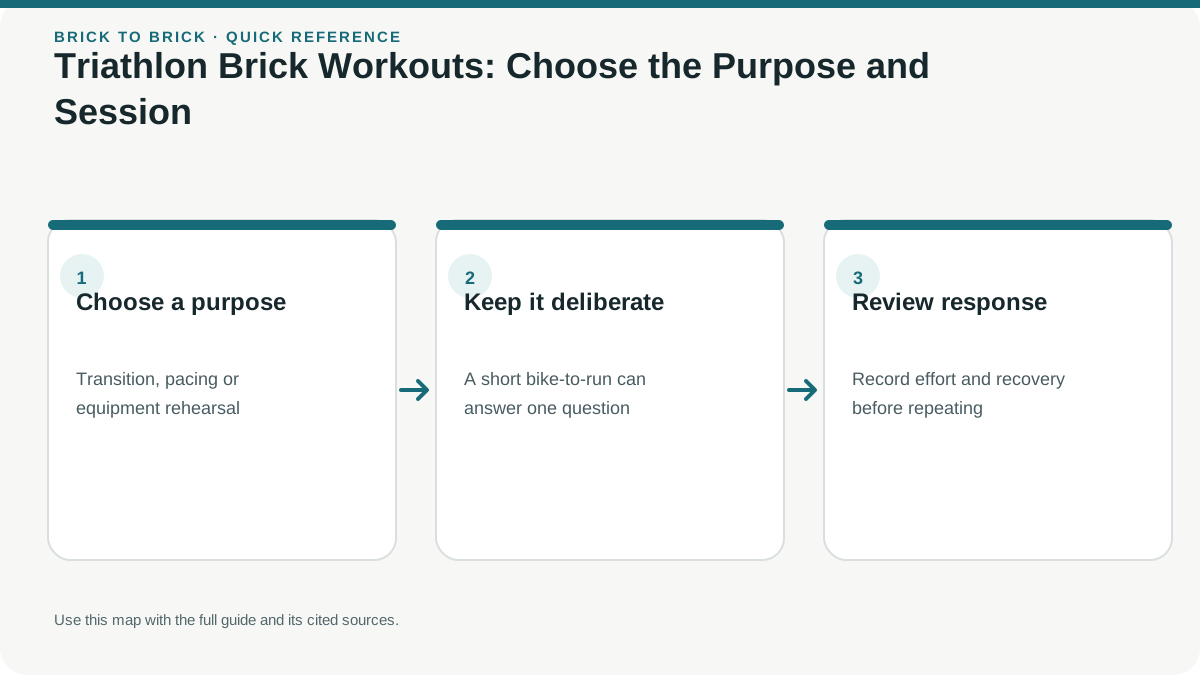
A brick workout links two disciplines in one session, commonly cycling followed by running. Choose whether the purpose is transition practice, learning the opening run effort or testing equipment and fueling; a useful brick does not need to be long or hard.
In this article
- 1Choose one objective for the brick
- 2A first bike-to-run example
- 3Progress the relevant part only
- 4Use swim-to-bike practice only with safe logistics
- 5Build a race rehearsal from known components
- 6Debrief the transition and the first run minutes
- 7Debrief the first ten minutes after the bike
- 8Time the transition practice separately from the endurance work
- 9What a brick can reveal that separate workouts may not
- 10Select a brick type that matches the training phase
- 11Progress by complexity, not by chasing longer combinations
- 12Make bike effort part of the run experiment
- 13Rehearse a transition without creating a traffic hazard
- 14Use swim-to-bike combinations only when the venue supports them
- 15Account for fueling and equipment without inventing a race test
- 16Place the brick where it will not compromise the rest of the week
- 17Use a debrief to decide what happens next
- ?Frequently asked questions
Choose one objective for the brick
A transition drill tests sequence and equipment. A short run after cycling tests how you settle into running. A longer rehearsal can test pacing and supplies. Combining every objective into one exhausting session makes it harder to learn what worked.
Research on the cycle-to-run transition describes physiological and mechanical differences from standalone running, but it does not establish a mandatory brick frequency for every athlete.
Write the question at the top of the session: “Can I begin the run under control?” is more useful than “Make my legs hurt so race day feels easy.”
A first bike-to-run example
For an athlete who already tolerates the components separately, an illustrative session is 20–30 minutes of easy cycling, a calm transition and 5–10 minutes of easy running or run-walking. Adapt downward if that exceeds your current capacity.
Use a safe route and secure place for the bicycle. Practise helmet, footwear and equipment order while stationary. There is no need for a flying dismount or rushed transition.
On the run, observe breathing, coordination and perceived effort. If pain or altered movement appears, stop rather than treating it as normal “brick legs.” The example is practice, not a fitness test.
Progress the relevant part only
If transition sequence is the problem, repeat short technical rehearsals. If pacing is the question, keep the run manageable and compare a controlled bike effort with your previous attempt. If food tolerance is the question, use a familiar fueling combination.
Increase duration, intensity or complexity one at a time. A longer bike does not automatically require a longer run afterward. Avoid adding a brick on top of a full run schedule without counting the extra impact.
Use the training-week guide to place the session around recovery and the other key workouts.
Use swim-to-bike practice only with safe logistics
A swim-to-bike brick can rehearse changing posture, removing swim equipment and starting the ride. It requires appropriate swim supervision and a safe, permitted transition area.
Do not leave valuables or a bike in an unsuitable place, rush across traffic or swim alone to reproduce a race sequence. A supervised venue or a stationary transition rehearsal may solve the practical question more safely.
Separate the learning tasks when necessary: practise wetsuit removal on shore, then begin a short easy ride after you have safely changed and prepared.
Build a race rehearsal from known components
An experienced athlete may use a longer brick to check the planned bike effort, bottle arrangement, food access and opening run. The session should fit the overall programme and recovery capacity.
Record what was consumed, what remained and whether equipment was accessible. Do not infer race readiness from completing one demanding session. A rehearsal can expose a problem without needing to cover the whole race distance.
Use race fueling for the quantities and pacing strategy for the whole-event effort decision.
Debrief the transition and the first run minutes
Record transition sequence, any equipment delay, bike effort and how the run settled. Separate discomfort from symptoms that need attention. A smooth transition with an easy run can be a successful session even if the total time is short.
Choose one adjustment for next time, such as easier opening pace, different shoe placement or a more accessible bottle. Keep the rest comparable.
Bricks are one tool within triathlon training. They should teach a useful skill or test an assumption, not become a weekly punishment or a substitute for adequate standalone practice.
Debrief the first ten minutes after the bike
Record what happened before interpreting the run pace. Note bike effort, transition duration, terrain, footwear and whether you started running faster than intended. Then describe how breathing and stride felt as the run settled.
A short easy run after a controlled ride can answer a useful question without becoming an endurance test. For example, you might discover that the first minute feels awkward but becomes manageable when you resist accelerating. Another rehearsal might expose shoes that are difficult to put on with damp feet.
Choose the next change from that observation. If the issue is transition organisation, practise the equipment sequence separately. If the bike effort made the run unsustainable, reassess the ride instead of adding a harder run. Do not lengthen both legs merely because the workout now has a name.
Time the transition practice separately from the endurance work
A short equipment rehearsal can focus on the sequence without requiring a long ride first. In a suitable private or permitted setting, practise stopping, securing the bike, changing shoes if needed and beginning an easy run. Follow race-relevant safety and equipment rules while keeping other people and traffic out of the drill.
Record which step caused confusion. A difficult shoe closure, misplaced cap or unclear place for the helmet is a practical problem you can address directly. Repeating a longer brick will not necessarily solve it.
When you later combine the sequence with riding, keep the familiar transition arrangement and observe whether fatigue changes execution. Do not use a stopwatch to reward rushing through a safety-critical action. Smooth, correct sequencing is the first aim; any time saving should follow from familiarity rather than cutting steps. This separates transition learning from the endurance purpose of a longer bike-to-run session.
What a brick can reveal that separate workouts may not
Cycling and running use different movement patterns, and the rapid change between them can feel awkward. A bike-to-run brick lets an athlete observe that transition under controlled training conditions. It can also reveal whether shoes, clothing, equipment placement or the opening run effort needs attention. A brick does not prove race readiness simply because the athlete completes it, and a hard session is not inherently more educational than an easy one.
Use the session to answer a narrow question. If you want to learn how the run settles, keep the ride familiar and the transition calm. If you want to test equipment, avoid introducing several new items at once. If the question is pacing, hold the bike effort at an established, manageable level rather than turning the ride into a test.
The cycle-to-run literature describes changes in physiology and mechanics, but that does not identify a universal recipe for all triathletes. Your experience, injury history, training phase and event distance matter. See the running off the bike guide for the opening run itself.
Select a brick type that matches the training phase
Early preparation may call for a low-pressure transition rehearsal: put equipment in the planned order, move from bike shoes to run shoes and begin an easy jog in a safe area. Later, an athlete who has developed the separate disciplines may choose a more race-specific session to check effort, terrain or practiced nutrition. A taper week usually calls for less total demand, not a final proving workout. The choice belongs within the overall plan.
Use the same format more than once if you want to compare it. A first attempt may feel unfamiliar because the transition is new; the second can show whether a specific cue or equipment change helped. Change just one important variable between sessions so you can interpret the result.
There is no mandatory brick frequency for every athlete. A beginner might benefit from learning a smooth, safe sequence without adding a run to every ride. An experienced athlete may use occasional race-specific practice. If you are unsure where it fits, ask a qualified coach to consider the brick alongside your full swim, bike, run and strength schedule.
Progress by complexity, not by chasing longer combinations
A brick can become more demanding in several ways: more total duration, greater intensity, a technical transition, a new surface or equipment, or additional race-specific fueling. Progress one element at a time. Adding a longer ride, a harder run and a rushed transition together makes it difficult to learn and may create more stress than the athlete expects.
Before adding complexity, confirm that the separate bike and run sessions are already manageable. A brick does not replace general run development or regular cycling practice. For a new runner or someone returning after injury, even a short run after cycling may add impact to a week that already needs careful planning. Remove or reduce another session if the combination increases total workload.
The transition itself may be practiced separately from endurance. Walking through the sequence in a safe, private space can identify a misplaced helmet, shoe or bottle without adding physical fatigue. Make the movement smooth and correct before timing it. Speed should emerge from familiarity, not skipped safety steps.
Make bike effort part of the run experiment
When the bike is much harder than planned, the opening run may feel difficult for reasons unrelated to running technique. Record the ride's perceived effort, terrain, wind, stops and any power or heart-rate data you normally use. Then note how breathing and coordination change after the transition. Do not assume a pace decline is a weakness in the run alone.
To learn about the switch, choose a familiar ride and avoid adding a new interval pattern. Begin the run at a controlled effort that allows you to observe your stride. If you start aggressively, you may learn more about overreaching than about a sustainable transition. Stop if sharp pain, altered gait, dizziness or concerning symptoms appear.
Compare sessions under similar conditions. Wind, hills, heat, fatigue and different equipment can make the bike load very different even when the workout title is the same. If the first minutes feel awkward but settle, record that pattern. If the discomfort grows, investigate the setup and workload rather than trying to suppress it with a fixed cadence cue.
Rehearse a transition without creating a traffic hazard
A transition rehearsal should use a secure place for the bicycle and a clear path away from traffic. Decide where the bike will be placed, where shoes and helmet will go and which items must be handled before moving. Follow event rules for helmet use and mounting or dismounting when practicing a race-specific sequence. Rules vary, so use your own athlete guide for the event.
Do not perform a flying mount, jump onto moving pedals or rush through a dismount unless a qualified coach has assessed the setting and you have the relevant skills. Those maneuvers are unnecessary for learning the basic bike-to-run switch. A stationary walk-through can answer many organization questions with less risk.
If the transition takes place near a public path, keep equipment and the bicycle out of the way of other users. Ask permission before using private property or a club facility. In open-water practice, use supervised access and do not leave a bicycle unattended in an unsuitable location while swimming. Safe logistics are part of the session design.
Use swim-to-bike combinations only when the venue supports them
A swim-to-bike brick may rehearse how a swimmer exits, changes equipment and begins riding. It is logistically more complex than a bike-to-run session and is not necessary for every athlete. You need a permitted place to leave the bicycle, a safe route and appropriate supervision for the swim. An indoor stationary bike after pool swimming may teach the feeling of changing posture, but it does not reproduce all outdoor transition demands.
Separate the tasks if the combined setup creates risk. Practise removing a wetsuit on land, then secure the bicycle and complete an easy ride after changing. Arrange open-water access through an organized venue or coach. Do not swim alone or carry gear across an active road to create a race-like sequence.
Keep the objective specific: equipment removal, calm transition, or the first minutes of riding. If the goal is simply aerobic training, two separate sessions on different days may provide a more practical way to manage fatigue and safety.
Account for fueling and equipment without inventing a race test
A brick can test whether a familiar bottle, food wrapper or shoe arrangement is easy to access. It does not require full race-distance volume or a maximal effort. Choose products you have already used, follow a plan appropriate to the athlete and event, and do not add a new supplement because a rehearsal is available. For individual nutrition needs, use qualified advice and the site's race fueling guide.
Keep a note of what was planned, what you actually used and whether you could handle it safely. Include temperature, ride duration and route conditions. Do not copy the quantities from another athlete's workout; body size, event, products, health and environment can differ.
Check that food, bottles and tools remain secure during the ride. If reaching a bag or bottle changes steering or control, move the item or sit up in a safe location. A race-specific rehearsal should make the system more reliable, not reward taking risks to remain aerodynamic.
Place the brick where it will not compromise the rest of the week
Look at the days before and after a brick. A session that includes cycling and running can add stress to both systems, even when each part is short. Consider the next key run, the long ride, strength work and any work or sleep constraints. If the brick repeatedly leaves you too fatigued to complete other training or function at work, reduce it or change the timing.
Do not place a demanding brick simply because the weekend has a free block. A free calendar slot does not guarantee recovery capacity. An easy technical transition may fit before a rest day; a longer rehearsal might need more space. Let a coach help sequence it when training volume is high or the event is long.
Use the periodization guide to connect a brick with the current block. It should support that block's objective rather than compete with it. If the only reason to repeat a brick is that triathletes are “supposed” to do one, remove it and use the time for a session with a clearer purpose.
Use a debrief to decide what happens next
After the session, write down the original question and answer it using what you observed. Did the transition sequence feel clear? Did the run settle? Did a specific item remain accessible? Did the bike effort match the planned demand? What changed in the conditions? A short note is more useful than saving only a total time.
Choose one adjustment. Move shoes, reduce opening effort, change the ride's intensity or schedule the transition separately. Do not change all the equipment and pacing at once. If the session revealed discomfort or a safety concern, resolve that before repeating it.
A successful brick can be short, controlled and informative. If no useful question remains, return to separate discipline training. Bricks are one tool in triathlon preparation; their value comes from the information and practice they provide, not from how exhausted you feel afterward.
Sources
Sources are listed so readers can verify consequential claims and dated details.
- Cycle-to-run transition: review and training considerations — British Journal of Sports Medicine (accessed September 14, 2026)
Frequently asked questions
Does every long ride need a run afterward?
No. A brick should serve a clear purpose and fit the total workload. Some long rides are better completed without additional impact so you can recover or preserve another session. Use transition practice deliberately rather than attaching a run to every ride by default.