Olympic Distance Triathlon: The 1.5km / 40km / 10km Guide
What the Olympic (standard) distance triathlon really demands — the 1.5km swim, 40km bike and 10km run, the rules and typical times, and why it is the sport's pivot distance.
By Lotte
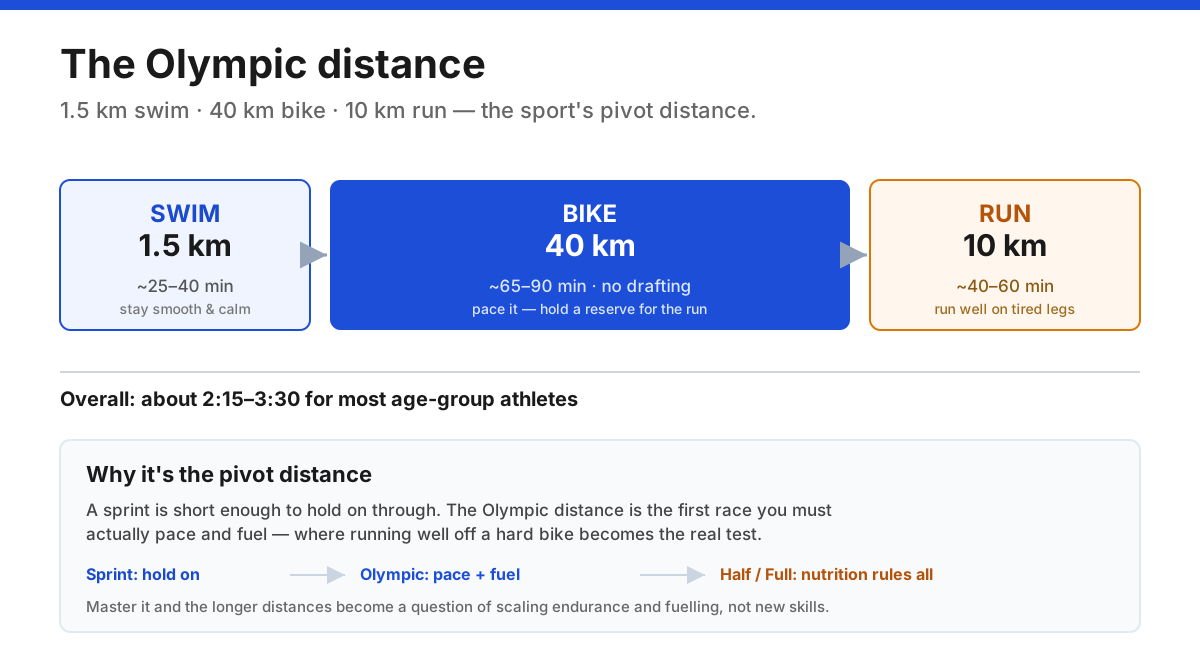
The Olympic distance — a 1.5km swim, 40km bike and 10km run, also called the standard distance and the format raced at the Olympic Games — is the pivot point of triathlon. It is roughly double a sprint, takes most age-groupers between about two and three and a half hours, and is the first distance where you cannot simply hold on: pacing the bike and taking on some fuel become the difference between a strong run and a walk. This guide is the overview of the distance itself — its format, rules and demands leg by leg — and it points you to the dedicated guides that own training plans, pacing, fuelling and the sprint-versus-Olympic decision rather than repeating them.
Key takeaways
- 1The Olympic (standard) distance is a 1.5km swim, 40km bike and 10km run — roughly double a sprint — and takes most age-groupers about 2:15 to 3:30.
- 2It is the sport's pivot distance: the first race you must pace and fuel rather than simply push through, and where running well off a hard bike becomes the real test.
- 3For age-group athletes the bike is almost always non-drafting, so your bike split is an individual pacing problem, not a group effort.
- 4The bike leg decides the race: ride it with discipline and hold something back, and the 10km run rewards you; over-ride it and the run unravels.
- 5This page is the distance overview — use the linked guides for the training plan, pacing rehearsal, fuelling numbers and whether to step up from a sprint.
In this article
- 1The Olympic distance at a glance
- 2Why the Olympic distance is triathlon's pivot point
- 3The swim: 1,500 metres
- 4The bike: 40 kilometres
- 5The run: 10 kilometres off the bike
- 6Fuelling and hydration for a two-to-three-hour race
- 7Are you ready to step up to the Olympic distance?
- 8How to train for it — and where to go next
- ⚖The Olympic distance segment by segment
- ?Frequently asked questions
The Olympic distance at a glance
The Olympic-distance triathlon is a 1.5km swim, 40km bike and 10km run. You will also see it called the standard distance — the name World Triathlon uses — and it is the format contested at the Olympic Games, which is where the popular name comes from. It sits second on the distance ladder, above the sprint and below the half (70.3) and full (140.6).
A few defining facts frame everything else:
- It is roughly double a sprint. Each leg is about twice the sprint equivalent, but the challenge more than doubles, because sustained effort and fuelling now matter in a way they did not over an hour of racing.
- Typical age-group finish times run from about 2:15 to 3:30. Stronger age-groupers come in around 2:00–2:30, and the very fastest amateurs dip under two hours; first-timers are usually well served by aiming simply to finish strong rather than chasing a number.
- The elite race is draft-legal; almost every age-group race is not. At the top level — including the Olympics — athletes may draft on the bike, which changes the tactics completely. In the age-group races most people enter, drafting is forbidden, so your 40km is ridden alone as an honest individual effort. Always confirm your event's rules, which follow frameworks like the World Triathlon Competition Rules or your national federation's; the drafting rules explained guide covers how the draft zone and penalties actually work.
For where this distance sits relative to all the others — and to help choose between them — see the triathlon distances overview; this page goes deep on the Olympic distance specifically.
Why the Olympic distance is triathlon's pivot point
Every distance has a character. The sprint is short enough that, once you are fit, you can largely hold on — go hard, manage the discomfort, and be finished inside an hour or so. The half and full are so long that nutrition and patience dominate from the gun. The Olympic distance sits at the hinge between those two worlds, and that is what makes it the sport's most instructive distance.
At roughly two to three hours, it is the first distance you cannot simply push through. Ride the 40km at the ragged effort that works for a sprint and the 10km run will fall apart — not because you are unfit, but because you spent the run's energy on the bike. This is the distance where three habits that define a real triathlete first become non-negotiable:
- Pacing becomes a decision, not an afterthought. You have to ration effort across the whole race, especially on the bike, and leave something in the tank for the run.
- Fuelling starts to matter. Two to three hours is long enough that taking on some carbohydrate and fluid on the bike changes how the run feels — though it is still a world away from the eat-constantly demands of long course.
- Running off a hard bike is the real test. The heavy-legged 10km is where the Olympic distance is won or lost, and learning to run well on a tired body is the skill the distance teaches.
Get comfortable here and the longer distances become a question of scaling up endurance and fuelling, not of learning new skills. That is why the Olympic distance is so often described as the gateway to serious triathlon — it is where the sport's core disciplines first come together.
The swim: 1,500 metres
The Olympic swim is 1,500 metres — long enough that flailing through it costs you dearly, but short enough that it is rarely where the race is decided. Most age-groupers take somewhere between about 25 and 40 minutes.
What changes versus a sprint swim is mostly duration and crowding. You are in the water long enough that a smooth, sustainable stroke matters more than speed, and starts are often busier, so composure in a pack and reliable sighting count. Unlike the bike, drafting is allowed in the swim, so sitting on another swimmer's feet is a legitimate and energy-saving tactic if you can hold the pace. The two things worth rehearsing before race day are sighting a straight line in open water and starting calmly without sprinting into oxygen debt — both covered in open-water sighting and breathing techniques and the broader open-water swimming guide.
The goal on the Olympic swim is to arrive at T1 having spent as little energy as possible for the time — controlled, straight and unhurried — because the race that matters starts on the bike.
The bike: 40 kilometres
The 40km bike is the heart of the Olympic distance and the leg that most determines your result. It takes most age-groupers roughly 65 to 90 minutes, and for the vast majority of races it is ridden non-drafting — you must keep a set distance behind the rider ahead and only use the space alongside to overtake, so your bike split is an individual time trial rather than a group effort.
The defining challenge is not raw power; it is restraint. The single most common Olympic-distance mistake is riding the bike at an effort that feels sustainable in the moment but quietly borrows from the run. Riding at a controlled, comfortably-hard effort and holding a meaningful reserve back for the 10km almost always produces a faster overall time than emptying yourself on the bike. This is exactly why pacing tools help so much at this distance: the bike is the most measurable leg, and holding a steady, planned effort by power or heart rate is far more reliable than going on feel with fresh legs. The how-to of pacing an Olympic bike leg is covered in depth in how to pace your first Olympic triathlon, and the general principles in race pacing strategy.
The bike is also your main fuelling window — the one place you can comfortably eat and drink — which is why nutrition and pacing are really the same conversation at this distance.
The run: 10 kilometres off the bike
The Olympic run is a 10km — a distance many athletes have run standalone — but it is run on legs that have already swum 1,500m and ridden 40km, and that changes everything. Most age-groupers cover it in around 40 to 60 minutes, usually a fair bit slower than their fresh 10km time, and the gap between those two is a direct measure of how well the rest of the race was managed.
Some athletes notice heavy or awkward legs when they start running after cycling; others may not. Research measures changes in running responses, but it does not establish one cause or a fixed settling time for every racer. Use an opening effort you have practised and adjust for the course, conditions and how you feel. Bricks can provide transition practice when appropriate to a plan, but they are not a required weekly workout or guaranteed cure. See the bike-to-run guide for evidence limits and warning signs.
The run is short enough that you finish on grit if you have to, but rewarding enough that good pacing shows up plainly — this is where the discipline of the previous two hours either pays off or catches up with you.
Fuelling and hydration for a two-to-three-hour race
The Olympic distance is the point where on-course fuelling starts to matter, without yet being the all-consuming factor it becomes over half and full distance. At two to three hours you are racing long enough that taking on some carbohydrate and fluid — mostly on the bike, where it is easy — noticeably improves how the run feels, but short enough that you do not need the elaborate eating schedule of long course.
The practical shape is simple: drink to thirst and take on a modest amount of easily-digested carbohydrate during the bike leg, then rely on water and whatever your legs will accept on the run. The single most important rule is to practise your exact fuelling in training and change nothing on race day, because a stomach that rebels is a far more common Olympic-distance failure than running out of energy. Because the right amounts depend on your size, sweat rate and the conditions, this overview deliberately hands the numbers to the dedicated guides: race fueling for what and how much to eat, and hydration for fluids and electrolytes. Dial those in during your long bricks, not on the start line.
Are you ready to step up to the Olympic distance?
The Olympic distance is a genuine step up from a sprint, but it is well within reach of most people who have built a consistent training habit. You do not need to have raced a sprint first — though doing one is the best possible rehearsal for transitions, open-water starts and your own pacing — but you do want a few things in place before you commit:
- A base of consistent training, typically able to handle something in the region of six to eight hours a week across the three sports without breaking down.
- Comfort covering each leg's distance in training, not necessarily fast: a continuous 1,500m swim, a 40km-plus ride, and a 10km run, ideally with some practice running off the bike.
- Some open-water experience, because the swim is long enough that pool-only fitness does not fully prepare you for a crowded, wetsuit swim without walls to rest on.
If you are weighing a sprint against an Olympic as your next race, the sprint vs Olympic comparison walks through the decision directly, and if this is your entry into the sport, your first triathlon covers the fundamentals a distance guide assumes. When the Olympic distance starts to feel comfortable and you are eyeing the next rung, Olympic vs half Ironman covers what changes on the way up.
How to train for it — and where to go next
Most athletes prepare for an Olympic distance over roughly twelve weeks, building the three sports toward the race distances while keeping the majority of training easy and adding a weekly long ride, a weekly long run and a regular brick. This page is the overview of the race, though — for an actual week-by-week schedule, follow the Olympic-distance 12-week training plan, and for how any plan is structured and progressed, training plans.
A sensible way to use the guides together is to treat this page as your map and the spokes as the detailed routes:
- The training schedule → Olympic-distance 12-week plan
- Pacing the race → how to pace your first Olympic triathlon
- Fuelling → race fueling and hydration
- The transitions → transition strategies and race-day preparation
Prepare with those, respect the distance's demand for pacing and fuelling, and the Olympic distance delivers what makes it so many triathletes' favourite: long enough to feel like a real achievement, short enough to race hard the whole way, and the perfect proving ground for everything the sport asks.
The Olympic distance segment by segment
| Segment | Distance | Typical age-group time | What it demands here |
|---|---|---|---|
| Swim | 1.5 km | ~25–40 min | Smooth stroke, sighting, calm in a pack |
| T1 | — | 1–3 min | A rehearsed, unhurried changeover |
| Bike | 40 km | ~65–90 min | Disciplined, non-drafting pacing with a reserve |
| T2 | — | 1–2 min | Quick change; ease into run legs |
| Run | 10 km | ~40–60 min | Running well on a tired body |
| Overall | — | ~2:15–3:30 | Pacing and fuelling across the whole race |
Sources
Sources are listed so readers can verify consequential claims and dated details.
- World Triathlon Competition Rules (standard-distance format and drafting) — World Triathlon (accessed September 18, 2026)
- USA Triathlon multisport competitive rules — USA Triathlon (accessed September 18, 2026)
Frequently asked questions
What are the Olympic-distance triathlon distances?
An Olympic-distance triathlon is a 1.5km (1,500m) swim, a 40km bike and a 10km run. It is also called the standard distance, and it is the format raced at the Olympic Games. It is roughly double the sprint distance and sits below the half (70.3) and full (140.6) on the distance ladder.
How long does an Olympic-distance triathlon take?
Most age-group athletes finish in about 2 hours 15 minutes to 3 hours 30 minutes. Stronger age-groupers come in around 2:00–2:30, and the fastest amateurs dip under two hours. Your time depends heavily on the course, conditions and how well you pace the bike, so first-timers are usually better off aiming to finish strong than chasing a specific number.
Should I race a sprint triathlon before an Olympic distance?
It is highly recommended but not required. A sprint teaches you transitions, open-water starts, race logistics and your own pacing in a lower-stakes setting, all of which transfer directly. If you skip the sprint, at least complete a full race-simulation brick in training so race day is not the first time you string the disciplines together.
Can you draft on the bike in an Olympic-distance triathlon?
It depends on the race. Elite and Olympic-level standard-distance racing is draft-legal, which changes the tactics completely. But almost all age-group Olympic-distance races are non-drafting: you must keep a set distance behind the rider ahead and only use the space alongside to pass. Always check your event's rules, which follow frameworks like the World Triathlon Competition Rules or your national federation.
How much should I eat and drink during an Olympic-distance race?
Enough that it helps the run, but far less than a long-course race requires. Take on some easily-digested carbohydrate and fluid mainly on the bike, where eating is easiest, then use water and what your stomach tolerates on the run. The exact amounts depend on your size, sweat rate and the weather, so rehearse your plan in long bricks and change nothing on race day — see the dedicated fuelling and hydration guides for numbers.