Triathlon Distances Explained: Sprint, Olympic, 70.3 and Ironman Compared
Compare common triathlon distances, understand event labels and choose a format to research with the organiser.
By Lotte
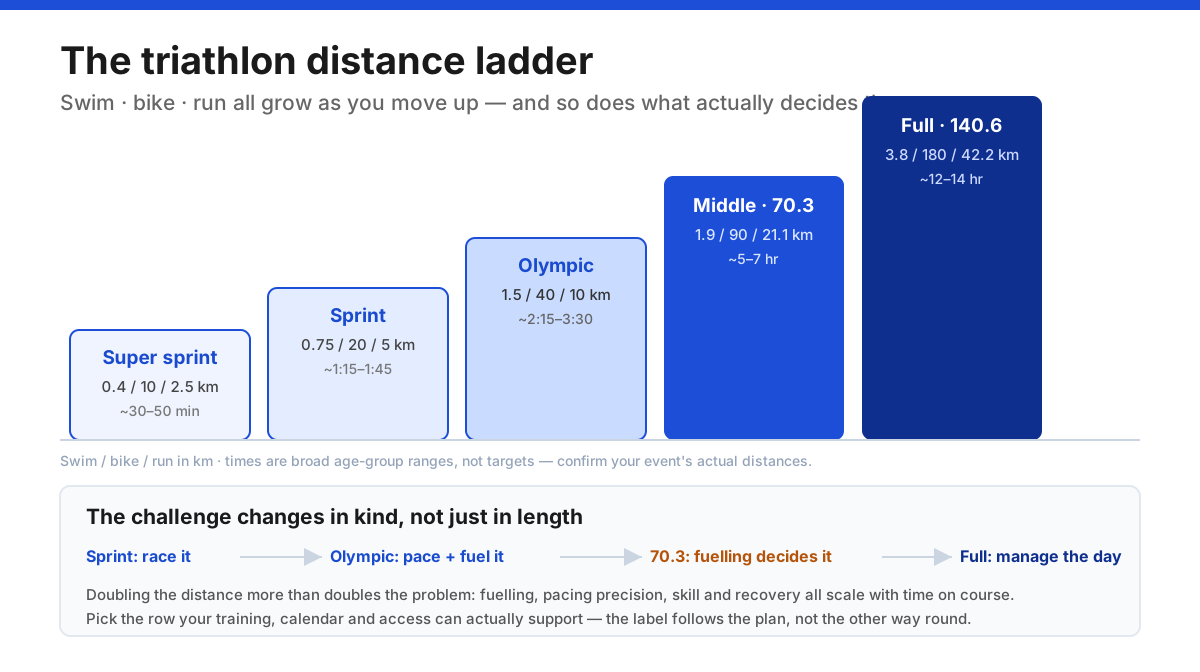
Triathlon is a family of distances — super sprint, sprint, Olympic, 70.3 and full — that form a ladder where each rung roughly doubles the last. This hub compares all three legs, decodes the names, shows how the challenge scales, and links to each distance's own guide so you can pick the rung your training and life can actually support.
Key takeaways
- 1The five common formats are super sprint, sprint, Olympic (standard), 70.3 (middle) and 140.6 (full); each rung is roughly double the time of the one below.
- 2'Olympic' and 'standard' are the same format; '70.3' and '140.6' are IRONMAN's combined mile totals, not single-leg distances.
- 3As distance grows, the challenge changes in kind — from racing a sprint to pacing an Olympic, fuelling a 70.3 and managing a full-distance day.
- 4Choose from four honest inputs — current ability, weeks to the event, safe access and repeatable hours — and let the distance follow the plan.
- 5Always confirm exact distances, swim environment, cutoffs and course with the organiser's athlete guide; labels and totals never describe the real day.
In this article
- 1Every triathlon distance at a glance
- 2The distance ladder: how the formats relate
- 3Decode the names: Olympic, standard, 70.3, 140.6
- 4How the challenge scales — not just the numbers
- 5Formats that change the maths: relays, indoor, duathlon and draft rules
- 6Read the table properly: units and combined figures
- 7Estimate your finish time from pace
- 8Which distance should you start with?
- 9You don't have to climb the ladder
- 10Always confirm the actual event
- 11Go deeper on each distance
- ⚖How the challenge scales across the distances
- ?Frequently asked questions
Every triathlon distance at a glance
Triathlon is not one race distance — it is a family of them, and the differences between the rungs matter more than the shared swim-bike-run shape. Here are the five formats you will meet most often, with all three legs in the same units:
| Format | Swim | Bike | Run | Rough time |
|---|---|---|---|---|
| Super sprint (example) | 400 m | 10 km | 2.5 km | ~30–50 min |
| Sprint | 750 m | 20 km | 5 km | ~1:15–1:45 |
| Standard / Olympic | 1,500 m | 40 km | 10 km | ~2:15–3:30 |
| Middle / 70.3 | 1,900 m | 90 km | 21.1 km | ~5–7 hr |
| Full / 140.6 | 3,800 m | 180 km | 42.2 km | ~12–14 hr |
Treat this table as the map, not the territory. The time ranges are broad age-group bands, not targets, and the super-sprint row is one common example rather than a fixed specification — try-a-tri, pool and community events measure their legs however they like. This page is the hub that compares the whole family; each distance also has its own in-depth guide, linked at the end, once you know which rung you are looking at.
The distance ladder: how the formats relate
The distances form a ladder, and each rung is roughly double the one below it in time on course. That doubling is the single most useful thing to understand, because the experience of racing changes at each step — not just the length.
- Super sprint and sprint are events you race. They are short enough that fitness and composure carry you through; on-course fuelling barely matters, and a smooth transition is a meaningful share of your total time.
- Olympic (standard) is the pivot. It is the first distance you genuinely have to pace and fuel, and the first time running well off a hard bike becomes the real test rather than an afterthought.
- Middle distance (70.3) is where nutrition and pacing start to decide the result. A first-hour mistake compounds over the next five, which is why the cliché is that these races are won on the bike and lost on the run.
- Full distance (140.6) is different in kind, not just degree: an all-day event where managing the day — pacing, fuelling, heat and your own mind — matters more than raw speed.
You can enter the ladder at any rung and stop wherever you like. Most people start at sprint or super sprint, and plenty of experienced triathletes race sprints for life because they enjoy the intensity. Moving up is a choice, not an obligation.
Decode the names: Olympic, standard, 70.3, 140.6
Triathlon naming is genuinely confusing, and most of the confusion comes from mixing the sport's terms with one brand's terms.
- "Standard" and "Olympic" describe the same 1.5 km / 40 km / 10 km format. "Olympic" comes from it being the distance raced at the Games; World Triathlon and many federations simply call it the standard distance.
- "70.3" and "140.6" are the approximate combined distances in miles used by the IRONMAN brand — 1.2 + 56 + 13.1 = 70.3 miles for the half, and double that for the full. Elsewhere the same legs are usually written in kilometres, which is why the numbers look nothing alike.
- "Middle" and "long" distance are the governing-body terms for roughly the 70.3 and 140.6 formats, but the exact measurements can vary between series and events.
The key distinction: triathlon is the sport; IRONMAN is a brand. An independent race can stage a "half" or "full" distance without being an IRONMAN 70.3 or IRONMAN event, and without offering the same cutoffs, qualification slots or event production. A similar total distance never guarantees an identical experience — always read the specific event's own numbers.
How the challenge scales — not just the numbers
Doubling the advertised distance more than doubles the preparation problem. The extra time on course pulls in a cascade of demands that a distance table can't show you. As you climb the ladder:
- Fuelling goes from optional to decisive. You can race a sprint on water and finish fine. A 70.3 or full requires a rehearsed plan for carbohydrate, fluid and sodium, and a gut trained to absorb it while working.
- Pacing precision matters more. A few seconds per kilometre too fast is survivable over an hour and catastrophic over twelve. Longer races reward discipline over enthusiasm.
- Skill and durability get tested. Longer bike legs expose fit and position problems; longer runs off the bike expose whatever your legs can't yet tolerate.
- Recovery cost climbs steeply. A sprint might need a day or two; a full-distance race is a multi-week recovery project.
- Training load — and life load — rise with it. Sprint plans fit around a normal week; full-distance blocks reshape your calendar for months.
The practical lesson is to look at the demand, not the label. And look hardest at your least-prepared discipline: strong cycling doesn't prove you can safely swim the distance in open water, and a good standalone run says little about your pace after a hard swim and bike.
Formats that change the maths: relays, indoor, duathlon and draft rules
The five "headline" distances aren't the whole story. Several format variables change what a given distance actually asks of you:
- Draft-legal vs non-drafting. Most age-group racing is non-drafting — you ride alone and can't shelter behind others — while elite and some development racing is draft-legal, which is a different tactical event at the same distance. World Triathlon and national federations such as USA Triathlon set the rules your event follows.
- Relays split the three legs across a team, so "olympic distance" becomes a single-discipline effort for each person — a great low-barrier entry to the sport. See how triathlon relays work.
- Indoor triathlons use pool swims and gym machines with formats that are sometimes timed rather than fixed-distance, so results don't compare across events. See the indoor triathlon guide.
- Duathlon (run–bike–run) removes the swim entirely — worth knowing if the swim is your barrier. Compare them in duathlon vs triathlon.
- Super sprint and try-a-tri sit below the sprint as the gentlest on-ramps, often with pool swims and generous cutoffs.
None of these are "lesser" races. They're tools for matching the event to your access, your confidence and the kind of day you want.
Read the table properly: units and combined figures
Most distance mistakes are unit mistakes. Two catches to watch for:
Kilometres vs miles. The standard-distance bike leg is commonly 40 km, not 40 miles. At an illustrative 24 km/h, 40 km takes 100 minutes (40 ÷ 24 × 60); read the same number as miles and you've described a completely different ride. IRONMAN's 70.3 and 140.6 labels are the one place miles are used deliberately — and they're combined totals, not any single leg.
Per-leg vs combined. "70.3" isn't a swim, a bike or a run distance — it's the sum of all three in miles. When you're planning, always break a race back into its three separate legs in one consistent unit before you estimate anything.
When in doubt, convert everything into the same system and keep the three legs separate. A name such as "sprint" only tells you the general category; the organiser's athlete guide supplies the actual distances, lap counts and course you need to prepare for.
Estimate your finish time from pace
Once the units are straight, a rough finish estimate is simple arithmetic:
- Swim (minutes) = distance in metres ÷ 100 × pace per 100 m.
- Bike (hours) = distance in km ÷ speed in km/h.
- Run (minutes) = distance in km × pace per km.
Worked example: a 750 m swim at 2:30 per 100 m is 7.5 × 2.5 = 18.75 minutes (18:45). A 1,500 m swim at the same pace is 15 × 150 seconds = 2,250 seconds, or 37:30. These say nothing about whether that pace is sustainable in open water, in a wetsuit, or in a pack — they're a planning starting point, not a promise.
Always add your two transitions and any realistic stops, and remember that pace fades over longer races. For anything beyond a mental estimate, let the pace calculator handle the conversions, the finish-time predictor build a full scenario with a sensitivity range, and good triathlon times by distance give you realistic context for what you're aiming at.
Which distance should you start with?
The right first distance follows four honest inputs, not ambition:
- Current ability in each discipline — especially your ability to cover the swim comfortably in the relevant environment.
- Time until the event — enough weeks to prepare without cramming.
- Safe, repeatable training access — pool or open water, roads or a trainer, somewhere to run.
- The weekly hours you can genuinely repeat, not the hours you can manage in one good week.
For most first-timers, a sprint or super sprint is the sweet spot: long enough to feel like a real achievement, short enough that you can prepare around a normal life. If you're weighing two options, the distance selector tool and the triathlon path builder turn those inputs into a suggestion, and choosing your first race helps you compare specific courses, which matters more than the distance label. This hub compares the formats; those tools and guides make the individual decision.
You don't have to climb the ladder
It's easy to assume triathlon is a staircase you're obliged to climb — sprint this year, olympic next, then a 70.3, then "one day" a full. It isn't. The distances are options, not a ranking of worth.
Repeating a distance with better skills, a calmer swim or a more enjoyable experience is a completely valid goal, and often a smarter one than jumping up before you're ready. Racing sprints fast is its own rewarding pursuit. Plenty of lifelong triathletes never do a full-distance race and never feel they've missed out.
If a deadline is forcing preparation you can't sustain, the answer is to change the event or the timeline — pick a later race or a shorter format — rather than to grind out an unsafe block. The distance name should follow a credible, enjoyable plan. It should never be the thing that decides whether you belong in the sport.
Always confirm the actual event
Before you commit time, money or a training block, verify the specifics with the organiser's official athlete guide — not a distance table:
- Exact distances and lap counts for each leg.
- Swim environment (pool, lake, river, sea) and whether wetsuits are permitted, required or banned by water temperature.
- Elevation, road conditions and transition layout.
- Every cutoff time, and whether the course can be shortened or altered for weather.
A race's headline kilometre figure doesn't describe its true time burden or safety requirements. A flat bike course in a strong wind can be harder than a hillier sheltered one; a pool swim can simplify logistics while adding lane-sharing procedures. Names such as "sprint" and "half" set expectations, but conditions and course design decide the day. Once you've chosen, the first-triathlon roadmap helps you organise preparation around the demands that are actually in front of you.
Go deeper on each distance
This page compares the whole family. When you've narrowed things down, each distance has its own dedicated guide, and there are head-to-head comparisons for the decisions people wrestle with most:
- The individual distances: sprint distance, Olympic distance, half distance / 70.3 and full distance / Ironman.
- The step-up comparisons: sprint vs olympic, olympic vs half-ironman and 70.3 vs full Ironman.
- Practical context: good triathlon times by distance and triathlon cut-off times for what "finishing" actually requires.
If you're brand new, start with your first triathlon for a readiness check, then use this table to pick the rung that fits the plan you can realistically build.
How the challenge scales across the distances
| Distance | Time on course | What decides it | Fuelling on the move | Typical training |
|---|---|---|---|---|
| Sprint | ~1–1.75 hr | Fitness & composure | Little to none needed | A few hours a week |
| Olympic | ~2.25–3.5 hr | Pacing & running off the bike | A light, simple plan | Moderate, consistent weeks |
| 70.3 | ~5–7 hr | Nutrition & disciplined pacing | A rehearsed, decisive plan | Higher volume, long sessions |
| Full | ~12–14 hr | Managing the whole day | Central — the fourth discipline | A months-long commitment |
Sources
Sources are listed so readers can verify consequential claims and dated details.
- World Triathlon Competition Rules 2026 — World Triathlon (accessed September 19, 2026)
- Multisport Competition Rules — USA Triathlon (accessed September 19, 2026)
- About triathlon and multisport — AusTriathlon (accessed September 19, 2026)
Frequently asked questions
What are the standard triathlon distances?
The most common are sprint (750 m swim / 20 km bike / 5 km run), Olympic or standard (1,500 m / 40 km / 10 km), middle distance or 70.3 (1,900 m / 90 km / 21.1 km) and full distance or 140.6 (3,800 m / 180 km / 42.2 km). Super-sprint and try-a-tri events sit below the sprint as gentle introductions, but their exact lengths vary by organiser.
What's the difference between Olympic and standard distance?
None — they're two names for the same 1.5 km swim, 40 km bike and 10 km run format. 'Olympic' refers to it being the distance raced at the Games; World Triathlon and many federations simply call it the standard distance.
Why is it called 70.3 and 140.6?
Those are the approximate combined distances in miles used by the IRONMAN brand: 1.2 + 56 + 13.1 = 70.3 miles for the half, and double that (140.6) for the full. The individual legs are usually written in kilometres elsewhere, which is why the numbers look so different.
Is every half-distance triathlon an IRONMAN 70.3?
No. IRONMAN 70.3 is a branded race series, while many independent organisers stage similar distances. Compare the actual course, rules, support and entry conditions — a similar total distance doesn't mean identical cutoffs, qualification opportunities or event procedures.
Which triathlon distance should a beginner start with?
For most first-timers a sprint or super sprint is ideal: long enough to feel like a real achievement, short enough to prepare for around a normal life. Base the choice on your current swim ability, weeks until the event, safe training access and the hours you can genuinely repeat — not on ambition.
How much harder is each step up in distance?
Each rung is roughly double the time on course of the one below, and the challenge more than doubles: fuelling, pacing precision, skill, recovery and training load all scale up with time. It's better to think about the demand than the label — a longer race is a different problem, not just a longer one.