A 12-Week Triathlon Training Framework for Beginners
A realistic 12-week triathlon framework with readiness checks, a flexible weekly structure, progressive practice, recovery and clear reasons to adjust or choose a later race.
By Lotte
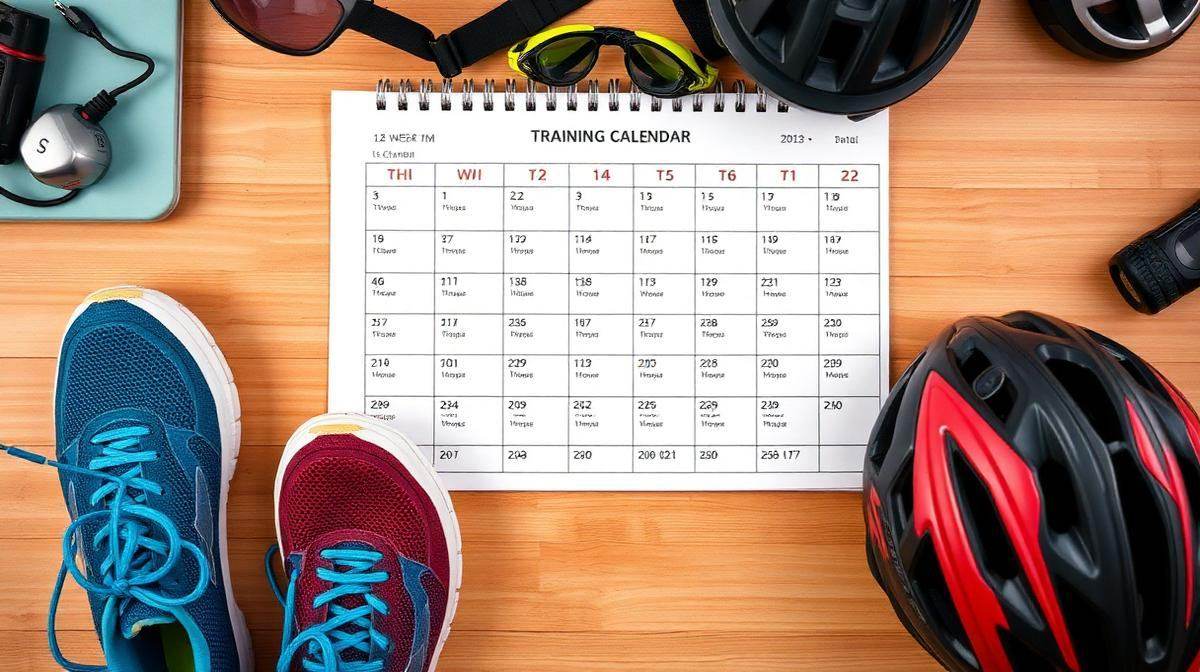
Twelve weeks may organize short-course preparation for someone with an established base, but it is not a universal beginner guarantee. This guide explains prerequisites, flexible progression, skill practice, recovery and when to modify the goal.
Key takeaways
- 1Twelve weeks is not automatically enough for a first triathlon; distance, baseline and health matter.
- 2Use progressive, mostly controlled practice across swim, bike and run, with recovery built in.
- 3Do not make up missed training by stacking sessions or ignoring symptoms.
- 4The example is a planning framework, not a personalized prescription or guarantee of race readiness.
- 5A shorter event, later date, coach or clinician may be the appropriate next step.
In this article
- 1Is 12 weeks enough to prepare for a triathlon?
- 2Phase 1: Foundation (Weeks 1-4)
- 3Phase 2: Building (Weeks 5-8)
- 4Phase 3: Sharpening (Weeks 9-12)
- 5Training tips that make the difference
- 6What to expect on race day
- 7What this 12-week framework can—and cannot—do
- 8Before week one: check the event and your starting point
- 9A flexible week: place sessions around recovery
- 10Use effort cues without pretending they are laboratory zones
- 11Skill practice for each discipline
- 12How to progress without a rigid percentage rule
- 13Race-specific practice and taper decisions
- 14If the plan no longer fits
- 15How to evaluate whether this plan helped
- 16Four checkpoints across the twelve weeks
- 17Make the schedule accessible to your circumstances
- 18A simple session vocabulary for a beginner
- 19Plan for the day after the event too
- 20Strength and mobility: useful support, not a shortcut
- 21Build logistics into the plan, not only fitness
- 22Choose a distance that matches demonstrated skills
- 23Examples are starting points, not hidden pass criteria
- ⚖12-week plan overview by phase
- ?Frequently asked questions
Is 12 weeks enough to prepare for a triathlon?
Twelve weeks is a calendar window, not a guarantee that every athlete can safely prepare for every triathlon. Whether it is enough depends on the race distance, current swim-bike-run ability, training history, health, available time and the event's conditions. A person who already swims continuously, rides regularly and runs comfortably may use 12 weeks to organize specific preparation for a short event. Someone starting all three disciplines from zero, unable to swim the course distance, returning from injury or aiming at a longer event needs a different assessment and usually more time. Do not use this example as medical clearance or a personalized prescription. Choose an event whose published distances and cutoffs fit your demonstrated ability, build progressively, and seek a qualified coach or clinician when individual health or injury questions affect training. For foundational context, see our complete beginner training guide, guide to choosing a training duration, and first-triathlon roadmap.
Phase 1: Foundation (Weeks 1-4)
In weeks 1–4, make the routine repeatable before making it harder. Spread manageable swim, bike and run practice across the week, keep most sessions easy enough to finish with control, and protect at least one genuine recovery day. If a discipline is new, use instruction and short skill-focused sessions instead of trying to copy another athlete's volume. Swimming in a supervised pool is a reasonable place to learn; open water has separate safety needs. Record how the session felt, not only pace or distance. A week that fits work, sleep and family obligations is more useful than a perfect schedule you cannot repeat. If discomfort changes your movement, worsens as you continue or remains after recovery, stop the provoking activity and seek appropriate advice rather than adding more sessions.
Phase 2: Building (Weeks 5-8)
Weeks 5–8 can add modest, specific practice only if the earlier workload has been tolerated. Keep the majority of training conversational, and change one meaningful stressor at a time—such as session length, frequency or intensity—rather than increasing all three together. A short, easy bike-to-run transition can teach the legs what the change feels like; it is not a test of toughness, and it does not need to be fast or long. Include familiarization with equipment and transitions, but do not treat a long simulation as mandatory for every beginner. If recovery, sleep, mood or ordinary daily function deteriorates, remove intensity or reduce volume and reassess.
Phase 3: Sharpening (Weeks 9-12)
Weeks 9–12 should make the target event feel more familiar while leaving room to absorb training. Practise the race's relevant skills—such as sighting in a supervised open-water session, mounting a bike only where permitted, or rehearsing a calm transition—without turning every session into a race simulation. Keep any faster work controlled and appropriate to your existing experience. A taper is a reduction in training load before an event, not a last-minute fitness-building block; the appropriate length and reduction depend on the athlete and distance. During the final days, prioritize normal meals, sleep, equipment checks and event instructions. Do not cram missed sessions into race week. If you cannot complete a required distance safely, contact the organizer about options rather than hiding the concern.
Training tips that make the difference
Consistency is helpful when it is built from recoverable training, not when pain or exhaustion is ignored. Missing a session does not create a debt that must be repaid. If life becomes busy, preserve sleep and essential recovery, then resume at a manageable level; do not stack hard sessions together to catch up. A short session can maintain a habit, but it is not always a safe substitute if you are ill, injured or unusually fatigued. Use a simple effort scale and note sleep, stress and soreness alongside distance. Consider a rest day when easy training feels unusually hard or symptoms are getting worse. People with chronic conditions, pregnancy, medication concerns or a history of serious injury should discuss their plan with a qualified health professional.
What to expect on race day
Training can improve readiness, but it cannot promise a finish or remove the need to make decisions on the day. Read the event guide, practise the relevant distances and skills, know the cutoffs, and understand where medical support is located. Start conservatively, follow officials' instructions and stop if you experience warning symptoms such as chest pain, fainting, confusion, severe breathlessness or an injury that prevents safe movement. Do not continue because an online plan says you are ready. A safe event choice, an adjusted goal or a decision to withdraw can be the right outcome.
What this 12-week framework can—and cannot—do
A 12-week outline is a way to arrange preparation toward a date. It cannot measure whether a particular athlete is ready. The World Triathlon age-group overview distinguishes sprint and standard formats, but local events can use different distances and course conditions. Confirm the actual event distance, water setting, elevation, surface, cutoff and equipment rules before adapting any plan. For general public-health context, the U.S. Centers for Disease Control and Prevention (CDC) describes adult activity recommendations as a weekly target for health, not as a triathlon training prescription. Race preparation may involve different amounts and needs. The CDC also advises people with chronic disease or disability to discuss suitable activity with a health professional. This article therefore offers decisions and progression checks rather than claiming that a fixed number of workouts prepares everyone. A coach can adapt the schedule around experience and constraints; a clinician can address health risk. Neither a finish-time calculator nor a generic web plan can do those jobs.
Before week one: check the event and your starting point
Write down the race's actual swim, bike and run distances, how the swim starts, whether the course is open water, the bike terrain, the run surface and the published cutoffs. A sprint race is not identical everywhere. Then describe what you can currently do on an ordinary week: swim continuously with relaxed breathing, ride in control for a suitable duration, and run or walk-run without symptoms that alter your stride. “I completed it once” and “I can train it repeatedly” are different statements. If you have not swum the distance in a pool, do not assume that a wetsuit or race adrenaline will solve that gap. For an open-water race, add supervised open-water familiarity under local safety rules; a pool session does not reproduce visibility, chop, crowding or navigation. If you have been inactive, recently ill, injured or are managing a condition affected by exercise, get individualized advice before using a triathlon schedule. Choose a later event if the basic skills and available training time do not fit the calendar.
A flexible week: place sessions around recovery
There is no single best weekly split. A practical schedule usually gives each discipline regular attention while avoiding a run of hard days. For example, an athlete with an established short-course base might put an easy swim and easy run on separate days, a controlled bike session later in the week, a second swim focused on skills, and a longer easy ride or run at the weekend. A brief easy transition can follow one bike session when recovery is good. This is an illustration of spacing, not an instruction to complete every listed session. The right number of sessions depends on the starting base and what can be recovered from. Leave room between demanding work where possible; an easy day means genuinely easy or rest, not a hidden interval session. Strength training may support general capacity, but new heavy lifting should not be added abruptly in the final weeks. If the plan conflicts with work, caring responsibilities or sleep, change the plan rather than sacrificing recovery. Our work-and-training guide and workout split guide discuss time and weekly structure.
Use effort cues without pretending they are laboratory zones
A talk test is a low-tech way to distinguish conversational effort from work that makes speech difficult. It is not a physiological measurement and does not create precise heart-rate zones. On easy sessions, aim for an effort that feels controlled enough to speak in phrases and finish with something left. Short, faster efforts—if appropriate to your background—should be separated by easy recovery and should not turn the whole week hard. Heat, hills, poor sleep, stress and illness can change how the same pace feels. If you use a heart-rate monitor or power meter, treat the reading as context; check whether the device is fitted and calibrated and avoid chasing a number when conditions or symptoms disagree. Do not use a “maximum heart rate” formula from a website as a medical safety limit. Stop and reassess for chest pain, faintness, confusion, new severe breathlessness or an unusual reaction to exercise.
Skill practice for each discipline
Swim practice should combine comfortable continuous swimming with technique that you can maintain without breath-holding or forcing range of motion. A qualified instructor or masters group can help identify a useful focus. Bike practice should include reliable braking, predictable steering, shifting, looking ahead and riding in a safe environment; do not practise risky handling in traffic. Run preparation can include easy running or walk-run intervals, with gradual changes that respect prior experience. Transition practice is mostly organization: lay out gear, know the route, fasten and remove equipment, and rehearse only race-legal actions. For outdoor training, choose routes and times with visibility and safe access, obey traffic law, and tell someone where you are going when appropriate. The plan does not require unsupported open-water swimming or riding alone in unsafe conditions. See our open-water safety practice guide for what land and pool sessions cannot replace.

How to progress without a rigid percentage rule
A popular “increase by ten percent” rule is not a guarantee against injury and does not fit every athlete or every measure. Instead, use a repeatable decision: if recent sessions were completed with stable technique and ordinary recovery, consider a small change in one variable; if they were not, hold or reduce the load. Change duration, intensity or frequency one at a time so you can tell how you respond. A longer easy session may be a better next step than adding speed. Keep a lighter week or recovery days when life stress rises. Pain that is sharp, worsening, changes your gait or persists outside the session needs more than a training-plan adjustment; stop the aggravating load and consult a qualified professional. Do not diagnose an injury from a chart. A coach can help adapt training while a clinician assesses symptoms.
Race-specific practice and taper decisions
In the final month, practice the parts of the event most likely to surprise you: swim start instructions, sighting, clothing and temperature choices, bike setup, transition layout and the sequence of food or drink you have already tolerated. A rehearsal should be shorter and safer than the race; it need not cover every race distance in one day. If your course is hilly, include suitable terrain only when your riding skills and local conditions permit. If the race is hot, rehearse sensible pacing and event-day decisions rather than trying to force heat exposure. During the last one to two weeks, many plans reduce load, but there is no single taper schedule for every distance and athlete. Keep light, familiar movement if it suits you, and allow recovery. Do not introduce new shoes, supplements, a new bike position or an untested fueling strategy at the start line. Read current race rules and organizer updates: a training plan does not override them.
If the plan no longer fits
A schedule is useful only while it fits the athlete. Fever, vomiting, significant respiratory illness, injury, worsening pain, unusual exhaustion and major life stress are reasons to pause or modify training—not challenges to overcome with willpower. Follow appropriate medical advice and return gradually when ready. If you miss a block, resume with the current ability rather than repeating the calendar's hardest week. You may be able to switch to a shorter distance, defer or withdraw, depending on the organizer's terms. That can be a better decision than trying to compress several weeks into a few days. Keep a short record of what changed and why; it helps a coach or clinician give specific advice. A plan is not a contract to race regardless of circumstances.
How to evaluate whether this plan helped
Use process measures that belong to you: Did you practise all three disciplines regularly? Can you complete the relevant distance at a controlled effort? Did you learn the course rules and transition steps? Did you recover well enough to maintain ordinary life? A pace change or finish time is not the only useful outcome, and it is affected by weather, course conditions, equipment, illness and race execution. If you are tracking training, compare similar sessions under similar conditions and avoid treating normal variation as fitness loss. For an event that remains too uncertain, ask the organizer about the course and a qualified coach about readiness. After the race, note what felt manageable and what should change next time. For related planning, continue to how long to train for a triathlon, choosing a triathlon workout split, or the first race week-by-week roadmap.
Four checkpoints across the twelve weeks
A calendar can be easier to use when it has decision points rather than automatic weekly increases. At the end of week 1, check whether the schedule fits your real life and whether any new activity provoked symptoms. Around week 4, review consistency and whether easy sessions still feel controlled; if not, hold the load or reduce it. Around week 8, compare the event's actual skills and distances with what you have practised, and decide whether there is enough time to address a gap safely. In the final two weeks, prioritize familiar sessions and recovery rather than adding missed volume. These are prompts, not clinical thresholds. The calendar should bend when you are ill, injured, unusually fatigued or facing unsafe weather. Keep a written note of decisions so that changing the goal is planned rather than a panic on race morning.
Make the schedule accessible to your circumstances
Training plans often assume a pool, safe roads, predictable shifts, equipment storage and uninterrupted time. Many athletes have none of those consistently. Check local pool opening hours and access needs before choosing a race with a swim; ask about adaptive options or a coach familiar with your circumstances. If outdoor riding is not safe, an indoor trainer can provide a controlled alternative, though it does not teach road handling. If impact running is not currently appropriate, ask a clinician and coach about options rather than substituting an unrelated session and assuming the race requirement is covered. Shift workers may need a rolling seven-day structure instead of a Monday-to-Sunday template. Heat, caregiving, cost and travel also influence what is sustainable. A useful plan names these constraints early and makes a safe adjustment, rather than describing missed access as lack of motivation.
A simple session vocabulary for a beginner
When a plan says “easy,” it should mean a pace you can control, not a pace selected from someone else's watch. “Steady” can describe a sustainable effort between easy and hard, but only use it if you have experience recognizing that feeling. “Intervals” are planned work periods with recovery; they are optional in early preparation and should not be all-out sprints. A “brick” is a bike session followed by a run, often with a short transition. Its purpose is familiarity, not proof that the athlete can race. “Taper” refers to reducing training load before a target event so fatigue can fall; it does not mean complete inactivity or last-minute intensity. If terminology in a downloaded schedule is unclear, ask the author or coach. Do not guess at pace zones or convert elite workout prescriptions to your own body without context.
Plan for the day after the event too
Race day is not the end of the training process. Keep the first post-event days flexible, eat and drink in your usual way, and allow recovery to guide the return to exercise. There is no single rest duration that fits every distance or athlete. Soreness can be expected after unfamiliar effort, but severe pain, swelling, dark urine, fainting, fever or persistent symptoms need medical evaluation. Do not schedule a personal record attempt the week after a first race simply because the plan ended. Reflect on the swim, bike, run, transitions, equipment and event logistics while details are fresh. Use that review to decide what skill or distance to pursue next. Sustainable participation includes recovery and enjoyment, not only the build toward one start line.
Strength and mobility: useful support, not a shortcut
General strength work can complement endurance training by helping an athlete practise controlled movement and build capacity, but it should match experience and be introduced gradually. A beginner might start with familiar body-weight movements and instruction on form rather than copying a high-volume gym routine. Avoid lifting to failure or adding heavy lower-body sessions immediately before a key long ride or run. Mobility work should address a useful movement need; aggressive stretching is not a substitute for strength, technique or clinical evaluation. No exercise in this article is required, and pain, prior surgery, pregnancy, disability or a chronic condition may change what is suitable. Ask a qualified clinician or coach for adaptations where needed. Keep a simple note of strength sessions just as you would swim, bike and run work, and allow time for recovery.
Build logistics into the plan, not only fitness
A first race includes paperwork and practical skills as well as training. Register for the right distance, check membership or one-day licence rules in the event's jurisdiction, learn the cutoff and equipment policy, and confirm where and when check-in occurs. Test the route to the pool and safe bike-training location before relying on them in a busy week. Set aside time to inspect a helmet, tyres, brakes and shoes; borrow or hire only equipment you have time to practise with. Plan transport, food and sleep for the event weekend. These tasks do not improve aerobic fitness, but leaving them until the final days can create stress and make it harder to follow the training you did complete. Use our race registration guide and race-morning routine alongside the physical preparation.
Choose a distance that matches demonstrated skills
Race categories can sound close in name while asking different things from an athlete. Read the event's own distances rather than assuming every “sprint” or “standard” race is identical. Confirm whether the swim is in a pool, lake, river or sea; check whether the bike course is technical, hilly or exposed; and look at run terrain and cutoff times. A shorter race is not a lesser achievement if it lets you learn transitions, pacing and event procedures while staying within your current ability. An athlete who is not yet comfortable swimming continuously should prioritize that skill or consider a pool event, duathlon or later date rather than relying on race-day adrenaline. Match the goal to what you can practise safely, and remember that weather or course changes can alter the demands after registration.
12-week plan overview by phase
| Phase | Weeks | Weekly hours | Focus | Key sessions |
|---|---|---|---|---|
| Foundation | 1-4 | 3-4 hrs | Build habit, aerobic base | Easy swims, rides, run/walk |
| Building | 5-8 | 4.5-5.5 hrs | Volume increase, first bricks | Intervals, brick workouts |
| Sharpening | 9-10 | 5.5-6 hrs | Race-specific fitness | Race simulation, pace work |
| Taper | 11-12 | 1.5-3.5 hrs | Recovery and freshness | Short, sharp sessions |
Sources
Sources are listed so readers can verify consequential claims and dated details.
- Adult physical activity recommendations — U.S. Centers for Disease Control and Prevention (accessed September 25, 2026)
- Age-group racing and sprint and standard distances — World Triathlon (accessed September 25, 2026)
- How Do I Get Started in Triathlon? — USA Triathlon (accessed September 25, 2026)
- 2026 Hamburg beginner and intermediate 12- and 20-week plans — World Triathlon / German Triathlon Union (accessed September 25, 2026)
Frequently asked questions
Can a beginner train for a triathlon in 12 weeks?
Some beginners with a basic swim, bike and run foundation may prepare for a short event in 12 weeks, but the timeline is not suitable for everyone. Confirm the event distance, current abilities, health and cutoffs before choosing a plan.
Is 12 weeks enough to train for an Ironman?
This beginner framework is not an Ironman plan. Full-distance preparation typically requires an established endurance base and individualized planning well beyond what a generic 12-week outline can assess.
How many days a week should a beginner train?
There is no universal number. Balance regular practice in all three disciplines with recovery and the athlete's existing base; a coach can help adjust frequency and workload.
What if I miss a week of triathlon training?
Do not cram missed sessions together. Resume at a manageable level, consider changing the goal or date, and seek advice if illness or injury caused the interruption.
Does the 10 percent rule prevent training injuries?
No single percentage rule guarantees injury prevention. Progress according to recent training, recovery, experience and symptoms, changing one major workload factor at a time.