First Triathlon Gear: What You Need and What Can Wait
Build a first-race kit from the event rules and equipment you already own, with a decision list for borrowing, buying and testing essentials.
By Lotte
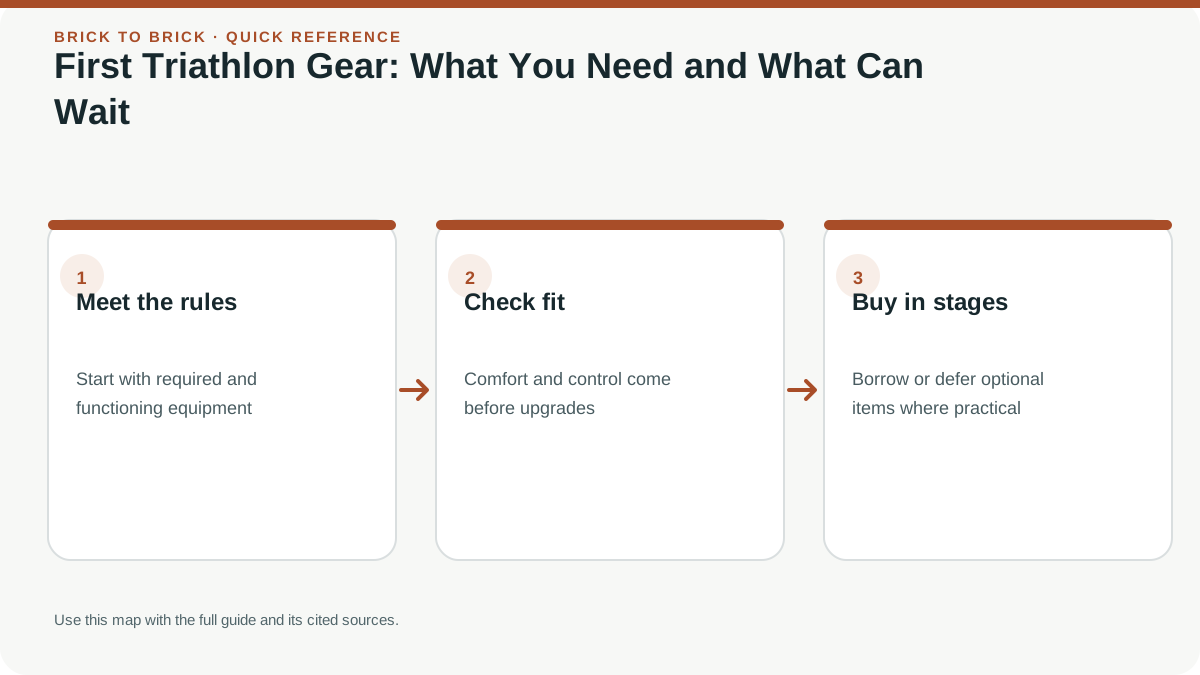
Your first triathlon kit should cover the event’s required equipment and let you swim, ride and run comfortably. Start with what you own, verify the race rules and buy only the missing items you can test before race day.
In this article
- 1Separate requirements from conveniences
- 2Swim: fit and familiarity before extra equipment
- 3Bike: a safe bicycle and a correctly fitted helmet
- 4Run and clothing: test the complete combination
- 5Borrow strategically and postpone uncertain purchases
- 6Run an equipment rehearsal before the final week
- 7Borrow equipment with a return and rehearsal plan
- 8Rehearse clothing as a complete outfit
- 9Build the list from the event guide in a fixed order
- 10Separate the price of gear from the cost of a safe setup
- 11Use a time-to-event test before borrowing or renting
- 12Check bicycle compatibility before adding race accessories
- 13Choose clothing for conditions and transitions, not branding
- 14Prepare a small repair and weather contingency
- 15Keep navigation, timing and tracking optional where possible
- 16Audit fit and condition instead of buying a new item by default
- 17Finish with an event-ready inventory
- ?Frequently asked questions
Separate requirements from conveniences
Read the equipment section of the athlete guide before shopping. Required items can depend on swim conditions, race format and local rules. A wetsuit may be permitted, mandatory or forbidden under the applicable decision; do not assume it is always optional.
Make three columns: required by this event, needed for personal comfort or safety, and optional convenience. Put your actual items beside each requirement. A timing chip supplied by the organiser is different from a watch you buy yourself.
This page decides what belongs in your first kit. The packing checklist organises those items once you have chosen them.
Swim: fit and familiarity before extra equipment
Use goggles that seal comfortably and that you can adjust without panic. Test them in ordinary swimming. Check the event's cap arrangements and any permitted eyewear or swimwear requirements.
If a wetsuit is appropriate, rent or buy one that fits and practise using it in suitable supervised conditions. Know how it affects movement, breathing and removal. It is not a replacement for swimming competence or safety cover.
Avoid buying paddles, fins or training floats as race equipment unless the rules explicitly permit them. Training aids and legal race kit are different categories.
Bike: a safe bicycle and a correctly fitted helmet
Confirm your bike type is permitted and arrange maintenance if needed. Reliable brakes, secure wheels, suitable tires and manageable gearing matter before aerodynamic accessories.
Choose a compliant helmet that fits correctly and has a known safe history. NHTSA emphasises fit and advises replacement after a crash because damage may be hidden. Our triathlon helmet fit and selection guide shows how to check sizing, straps, race rules and helmet style.
Use pedals and shoes you can operate confidently. Clipless pedals are not a prerequisite for a first race where other systems are allowed. Practise starts, stops and dismounts before adding a more complicated transition technique.
Run and clothing: test the complete combination
Wear shoes that fit and have been comfortable in training. Check socks, seams and any chafing when clothing is wet. A tri suit can simplify changing between sports, but it is a convenience rather than a universal requirement.
Confirm the event's clothing and number-display rules. If using a race belt, practise fastening and positioning it. Check that pockets hold supplies securely without interfering with movement.
Include sun or weather protection appropriate to the forecast and venue. Test products and clothing beforehand rather than introducing an unfamiliar combination during a long event.
Borrow strategically and postpone uncertain purchases
Borrowing a suitable bike or renting a wetsuit can reduce commitment while you learn what you need. Allow enough time for fit, inspection and practice. A borrowed item that arrives the night before creates a different risk from one used throughout preparation.
A power meter, premium watch, deep wheels and elaborate transition accessories can wait until you have a specific reason for them. Use the budget gear guide to compare the complete cost of acquiring essentials.
Spend first on a genuine gap: safe equipment, access to instruction or a replacement for something that does not fit.
Run an equipment rehearsal before the final week
Lay out the chosen kit and move through a stationary transition practice, then use the clothing and equipment in appropriate training. Check what is awkward, missing or uncomfortable.
Write a small action list: adjust goggles, replace a worn tire, test the race belt, or simplify the bag. Avoid turning the rehearsal into an excuse to add more products.
Your kit is ready when it meets the rules and works reliably for you. The aim is fewer unresolved decisions on race morning, not a collection that resembles an experienced athlete's transition rack.
Borrow equipment with a return and rehearsal plan
Borrowing works best when it includes time to learn the item. Agree when you can collect it, what accessories belong with it and when it must be returned. Take photographs of its starting condition and check the owner's instructions for care.
A borrowed wetsuit still needs appropriate fit and a safe swim rehearsal. A borrowed bicycle needs sizing, inspection and familiarisation. A helmet with uncertain history should not be treated as a bargain simply because it is free.
Create a short list of items you can share with a supporter outside the race and items that must be your own during it. Race rules may limit outside assistance, and your training partner cannot necessarily hand over a missing bottle or tool whenever you want. Packing and practice should make the required equipment available through the event's permitted arrangements.
Rehearse clothing as a complete outfit
Try the swim-to-bike and bike-to-run clothing sequence with the exact combination you intend to use, in a suitable practice setting. Check seams, zippers, pockets and whether layers interfere with the helmet buckle, race belt or access to supplies. Follow event rules about changing and required coverage.
A tri suit can simplify transitions, but it is not automatically comfortable for every person or event. Existing sports clothing may be suitable when its performance and the rules allow it. The decision should come from a rehearsal, not the assumption that specialised clothing is mandatory.
Keep dry post-race clothing separate from items used during the event. If a supporter holds it, agree a meeting point accessible to both of you. If it goes into an official bag, check when and where that bag can be retrieved. The outfit you finish in and the clothing you need afterward solve different problems.
Build the list from the event guide in a fixed order
Start with the event's latest athlete guide, race briefing and rules. Check the swim format and conditions, helmet and bicycle requirements, transition procedures, clothing rules, assistance policy and any required event-issued items. A generic list can remind you to pack a helmet, but only the organizer can confirm whether your bicycle, uniform or equipment setup is permitted at that particular race.
Make a short checklist in this order: required by the event; needed for safe use; required for your personal plan; optional comfort item. Put the source beside any unusual requirement, such as a specific number placement or bag rule. If instructions conflict, ask the organizer before race week. Do not infer legality from a product listing or from what you saw at another race.
The World Triathlon FAQ explains that rules and athlete guides govern many event details, but local commercial races may use different rules. The event document is the practical reference for your start, and it can change after registration. Save the current version and check for updates close to race day.
Separate the price of gear from the cost of a safe setup
A purchase price rarely tells you the full cost of using an item. A bicycle may need a safety inspection, tires or a fit adjustment; a wetsuit may need time to fit and be rehearsed; a watch may require sensors or paid services. Compare the full setup and the item’s useful life rather than the headline price.
Use a simple budget worksheet: list the event-required items, what you already own, what can be borrowed, what needs service, and the price of a replacement if the borrowed item fails. Reserve money for safety and instruction before optional upgrades. A well-maintained bike that fits and can be controlled is more useful than a discounted frame with worn brakes or an unavailable part.
If a purchase would create financial stress, ask whether renting or borrowing is practical. There is no equipment price threshold that makes a first triathlon more legitimate. A club may offer loan gear or a supported beginner program; verify fit, condition and event permission before relying on it.
Use a time-to-event test before borrowing or renting
Borrowing can save money, but only when there is time to inspect, fit and practise the item. Count backward from race day and reserve time for any adjustment. A bicycle or wetsuit that arrives the evening before gives you little opportunity to discover a sizing, mechanical or comfort problem.
For a borrowed bicycle, confirm size, brake operation, shifting, tire condition, pedals, saddle adjustment and the owner's permission for changes. For a rental wetsuit, ask how sizing works, whether the suit has been inspected and when it can be collected. For a helmet, confirm fit and crash history; do not accept one with an unknown impact history simply because it is convenient. NHTSA advises replacing a bicycle helmet after a crash because damage may not be visible.
Agree on collection, return, care and responsibility for damage in advance. Photograph the item's condition, read its instructions and practise with the exact setup. If you cannot do those checks before the race, choose another option or ask the organizer what alternatives are available.
Check bicycle compatibility before adding race accessories
A computer mount, clip-on bars, bottle cage, bento bag or pedal can fit one bicycle and be incompatible with another. Confirm the bike maker's instructions and the event's rules before installing an accessory. Make sure the brakes, steering, cables, wheels and rider's knees remain clear. A mechanic can check a questionable installation.
For a first race, use the simplest configuration you can control. If you want to add aero bars or change pedals, install them early enough to practise starts, stops, turns and braking. A new position can change balance and access to controls; do not assume a few indoor minutes establish safe outdoor handling. Keep a familiar setup if the change is not essential.
Carry only repair items you know how to use and that suit your bicycle. A spare tube, lever or inflator is useful only when compatible and accessible. Ask a qualified mechanic to explain basic roadside repairs if you have not done them before. Do not let a packed tool kit create a false sense that an unsafe bike is ready to race.
Choose clothing for conditions and transitions, not branding
A tri suit can simplify the swim-to-bike-to-run sequence, but it is not the only option. Existing sports clothing can work if the material, fit and event rules allow it. Test how the full outfit behaves when wet, while bent over the bike and while running. Pay attention to chafing, seams, support, pockets and whether the helmet straps or race number remain usable.
Plan one weather contingency that solves a real problem. A familiar warm layer or rain shell may matter in a cold or wet forecast, but extra clothing must be permitted and safe to handle. The event may restrict changing or require specific uniform coverage. Check whether you will carry, discard or store a layer and where that is allowed.
Avoid buying specialized clothing because a marketing label promises speed. Fit and comfort are personal, while event rules are specific. If you need a support garment or adaptive clothing for comfort, privacy or access, verify the rules with the organizer in advance rather than assuming it is prohibited or allowed.
Prepare a small repair and weather contingency
Think through the most likely failure for your equipment and the response you can actually perform. For a bicycle, that may be a flat tire, loose bottle or a mechanical issue beyond your skill. The event's support policy matters: some races provide mechanical aid, while others do not guarantee it at every point. Read the guide rather than assuming a support vehicle will be nearby.
Carry compatible tools only if permitted and practise their use in training. Store them so they cannot injure you or damage food, and test that a bag or cage remains secure on rough surfaces. If you cannot repair the problem, know how to signal for help and what to do with the bicycle. Do not attempt a roadside repair in a dangerous location.
For weather, check the forecast and event updates. Pack a tested layer for plausible conditions, not every possible scenario. If conditions are severe, follow organizer and local authority decisions. Gear cannot make unsafe weather safe, and a race entry does not require starting under every condition.
Audit fit and condition instead of buying a new item by default
Before replacing equipment, check whether it is worn, damaged, incompatible or simply unfamiliar. Inspect helmet straps and shell according to manufacturer guidance, bicycle tires and brakes, shoe closures, goggles seals and clothing seams. A repair or adjustment may be enough, but safety-critical problems should be assessed by a qualified mechanic or the manufacturer.
Record model names and sizes for items that fit well. If you replace an item, compare the new model's dimensions and fit rather than assuming the same label means the same feel. Keep a backup only when a failure would matter and the spare itself has been tested. Two pairs of goggles can be a practical backup; two new gadgets with overlapping functions may not be.
Retire damaged or expired items according to the maker's instructions and applicable safety guidance. A low price is not a reason to use a helmet with unknown history or a bicycle part that fails inspection. Gear should reduce avoidable uncertainty, not conceal it.
Finish with an event-ready inventory
Several days before the event, put each item beside its checklist line and note whether it is mandatory, personal or optional. Check batteries, charges, fit and condition. Pack race-day items separately from travel clothes so you can find them even if another bag is delayed. Keep registration information, medication and essential contact details accessible according to your travel plan.
Do one final rehearsal in a suitable setting. Lay out transition items in the order you will use them, walk through the sequence without rushing, and confirm that the setup follows the current athlete guide. If an item is missing, decide whether it is truly required, can be borrowed safely or should be removed from the plan. Avoid late shopping for a marginal upgrade.
For packing order, use the triathlon race-day checklist. For a budget-specific purchase decision, see the first triathlon setup by budget guide. A short, tested list is easier to manage than a full rack of gear you have never used.
Sources
Sources are listed so readers can verify consequential claims and dated details.
- Bicycle safety — NHTSA (accessed September 24, 2026)
- World Triathlon race and equipment information — World Triathlon (accessed September 24, 2026)
- Helmet fit and replacement — NHTSA (accessed September 24, 2026)
Frequently asked questions
Do I need cycling shoes for a first triathlon?
Not automatically. Check that your shoes and pedals are compatible and allowed, then use the combination you can control confidently. Switching to clipless pedals shortly before a race adds a skill to learn. Practise stopping and starting well before racing if you make that change.