Open Water Swimming for Triathletes: Making the Jump from the Pool
Open water is a skill, not just fitness. What changes from the pool, how to adapt to it with graded, safe exposure, and where to build each specific open-water skill.
By Lotte
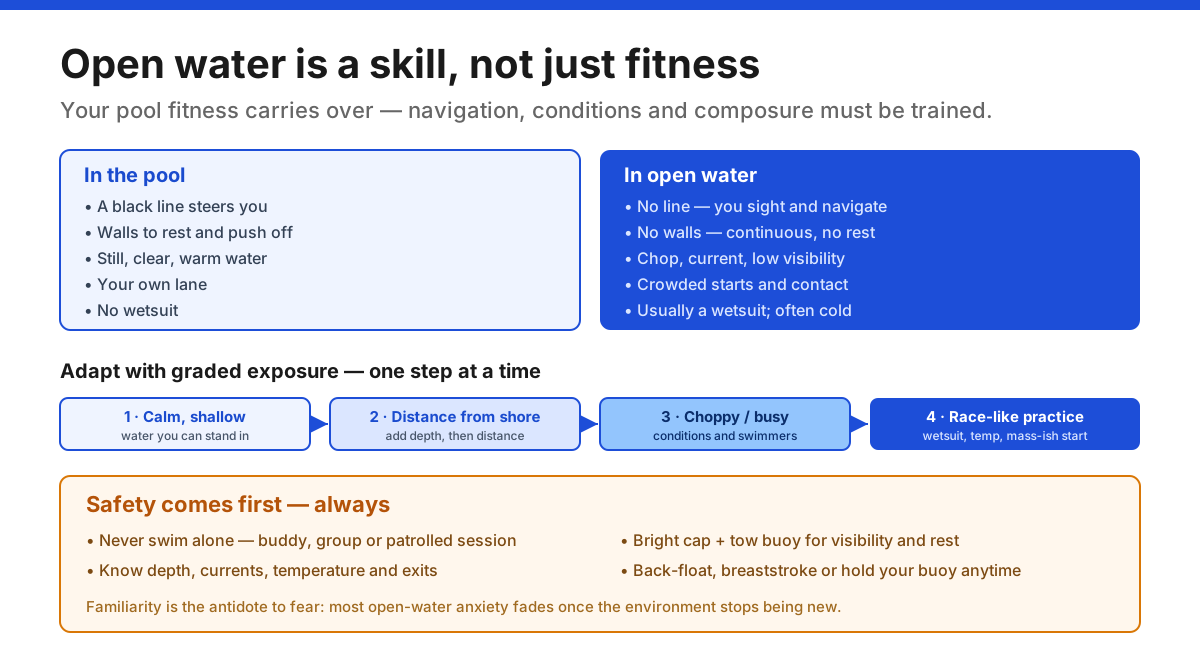
Open water swimming is not just pool swimming outdoors — it is a distinct set of skills, and strong pool fitness does not automatically transfer to it. Without walls, lane lines or a black line to follow, you have to navigate, handle conditions and other swimmers, and stay calm in water you cannot see through, often in a wetsuit. The good news is that these are all trainable, and the method is the same: graded, safe exposure that builds confidence, not just fitness. This guide is the orientation to that jump — what changes, how to adapt to it, and how to stay safe — and it points to the dedicated guides that own each specific skill, from sighting to starts to cold water.
Key takeaways
- 1Open water is a skill set, not just fitness — a fast pool swimmer can still struggle without practising navigation, conditions and composure.
- 2The reliable method for adapting is graded exposure: start in calm, shallow water and progress toward race-like conditions over several sessions.
- 3The open-water-specific skills — sighting, starts and positioning, drafting, wetsuit swimming and cold water — each have a dedicated guide to go deep on.
- 4Safety is non-negotiable: never swim alone, use a bright cap and a tow buoy, know the conditions and exits, and respect cold water.
- 5This page is the orientation — use the linked guides to build each skill and to manage the mental side of open water.
In this article
- 1Open water is a skill, not just fitness
- 2What actually changes from the pool
- 3The fix is graded exposure
- 4Sighting and breathing: navigating without a black line
- 5Starts, positioning and other swimmers
- 6Wetsuits, cold water and conditions
- 7Safety comes first, always
- 8The mental side of open water
- 9Build an open-water plan before race day
- ⚖Pool vs open water: what changes and what to practise
- ?Frequently asked questions
Open water is a skill, not just fitness
The most important thing to understand about open water is that it is not simply the pool with the roof taken off. It is a different discipline with its own skills, and it is completely normal for a confident pool swimmer to feel out of their depth the first time they swim in a lake or the sea. Fitness carries over; navigation, composure and handling the conditions do not — those have to be learned separately.
That is genuinely good news, because it means struggling in open water is not a verdict on your swimming — it is a signal that you have skills to practise, and skills respond to practice. The single biggest mistake triathletes make is assuming their pool sessions have prepared them, then meeting open water for the first time on race morning. This guide is the orientation to making that jump deliberately: what actually changes, how to adapt to it, and how to do it safely. It stays at that level on purpose — each specific skill has its own dedicated guide, linked as we go, so this page is the map rather than every detail. If you are also working on the stroke itself, swim drills for triathletes and how to improve your triathlon swim cover the pool-based technique that underpins everything here.
What actually changes from the pool
Before you can adapt to open water, it helps to name exactly what is different about it. Almost all the difficulty comes from a handful of changes, and each one is a specific thing you can practise:
- No black line, so you have to navigate. In the pool the line steers you; in open water you swim off course unless you actively sight off buoys and landmarks.
- No walls, so no rest and no push-offs. Your swim is continuous. There is nowhere to stop, which changes both pacing and the mental experience.
- Water that moves and cannot be seen through. Chop, current, wind and limited visibility are all normal, and all unsettling the first few times until you have felt them.
- Other swimmers, close up. Starts and turns put you in a crowd, with contact that is accidental and constant rather than personal.
- A wetsuit and, often, cold water. Most open-water triathlon swimming is done in a wetsuit, which changes your position and feel, in water that can be cold enough to take your breath away.
None of these is dangerous once you have adapted to it, and none requires talent — only exposure. The table below lays them side by side with what to practise for each.
The fix is graded exposure
The reliable way to get comfortable in open water is the same way you get comfortable with anything intimidating: gradually, in controlled steps, so that each session is only slightly harder than the last. Adaptation is as much about your nervous system settling as it is about fitness.
A sensible progression looks like this. Start in calm, shallow, safe water where you can stand up — somewhere you feel secure — and simply get used to the sensation of swimming without a line and without seeing the bottom. Once that feels normal, add one variable at a time: a little more depth, then some distance from shore, then a session in slightly choppier or busier conditions, and eventually a practice that mimics your race — same wetsuit, similar temperature, a mass-ish start if you can arrange one. The aim across several sessions is that by race day nothing about the environment is a first. Building comfort, not just fitness, is the real goal, and it is why a handful of dedicated open-water sessions before your first race is worth far more than the same time spent in the pool.
If you do not have easy access to a lake or safe sea, you are not stuck: how to practise open water without a lake covers how to build many of these skills in a pool and other settings.
Starts, positioning and other swimmers
The mass swim start is the part of open water most likely to rattle a newcomer — the "washing machine" of arms, legs and churned water in the first minutes. The reassuring truth is that contact is normal, almost always accidental, and settles quickly as the field spreads out.
Two things make it manageable. First, position yourself deliberately: starting toward the side or the back of your group, rather than in the fast-charging middle, keeps you out of the worst of the scrum while you find your rhythm, at the cost of a few seconds you will happily trade on your first race. Second, once things settle, you can use other swimmers to your advantage — swimming just behind another athlete's feet or beside their hip lets you draft, which can save meaningful energy over a swim and is entirely legal in triathlon. Finding someone at your pace and tucking in is a smart, low-effort tactic. The detail of where exactly to line up and how to handle the first hundred metres is in the swim start positioning guide.
Wetsuits, cold water and conditions
Most open-water triathlon swimming happens in a wetsuit, and a wetsuit changes things in ways worth rehearsing. It adds buoyancy — lifting your legs and usually making you faster and more comfortable — but it also changes your position and can feel tight around the shoulders and chest until you are used to it. Never race in a wetsuit you have not swum in: practise in it, and practise getting it off quickly for a smoother T1. The first-time wetsuit swimming tips and the wetsuit buying guide cover choosing and using one.
Temperature is the other variable, and it comes with rules. Whether a wetsuit is permitted — and whether a swim is shortened or cancelled — depends on water temperature, and the exact thresholds are set by your race's governing body and can differ between federations, so always check your event's athlete guide rather than a generic number. What matters for your safety is that cold water produces a real, involuntary "cold shock" gasp-and-hyperventilation response on sudden immersion, which is a documented physiological reaction, not a lack of toughness. Enter cold water gradually, let your breathing settle before you start swimming, and build cold tolerance over time; cold-water swimming for triathletes covers doing it safely.
Safety comes first, always
Open water is safe when it is treated with respect and genuinely risky when it is not, so a few rules are non-negotiable and sit above every performance consideration on this page:
- Never swim alone. Swim with a buddy, a group, or within a supervised, patrolled session. This single rule prevents the majority of serious incidents.
- Be visible and buoyant. Wear a bright swim cap and tow a brightly coloured swim buoy — it makes you visible to boats and gives you something to hold if you need a rest.
- Know the water before you get in. Understand the depth, currents, tides, temperature, entry and exit points, and any boat traffic. Conditions you cannot see can change a swim completely.
- Stay within your ability, and have an out. It is always acceptable to roll onto your back, switch to breaststroke, or hold your buoy to recover. In a race, kayakers and boats are there to support you, and holding one to catch your breath does not disqualify you.
A short pre-swim routine turns these into habit; the open-water swim safety checklist puts them in one place. And if the swim goes wrong on race day, what happens if you can't finish the swim explains your options — none of them a catastrophe.
The mental side of open water
For a lot of triathletes, the hardest part of open water is not physical at all — it is the flash of anxiety that comes with deep, dark, moving water and a crowded start. That feeling is extremely common and does not mean anything is wrong with you or your swimming.
Two things defuse it. The first is the graded exposure above: familiarity is the most powerful antidote to fear, and most open-water anxiety fades once the environment has stopped being novel. The second is having a simple reset you can reach for mid-swim — rolling onto your back, taking a few slow breaths until your heart rate drops, and then resuming — so that a moment of panic never becomes a spiral. Knowing you have that escape valve is often enough to stop needing it. If open-water anxiety is a real barrier for you rather than ordinary nerves, managing open-water anxiety goes deeper on techniques that work, and your first triathlon sets expectations for the whole day.
Build an open-water plan before race day
Putting it together, the goal for a first open-water season is a short, deliberate progression rather than a single nervous swim the week before your race. Keep working your stroke and fitness in the pool, but add open-water sessions that graduate from calm and safe toward race-like, and use each to practise a specific skill — sighting one week, starts and drafting another, swimming in your wetsuit another.
A useful minimum is several open-water swims before a first race, enough that the sensations, the sighting and the wetsuit are all familiar. Pair that with the swim drills and technique work that make you more efficient, and the two together turn open water from the leg triathletes dread into one they can simply get on with. Prepare it like the skill it is, respect the safety rules without exception, and the swim stops being the scary part of the race and becomes the calm, controlled start to a good day.
Pool vs open water: what changes and what to practise
| Aspect | In the pool | In open water | What to practise |
|---|---|---|---|
| Navigation | Black line steers you | You swim off course unaided | Sighting off buoys and landmarks |
| Walls / rest | Push-offs and stops | Continuous, nowhere to stop | Steady pacing; a back-float reset |
| The water | Clear, still, warm | Chop, current, low visibility | Graded exposure to conditions |
| Other swimmers | Your own lane | Crowded starts and contact | Start positioning; drafting |
| Wetsuit | Rarely worn | Usually worn; changes position | Swimming and stripping it off |
| Temperature | Controlled | Can be cold; rules vary | Gradual cold-water adaptation |
Sources
Sources are listed so readers can verify consequential claims and dated details.
- Datta & Tipton — Respiratory responses to cold water immersion: neural pathways, interactions and clinical consequences — Journal of Applied Physiology (2006) (accessed September 18, 2026)
Frequently asked questions
Is open-water swimming dangerous?
When it is treated with respect, open-water swimming is safe, but it demands precautions that pool swimming does not. Never swim alone, wear a bright cap and tow a swim buoy, know the depth, currents, temperature and exits before you get in, and stay within your ability. Organised races have extensive safety cover with kayaks and boats. Most incidents come from swimming alone, ignoring conditions, or going beyond one's ability — all avoidable.
Why do I feel like a strong pool swimmer but struggle in open water?
Because open water is a different skill set, not just the pool outdoors. Without a black line you have to navigate, without walls there is no rest, and you have to handle conditions, other swimmers, limited visibility and often a wetsuit and cold water — none of which your pool fitness prepares you for. The fix is not more pool training but graded open-water exposure that builds those specific skills and your composure.
How many times should I swim in open water before my first race?
Aim for several dedicated open-water sessions before a first race, enough that sighting, the wetsuit and the general sensation all feel familiar rather than new. Progress them from calm, safe water toward something like race conditions, and use each to practise a specific skill. A handful of open-water swims does far more for your race than the same time spent in the pool.
Can I use breaststroke in open water?
Yes. There is no requirement to swim freestyle, and many triathletes use breaststroke for part of the swim — it makes sighting easier and can feel more stable in chop or when you need to compose yourself. Rolling onto your back or switching stroke to recover is always allowed, in training and in a race, and using it to settle your breathing is a sign of good judgement, not weakness.
How cold is too cold for open-water swimming?
It depends on you, your wetsuit and your acclimatisation, and race rules on wetsuits and cancellations are set by the governing body and vary, so check your event's athlete guide rather than a fixed number. What matters for safety is that sudden entry into cold water triggers an involuntary gasp-and-hyperventilation cold-shock response, so enter gradually, let your breathing settle before swimming, build tolerance over time, and never push into cold water alone.