Am I Ready for My First Triathlon? A Practical Checklist
Assess swim, bike, run, schedule and event requirements before entering your first triathlon, then turn any gaps into safe, practical next steps.
By Lotte
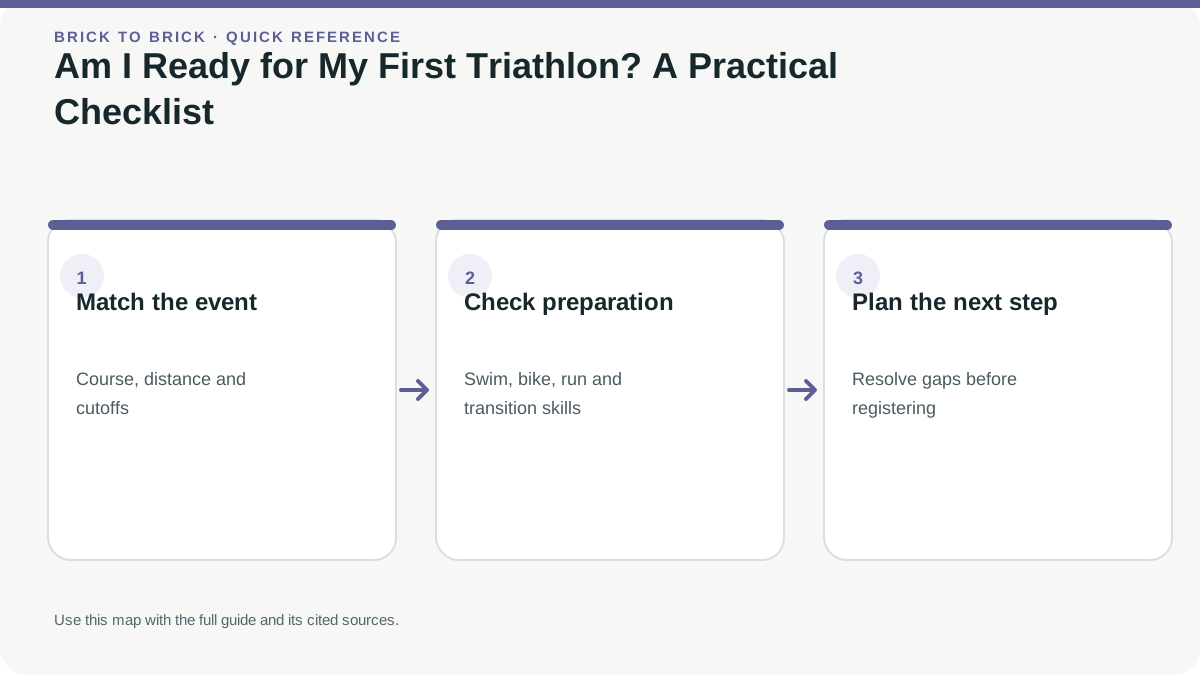
You do not need a perfect fitness score or a particular race distance to begin triathlon. You do need a credible way to prepare for the actual swim, bike, run and event logistics. Use this guide to assess those demands separately, choose a suitable first event, identify any safety or access gaps and decide what to do next. It is a readiness guide, not a fixed training plan.
Key takeaways
- 1Assess swimming, cycling, running, transitions and logistics separately; a strength in one discipline does not establish readiness in another.
- 2Read the current athlete guide for the event you may enter, including swim conditions, course, cutoffs, rules and required attendance.
- 3Choose a goal that fits your current skills, safe training access, calendar, recovery and budget.
- 4Turn each unresolved gap into one observable action, such as a lesson, bike check, supervised swim or question to the organizer.
- 5Use the week-by-week roadmap for calendar milestones; change the timeline or event if essential preparation cannot be completed safely.
In this article
- 1The short answer: prepare for the event you will actually do
- 2Begin with the event requirements, not an abstract fitness label
- 3Swimming readiness: check the water and your response
- 4Cycling readiness: control matters as much as distance
- 5Running readiness: choose an approach your body tolerates
- 6Transitions and equipment: rehearse the basic sequence
- 7Choose a first event by format, course and support
- 8Check whether your weekly routine is realistic
- 9Use this readiness worksheet before you register
- 10Turn each gap into an observable next action
- 11Budget for the complete experience
- 12Read the athlete guide for rules and contingencies
- 13Plan for health, safety and changing conditions
- 14If the event does not fit, adjust the goal
- 15Define a useful first-race goal
- 16What to do after you choose an event
- ⚖First-triathlon readiness at a glance
- ?Frequently asked questions
The short answer: prepare for the event you will actually do
A first triathlon is a swim, bike and run joined by transitions, but the race you enter has its own course, conditions, rules and logistics. Start by learning those demands. Then compare them with what you can do now, what you can practise safely and how much time you can consistently make available.
You do not have to complete the full event in training, buy expensive equipment or choose a particular distance to earn the right to participate. You do need a realistic preparation route. That can include swim instruction, bike-handling practice, a run-walk approach, familiar equipment and clear event information. If an essential safety skill or requirement is still unresolved, choose a different format or a later date rather than hoping race-day excitement will solve it.
This page helps you make that readiness decision. It does not prescribe a 12-week schedule; use the first-triathlon roadmap when you need to organize milestones over time.
Begin with the event requirements, not an abstract fitness label
Find one or two events you might realistically enter and open the current athlete guide, course page and entry terms for the correct edition. Write down the actual swim distance and setting, bike route and surface, run distance and terrain, start format, cutoff schedule, required kit, check-in times and any mandatory briefing. A short event can still have a demanding swim or complicated logistics; a beginner-friendly label is not a substitute for the details.
Check whether the swim is in a pool, lake, river or sea and whether the course is exposed, shallow, current-affected or likely to be cold. For the bike, note elevation, road closures, turns and traffic-management arrangements. For the run, consider surface, shade and access to aid stations. Save the guide and check it again before travel because organizers may update procedures.
If information is missing, prepare a concise question for the organizer. Ask about the specific point you cannot verify rather than assuming another race uses the same procedure. The choosing your first race guide compares event fit in more detail.
Swimming readiness: check the water and your response
Ask whether you can cover the event’s swim demand in a way that feels controlled enough for the setting. Pool swimming and open-water swimming are different tasks: an open-water course may have no wall to hold, limited visibility, other athletes nearby and changing water or weather conditions. A swimmer who can cover a distance in a pool may still need supervised practice outside it.
If swimming is new or uncomfortable, make instruction the next step. A qualified instructor can help you learn basic breathing, floating, moving through the water and stopping safely. Build familiarity gradually in a pool or an organized, supervised open-water session. Do not swim alone in open water or use a race as your first exposure to unfamiliar conditions. Follow local water-safety advice and the event’s support procedures.
Before entering, find out how the start works, what safety craft or staff are present, how to signal for assistance and what happens if you withdraw from the swim. If you are uncertain about any of these, ask the organizer. The open-water swimming safety guide covers that environment; the open-water anxiety guide addresses confidence and gradual familiarization.
Cycling readiness: control matters as much as distance
A race bike leg asks you to travel the course while sharing space with other athletes and, depending on the event, road users. Consider whether you can start, steer, brake, corner and stop predictably on the kind of surface and terrain listed by the organizer. If changing gears, drinking from a bottle or looking behind makes your riding unstable, practise those skills in a suitable controlled setting before adding traffic or race pressure.
Check that the bicycle is in safe working order and that you know how to use its controls. If you cannot assess the brakes, tyres, wheels or drivetrain, ask a qualified mechanic to inspect it. Confirm helmet fit and any event-specific equipment rules. A newer or more expensive bike does not replace confident handling, and equipment legality can differ by event or governing body.
Read local road rules and choose safe places to practise. Do not rely on generic advice from a different country or race. If the course includes steep descents, technical turns or busy roads, decide whether you can prepare for those demands or whether another event is a better first step. Our bike-handling guide covers practical skills.
Running readiness: choose an approach your body tolerates
Assess running separately from cycling. Think about the run or run-walk activity you can currently tolerate, the course surface, hills, likely conditions and how you recover afterward. A strong bike does not establish running readiness, and a first triathlon does not require you to run every step. Walking breaks may be part of a sensible approach if the event permits them and the cutoff allows for your expected pace.
Do not use someone else’s pace, training schedule or race story as your readiness standard. A useful question is whether you can build a repeatable routine without repeatedly creating pain or fatigue that interferes with ordinary life. If you have a current injury, persistent symptoms or a health condition that affects exercise, get appropriate individual advice before increasing the demands.
Check the organizer’s run route and cutoff details rather than estimating from a map alone. If your intended run-walk strategy would leave little margin, choose a more suitable event or allow more preparation time. The purpose is to make a reasonable plan for the actual course, not to prove toughness by ignoring what your body is telling you.
Transitions and equipment: rehearse the basic sequence
Transitions are the areas where you change from swim to bike and bike to run. Their layout and rules vary, but simple preparation helps: know where your equipment goes, what you need to put on, where you will leave and enter the bike course, and where the run begins. The clock may continue through transitions, but speed is not the first priority for a beginner; correct, calm actions are more useful.
At home or in a permitted practice area, lay out the items in the order you expect to use them. Practise finding your helmet, putting it on and fastening it before touching the bike. Check that shoes, clothing, eyewear and any race number are comfortable. If you will wear a wetsuit, practise putting it on and removing it according to the manufacturer’s instructions before race week.
Make a short equipment list based on the event’s rules and conditions. Separate required gear from optional upgrades. Borrowing or renting may work for a one-off event, but any item affecting fit, safety or comfort should be tested before race day. The first-race gear guide covers what is necessary and what can wait.
Choose a first event by format, course and support
There is no single best first distance for everyone. A short pool-based event may reduce open-water uncertainty for one person; another may have relevant endurance experience and prefer a different format. Compare the event’s swim, bike and run demands, course complexity, support, cutoffs, travel, costs and rules with your present skills and the time available to prepare.
Look for clear current information and practical support for participants: an athlete guide, a briefing, visible course markings, a way to ask questions and published procedures for withdrawal or emergencies. Consider whether the event requires a very early start, overnight accommodation, advance bike check-in or travel that makes attendance difficult. A nearby event with suitable conditions can be a better fit than a prestigious race whose logistics are unclear.
World Triathlon publishes common age-group formats such as sprint and standard distances, but individual events can vary. The triathlon distances overview explains common labels. Use the distance selector to compare formats, then return to the actual event course and guide before registering.
Check whether your weekly routine is realistic
Before you commit to a date, map a normal week rather than an ideal one. Include work, study, caring responsibilities, travel, pool opening times, safe bike access, sleep and recovery. Remember that a session takes longer than the time spent exercising: getting to the pool, changing, preparing a bike and showering all use the day.
Look for a schedule you can repeat and adapt when life intervenes. If every workout depends on perfect weather, a free weekend or a family member covering a shift, the plan may need a different arrangement. A missed session is not a reason to cram several hard sessions together; the plan should allow rest and adjustments.
You do not need to know your exact peak weekly hours before choosing an event, but you should be able to describe when and where training could happen. Try a representative week before paying if you are unsure. The guide to starting triathlon training helps build an initial routine; the training-week overview explains how to fit sessions around real availability.
Use this readiness worksheet before you register
For each area, write what you can currently do, what evidence you have and one unresolved question. Keep the assessment concrete:
| Area | What to check | Example of useful evidence |
|---|---|---|
| Swim | Distance, setting, comfort and help procedure | A supervised session in a relevant environment |
| Bike | Control, route conditions and mechanical safety | Practising stops and turns on a suitable route; service record if needed |
| Run | Current tolerance and intended run-walk approach | A repeatable comfortable session and recovery afterward |
| Transitions | Equipment order and event layout | A calm rehearsal of helmet, shoes and bike movement |
| Schedule | Available places, time and recovery | A representative week that fits ordinary responsibilities |
| Event | Course, rules, cutoffs and travel | Current athlete guide and saved organizer answers |
| Budget | Entry, access, equipment and travel | A list priced from current local quotes |
Mark each item as ready, needs a specific action or needs expert clarification. “I hope it will be fine” is not evidence. A missing skill does not mean you cannot do triathlon; it identifies the next action or tells you that the event date needs to change.
Turn each gap into an observable next action
A useful readiness plan turns uncertainty into something you can complete and check. If you are unsure about swimming, book a lesson or supervised session and note what skill you are working on. If the bike feels unreliable, arrange an inspection and practise handling in a controlled setting. If the course cutoff is unclear, ask the organizer and save the answer with the event edition.
Make the action small enough to happen soon. “Get fitter” does not say what to do; “find an adult swim lesson and attend one session” does. “Buy a triathlon bike” may not solve a handling problem; a bike check or skills session may. Avoid spending money before you know which gap you are trying to close.
Give the action a result you can observe: a lesson booked, a bike inspection completed, an event question answered, a representative week attempted or a piece of equipment rehearsed. If the result shows that the race demands are still unsuitable, use that information to revise the goal. A readiness decision is allowed to change as you learn more.
Budget for the complete experience
Entry is only one part of the cost. Include pool access or lessons, bike maintenance, clothing, required equipment, travel, accommodation, meals, parking and time away from work. Check the current event entry price and its transfer, cancellation or deferral terms before paying. Prices and policies vary by organizer, country and year, so an old race report is not a reliable budget quote.
Separate required items from optional upgrades. Many people can begin with equipment they already own if it works safely and meets the event rules. Other participants may need instruction, accessible equipment, a wetsuit rental or travel support. Plan around your actual event and circumstances rather than copying a product list made for a different athlete.
If the full budget is not workable, consider a local event, a relay, a lower-cost format, a later date or borrowed equipment where appropriate. Avoid borrowing safety-critical equipment without a careful fit and function check. A realistic budget protects the whole preparation process, not only the day you cross the start line.
Read the athlete guide for rules and contingencies
Before entering and again before travelling, check the athlete guide for the correct event year. Confirm the start time and location, check-in requirements, transition opening hours, bike rules, helmet requirements, wetsuit procedure, course map, aid stations, cutoff schedule, emergency contacts and withdrawal process. The details are event-specific and may change.
Ask how the event measures cutoffs and whether swim, bike or transition deadlines apply separately. Check what happens if the swim is modified or cancelled, if weather changes, or if you need to stop. Read the rules for outside assistance and support people. Do not assume procedures from another organizer apply just because the distances look similar.
Save the current guide offline or make a note of where it is available. Recheck it for updates before leaving home. If a rule affects whether you can safely participate or meet the entry requirements, contact the organizer and keep the answer. World Triathlon and other governing bodies publish rules for their sanctioned events, but your event guide explains the local process.
Plan for health, safety and changing conditions
A training or readiness guide cannot provide medical clearance. If you have a health condition, take medication that affects exercise, are returning after injury or experience concerning symptoms, speak with an appropriately qualified clinician about your individual situation. Do not increase training simply because an event date is close.
Think about environmental conditions too. Cold or warm water, current, heat, storms, traffic, darkness and unfamiliar roads can change the risk of a session. Follow local safety advice and event instructions. Do not swim alone in open water. Choose a safe route, tell someone where you are going where appropriate and stop if conditions no longer feel manageable.
Set a personal stop rule before the event. Know what symptoms or conditions mean you will pause, seek help or withdraw, and how to contact race staff. Continuing is not always the best decision. The organizer’s medical and course procedures are there to support athletes, but your own decision to stop when something is wrong matters too.
If the event does not fit, adjust the goal
Changing a race date is a planning choice, not evidence that you do not belong in triathlon. If an essential swim skill is unresolved, the event’s course is not suitable, a cutoff looks unrealistic or your training schedule cannot be repeated, identify which condition would make participation more appropriate. It may be more instruction, a different event, additional recovery or simply more time.
Do not try to compress months of learning into a final few weeks by removing rest, attempting unfamiliar distances or training through symptoms. The event calendar will keep moving; your preparation still needs to match your circumstances. Check the organizer’s transfer and deferral terms if you have already registered.
You can also choose a relay, indoor format or shorter local event if that better fits your current skills and access. These options are real ways to take part, not consolation prizes. Revisit the decision after completing the action that addresses your main gap.
Define a useful first-race goal
For a first event, goals you can influence are often more useful than a finish-time prediction. Examples include arriving with familiar equipment, following the course, starting the swim under control, managing transitions calmly, using a planned run-walk approach and responding sensibly to conditions. These actions are easier to rehearse than a particular result.
Choose one process goal for each stage, not a long list that adds pressure. Keep it specific enough to remember: “look for the swim exit marker,” “fasten the helmet before moving the bike,” or “begin the run at an effort I can maintain.” Follow the organizer’s actual instructions if they differ from your practice routine.
After the event, record what was expected, what surprised you and what you would repeat. If you withdraw or do not finish, review the reason without turning it into a judgment about your potential. The first race gives you information for future choices whether or not the day follows the original plan.
What to do after you choose an event
Once you have selected an event, keep the current athlete guide and your readiness worksheet together. Use the week-by-week roadmap to place milestones on a calendar that fits your starting point. For exact session design, follow an appropriate plan or qualified coach; for the race-day sequence, read how triathlons work and the event’s own briefing.
Revisit the readiness list when the course or rules change, after illness or injury, and as the race approaches. Update the next action rather than maintaining an old plan because you have already invested time in it. If equipment fails, a key skill remains uncertain or your health changes, ask for help and consider whether the event still fits.
A first triathlon is one possible next step in a sport with many formats. You can keep the same distance, choose a different event, enter a relay or take a break. The aim is to make an informed decision you can prepare for—not to let one registration define your relationship with the sport.
First-triathlon readiness at a glance
| Area | Question to answer | If uncertain, start with |
|---|---|---|
| Swim | Can I manage the actual swim setting and know how to get help? | A qualified lesson or supervised, suitable practice |
| Bike | Can I control my bike on the type of route and is it mechanically safe? | A bike check and appropriate handling practice |
| Run | Can I use a run or run-walk approach I can currently tolerate? | A manageable session and recovery check |
| Logistics | Do I understand check-in, transitions, cutoffs and travel? | The event guide and a question to the organizer |
| Schedule | Can I repeat a realistic week with recovery included? | A representative week before choosing a plan |
Sources
Sources are listed so readers can verify consequential claims and dated details.
- Age-group racing and common triathlon distances — World Triathlon (accessed September 23, 2026)
- World Triathlon competition rules and documents — World Triathlon (accessed September 23, 2026)
- Open-water swimming safety — Royal National Lifeboat Institution (accessed September 23, 2026)
- About triathlon and multisport — AusTriathlon (accessed September 23, 2026)
Frequently asked questions
How fit do I need to be for my first triathlon?
There is no single fitness score that establishes readiness. Compare your current swim, bike and run abilities with the actual event, then consider safe practice access, recovery and cutoffs. A strong discipline does not replace an unresolved safety skill in another.
What distance should I choose for my first triathlon?
Choose a format whose course, skills and logistics you can prepare for consistently. A sprint or pool event may suit one person; a relay, indoor race or another distance may fit someone else. Check the actual event guide rather than choosing from the label alone.
How long should I train before my first triathlon?
The appropriate preparation time depends on your experience in all three sports, the event demands, safe access, schedule and recovery. Fixed week counts do not establish readiness for every athlete. Use a plan whose prerequisites match your starting point and extend or change the goal when needed.
Do I need to swim the full race distance in training?
Not every athlete needs to reproduce the entire event in one training swim. You do need to prepare for the expected distance and environment, develop the skills to manage it and understand how to get help. Ask a qualified instructor or coach when you are unsure what rehearsal is appropriate.
Do I need a triathlon-specific bike?
Not necessarily. A bicycle that is safe, fits you and complies with the event’s rules may be suitable. The actual course and your handling skills matter; check the athlete guide and arrange a mechanical inspection if you are uncertain.
Can I walk during the run?
Many participants use walking breaks, but check the event’s cutoff schedule and course rules. A planned run-walk approach should reflect your current tolerance and the actual route rather than another athlete’s pace.
Should I enter before I feel completely ready?
You do not need to eliminate every uncertainty, but you should have a credible plan for essential skills, safe practice and event logistics. If a safety requirement or key course demand is unresolved, gather information first or choose a later event.
What if I am worried about open-water swimming?
Do not make the race your first exposure. Seek instruction or supervised practice in suitable conditions, follow local water-safety advice and learn the event’s help procedure. Consider a pool swim, another format or a later date if open water remains unsuitable.
Do I need to complete a brick workout before my first triathlon?
A short, appropriate bike-to-run rehearsal can help you understand the change in movement, but it does not need to reproduce the race. Keep it suitable for your experience and recovery, and seek coaching guidance if you are unsure how to combine sessions.
What should I do if I become ill or injured while preparing?
Reduce or stop training as appropriate and seek guidance from a qualified clinician when symptoms or individual health risks warrant it. Do not compress missed sessions or rely on an app or generic plan for medical clearance.