Triathlon Training Basics: The Principles Behind Every Plan
The foundations of triathlon training explained: how adaptation works, the four levers of load, why most training is easy, how to progress safely, and how to read and adjust any plan.
By Lotte
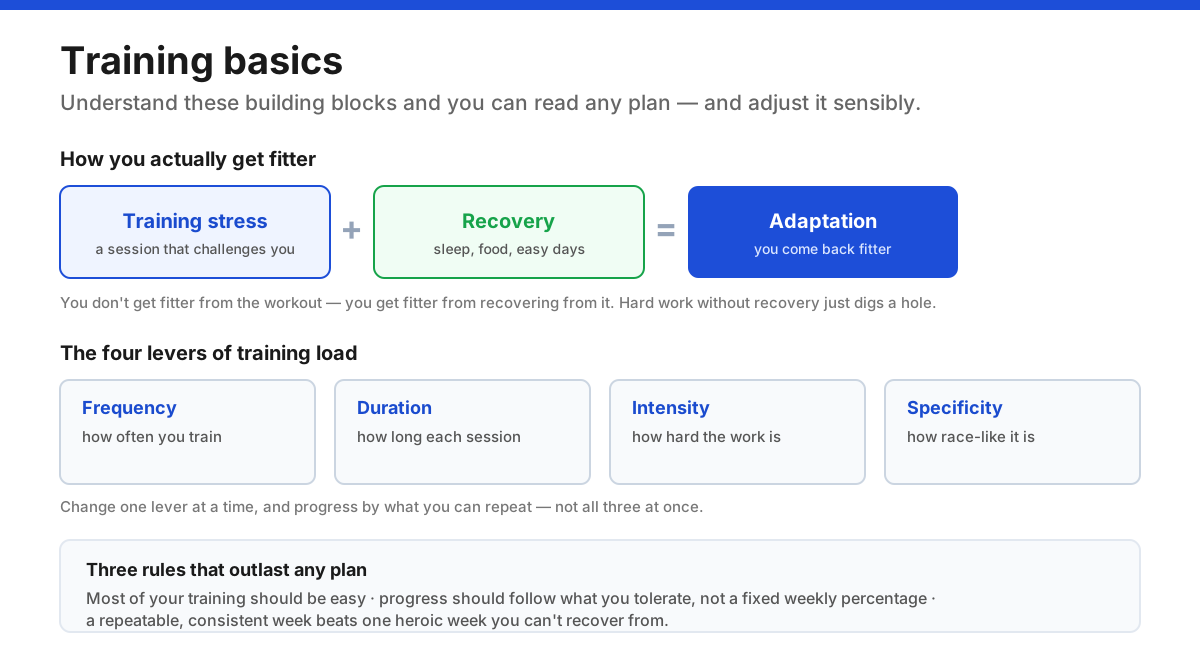
Triathlon training rests on a few durable principles: you get fitter by recovering from appropriate stress; every session combines frequency, duration, intensity and specificity; most work should be easy; you progress one lever at a time and by what you tolerate, not a fixed percentage; and consistency and recovery drive improvement more than heroics. Understand these and you can read, follow and adapt any plan across all three disciplines.
Key takeaways
- 1Adaptation = training stress + recovery: you get fitter from recovering from a session, not from the session itself.
- 2Describe any session with four levers — frequency, duration, intensity, specificity — and change only one at a time.
- 3Most training should be easy; a minority genuinely hard; avoid the grey zone that's too hard to recover from but too easy to develop you.
- 4Progress by what you can tolerate and repeat, not a fixed weekly percentage; repeating a week is progress too.
- 5Consistency and recovery beat heroics — and a plan is a structure for decisions, not a debt ledger.
In this article
- 1How you actually get fitter
- 2The four levers of training load
- 3Intensity: why most of your training should be easy
- 4Progressive overload, done sensibly
- 5Specificity: train the event you're actually doing
- 6Consistency beats heroics
- 7Keep all three disciplines — and strength — visible
- 8Recovery is a condition for training, not a reward
- 9Read a workout before you follow it
- 10Review each week to choose the next one
- 11The bottom line
- ⚖The four levers of training load
- ?Frequently asked questions
How you actually get fitter
The single idea that makes every training plan make sense is this: you don't get fitter from a workout — you get fitter from recovering from it. A session is a stress that disturbs your body; the fitness gain happens afterwards, while you rest, sleep and eat and your body rebuilds a little stronger than before. Stress plus recovery equals adaptation.
That's why hard training without recovery doesn't build fitness — it just digs a hole. And it's why the athletes who improve most aren't usually the ones doing the most heroic single sessions, but the ones stacking up repeatable weeks of appropriate work and actually absorbing it.
Everything else on this page — how to read a session, how hard to go, how fast to progress — flows from that principle. Understand it and you can pick up almost any plan, understand why it's built the way it is, and adjust it intelligently when real life gets in the way. This is the foundation the training week structure and full training plans are built on.
The four levers of training load
Any session — and any plan — can be described with four levers, and knowing them lets you talk about training precisely instead of vaguely:
- Frequency: how often you train (sessions per week, per discipline).
- Duration: how long each session lasts.
- Intensity: how hard the work is.
- Specificity: how closely it resembles your event or the skill you're building.
Here's the catch that trips people up: two weeks with the same total hours can create completely different demands. Four easy 30-minute sessions and one hard two-hour session both total two hours, but they load your body, your skills and your fatigue in totally different ways. Hours alone don't describe training.
So when you look at a plan, read each session through these four lenses, and write the purpose beside each workout — technique, easy endurance, a controlled harder effort, or a race rehearsal. A session without a clear purpose is almost impossible to evaluate afterwards, and "it was on the plan" is not a purpose.
Intensity: why most of your training should be easy
The most common beginner mistake is training too hard, too often — turning every session into a moderate slog that's too hard to recover from and too easy to drive real adaptation. Research on how well-trained endurance athletes actually distribute their training consistently shows a large majority of easy work with a smaller amount of genuinely hard work, and very little in the vague middle.
For an age-group triathlete the practical version is simple: most of your sessions should feel easy — conversational, controlled, sustainable — so you can do enough of them and still recover. A minority are genuinely hard, and those days you commit. What you want to avoid is the grey zone: sessions hard enough to tire you but not hard enough to develop you.
"Easy" and "hard" need a definition before a zone label is useful. "Zone 2" means different things in different systems, and a heart-rate boundary from a generic age formula can be well off for an individual. Let breathing, perceived effort and movement quality interpret the device data, not the other way round. For the numbers, use the FTP guide, heart-rate zones and the data-driven training guide — a metric should support your observations, never override them.
Progressive overload, done sensibly
To keep adapting you have to gradually ask for a little more — that's progressive overload. But "a little more" is doing a lot of work in that sentence, and the systematic-review evidence links large, rapid jumps in training load to higher injury risk.
Two rules keep progression safe:
- Change one lever at a time. When a week is genuinely repeatable and your recovery is good, nudge one of frequency, duration or intensity — not all three at once. Adding volume and intensity and frequency in the same week is how people get hurt or burnt out.
- Progress by what you tolerate, not a fixed formula. The popular "increase by 10% a week" is a rough guideline, not a guarantee — your starting point, terrain, running impact, and any recent interruptions all matter more than a tidy percentage.
And remember that repeating a week is progress too. Consolidating a skill or confirming a load is comfortable is valuable, not wasted time. If pain, unusual fatigue or other concerning symptoms appear, back off the provoking work and seek appropriate advice — never make the next increase just because it's printed in the plan.
Specificity: train the event you're actually doing
Specificity is the principle that your training should increasingly resemble your event as it approaches. General fitness gets you started; race-specific fitness gets you to the finish well.
For a triathlete that means, as the race nears, practising the things the race will actually demand: swimming in open water if that's your race, riding at the effort you'll hold, running off the bike in brick workouts, and rehearsing pacing and fuelling. A swimmer who only ever swims easy laps hasn't rehearsed a mass start; a cyclist who never runs off the bike hasn't trained the transition their legs will face.
The balance is to build a broad, general base first — easy volume, basic skills, durability — and layer specificity on top later, rather than doing race-pace work year-round. How that shift plays out across a season is exactly what periodization organises, and how the disciplines get designed lives in the run and bike training pillars.
Consistency beats heroics
If there's one habit that separates athletes who improve from those who plateau, it's consistency. Fitness is built by the accumulation of appropriate, repeatable work — not by occasional huge sessions that leave you wrecked for days.
This reframes how you should judge a week. Completing one heroic week that flattens you is far less informative — and less useful — than sustaining a manageable pattern you can repeat for months. A moderate week you actually finish, recover from, and can do again next week is worth more than an ambitious one you can only survive once.
It also takes the pressure off. You don't need every session to be perfect or every week to be a personal best. You need to keep showing up, keep the easy days easy, and let the weeks add up. Triathlon training should feel demanding but sustainable — not like a series of survival efforts that make the sport feel overwhelming when it should be rewarding.
Keep all three disciplines — and strength — visible
Triathlon isn't one sport with three flavours; it's three sports with genuinely different demands, and each needs its own attention:
- Swimming rewards regular skill practice as much as fitness — technique and water feel improve with frequency, not just hard sets.
- Cycling needs bike handling, control and appropriate equipment alongside aerobic fitness, and it's the most trainable by volume.
- Running demands gradual adaptation to impact — it's where the injury risk concentrates if you progress too fast.
- Strength work can support durability and capacity when it fits the programme, rather than competing with it.
The key mistake to avoid: assuming a strong background in one sport erases the learning needs in the others. A confident cyclist can still be a nervous open-water swimmer; a lifelong runner still has to build swim technique and bike handling. Assess yourself discipline by discipline rather than under one general "fitness" label, and give your weakest discipline the frequency it needs.
Recovery is a condition for training, not a reward
Because adaptation happens during recovery, rest isn't the thing you earn after the real work — it's part of the work. Plan sleep, meals, and easy or rest days alongside your sessions, not as an afterthought.
Crucially, your appropriate training load depends on your whole life, not just your race. A stressful, sleep-short work week lowers how much training you can absorb even though the race hasn't changed — so a plan that fit last month might be too much this week. Adjust to the life you're actually living. General physical-activity guidance sets a health floor, but it's not a race-specific prescription or a reason to pile on exercise you can't recover from.
The honest test for any week is: can I repeat this without accumulating problems? Persistent fatigue, disrupted sleep, nagging pain, illness or low mood are signals to reduce load and, if they persist, seek appropriate help. Recovery isn't the soft option — it's where you actually get fitter, and the sleep and recovery guide goes deeper.
Read a workout before you follow it
A surprising amount of training goes wrong simply because a session was misread. Take a workout written as "10 minutes easy, 4 × 3 minutes controlled-hard with 2 minutes easy between, 8 minutes easy." Does the recovery come only between the four efforts (total 10 + 12 + 6 + 8 = 36 minutes), or after every effort (38 minutes)? Clarify the structure rather than guessing — small differences change the session's purpose.
Then identify what each intensity cue means. A pace, a heart-rate zone and a perceived-effort description won't always line up, especially once heat, hills or fatigue shift the relationship. Use the plan's own definitions plus your real-time response, and let effort win when the numbers disagree with how you clearly feel.
This is what "training literacy" really means: being able to decode a plan into its actual demands and purposes, so you're executing it deliberately rather than ticking boxes.
Review each week to choose the next one
A short weekly review turns training from a fixed script into a series of good decisions. Record what you planned versus what you completed, roughly how it felt, any symptoms, and one useful lesson. Then decide the next step: continue as planned, repeat the week, simplify, or seek help.
Two habits make this powerful. First, keep a record of the session you actually did, not just the one scheduled — your training history should describe reality, because that's what makes next week's progression decision credible. Second, when you miss a workout, ask whether its purpose still matters this week; usually it's better to move on or drop a lower-priority session than to cram everything into the weekend and blow up your recovery.
The mindset that ties it together: a plan is a structure for decisions, not a debt ledger. A missed session is not a debt to repay. Learn the principles on this page and you can use any plan intelligently when ordinary life inevitably changes it.
The bottom line
Triathlon training isn't complicated once you hold the principles: you get fitter by recovering from appropriate stress; every session is a mix of frequency, duration, intensity and specificity; most of your work should be easy; you progress by changing one lever at a time and by what you can tolerate; you keep all three disciplines visible; and you treat recovery and consistency as the real engines of improvement.
Get those right and any plan becomes a tool you can read, follow and adapt — rather than a rigid script that breaks the first time life interferes.
Where to go next: how to start training for the first practical steps, the training week structure and a worked example week to see the pieces placed, training plans to choose one, and periodization for how it all evolves across a season.
The four levers of training load
| Lever | What it means | How to change it safely | Watch out for |
|---|---|---|---|
| Frequency | How often you train | Add a session only when the week is repeatable | Cramming sessions into the weekend |
| Duration | How long each session lasts | Extend your easy/long sessions gradually | Long sessions creeping too hard |
| Intensity | How hard the work is | Keep most work easy; add hard days sparingly | Living in the grey zone |
| Specificity | How race-like it is | Increase as the race nears, on a general base | Racing your training year-round |
Sources
Sources are listed so readers can verify consequential claims and dated details.
- Physical activity and sedentary behaviour guidelines — World Health Organization (accessed September 20, 2026)
- Training-load changes and injury: systematic review — International Journal of Sports Physical Therapy (accessed September 20, 2026)
- The training intensity distribution among well-trained and elite endurance athletes — Frontiers in Physiology (2015) (accessed September 20, 2026)
Frequently asked questions
What are the basics of triathlon training?
That you get fitter by recovering from appropriate training stress; that any session is a mix of four levers (frequency, duration, intensity and specificity); that most training should be easy; that you progress by changing one lever at a time and by what you can tolerate; and that consistency and recovery matter more than any single heroic session. Understand these and you can read and adjust any plan.
How much of my training should be easy versus hard?
Most of it should be easy — conversational and sustainable — with a smaller amount that's genuinely hard, and very little in the vague middle. Research on trained endurance athletes shows this mostly-easy distribution, and for age-groupers it lets you train enough while still recovering. Avoid the grey zone of sessions too hard to recover from but too easy to drive adaptation.
How fast should I increase my training?
Gradually, and by what you can tolerate rather than a fixed formula. Change only one lever — frequency, duration or intensity — at a time, when the current week is genuinely repeatable and recovery is good. The popular '10% a week' is a rough guideline, not a guarantee; your starting point, running impact and any recent interruptions matter more.
Do I need to train all three disciplines every week?
Ideally you touch each discipline regularly, because swimming especially rewards frequent skill practice and running needs gradual, consistent impact adaptation. Exact frequency depends on your time, your weakest discipline and your race. Assess yourself discipline by discipline rather than under one 'fitness' label, and give the weakest sport the attention it needs.
Is the 10% rule for increasing training load real?
It's a useful rough guideline, not a scientific law. Large, rapid jumps in load are linked to higher injury risk, so gentle progression is wise — but the right rate depends on the individual, the discipline (running impact especially), terrain and recent training history. Progress by how you're tolerating the load, not by a fixed percentage.
Is an easy workout wasted if my watch calls it 'unproductive'?
No. A device model doesn't know every purpose of a session — easy work supports technique, recovery and consistency, which are the foundation of improvement. Review the intended task and how you responded before changing anything. If the label repeatedly conflicts with ordinary observations, check the device settings and model assumptions.