First Triathlon Roadmap: Twelve Weeks of Readiness Milestones
A practical first-triathlon roadmap that organizes swim, bike, run, skills and logistics milestones across twelve weeks—with clear checkpoints for changing the timeline.
By Lotte
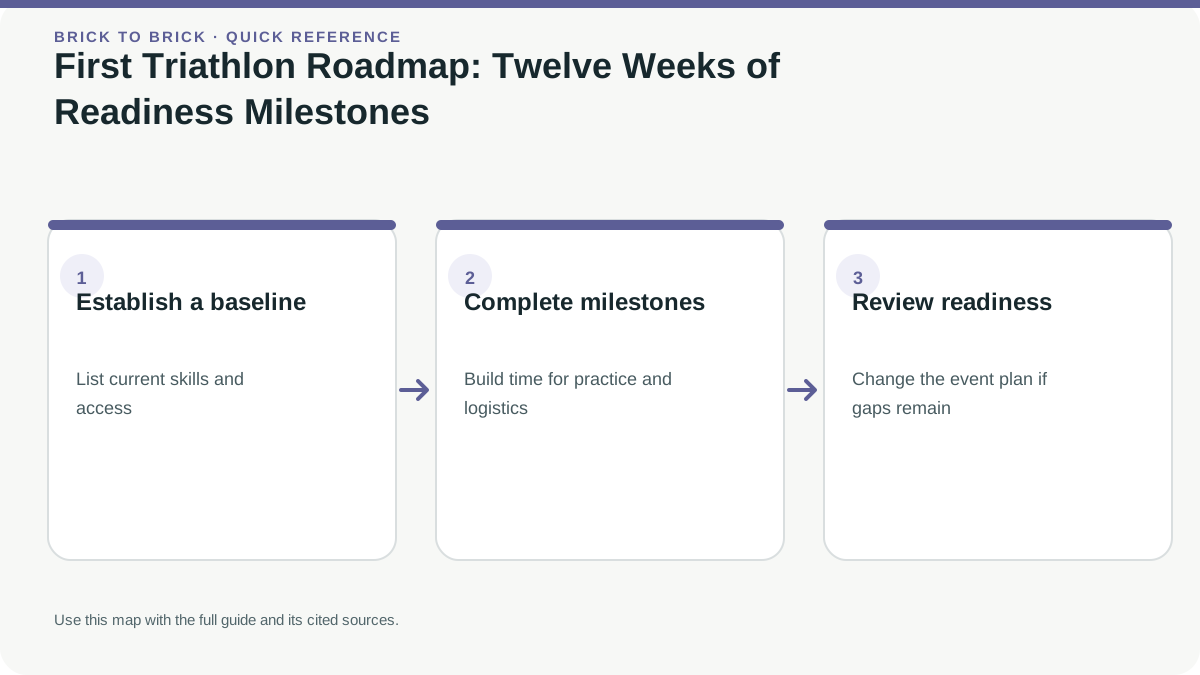
This first-triathlon roadmap uses twelve weeks to organize readiness milestones, not promise that every beginner will be ready by a date. Choose the actual event, assess your starting point, build skills and revise the timeline when needed.
Key takeaways
- 1Choose the event and understand its distances, conditions, rules and cutoffs before following a calendar.
- 2Track fitness, discipline-specific skills and logistics separately.
- 3Repeat, modify or extend a phase when access, symptoms or recovery require it.
- 4A twelve-week roadmap is not a medical clearance or a guarantee of readiness.
- 5Changing distance or choosing a later race can be a responsible outcome.
In this article
- 1Check the entry point before using the calendar
- 2Weeks 1–4: establish the routine and remove basic barriers
- 3Weeks 5–8: connect skills with the event
- 4Weeks 9–12: confirm execution and simplify
- 5Use checkpoints to change the timeline
- 6Keep the final output short and usable
- 7Tell us which beginner questions remain
- 8Use three decision gates instead of blindly advancing the calendar
- 9Twelve organisational tasks to place beside the training calendar
- 10Use the middle weeks to connect separate skills
- 11Use the final weeks to verify, simplify and hand over
- 12Keep the roadmap useful when the sequence changes
- 13Choose the event before assigning week numbers
- 14Record a baseline without turning it into a test day
- 15Separate fitness, skill and logistics milestones
- 16Let adaptation—not the date—control progression
- 17A practical seven-day planning review
- 18Use the right environment for each skill
- 19A worked example: when a milestone needs a different decision
- 20Make race readiness a decision, not a medal for completing all weeks
- 21Plan for interrupted weeks and changing access
- 22Protect time for recovery and ordinary life
- 23Use the tables as a conversation aid
- ?Frequently asked questions
Check the entry point before using the calendar
You need a suitable starting level of activity, access to swimming instruction or safe practice, a functioning bicycle and time to recover. If a discipline is completely new, allow additional learning time rather than forcing the first milestone.
Choose the actual event and read its swim environment, course, rules and cutoffs. This roadmap is aimed at organising a first short-course preparation process; it is not a zero-to-IRONMAN plan.
Use how to start training first if you have not established a manageable week.
Weeks 1–4: establish the routine and remove basic barriers
| Week | Main milestone | Evidence to keep |
|---|---|---|
| 1 | Assess each discipline and arrange practice | Current comfortable activity and access |
| 2 | Repeat a manageable week | Actual calendar time and recovery |
| 3 | Work on the clearest skill limitation | Coach feedback or a specific observation |
| 4 | Review equipment and event fit | Safe bike check and unresolved requirements |
These are learning priorities, not instructions to increase volume each week. Repeat a week or extend the phase when a skill remains uncertain. A smooth calendar is less important than a credible foundation.
Weeks 5–8: connect skills with the event
| Week | Main milestone | Evidence to keep |
|---|---|---|
| 5 | Practise a calm stationary transition | Equipment order that works |
| 6 | Test a short appropriate bike-to-run session | Opening-run control and comfort |
| 7 | Practise the relevant swim environment safely | Supervision, orientation and help procedure |
| 8 | Review realistic race-time assumptions | Comparable training and official cutoff margins |
Keep overall load appropriate to your capacity. A new open-water session is not simply another pool workout, and a brick adds running impact even if the run is brief.
Use the brick guide and sighting guide for those specific tasks.
Weeks 9–12: confirm execution and simplify
| Week | Main milestone | Evidence to keep |
|---|---|---|
| 9 | Test race clothing and food access | Comfortable, familiar equipment and supplies |
| 10 | Resolve remaining practical problems | A short action list completed before race week |
| 11 | Follow an appropriate taper and confirm logistics | Current guide, travel and reporting deadlines |
| 12 | Execute the race-week and morning plans | Clear pacing, support and withdrawal decisions |
The final weeks should not contain a desperate attempt to cover every race distance in one session. Use familiar work and an appropriate reduction in load rather than a last-minute fitness test.
Use checkpoints to change the timeline
At each review, ask whether skills, recovery and logistics are progressing. If swimming remains unsafe, the correct response may be more instruction, a different format or a later race. Faster cycling cannot compensate for an unsafe swim.
After illness or injury, obtain appropriate advice and revise the plan. Do not compress missed weeks. A twelve-week template does not establish a medically safe return date.
If you have more time, repeat useful phases and build consistency. If you have less, do not simply delete the early learning work.
Keep the final output short and usable
By race week, you should have a packing list, a morning timetable, an effort plan, familiar food and fluid arrangements, and the event's help and withdrawal instructions.
Use race-week scheduling, packing and race-morning planning for those final documents.
After the event, review which milestone was most useful and where more preparation was needed. The roadmap's value is a sequence of decisions you can assess, not a guarantee tied to the twelfth week.
Tell us which beginner questions remain
A roadmap can show the next step and still leave a practical question unanswered. If you choose, use the optional beginner triathlon survey to tell us which topics need clearer beginner resources. It collects fixed-choice editorial feedback; it is not a coaching intake or readiness assessment.
Use three decision gates instead of blindly advancing the calendar
At the end of the first phase, check whether the routine and facilities are workable. At the middle checkpoint, check whether event-specific skills are progressing. Before the final phase, check whether equipment, registration and a realistic race plan are in place.
A gate can have three outcomes: continue, repeat the relevant preparation, or change the goal. For example, consistently missed pool sessions suggest an access problem that more running will not solve. Unresolved open-water confidence may require lessons or a different event format, not a harder final month.
Keep each review short and dated. Record one decision and the next action so the roadmap remains usable. The weeks are an organising example for an appropriate starting level; they are not a promise that a complete beginner becomes ready after twelve calendar pages.
Twelve organisational tasks to place beside the training calendar
The week numbers below provide a sequence for an athlete whose current preparation makes this timeline appropriate. They are practical tasks, not automatic increases in fitness or a requirement to progress despite symptoms or unresolved safety skills. Shift, repeat or extend the sequence when your starting point or event requires it.
Week 1 — confirm access. Book the pool or lesson, identify a suitable bike setting and choose a familiar run route. Record travel and changing time. The output is a realistic list of places where training can happen, not just a list of workouts you would like to do.
Week 2 — check basic equipment. Resolve obvious fit, condition and missing-item problems. Have the bike inspected when you cannot assess it confidently. Practise the closures and controls you will use. The output is usable equipment and a list of any work still required.
Week 3 — establish the routine. Compare the planned week with actual completion and recovery. Identify one recurring obstacle and change the arrangement that causes it. Do not increase several demands simply because the first fortnight has passed. The output is a week you can plausibly repeat.
Week 4 — review the event match. Compare your emerging routine and skills with the intended event. Confirm the swim environment, distances and entry requirements. If an essential gap remains substantial, revise the timeline or event. The output is a decision supported by current evidence.
Use the middle weeks to connect separate skills
Week 5 — learn transition order. In a suitable permitted setting, practise organising the required equipment and moving through the basic sequence. Focus on correct actions before speed. The output is an arrangement you understand, including helmet, shoes and where items belong.
Week 6 — rehearse one useful combination. If individual sessions are already appropriate and recoverable, use a modest combination such as controlled cycling followed by a short easy run. Keep one purpose, such as observing the opening run effort. The output is a specific lesson about the transition, not a complete race simulation.
Week 7 — verify course-relevant skills. Identify what the venue adds beyond your normal training: open-water orientation, hills, turns or a particular transition layout. Arrange appropriate supervised instruction or practice where needed. The output is a plan for the relevant skill gap, rather than extra distance in the discipline you already enjoy most.
Week 8 — test practical supplies. Rehearse suitable food and drink arrangements where relevant to session and event duration. Check packaging, carrying and product labels. Do not adopt an unfamiliar intake simply to complete the task. The output is a workable supply arrangement and a record of what remains uncertain.
At the middle checkpoint, assess whether these tasks fit the preparation you have actually completed. If access, symptoms or logistics have repeatedly prevented them, address the cause and reconsider the remaining timeline. The calendar should reveal a problem early enough to act, not conceal it beneath completed-week numbers.
Use the final weeks to verify, simplify and hand over
Week 9 — review readiness and unresolved questions. Check ordinary session tolerance, essential skills and the current athlete guide. List the gaps that could affect safe participation or execution. A successful workout in one discipline does not cancel an unresolved requirement in another.
Week 10 — complete a suitable rehearsal. Use familiar work to check equipment, pacing cues and the practical sequence. Its size should fit your preparation and recovery. The output is a short list of adjustments, not proof that you must complete the full race in training.
Week 11 — resolve travel and administration. Confirm registration documents, start information, transport, bike or bag check-in and post-race collection. Give supporters the arrangements they need. The output is a dependable logistics plan with the correct official deadlines.
Week 12 — follow the appropriate taper and race-week plan. Retain suitable familiar movement, organise the final checks and respond to live organiser instructions. Do not use the final days to catch up on missed preparation. The output is a simple execution card and permission to change the participation decision if health or conditions make that necessary.
After the event, note what you learned and allow appropriate recovery before choosing the next objective. Completing the roadmap is not an obligation to escalate immediately to a longer distance. The experience can inform another similar event, more skill development or a different season goal.
Keep the roadmap useful when the sequence changes
If you miss a week through illness or a major interruption, do not compress its tasks into the next few days without review. Some administrative jobs can be moved easily; physical preparation and recovery cannot always be accelerated in the same way. Separate those categories when replanning.
Keep a record of the current version of the roadmap and why it changed. That prevents you from comparing actual progress with an abandoned timetable. A clear revised plan is more useful than several overlapping versions saved in different apps.
Ask for help with the specific unresolved task. A swim instructor, bike mechanic, organiser, coach or clinician each answers different questions. The roadmap should help you identify the right next conversation and turn its answer into a practical action.
Choose the event before assigning week numbers
Start with the race rather than with a generic twelve-week calendar. Read the organizer's current event page for distance, swim environment, course elevation, cutoffs, start format, equipment rules, transition access and withdrawal options. A pool swim and an exposed open-water swim demand different preparation. A flat paved bike course and a technical route also ask different things from a new athlete. Confirm the exact location and whether the event is individual, relay, duathlon or another format. Then compare those facts with the skills and time you actually have. A plan titled “beginner” does not make every race beginner-appropriate. If you do not yet have comfortable swimming ability or safe access to the relevant training, choose more preparation time or a different event. The registration guide and distance comparison help turn the event choice into an informed entry.
Record a baseline without turning it into a test day
The first step is observation, not a maximal test. Note how you currently swim, ride and run during ordinary, controlled activity: what feels comfortable, which skills are new, and what symptoms or access barriers occur. You do not need to time an all-out swim or run to start a roadmap. If you have not exercised regularly, are returning after illness or injury, or have a health condition or medication that changes exercise risk, discuss an appropriate starting point with a qualified clinician. A coach can assess skills and make training specific to the event. Write down the date and conditions of your baseline so that you can compare like with like later. The point is to see whether a manageable routine is emerging, not to label yourself fast or slow. Any concerning symptom changes the next step: stop the activity and get appropriate advice before progressing.
Separate fitness, skill and logistics milestones
A roadmap works best when it tracks three different kinds of readiness. Fitness is the ability to sustain appropriate activity and recover. Skills include swimming calmly, controlling a bicycle, navigating transitions and following event instructions. Logistics include registration, transport, equipment, course access, nutrition, support and race-day timing. These dimensions do not substitute for one another: a strong runner cannot compensate for an unsafe swim, and a fast cyclist cannot fix a missing event licence. Mark each item as complete, in progress, uncertain or not applicable. Add the evidence for your judgment: a supervised practice, an equipment inspection, written organizer information or a completed registration. When a task is uncertain, identify who can answer it and set a date to follow up. This turns a vague “get ready” goal into practical work with clear owners.
Let adaptation—not the date—control progression
A twelve-week schedule is an organizing example, not a requirement to make training harder every Monday. Progress can be uneven because of work, illness, access, weather or family responsibilities. Repeat a phase if the routine is not recoverable. Reduce or pause training if ordinary sessions become unexpectedly difficult, pain worsens, movement changes or sleep and daily function deteriorate. The CDC's general adult physical-activity guidance is a public-health reference, not a race-readiness standard; a triathlon roadmap has to account for the event's three disciplines and your own training history. Avoid rigid percentage rules that claim to prevent injury. Change one meaningful load factor at a time when recent work has been tolerated, and leave room for rest. If you return after an interruption, begin from current ability rather than the week number shown in an old calendar.
A practical seven-day planning review
At the start of each week, check five things before placing sessions: pool or lesson access, safe bike route or indoor alternative, run surface and weather, work and care commitments, and the recovery space between demanding days. Put appointments and rest on the calendar first; then place training where it can happen consistently. Give each session a purpose, such as relaxed swim technique, easy aerobic ride, controlled run or transition organization. Do not make every session a fitness test. If two hard sessions would land back-to-back because of a shift pattern, move one or keep it easy. A rolling seven-day window can suit shift workers better than a Monday-to-Sunday plan. If the week becomes crowded, drop a nonessential task rather than cutting sleep or stacking missed workouts. The training-while-working guide and workout split guide discuss this trade-off in more detail.
Use the right environment for each skill
Pool laps can build comfort with continuous swimming but do not teach open-water sighting, contact, water temperature, current or the feeling of a mass start. If the race uses open water, arrange supervised practice that follows local safety rules and your ability; do not swim alone or rely on a flotation device as a substitute for supervision. A stationary trainer can build cycling practice but does not teach traffic awareness, cornering or group-riding behavior. Road skills belong in a suitable, legal and visible environment. A treadmill can offer a controlled run setting, but a technical trail or road race may need additional familiarization. Note which demands have been rehearsed and which are still unknown. The open-water practice guide, cycling route guide and bike maintenance guide cover practical parts of those environments.
A worked example: when a milestone needs a different decision
Imagine an athlete who can jog comfortably and ride on quiet roads but has never swum continuously outside a lesson. The calendar reaches week 7, and the target race has a crowded lake start. The right response is not to borrow extra running time and mark swim readiness complete. The athlete needs qualified swim instruction, a suitable path to safe open-water familiarization if appropriate, and an honest comparison with the event requirements. If there is not enough time, choosing a pool event, duathlon, later date or withdrawal may be reasonable. In a different case, an athlete may have all three fitness foundations but cannot access a pool during work travel; the task is to find reliable access or adapt the event timeline. Both cases show that a milestone should produce a decision, not pressure the athlete to pretend the condition is met.
Make race readiness a decision, not a medal for completing all weeks
At the end of the roadmap, summarize what you can demonstrate, what remains uncertain and what the event requires. A sensible race decision includes current ability in each discipline, recent recovery, safe course-specific skills, equipment condition, cutoffs, weather instructions and any medical guidance relevant to you. No online checklist can guarantee readiness or prevent problems. If a key skill or health concern remains unresolved, ask the event organizer, coach or clinician the appropriate question. You may continue, adjust your goal, switch distance, defer or withdraw depending on the facts and available terms. Completing week 12 is not an obligation to start. For the final logistics, use the race-morning routine and timing-chip guide, then record one lesson after the event and allow recovery before choosing the next goal.
Plan for interrupted weeks and changing access
A pool closure, work trip, illness, weather alert or caregiving change may disrupt the exact order shown in the tables. Separate tasks into those that can move (reading the athlete guide, checking an entry, packing) and those that depend on physical practice (swim comfort, bike handling, running tolerance). Move administrative work freely; do not pretend that reading about a skill is the same as rehearsing it. If access to one discipline repeatedly disappears, identify a realistic alternative or change the event timeline. A trainer can preserve indoor cycling but not replace safe outdoor handling; mobility work can support movement but not recreate swimming. Mark the reason for the change and the next decision date. This makes a revised plan clear to a coach or family member and helps avoid the false feeling that you have “fallen behind” an immutable schedule.
Protect time for recovery and ordinary life
The roadmap's weeks should include sleep, meals, work, transport, relationships and ordinary recovery—not just sport sessions. A training plan that only works if every commute is perfect or every night is uninterrupted is fragile. At weekly review, count the time required to travel, change, shower and maintain equipment, not only the workout minutes. Keep a rest option available and avoid replacing all missed work with double sessions. If training begins to crowd out sleep or makes routine responsibilities harder, lower the load or revisit the goal. General activity guidelines can provide health context, but they do not prescribe the recovery time this specific athlete needs. Talk with a coach about training balance and a clinician about symptoms, fatigue or health concerns. Sustainable progress is a sequence that can be repeated without undermining the rest of life.
Use the tables as a conversation aid
The evidence column is a prompt to keep a record, not a pass-fail test. A note such as “pool access is reliable, but I have not practised in open water” is more useful than a green checkmark that hides the gap. Bring the table to a coach, instructor, event organizer or clinician and point to the item you cannot resolve. They can tell you whether it is a training skill, event rule, equipment question or health concern. Replace any milestone that does not fit your event, and keep the reason for the change. That is how a flexible roadmap remains specific without pretending one calendar works for every country, race format or athlete.
Sources
Sources are listed so readers can verify consequential claims and dated details.
- WHO physical activity guidelines — World Health Organization (accessed September 14, 2026)
- World Triathlon FAQs and event procedures — World Triathlon (accessed September 25, 2026)
- Adult physical activity recommendations — U.S. Centers for Disease Control and Prevention (accessed September 25, 2026)
- World Triathlon age-group racing and distances — World Triathlon (accessed September 25, 2026)
- How Do I Get Started in Triathlon? — USA Triathlon (accessed September 25, 2026)
Frequently asked questions
Can a complete beginner follow this 12-week first-triathlon roadmap?
The roadmap helps organize decisions, but a complete beginner may need more time than twelve weeks, especially to learn swimming and race-specific skills. Assess your starting point and event before choosing a date.
What should I do if I miss a week?
Do not compress the missed work into the next week. Resume according to current ability and recovery, or revise the goal and timeline.
Does completing all twelve weeks mean I am ready to race?
No. Calendar completion does not prove fitness, skill or medical readiness. Compare current ability with the event requirements and ask qualified professionals about unresolved concerns.
Should my first triathlon be a sprint?
A shorter event can be a manageable first goal for some athletes, but distances, swims, terrain and cutoffs vary. Choose based on the actual event and your preparation.
What is the most important first-triathlon milestone?
There is no single milestone for every athlete. Safe swimming, suitable cycling, recoverable running, event-specific skills and logistics all matter; identify the area that is currently least ready.