Triathlon Training With a Full-Time Job: Make a Feasible Plan
Build a triathlon schedule around work by counting the full time cost, protecting realistic training windows, planning fallback weeks and adjusting for travel or shift work.
By Lotte
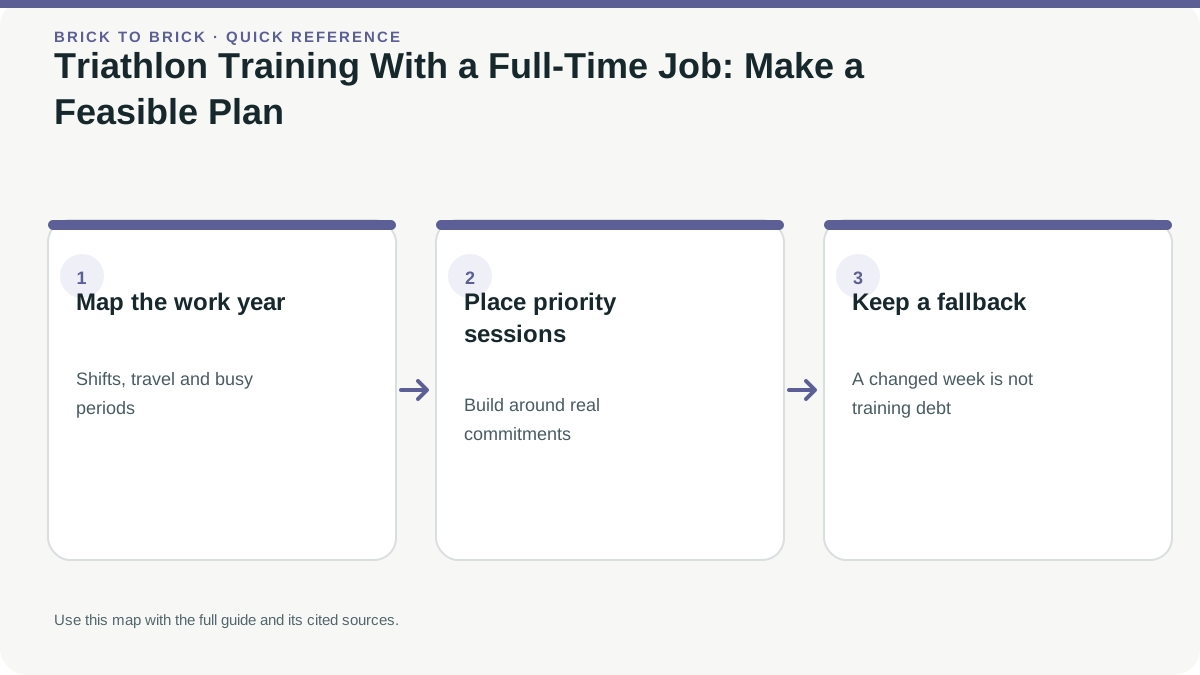
A workable training schedule includes travel, changing, setup, recovery and work demands—not only workout minutes. Use predictable anchors, safe alternatives and a fallback week, then reassess whether the race goal fits your actual calendar.
Key takeaways
- 1Count commute, changing, setup and recovery in the calendar cost of training.
- 2Use reliable anchor sessions and a safe fallback week instead of trying to repay missed workouts.
- 3Work fatigue, travel and shift patterns can change whether a session is practical or safe.
- 4If recurring schedule conflicts leave too little time for the plan, change the race goal or date.
In this article
- 1Calculate the whole cost of a training week
- 2Agree commitments with the people affected
- 3Choose anchors and flexible sessions
- 4Reduce recurring friction
- 5Manage energy as well as available minutes
- 6Review the goal against the schedule you can repeat
- 7Negotiate a specific week instead of asking for unlimited flexibility
- 8Compare morning, lunch and evening with the same accounting
- 9An office-worker scheduling example with transparent totals
- 10Adapt the system to shift work and unpredictable finish times
- 11Make commuting work only when the route and responsibilities fit
- 12Use a monthly review to decide whether the goal still fits
- 13Keep a normal-week version and a fallback week
- 14Place the hardest session where alertness is realistic
- 15Plan work travel as a different training environment
- 16Distinguish short training from a rushed workout
- 17Choose training priorities with the actual event in view
- 18Treat recurring schedule conflict as useful information
- 19Choose a race date around the work year, not just the weather
- 20Give a coach or training partner accurate constraints
- ?Frequently asked questions
Calculate the whole cost of a training week
Count travel, changing, equipment preparation, meals and recovery arrangements as well as exercise. An illustrative 45-minute swim with 20 minutes of travel each way and 15 minutes changing occupies 100 minutes. Two such swims use 3 hours 20 minutes of calendar time.
Do the same for rides and runs. A nominal six-hour training week can occupy considerably more time, depending on facilities and setup. These are personal calculations, not universal overhead estimates.
Use the actual diary from a normal working week before committing to a more demanding event.
Agree commitments with the people affected
Discuss which sessions use shared time, transport, childcare or household support. Make the plan visible and reciprocal. A long weekend ride can affect others even when it begins early.
At work, use the flexibility you actually have rather than assuming lunch or remote days are free. Protect important meetings and recovery rather than repeatedly squeezing sessions into uncertain gaps.
If you work rotating shifts, organise training around the shift pattern and sleep opportunities. A fixed Monday-to-Sunday template may be less useful than a rolling sequence.
Choose anchors and flexible sessions
An anchor is a reliable slot for a high-value session, such as a coached swim or a longer ride. Put these into the calendar first. Flexible easy sessions can move or shorten when work changes.
Avoid making every workout an anchor. A plan with no optional elements becomes fragile. The training-week guide shows how to arrange the disciplines once availability is known.
For a temporary crunch, use the minimum busy-week plan rather than attempting to preserve the full load at the expense of sleep.
Reduce recurring friction
Prepare the next session's kit before the working day, keep a simple food option available and choose routes or facilities that reduce unnecessary travel. Combine errands only when it genuinely simplifies the day.
An indoor trainer can remove some constraints if you already have an appropriate setup, but it creates noise, heat and storage needs. A run commute requires a safe route, clothing and a practical arrival routine.
Measure the saving rather than assuming every efficiency idea works. A system that takes longer to maintain than the time it saves should be simplified.
Manage energy as well as available minutes
A free hour after a demanding shift is not automatically a good place for a hard workout. Consider alertness, food, sleep and the next day's responsibilities. Avoid road riding or swimming when fatigue makes it unsafe.
The athlete sleep consensus supports an individual approach to recovery. A schedule that repeatedly reduces sleep opportunity needs revision even if every training box is ticked.
Use sleep and recovery to identify patterns, and seek professional advice for persistent unusual fatigue or other symptoms.
Review the goal against the schedule you can repeat
After a few representative weeks, compare planned and actual training, calendar burden and recovery. If the plan repeatedly fails at the same point, change the structure or event goal rather than blaming motivation.
A shorter race, later date or lower-pressure objective can preserve participation. Long-course preparation may not fit a particular work season, and that is a planning fact rather than a personal failure.
For home-working boundaries, use remote-work training. For a temporary trip, use holiday training. Keep the main work-life decision here.
Negotiate a specific week instead of asking for unlimited flexibility
Take a draft calendar to the people affected and identify the fixed commitments on both sides. A request for Saturday morning from 07:00 to 10:30 is easier to assess than a promise that training will somehow fit around family life.
Include the preparation and return period, not just the ride duration. Agree what happens if work runs late, childcare changes or the weather makes the planned session unsuitable. A useful fallback might move an indoor ride or shorten an optional session; it should not silently transfer responsibilities to someone else.
Review the arrangement after a representative week. Ask which part caused friction and change that part first. Shared predictability can matter more than adding another hour of training. If the required long-course block cannot fit the available support, changing the event is a legitimate planning decision rather than a failure of commitment.
Compare morning, lunch and evening with the same accounting
Choose a time slot by examining its complete cost and dependencies. Morning sessions may be protected from some work interruptions, but only if sleep and the household routine allow them. Lunch sessions can be convenient when facilities and changing space are nearby. Evening sessions may support group participation, while late meetings or family commitments can make them less reliable.
| Window | Confirm first | Common hidden cost | A possible adaptation |
|---|---|---|---|
| Before work | Bedtime, travel and facility opening | Lost sleep or rushed breakfast | Shorter nearby session on selected days |
| Lunch | Actual break length and changing access | Travel, showering and eating | A session that leaves those tasks time |
| After work | Finish time and other commitments | Fatigue, traffic and delayed dinner | Flexible easy session or another day |
| Weekend | Shared plans and safe conditions | Preparation, collection and recovery | Agree a defined window and fallback |
Do not choose the same slot for every session merely because it worked once. A 30-minute run from home and a 60-minute pool session across town require different arrangements. Record the start and return time that other people will experience, rather than only the exercise minutes.
The first useful experiment might be one consistent swim appointment, not an entire new morning routine. If that appointment repeatedly costs sleep or creates rushed driving, revise it. Reliability should include arriving at work and home in a manageable condition.
An office-worker scheduling example with transparent totals
Consider a fictional athlete who already tolerates four to five hours of weekly exercise and has access to a nearby pool. The aim of this example is to make calendar costs visible, not to prescribe a race preparation block.
| Session | Exercise | Additional travel and changing | Calendar space |
|---|---|---|---|
| Tuesday swim | 35 min | 35 min | 70 min |
| Wednesday run from home | 30 min | 15 min | 45 min |
| Thursday indoor bike | 45 min | 15 min | 60 min |
| Saturday outdoor ride | 90 min | 25 min | 115 min |
| Sunday swim | 40 min | 35 min | 75 min |
Exercise totals 240 minutes, or four hours. Calendar space totals 365 minutes, or six hours five minutes, before any additional meal preparation or recovery arrangements. The difference is not wasted time; it is part of doing the activity.
This week also contains only one run session. Whether that is appropriate depends on the athlete and goal. The point is to expose the tradeoff rather than label the week complete because its total looks plausible. Adding a second run requires both a suitable training decision and actual calendar space.
If Tuesday's pool visit becomes unreliable, first investigate the cause. A different facility or day may solve access; a shorter session may solve one timing problem; neither solves insufficient sleep if the alarm remains too early. Make the change that matches the constraint.
Adapt the system to shift work and unpredictable finish times
For irregular work, fixed clock times can be less useful than a sequence anchored to adequate rest and known commitments. Mark work blocks, travel and protected recovery first. Place a small number of suitable sessions where they can be completed without creating unsafe fatigue for work, driving or outdoor training.
Keep two versions of a flexible session: the intended suitable workout and a simpler option for a more demanding day. The fallback should preserve a useful purpose, such as easy movement or a familiar technique task, without becoming a punishment for not doing the original. Sometimes rest is the appropriate version.
If your finish time changes unexpectedly, use an agreed decision point. For example, you might decide before leaving work whether the remaining evening can accommodate training, food and a reasonable bedtime. That prevents a session from consuming recovery time by default.
A roster with repeated nights, heavy physical work or safety-critical duties can require more individual planning than a generic office example. Describe those demands to a coach or relevant health professional rather than treating paid work as a neutral gap between workouts. Physical and mental demands both belong in the overall picture.
Make commuting work only when the route and responsibilities fit
A commute can sometimes provide useful movement, but it is not automatically a suitable training session. Inspect the route, traffic, lighting, storage and changing arrangements. Consider what you must carry and whether you need another transport option for the return trip.
Keep road safety ahead of an interval target. Junctions, pedestrians and traffic make some routes inappropriate for prescribed hard efforts. Arriving at work safely and with equipment secured is a different objective from completing an uninterrupted training session.
Plan for a mechanical problem or weather change. A usable lock, a permitted storage location, repair arrangements and a way to get home can matter more than the apparent time saving. Do not assume a colleague or household member is available for an unplanned collection without discussing it.
Count the actual riding or running appropriately in the week. Adding a commute on top of the existing schedule changes exposure even if it feels like free time. Review how it affects the next session and your responsibilities before making it a recurring commitment.
Use a monthly review to decide whether the goal still fits
At the end of a representative month, compare planned and completed work and record the reasons for differences. Separate one-off disruption from a repeated structural conflict. A single late meeting and a month of unavailable pool time do not call for the same response.
Review the household arrangement as well as the training record. Did the agreed windows stay predictable? Were meals and sleep manageable? Did a long session repeatedly consume more of the day than expected? Discuss the observed pattern without framing other responsibilities as obstacles to be defeated.
Then choose a concrete adjustment. You might preserve the event and simplify optional training, extend the preparation runway, change the distance, use a coach for scheduling help or decide that this season has another priority. Keep the reason in the plan so the decision does not have to be renegotiated every difficult week.
The useful outcome is a goal supported by a repeatable life arrangement. A calendar that technically contains enough blank minutes can still be unsuitable if those minutes are not recoverable or available in practice. Work-compatible training means the complete system functions, including the people and responsibilities that continue after the finish.
Keep a normal-week version and a fallback week
A calendar is more resilient when it has a normal version and a simple fallback for a week with late meetings, overtime or a family change. The fallback is not a second demanding plan. It identifies which sessions can move, shorten or be skipped without creating a catch-up debt. For example, if an outdoor ride becomes unsafe after a late shift, moving it indoors may preserve easy cycling time if you have a compatible setup; it does not reproduce road-handling practice. If a coached swim is your only safe pool opportunity, moving that session may matter more than preserving an optional run. The right priority depends on your current plan and event, so ask a qualified coach if you are unsure. Write the fallback before the difficult week arrives, while you can think clearly. If the fallback requires sleep loss, riding while fatigued or dropping recovery every week, the overall goal or training schedule may be too demanding. See the 12-week training framework for an example of how plans can be adjusted; use its starting assumptions rather than copying its exact sessions.
Place the hardest session where alertness is realistic
A theoretically free calendar slot may be a poor place for a session that requires concentration or strong efforts. Consider what your workday demands: a long commute, physical labor, a night shift, extended screen work or a high-stakes deadline can change how alert you feel. Road cycling, open-water swimming and technical workouts require attention, so do not force them into a slot when fatigue makes the activity less safe. An easy indoor ride or walk may be a better option, or rest may be appropriate. The best time of day is individual; a morning workout is not automatically better if it cuts sleep, and a lunch session is not automatically convenient if travel and changing take longer than the break. Test a schedule for a few representative weeks and note both completion and how you felt during work afterward. If training consistently affects safe driving, job performance or sleep, revise the schedule rather than trying to become more efficient at ignoring fatigue.
Plan work travel as a different training environment
Travel weeks can alter equipment, time zones, facility access and sleep. Before leaving, check whether the hotel or nearby area actually offers a pool, safe running route or suitable stationary bike; do not count an amenity based only on a booking-site description. Decide what equipment is essential and what can be skipped. If bringing a bicycle, compare transport rules, assembly support, insurance and safe storage with the cost and availability of a rental or indoor alternative. A short easy session may be useful after a flight, but travel fatigue and local conditions should guide the decision. Do not try to reproduce every missed workout in the hotel gym. Keep a flexible goal, such as maintaining movement or completing one key skill session, and resume your normal plan when logistics allow. If your job travel is frequent, select a race season that leaves margin for predictable trips. The triathlon training-on-holiday guide covers travel-specific choices in more detail.
Distinguish short training from a rushed workout
A short session can fit into a workday and still have a clear purpose, but it should not be crammed into an unsafe gap. Include time to warm up appropriately, change clothes, prepare equipment and return to work. If the only available slot is too short for those tasks, consider a walk, mobility break or rest rather than starting an interval workout you cannot finish calmly. Short indoor rides may work well for a controlled session; a short open-water swim without safe supervision is not an acceptable shortcut. Use the plan's intended effort and modify or skip the session if the schedule changes. Do not turn every workout into a rushed test because the rest of the week is busy. A few predictable, manageable sessions are easier to sustain than a calendar full of workouts that rely on perfect timing. If the plan requires several extended sessions that your working life cannot support, change the event date or distance instead of cutting recovery and preparation time.
Choose training priorities with the actual event in view
Work constraints can make it tempting to preserve whichever session is easiest to schedule, but a training week should still reflect the event and your current needs. A pool session may be difficult to replace if you are building water confidence; an indoor bike session can preserve a structured workout during a dark commute week; a short run may be less useful if you are injured or exhausted. This does not mean every athlete needs the same frequency in each sport. Review your plan's purpose and ask a coach which sessions are priorities for your event and experience. Include skill practice, recovery and the logistics of a race-specific session, not just total minutes. If the only time available for outdoor riding is during unsafe traffic conditions, solve for a safer route or trainer rather than treating the ride as mandatory. Use the workout-split guide to understand how sessions can be arranged, then adapt it to the time and facilities you actually have.
Treat recurring schedule conflict as useful information
If the same workout is missed for three weeks because of a recurring meeting, pool closure or care responsibility, the issue is probably structural rather than a one-off failure of motivation. Record what blocked it and decide whether the session can move, be replaced with a suitable alternative, or be removed from the plan. Ask whether a different race date or distance would fit the year better. A useful record includes the planned time, actual start-to-finish calendar cost, the reason for the change and whether the alternative was safe. Do not use a completion percentage as a judgment of commitment; it is a way to see whether the plan matches reality. A coach can adjust training around stable constraints, while an employer, family member or facility may be able to clarify a logistical issue. If the change affects sleep, persistent pain or medical symptoms, involve the appropriate professional. The goal is a training system that can repeat during ordinary work weeks, not a perfect training diary.
Choose a race date around the work year, not just the weather
A race date can collide with a busy season, annual audit, school holiday, product launch, harvest period or shift rotation even when the local climate seems appealing. Look at the full preparation block and race travel, not only the event weekend. Consider whether peak training weeks overlap with work deadlines, whether you can take leave, and how much recovery time you will need afterward. If your schedule has predictable busy periods, choose a race with room before and after them or plan a lower training block around a quieter event. Do not count a week of annual leave as a guaranteed solution unless the leave is approved and travel is booked. For long-course events, a race calendar can demand months of consistent work; if that does not fit this year, choosing a later season is a sound decision. Compare race options using the full-distance versus 70.3 guide and the organizer's current entry and deferral policy.
Give a coach or training partner accurate constraints
A coach can adapt a plan only when they know the constraints that affect it. Share shift patterns, commute time, days when a pool is unavailable, upcoming work travel and how much training time you can protect without sacrificing sleep or essential responsibilities. You do not need to disclose private workplace or family details beyond what is relevant to scheduling. Agree how to communicate a disrupted week and what decisions you may make independently. If you train with a partner, set clear expectations about long sessions, transport, childcare or shared facilities rather than assuming that early starts affect nobody else. Review the arrangement after a few weeks: if the agreed slots repeatedly fail, revise them. A plan should not depend on secrecy, pressure or a promise that work will become quieter. Keep the discussion practical and specific—“Tuesday pool access is available until 7 p.m.” is more useful than “I will find time.”
Sources
Sources are listed so readers can verify consequential claims and dated details.
- Sleep and the athlete: expert consensus recommendations — British Journal of Sports Medicine (accessed September 25, 2026)
- How Do I Get Started in Triathlon? — USA Triathlon (accessed September 25, 2026)
Frequently asked questions
Can I train for a triathlon while working full time?
Many athletes combine work with triathlon training, but the workable schedule depends on event demands, current experience, commute, family responsibilities and access to facilities. Count total calendar time and select a plan that fits your actual week.
How many hours a week do I need to train for a triathlon?
There is no universal number. Training time depends on race distance, current skill, plan assumptions and available recovery. Include travel, changing and setup when deciding what fits your life.
Should I train before work or after work?
Choose a time you can repeat without cutting needed sleep or making the activity unsafe. Morning, lunch and evening sessions each have different travel, facility and household constraints.
What should I do when work makes me miss a workout?
Do not stack sessions to repay the missed workout. Use a pre-planned safe alternative, move a flexible session if recovery allows, or let it go and reassess a recurring conflict.
Can I train for a triathlon while traveling for work?
Yes, if you plan around real facility access, safe routes, equipment transport and travel fatigue. Keep a flexible goal and do not try to compress every missed session into the trip.
When should I choose a later race?
Consider a later date if the training plan repeatedly conflicts with work, travel or care responsibilities, if the weekly time is unavailable, or if preparation would require lost sleep or unsafe sessions.