First-Triathlon Anxiety: Prepare, Practise and Get Support
Separate practical race worries from safety concerns, rehearse manageable situations and recognise when anxiety needs professional support.
By Lotte
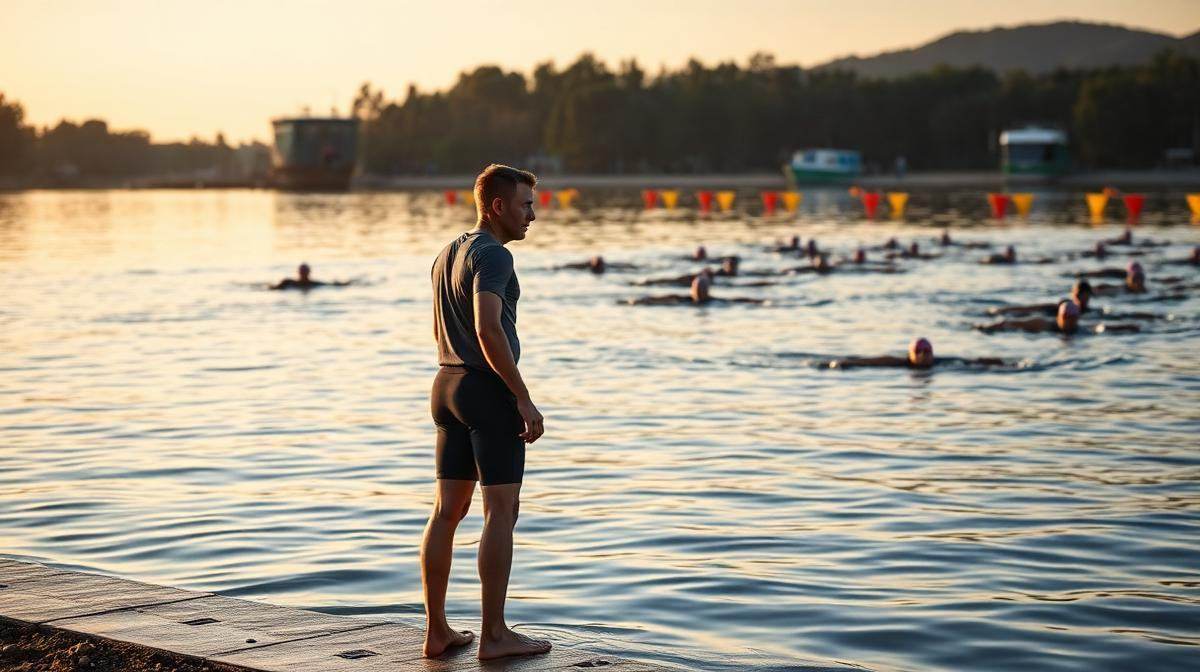
First-triathlon anxiety is easier to address when you name the specific worry and choose an appropriate response. Preparation can reduce uncertainty, but genuine safety concerns and severe or persistent anxiety should not be dismissed as ordinary nerves.
In this article
- 1Turn a general fear into a specific question
- 2Create a small rehearsal ladder
- 3Reduce avoidable uncertainty before race week
- 4Choose simple attention cues
- 5Write permission to change the plan
- 6Recognise when professional support is appropriate
- 7Write a specific support request
- 8Separate uncertainty about the process from distress about participation
- 9Use an equipment rehearsal to reduce one source of uncertainty
- 10Give race-day support a clear role and boundary
- 11Make a plan for the parts of race day you cannot control
- 12Account for noise, crowds, and sensory demands
- 13Separate anxiety from a readiness decision
- 14Choose an attention cue that works when plans change
- 15If anxiety rises during an open-water swim
- 16Agree on what a supporter can and cannot do
- 17Review the race without treating it as a verdict
- 18Know what a sports psychologist or clinician can offer
- 19A short race-day card for practical reassurance
- ?Frequently asked questions
Turn a general fear into a specific question
Write the worry in concrete terms: not knowing where to rack the bike, losing control of breathing, missing a cutoff or being watched while learning. Each points to a different action.
For an information gap, consult the organiser or a clear guide. For a skill gap, arrange instruction and suitable practice. For a safety concern, change the conditions or seek qualified advice rather than relying on reassurance.
Avoid telling yourself that every fear is irrational. Open-water competence and safe bike control are real preparation needs.
Create a small rehearsal ladder
Choose a manageable version of the situation and repeat it before increasing complexity. For transition worry, start with equipment laid out at home, then practise a stationary sequence and later a short appropriate brick.
For swimming concerns, work with qualified instruction in a supervised setting. Do not use unsupervised exposure to deep or rough water as a confidence exercise. A pool skill does not automatically transfer to a crowded open-water start.
Keep the goal specific: knowing the help signal or finding a comfortable breathing rhythm is more useful than demanding that you feel no anxiety.
Reduce avoidable uncertainty before race week
Read the current athlete guide and identify the start procedure, transition access, toilets, support and cutoffs. Ask the organiser about unresolved details early.
Use a short list of actions rather than repeatedly searching for more race stories. Other athletes' experiences may raise useful questions, but they cannot predict your day.
The race-day explanation and morning timetable can make the sequence concrete.
Choose simple attention cues
Before a familiar training task, use a short cue such as “look ahead,” “easy start” or “one step at a time.” Keep breathing comfortable rather than forcing an elaborate pattern.
If anxiety rises, pause where safe and orient to the immediate task and surroundings. Tell a coach, volunteer or supporter what you need. You do not have to hide difficulty to appear experienced.
These are general coping ideas, not treatment for an anxiety disorder. If an exercise makes you feel worse, stop and seek appropriate support.
Write permission to change the plan
Decide in advance what would make you delay, withdraw or ask for help: unsafe conditions, illness, uncontrolled breathing or a mechanical problem. A clear stop decision can reduce pressure to continue because of entry fees or expectations.
Share the support and meeting plan with someone you trust. If you withdraw, tell officials so they can account for you.
A first race can still teach useful lessons when the result differs from the goal. You do not need to prove confidence by ignoring a real limit.
Recognise when professional support is appropriate
Seek help when anxiety is severe, persistent, causes panic, disrupts sleep or everyday life, or prevents activities you want to do. NHS guidance describes routes to assessment and support; local services and a qualified clinician can advise on your circumstances.
New chest pain, fainting or severe breathing difficulty should not automatically be attributed to anxiety. Obtain urgent medical help when symptoms are concerning.
After the event, review what helped without judging every emotion. If low mood becomes the main issue, use the separate post-race support guide.
Write a specific support request
Instead of saying “I am nervous about everything,” try naming the moment that worries you: finding the start, entering cold water, managing contact or forgetting transition equipment. Then choose a support request that fits it.
You might ask a coach to explain a start procedure, ask the organiser about a permitted start position, or ask a friend to help rehearse packing. These actions reduce uncertainty without pretending that every anxious feeling must disappear before participating.
Keep an exit option clear. Knowing how to stop safely, signal for help or withdraw can make the situation more understandable. Do not use an anxiety exercise to push through unsafe water conditions or symptoms that need assessment. If fear repeatedly affects sleep, work, relationships or everyday activity, seek appropriate professional support rather than escalating race exposure alone.
Separate uncertainty about the process from distress about participation
If the concern is “I do not know where to go,” a venue map and a specific organiser question may help. If it is “I cannot safely manage this swim environment,” the next step is appropriate skill and safety assessment. If anxiety is affecting daily life or you are struggling to cope, professional mental-health support may be appropriate. These situations can overlap, but they should not all receive the same checklist.
Write the concern in one sentence without judging yourself. Then identify what information or support could change the decision. A practical answer might be confirming the start procedure, learning how to signal for help or choosing a different event. You do not need to eliminate every feeling of nervousness before making a thoughtful choice.
Avoid using the race as a compulsory test of courage. Participation is optional, and an entry fee does not create an obligation to ignore health, safety or significant distress. A change of plan can be a reasoned decision even when other people are enthusiastic about the event.
Use an equipment rehearsal to reduce one source of uncertainty
Choose a quiet suitable setting and lay out the items required for the next stage. Practise finding and using them in order, without a speed target. If you lose your place, stop, identify the confusing step and simplify the arrangement.
For example, a transition rehearsal may reveal that the helmet buckle is awkward with the planned clothing, or that the run shoes are stored under something else. Fixing that practical problem gives you information you can use. Repeating an increasingly rushed version may only make the task harder to understand.
When a rehearsal involves water, riding or other physical risk, use the appropriate supervision and environment. Do not treat a mental preparation exercise as permission to exceed current skills. Ask a qualified instructor to help design a suitable progression when needed.
Afterward, record what is now known and what remains unresolved. The aim is one clearer task, not a promise that you will feel calm in every race situation. A useful rehearsal can coexist with ordinary nerves.
Give race-day support a clear role and boundary
Tell a supporter what would help: meeting at a particular location, reminding you of the agreed plan, listening without comparison or helping with transport if you withdraw. Confirm what the event permits; supporters cannot necessarily enter transition or provide assistance on course.
Agree how you will communicate if plans change or mobile coverage is poor. A specific meeting point can be more dependable than repeated messages saying you are near the finish. Keep essential information available without relying on a phone stored in an inaccessible bag.
Supporters should not pressure you to start or continue through unsafe conditions or concerning symptoms. Nor should they be expected to provide clinical advice. If distress or symptoms require professional help, use the appropriate event medical team, clinician or local emergency service.
After the event, choose when and how to discuss it. You can value the support without wanting immediate technical analysis. Clear requests before and after the race can make the experience easier to navigate for both the athlete and the people helping.
Make a plan for the parts of race day you cannot control
Preparation can reduce uncertainty, but an event may change because of weather, congestion, a delayed start, a course adjustment, or a mechanical problem. Trying to predict every possible version can become another source of worry. Instead, identify a few situations that would change your next safe action and decide whom you would ask for help.
For example, if the start is delayed, check the official announcement and adjust only the parts of your schedule that depend on timing. If the swim course changes, listen to the briefing and ask an official about anything that affects your ability to participate safely. If a bicycle problem occurs, move to a safe location and ask event staff for assistance rather than trying a repair beyond your skill.
Keep the contingency plan short: what might change, where to get reliable information, and what you can do next. You do not need to rehearse every imagined outcome. A plan is useful when it makes one real decision easier; if writing it repeatedly increases distress, pause and discuss the worry with someone you trust or a qualified professional.
Account for noise, crowds, and sensory demands
A race environment can be louder, busier, brighter, and less predictable than training. Announcements may be hard to hear, athletes may be moving in several directions, and the transition area may feel crowded. These conditions can add load even when you know the physical tasks.
Visit the venue or review its map when that is possible and permitted. Ask the organizer in advance about accessible entry, quiet waiting areas, start procedures, support-person rules, or other accommodations that may be available. Organizers set the rules, and options vary by event; do not assume a particular start position or extra support will be permitted without asking.
Create a small sensory plan: bring permitted ear protection for travel but remove it wherever you must hear safety instructions, identify a meeting point with your supporter, and keep essential gear in a consistent place. If sensory overload affects your ability to follow directions or stay safe, step to a safe area and contact event staff. You do not need to prove that you can tolerate a situation that exceeds your current capability.
Separate anxiety from a readiness decision
Feeling anxious does not by itself prove that you are unprepared, and feeling calm does not prove that a skill is safe. Make readiness decisions from concrete factors: have you practised the event's basic demands, can you follow the current rules, and do you have a plan for conditions that exceed your ability? Anxiety is one part of the experience, not a pass-or-fail test.
For an open-water swim, consider swimming ability, supervised practice, the venue, water conditions, and the event's support plan. For cycling, consider whether you can control the bike and follow the route. For a health concern, ask a qualified clinician rather than trying to answer it with mental reassurance. The organizer can explain event rules but cannot assess every individual's medical readiness.
If a concrete safety gap remains, address it before race day or choose a different event format. If the practical preparation is in place but anxiety persists, a sports psychologist or mental-health professional may help you work with it. Both situations can be true at once: emotional support does not replace skill practice, and skill practice does not guarantee that anxiety disappears.
Choose an attention cue that works when plans change
A cue should point to an action you can take now. “Find the next buoy,” “follow the marked path,” or “check the brake before moving” is more specific than “be confident.” Use one cue at a time and practise it during training so it is familiar. Do not build a long script that requires perfect conditions.
If the situation changes, update the cue. A planned pace cue may no longer fit a hot day; an organizer's new instruction takes priority over your rehearsal. You can return to a basic next step: stop in a safe place, listen, ask an official, and decide what to do. The aim is not to eliminate anxious thoughts but to keep attention on the decision that matters.
Research on sport-anxiety interventions includes varied athletes and approaches, and it does not establish one cue as effective for every triathlete. Treat cues as a personal practice tool, not treatment for an anxiety disorder or guarantee of performance. If they increase pressure or self-criticism, choose a simpler action or seek support from a qualified professional.
If anxiety rises during an open-water swim
Open water adds real demands such as reduced visibility, waves, contact, and distance from a wall. If you become distressed, prioritize staying afloat and getting help. Follow the venue's safety procedures and lifeguard or event-staff instructions. Do not treat continuing the race as more important than breathing control or safe participation.
Before the event, learn what support is available and how to signal for help. Practise in a supervised setting only when the venue and conditions are appropriate. A pool rehearsal cannot fully reproduce a race swim, and a race start is not the place to test an unpractised open-water skill. If you have not developed the required comfort or swimming control, consider a different start, distance, format, or event when available.
New chest pain, fainting, severe breathlessness, confusion, or other concerning symptoms should not automatically be attributed to anxiety. Alert safety staff and seek appropriate medical help. Anxiety and a medical problem can overlap; an online article cannot distinguish them. If symptoms are severe or worsening, use local emergency procedures.
Agree on what a supporter can and cannot do
A supporter can help by listening, meeting you at an agreed location, reminding you of the next step, or assisting with transport if you withdraw. They cannot necessarily enter transition, accompany you on course, or provide equipment during the race. Check event rules and tell your supporter where their access is limited.
Agree on a communication plan before race day. Choose a meeting point that does not depend on mobile coverage, and decide how you will communicate a change of plan. Ask the supporter to use the kind of help you find useful: practical information, quiet company, or a reminder to speak with an official. Avoid asking them to make a safety decision they are not qualified to make.
Support does not mean pressuring you to start or continue. Share your stop criteria and ask the supporter to respect them. If you withdraw, tell event staff so they can account for you. A clear role can reduce confusion for both people and make it easier to act on the plan when emotions are high.
Review the race without treating it as a verdict
After the event, give yourself time before deciding what the experience “means.” Note what happened, what helped, what increased distress, and which conditions were outside your control. Separate an outcome such as finishing or withdrawing from the quality of the decisions you made. A safe withdrawal can reflect good judgment; finishing does not prove that every part of the plan was suitable.
Choose one practical learning point for next time. You might practise finding a transition landmark, ask the organizer an earlier question, try a supervised open-water session, or arrange a different support role. Avoid changing every part of your preparation because of one difficult moment. A race report from another athlete can offer ideas but cannot tell you what caused your own response.
If anxiety is worsening, affecting sleep or daily activities, or making you avoid things you want to do, consider discussing it with a qualified mental-health professional. If the race raised a health or injury concern, consult a clinician. Reflection can help organize questions, but it is not a substitute for treatment or medical assessment.
Know what a sports psychologist or clinician can offer
A sports psychologist can help with performance-related concerns such as preparation routines, attention, confidence, or responding to pressure. A mental-health clinician can assess anxiety that affects wider life and discuss appropriate care. Credentials and scope vary by country, so check qualifications and choose someone experienced with the concern you want to address.
Psychological approaches have been studied in athletes, but study populations, interventions, and outcomes vary. A systematic review and meta-analysis found that interventions can affect performance-anxiety measures across studied groups; it does not guarantee that one technique will work for every triathlete or replace individualized assessment. A professional can help decide what fits your goals and circumstances.
Consider seeking support when anxiety is persistent, severe, causes panic, disrupts sleep or everyday life, or prevents activities you want to do. For immediate danger or a mental-health crisis, use local emergency and crisis services. If symptoms may be medical, seek medical care rather than assuming they are “just nerves.”
A short race-day card for practical reassurance
A small note can hold information you do not want to keep rehearsing. Include the event contact point, your supporter's meeting location, the first action at each transition, and one condition that means you will pause or ask for help. Keep it brief enough to read once. Do not add a long list of worst-case scenarios or make the card a promise that nothing will go wrong.
Use official sources for event facts: the latest athlete guide, race-day announcements, and staff instructions. If the race guide does not answer an important question, ask the organizer before race week. A social post or a previous year's map may be outdated.
If checking the note repeatedly increases anxiety, put it away after the final review and focus on the next ordinary task. The card is a practical memory aid, not a coping treatment. If reassurance-seeking becomes repetitive or distressing, a mental-health professional can help you find a more suitable approach.
Sources
Sources are listed so readers can verify consequential claims and dated details.
- Anxiety, fear and panic: getting help — NHS (accessed September 14, 2026)
- Open-Water Swimming Safety — Royal National Lifeboat Institution (accessed September 24, 2026)
- The Effect of Different Psychological Interventions on Athletes’ Competitive Anxiety: A Systematic Review and Bayesian Network Meta-Analysis — Frontiers in Psychology / PubMed (accessed September 24, 2026)
- Effects of Psychological Interventions on Performance Anxiety in Performing Artists and Athletes: A Systematic Review with Meta-Analysis — Behavioral Sciences / PubMed (accessed September 24, 2026)
- Anxiety, Fear and Panic: Getting Help — National Health Service (accessed September 24, 2026)
Frequently asked questions
Should I force myself into a crowded swim start to overcome fear?
No. Choose a suitable supervised progression and follow the event's start instructions. Crowding adds real physical and navigation demands. Work on the specific skill or concern with appropriate support, and change the participation plan when the setting exceeds your current safe capability.