What Is a Triathlon? The Sport, Formats and First Step
A clear introduction to triathlon: the three disciplines, related event formats, who can take part and practical first steps for exploring the sport.
By Lotte
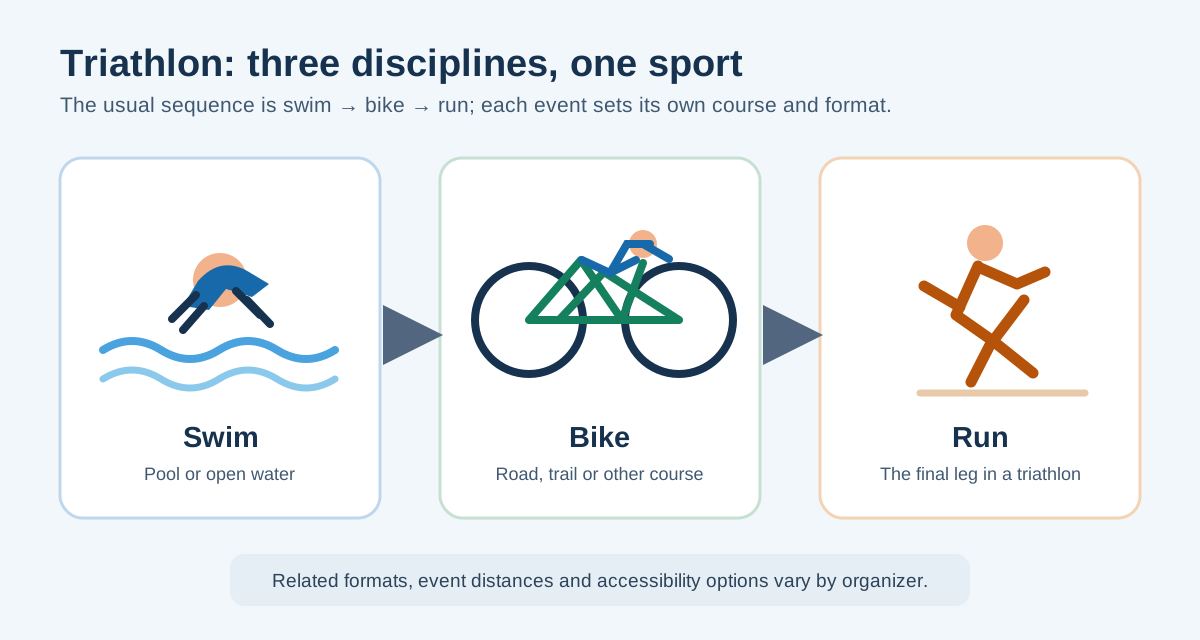
A triathlon is a multisport event that usually combines swimming, cycling and running in that order. It is a sport with many distances and participation formats; IRONMAN is one event brand within it. Event rules, access arrangements and exact course details vary, so use the organizer’s current guide when choosing a race.
Key takeaways
- 1Triathlon usually means swim, bike and run in sequence as one event; organizers may alter the format for safety or conditions.
- 2IRONMAN is an event brand, not another word for every triathlon or distance.
- 3Duathlon, aquathlon and aquabike use different discipline combinations; confirm the exact event format.
- 4Pool events, relays and adaptive participation can offer different ways to explore multisport, depending on local events and rules.
- 5Start by identifying the skill or question you need to address; buying specialist equipment or entering a long race is not a prerequisite.
In this article
- 1One event with three connected disciplines
- 2Triathlon and IRONMAN are different labels
- 3Who takes part?
- 4Related formats can offer another entry point
- 5What you need before choosing a race
- 6Choose your next question
- 7Understand the basic event without buying anything first
- 8What you can learn from watching a local event
- 9Why the three disciplines need different kinds of preparation
- 10Distance names describe race formats, not who belongs in the sport
- 11Pool and open-water triathlons share a sport but not a swim setting
- 12Individual, relay and adaptive participation are different ways to race
- 13Read an event listing for the details behind the name
- 14Training for three sports means learning three different skills
- 15The event guide explains what a generic introduction cannot
- 16Triathlon also happens between race days
- 17A first step does not require a race entry
- ⚖Common ways to explore multisport
- ?Frequently asked questions
One event with three connected disciplines
A triathlon is a multisport race that combines swimming, cycling and running, usually in that order, as one event. The defining feature is the combination: the athlete prepares for three different activities and completes them as parts of the same race. The event may be a small local pool triathlon, an open-water race, an individual competition or a relay.
“Usually in that order” matters because event organizers can change or cancel a leg when conditions make the original format unsafe. Related multisport events also use different combinations. The simplest description is therefore a starting definition, not a promise that every race day looks identical.
This page explains what the sport includes and where to begin learning about it. For the detailed sequence, transitions and timing, read how triathlons work. For distance names and common leg lengths, see triathlon distances.
Triathlon and IRONMAN are different labels
Triathlon is the sport; IRONMAN is a commercial event brand. The brand organizes full-distance races and events called IRONMAN 70.3, while many other organizers offer triathlons under their own names at a range of distances. A local race can be a complete triathlon even if it is not an IRONMAN event.
This distinction helps when searching for a first race. Do not assume that entering a triathlon means signing up for a full-distance event, and do not use the brand name as a synonym for every course length. Read the organizer's event page for the actual swim, bike and run distances, cutoff rules, course and entry category.
The distance guide compares common labels such as Sprint, Olympic or standard, 70.3 and full distance. Those labels help people discuss event types, but the published route and athlete guide for a specific race determine what that athlete will do.
Who takes part?
People enter triathlons for different reasons: a first finish, a shared relay experience, a personal challenge, a category result or high-level competition. Age-group racing is one common way recreational athletes are grouped, but age categories, eligibility, awards and start formats are set by the event or governing body. Elite racing and para triathlon have their own structures and rules.
The sport does not require one body type, background discipline or performance goal. It does require a race choice that matches the athlete's preparation, access and needs. A person who can run well but is unfamiliar with water may need swim instruction and a suitable pool event; an experienced swimmer may need to build bike handling and run durability.
If you need equipment adaptations, a guide, an accessible transition or other support, ask the event organizer early about its process and available arrangements. Do not infer eligibility or access from generic pictures. World Triathlon and national federations publish information for their own categories; local participation rules can differ.
What you need before choosing a race
Before choosing an event, take a practical inventory of what you can currently do and what support is available. Can you swim comfortably in the setting the event uses? Can you control a bicycle safely on the likely course? Can you run or run-walk a distance appropriate to the goal? Are there coaches, lessons, safe routes or supervised sessions nearby for any skill you have not learned?
The answer does not need to be “ready for everything today.” It needs to include enough preparation time and an honest route to learning. General fitness does not replace swim instruction or safe cycling practice. If a recent injury, chronic condition, medication or other health concern affects participation, speak with an appropriately qualified clinician about your circumstances.
You need equipment that fits, works and meets the event rules. A dedicated triathlon bike, premium watch or race wheelset is not a requirement for understanding the sport. Use the first-race gear guide to separate basic requirements from optional purchases, and the open-water safety checklist if the race includes open water.
Choose your next question
Pick the guide that answers the question you have now. If you want the basic race mechanics—sequence, transition areas and timing—read how triathlons work. To compare common course lengths, open triathlon distances. If you are considering your first entry, use your first triathlon to think through preparation and race choice.
Other useful next steps include how to start training, finding a local race, or first-race gear essentials. These pages answer separate questions so you can read only what is useful rather than turning this introduction into a training plan, gear catalogue and race manual at once.
A first action might be booking an introductory swim lesson, visiting a local club session or comparing two event guides. You do not need to buy a bike or choose a distance before understanding whether the sport interests you.
Understand the basic event without buying anything first
Triathlon is also a community and practice, not only a paid race entry. Local clubs, coached sessions, pool events, introductory rides and volunteer roles can help you learn the sport's vocabulary and meet people who know local courses. Availability differs by region, so search through your national federation, community sports organizations and nearby facilities.
You can explore without committing to a long-distance event or purchasing specialist equipment. A swim lesson, a beginner-friendly club session, helping at a race or watching a permitted local event can help you decide what interests you. If you watch, use public areas and follow the organizer's spectator guidance; race courses and transition zones are controlled spaces.
Use those first experiences to collect specific questions: what is the swim setting, what type of bike is allowed, what support is available and how much preparation time would be realistic? Then look at an event guide or ask an organizer. This approach makes the sport more concrete without treating a first race as the only valid way to participate.
What you can learn from watching a local event
Watching a local event can show how broad the sport is. From permitted spectator areas, notice the range of participant goals and equipment rather than looking only at the fastest competitors. Read the event's spectator information so you do not enter a controlled route, block an aid station or interfere with timing and safety work.
If the organizer offers a beginner briefing or open-house session, that is a better time to ask about entry requirements, swim format, accessibility, volunteer roles and local training. Ask concise questions and respect the volunteers' role during race operations. An event may change its course or procedure for safety; the athlete guide and current announcements are more reliable than what you saw at last year's race.
Watching provides context, not proof that you are ready or unready. Make a short list of the skills you would need to learn and the questions to confirm with the organizer. Then use the first-triathlon guide to assess next steps.
Why the three disciplines need different kinds of preparation
Swimming, cycling and running place different demands on skill and environment. Swimming involves breathing, body position and orientation in a pool or open water. Cycling combines endurance with bicycle control, equipment checks and awareness of other people. Running has its own movement and load demands, and in a triathlon it begins after earlier work. These disciplines are connected by the event but are not interchangeable training minutes.
A strong runner may need swimming instruction more urgently than another hard run. An experienced cyclist may need a gradual introduction to running. Someone comfortable in a pool still has to learn about the event's open-water conditions if the race uses a lake or sea. Those examples explain why a balanced plan begins with a skills inventory rather than a generic schedule.
List what you can do safely, what you can practise locally and where you need instruction. Match the event to a credible preparation route, and change the goal if that route is not available. The how-to-start guide helps turn that inventory into an initial plan.
Distance names describe race formats, not who belongs in the sport
Triathlon races are offered at many lengths. Common labels include Super Sprint, Sprint, standard or Olympic, half distance or 70.3, and full or long course. They describe a broad race format; they do not measure an athlete's worth, experience or place in the sport. A shorter event is not a lesser triathlon, and entering a long-course race is not a required progression.
The names can be confusing because organizers and governing bodies use slightly different distance conventions, and the actual course can change or vary. A race labelled “Olympic” may not be exactly the same route length as another event with that label. An event called “70.3” refers to a total advertised race distance, but you should still check the swim, bike and run legs for the specific race.
Use the dedicated distance guide for common figures and how to compare them. When choosing an event, its current course map and athlete guide are more useful than a label on a poster. They explain the distance you will actually encounter, the terrain, the cutoff times and any changed format.
Individual, relay and adaptive participation are different ways to race
In an individual triathlon, one athlete completes all three legs. In a relay, teammates share the disciplines under the event's team and handoff rules. A relay may be a way to try one sport in a race setting, but the organizer decides which legs, team sizes and categories are offered. Each participant registers and follows the requirements for their event.
Para triathlon and adaptive participation also have event-specific rules, equipment and support arrangements. World Triathlon's para triathlon overview explains international competition categories; USA Triathlon describes adaptive divisions and recommends contacting an event about accommodations. Those resources do not tell you what every local organizer can provide.
If you need an accommodation, guide, adapted equipment, transition assistance or clarification about eligibility, contact race management well before registration or race day. Ask what information they need, what course surfaces and transitions are like, and who can discuss the request confidentially. Do not assume that a promotional image or a general category description settles an individual access question.
Read an event listing for the details behind the name
An event name and distance label are only the starting point. Before entering, look for the current year and exact race category, then check the swim venue, bike and run maps, elevation, surface, start format, cutoff times, equipment rules, transition layout, accessibility information and cancellation or modification policy. A race may offer several distances or formats on the same weekend; confirm that the page refers to the event you intend to enter.
Check how the course is measured and whether roads are open to traffic. See whether you need a governing-body membership or one-day licence, whether a relay is available, and when packet pickup and bike check-in happen. For an open-water event, read what the organizer says about swim support and conditions. For a pool race, find out the lane/start procedure. The athlete guide often answers questions that the headline cannot.
If a consequential detail is missing, ask the organizer before paying. Do not rely on an old review, another athlete's memory or an event page for a previous year. The race-finding guide helps you locate listings; the current organizer information is the source for entry-specific decisions.
Training for three sports means learning three different skills
The combined event uses three disciplines, but preparation is not simply one generic endurance plan split into equal thirds. Swimming involves technique and confidence in water. Cycling adds equipment and handling in the environment where you train. Running asks for its own gradual preparation, and in a triathlon it follows the swim and bike. Race distance, skill background and local access all affect what learning is needed.
You may already have experience in one discipline and little in another. A runner can begin with swim instruction; a cyclist can practise safe running gradually; a pool swimmer can learn open-water conditions with suitable supervision. The work that matters most for one athlete may be different for another. Being generally fit is useful background but is not proof that every race skill is already prepared.
This is why the first plan should begin with an honest inventory and a suitable event, not with a rigid generic weekly schedule. See how to start training for a separate planning guide, or your first triathlon if you want to assess readiness and choose a goal.
The event guide explains what a generic introduction cannot
This page can define the sport, but it cannot tell you how a particular race is run. The organizer's current athlete guide explains local directions, check-in, race numbers, safety procedures, course support, equipment rules and any changes for that year. Read it before registering when possible, and read the final version again before travel.
Make a short note of what affects your own participation: swim start and venue, bike-course traffic or technical features, run surfaces, cutoff timing, transition access, available aid, special assistance, and the location of medical support. Ask the organizer about a detail that is unclear or missing, especially if it affects safety or accessibility.
Rules from one race or country do not automatically carry over to another. Governing bodies may publish broad rules, while an event adds local procedures and permitted equipment. If you find conflicting instructions, contact the race rather than choosing the version that seems easiest. The athlete-guide reading guide shows how to turn that document into a practical checklist.
Triathlon also happens between race days
Many people encounter triathlon first as a race, but taking part can include learning to swim, riding with a club, following a training plan, volunteering at an event or sharing a relay with friends. Clubs and coached sessions may provide instruction or a social setting, but what is available depends on your region. You do not need to join a club or hire a coach to understand the sport.
If you visit a group session, check its level, location, safeguarding practices where relevant, equipment expectations and whether newcomers can observe or try a session. Ask about the coach's qualifications and how they accommodate beginners or different experience levels. A friendly name is not a guarantee that a session suits every athlete; decide from its actual format and support.
Volunteering can show how an event is organized without asking you to race, while observing from permitted areas can help you understand the variety of participants and equipment. Those activities do not replace swim lessons, cycling skills or medical advice, but they can be useful low-commitment ways to explore whether triathlon interests you.
A first step does not require a race entry
If you are curious but unsure whether triathlon fits, choose one small action that answers a real question. You might find a nearby pool and ask about beginner lessons, compare a pool event with an open-water event, visit a club session or read an organizer's athlete guide. You could also volunteer or watch a race from public areas. These steps create useful information without requiring you to buy specialist gear or commit to a full training block.
Write down what you learned and what remains uncertain. For example: “I can reach a pool twice a week, but I need help learning freestyle,” or “The local race is open water; I should look for supervised practice before deciding.” This gives your next question a clear focus and helps avoid buying equipment to solve a skill or access problem.
When you are ready to consider an entry, use your first triathlon. If you are not ready to race yet, learning a discipline or joining an inclusive community is already participation in the sport. There is no single timeline that every new triathlete needs to follow.
Common ways to explore multisport
| Event format | Typical disciplines | What to confirm |
|---|---|---|
| Triathlon | Swim, bike, run | Order, distances, swim setting and rules |
| Duathlon | Run, bike, run | Leg distances and run start arrangements |
| Aquathlon | Swim and run | Discipline order and whether the swim is pool or open water |
| Aquabike | Swim and bike | Swim conditions, cycling course and finish procedure |
| Triathlon relay | Team members divide swim, bike and run | Available categories, handoff procedure and each athlete’s requirements |
Sources
Sources are listed so readers can verify consequential claims and dated details.
- About triathlon and multisport — AusTriathlon (accessed September 24, 2026)
- Age-group racing — World Triathlon (accessed September 24, 2026)
- Multisport overview — USA Triathlon (accessed September 24, 2026)
- Para triathlon — World Triathlon (accessed September 24, 2026)
- Adaptive divisions — USA Triathlon (accessed September 24, 2026)
- Adaptive athlete event information — USA Triathlon (accessed September 24, 2026)
- Open-water swimming for beginners — USA Triathlon (accessed September 24, 2026)
Frequently asked questions
What is a triathlon?
A triathlon is a multisport event that normally combines swimming, cycling and running in that order. The legs are completed as one event, and the event organizer defines its course, rules and any changes.
Is IRONMAN the same as triathlon?
No. Triathlon is the sport; IRONMAN is one event brand that offers races at several distances. Many other organizers hold triathlons too.
Do I need to be good at all three sports before I start?
You do not need equal experience in swimming, cycling and running to learn about the sport, but you need an appropriate preparation route for the specific event. Seek instruction for unfamiliar skills and choose conditions you can practise safely.
Are all triathlons the same distance?
No. Events range from short local races to long-course formats, and labels can vary. Check the organizer’s current distances and course guide rather than inferring exact legs from a name.
Can a triathlon use a pool instead of open water?
Yes. Some events use pool swims, while others use lakes, rivers or the sea. Confirm the swim environment and prepare specifically for it.
Can people compete as a relay or with adaptive support?
Some events offer relays and some have adaptive or para categories and arrangements. Availability, eligibility and support differ, so contact the organizer early and confirm the current requirements.