Bike Training for Triathletes: How to Build the Bike Leg
The design of triathlon bike training — how much to ride, the aerobic-plus-intensity mix, the bike session menu, training by power, and riding to set up a strong run.
By Lotte
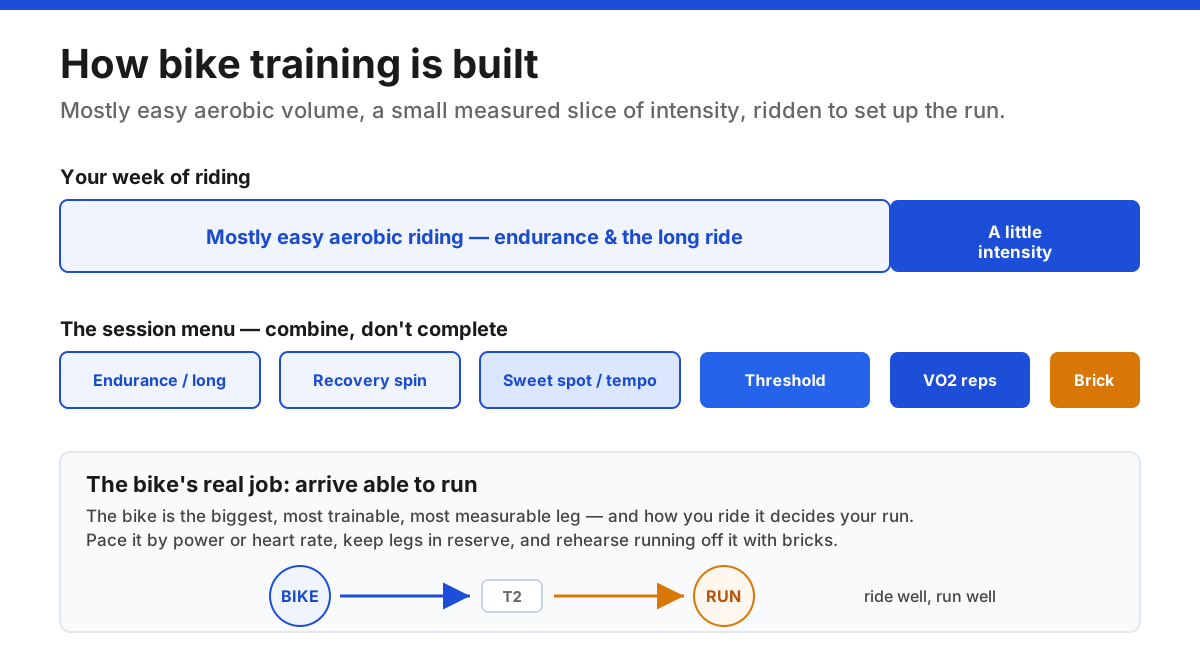
Bike training for triathlon is a design problem, not a pile of hard rides. The bike is the biggest share of your race time, the most trainable discipline, and the one that decides how your run goes — so how you structure it matters more than any single session. Get four things right: ride consistently and mostly easy, add a small amount of measured intensity, build one long ride, and pace it in training so it sets up the run rather than wrecking it. This pillar covers how those pieces fit together and links out to the guides that go deep on power, cadence, indoor training, handling, hills and fuelling.
Key takeaways
- 1The bike is worth the investment: it is the largest slice of race time, the most trainable discipline, and the leg that most determines how your run feels.
- 2Ride consistently and mostly easy — the majority of your cycling should be comfortable aerobic work, with only a small, deliberate share of intensity.
- 3Cycling carries volume more safely than running because it is low-impact, so the real ceiling on ride volume is your time and recovery, not injury.
- 4The bike is the most measurable discipline: training and pacing by power or heart rate beats going on feel, and it is what protects your run.
- 5Each ride type has a job — endurance, sweet-spot, threshold, VO2 intervals, recovery spins and bricks form a menu you combine, not a checklist you complete.
In this article
- 1What bike training for triathlon actually involves
- 2Why the bike is the leg to build
- 3The two levers that matter most: consistent volume and a little intensity
- 4The bike session menu — and what each ride is for
- 5Measure and pace the bike — don't just ride on feel
- 6Bike training is multisport training: ride to set up the run
- 7Indoor and outdoor: two tools, two jobs
- 8How much cycling by race distance
- 9Common bike-training mistakes to avoid
- ⚖The triathlon bike session menu at a glance
- ?Frequently asked questions
What bike training for triathlon actually involves
The bike is the longest leg of every triathlon — commonly around half of your total race time — and the one where good structure pays off most. Yet it is often trained either as junk miles at one steady effort, or as a pile of hard indoor sessions with no easy riding around them. This guide is about the design of your cycling: how much to ride, how hard, what kinds of sessions to include, and how to pace the bike so it makes your run better rather than worse.
It deliberately stays at the level of structure. For the parts that deserve their own deep dive, it points you to dedicated guides rather than repeating them:
- Cadence → triathlon cadence explained
- Training and racing by power → power meters for triathlon, cycling watts explained and the FTP test
- Indoor training → smart bike trainers and indoor cycling workouts
- Bike handling and hills → bike handling skills and hill climbing
- Fuelling on the bike → race fueling and hydration
Think of this page as the map, and those as the detailed routes. Get the design right here and every one of those specifics has something solid to attach to.
Why the bike is the leg to build
Before the how, it is worth being clear on why the bike rewards structured training more than the other two disciplines.
- It is the biggest share of your time. Across every standard distance, the bike is the longest leg — often roughly half the race. A small percentage improvement on the bike returns more clock time than the same percentage on the swim, simply because there is more time to save.
- It is the most trainable. Cycling fitness responds strongly and relatively quickly to consistent, well-structured training, and because it is low-impact you can accumulate the volume needed to drive that adaptation without the injury cost that limits running. For most age-groupers, the bike has the most headroom of the three sports.
- It sets up the run. This is the part beginners miss. How you ride does not just determine your bike split — it determines whether you can run at all. Ride the bike too hard and the run falls apart; ride it well and you run close to your standalone ability. The bike is trained not only to be fast on its own, but to deliver you to T2 with legs that still work.
Those three facts shape everything below: build plenty of aerobic cycling because you safely can, measure it because you can, and always judge a bike session partly by what it does to the run that follows.
The two levers that matter most: consistent volume and a little intensity
If you change only two things about your cycling, change how consistently you ride and how disciplined your intensity is.
Consistent aerobic volume. Cycling fitness is built on a large base of steady, aerobic riding — comfortable efforts you could hold a conversation through. Because the bike is low-impact, you can carry more of this volume than you can running without breaking down, which is exactly why the bike is where endurance is most efficiently built. The constraint is your available time and your ability to recover, not your joints. Three or more rides a week, most of them easy, beats one big weekend ride done in isolation.
A small, deliberate slice of intensity. On top of that base sits a modest amount of hard work — and it should be a minority of your riding, not the point of it. Well-trained endurance athletes spend most of their time at low intensity and only a small, focused share at high intensity, and that distribution is what makes the hard sessions effective. The most common mistake is the opposite: every ride at a moderately hard "grey zone" effort that is too hard to recover from and too easy to drive real adaptation. Keep easy rides genuinely easy so the hard sessions can be genuinely hard.
For how a single session's frequency, duration and intensity fit together in general, see triathlon training basics, and for the physiology of easy aerobic riding, zone 2 training explained.
Measure and pace the bike — don't just ride on feel
The bike is the most measurable discipline in triathlon, and using that is one of the biggest advantages available to an age-grouper. Effort on the bike can be tracked directly through power or heart rate in a way that swimming and running make harder, which means both your training and your race can be paced by numbers rather than by the deceptive feel of fresh legs.
- Power is the most objective measure. A power meter reports the work you are actually doing, unaffected by wind, hills, fatigue or how motivated you feel. Setting zones from a functional threshold power (FTP) test lets you target each session precisely and track fitness over time. If you are new to what the numbers mean, cycling watts explained and power meters for triathlon cover the basics.
- Heart rate is a useful backup. Without a power meter, heart rate still keeps your easy rides honestly easy — though it lags effort and drifts with heat and fatigue, so it is better for controlling steady efforts than for short intervals.
- Cadence is part of pacing, not just fitness. Spinning at a comfortable cadence rather than grinding a big gear tends to shift load off your legs and onto your aerobic system, which helps preserve your legs for the run. The cadence guide covers how to find and change yours sensibly.
The single most valuable use of all this is pacing the bike leg conservatively so you can run. A bike split that feels comfortably controlled almost always produces a better overall race than one ridden to your limit — see race pacing strategy for how to execute that on the day.
Bike training is multisport training: ride to set up the run
A road cyclist can build a week around the bike and judge it by the bike alone. A triathlete cannot — your cycling shares a body with swim and run load, and the bike's real job is to hand you to the run in good shape. That changes the design in a few concrete ways:
- Practise running off the bike when it fits your plan. A brick pairs a ride with a run and gives you a chance to rehearse the transition; it does not guarantee that a particular sensation will disappear. Keep the session appropriate to your experience and recovery. See the brick workouts guide for session context and jelly legs after the bike for what research can and cannot explain.
- Practise restraint, not just power. Some of your key rides should rehearse holding back — riding at realistic race effort and then running well — because racing the bike to your limit is the classic way to ruin the run. Practise the bike-to-run tips in running off the bike.
- Mind what sits next to a hard ride. Separate your two hardest days so a hard bike is not stacked against a hard run; each should be done on relatively fresh legs. An easy spin the day after a long ride is fine; hard intervals often are not.
- Fuel the bike because it fuels the run. The bike is the easiest place to eat and drink, and doing it well is what makes the run possible — but the specifics of how much and what belong to the race fueling and hydration guides, not here.
To see how a whole week of swim, bike and run stacks up — including where the long ride and bricks sit — read the training week examples.
Indoor and outdoor: two tools, two jobs
Indoor and outdoor riding are not rivals; they are different tools, and a good bike-training design uses both for what each does well rather than treating one as a compromise.
Indoor riding is unmatched for structured, measurable work. There is no coasting, no traffic and no weather, so every minute is productive and intervals can be held to precise targets — which makes it ideal for sweet-spot, threshold and VO2 sessions, and for time-limited athletes who need training density. The smart bike trainers guide and indoor cycling workouts cover the equipment and the sessions.
Outdoor riding builds the things a trainer cannot: bike handling, cornering, descending, riding in wind, and the specific durability of holding a position for hours. These are race skills, not just fitness, and they only come from real roads — see bike handling skills and, for climbing, the hill climbing guide.
Most triathletes are best served by using indoor sessions for their controlled quality work and long or skill-building rides outdoors when conditions and time allow. For a fuller comparison of the trade-offs, see indoor vs outdoor training. This pillar's point is simply that the two are complementary: assign each session to the setting that does its job best.
How much cycling by race distance
Exact numbers depend on your background and the time you have, but the shape of a bike-training week scales predictably with race distance. Treat this as a starting frame, not a prescription:
| Race distance | Rides per week | Typical emphasis |
|---|---|---|
| Sprint | 2–3 | Consistency, easy riding, one short brick |
| Olympic | 3 | A weekly long ride plus one or two quality sessions |
| Half (70.3) | 3–4 | Longer long ride; sustained race-power and fuelling |
| Full (140.6) | 3–5 | High aerobic volume; long rides and pacing discipline |
Notice that the number of rides stays modest even at long-course distances — the extra work is mostly more aerobic volume and a longer long ride, not more hard sessions. Because the bike carries volume so much more safely than the run, it is usually the discipline you scale up most as distance increases. For full multi-week plans that put these into a day-by-day schedule, use training plans and, for how the emphasis shifts across a season, triathlon periodization; this guide is about the bike-leg logic those plans rely on.
Common bike-training mistakes to avoid
Most bike-training problems come from a handful of predictable errors:
- Riding everything at the same moderate effort. The classic time-waster — hard enough to tire you, easy enough to leave you unfit. Slow the easy rides down and make the hard ones count.
- All intensity, no base. A stack of hard indoor intervals with no easy aerobic riding around them builds a fragile fitness that fades under race-distance fatigue. The base is not optional.
- Skipping the long ride. Race-day endurance and fuelling tolerance are built on the weekly long ride; without it, the back half of the bike — and the run after it — suffers.
- Never practising restraint. If every ride is ridden to your limit, race day teaches you the hard way what pacing the bike too aggressively does to the run.
- Skipping bricks. If the only time your legs run off the bike is on race day, expect the run to feel far worse than it does in training.
- Neglecting handling and fuelling. Fitness you cannot control through a corner, or cannot fuel across three hours, does not fully show up on the clock.
Fix these and the bike leg improves without any exotic session. Ride consistently, keep most of it easy, build one long ride, measure and pace it, and rehearse running off it — the rest is detail you can add from the linked guides once the foundation is repeatable.
The triathlon bike session menu at a glance
| Session | Purpose | How it feels | How often |
|---|---|---|---|
| Endurance / long ride | Aerobic base & fuelling practice | Conversational, long | 1×/week + easy rides |
| Recovery spin | Active recovery, easy volume | Very easy, light | As needed |
| Sweet spot / tempo | Race power, time-efficient | Comfortably hard | 1×/week |
| Threshold | Raising sustainable power | Hard but controlled | 0–1×/week |
| VO2 / intervals | Top-end fitness | Very hard, in reps | 0–1× (sharpening) |
| Brick | Running off the bike | Heavy legs off the bike | 1×/week |
Sources
Sources are listed so readers can verify consequential claims and dated details.
- The training intensity distribution among well-trained and elite endurance athletes — Frontiers in Physiology (2015) (accessed September 18, 2026)
- Training-load changes and injury: systematic review — International Journal of Sports Physical Therapy (accessed September 18, 2026)
Frequently asked questions
How many times a week should a triathlete cycle?
For most age-groupers, three rides a week is a solid foundation, rising to three to five for half and full-distance training. Sprint athletes can progress on two to three. Because cycling is low-impact, ride volume is limited mainly by your available time and recovery rather than injury risk, so consistency across the week matters more than one big ride. Keep most of those rides easy and reserve one or two for quality work.
Should most of my cycling be easy or hard?
Most of it should be easy. The large majority of your riding should be comfortable aerobic effort, with only a small, deliberate slice of intensity such as sweet-spot or threshold work. This mirrors how endurance athletes train and is what makes the hard sessions effective. Riding everything at a moderate 'grey zone' effort is the most common way to end up tired but not fitter.
Do I need a power meter to train on the bike?
No, but it is one of the most useful tools available because the bike is the most measurable discipline. A power meter reports the work you are actually doing regardless of wind, hills or fatigue, which lets you pace both training and racing precisely. Without one, heart rate is a workable backup for keeping easy rides easy and steady efforts controlled, though it lags effort and drifts with heat and fatigue.
Is indoor cycling as good as riding outside?
They do different jobs. Indoor riding is unmatched for structured, measurable interval work and time efficiency, since there is no coasting or traffic. Outdoor riding builds bike handling, cornering, descending and the durability of holding a position for hours — race skills a trainer cannot teach. Most triathletes are best served using indoor sessions for quality work and outdoor rides for long and skill-building sessions.
Why does riding too hard ruin my run?
The bike and run share the same legs and energy systems, so effort spent beyond your sustainable level on the bike is effectively borrowed from the run. Riding the bike leg to your limit leaves you with depleted fuel and fatigued legs at T2, which is why an over-hard bike split so often produces a walk-run finish. Pacing the bike conservatively — ideally by power or heart rate — is what lets you run close to your standalone ability.