Run Training for Triathletes: How to Build the Run Leg
The design of triathlon run training — how often to run, the easy-to-hard mix, the run session menu, building durability, and fitting running around the swim and bike.
By Lotte
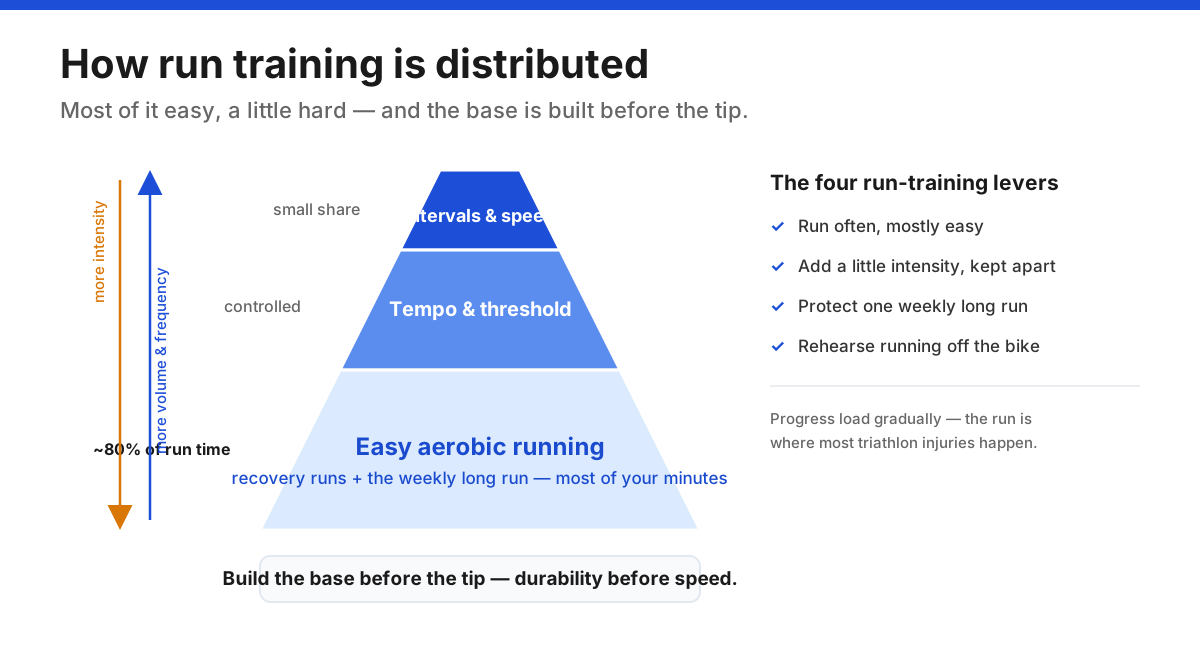
Run training for triathlon is a design problem, not a collection of workouts. Get four things right — run often and mostly easy, add a small amount of intensity, protect one weekly long run, and rehearse running off the bike — and progress the load gradually because the run is where most triathletes get hurt. This pillar covers how those pieces fit together and links out to the guides that go deep on technique, injuries, running off the bike, pacing and the long run.
Key takeaways
- 1Run training is mostly easy: the large majority of your running should be comfortable, aerobic effort, with only a small, deliberate slice of hard work.
- 2Frequency beats heroics — three to five shorter runs a week build the run leg better than one or two long, hard ones.
- 3Build durability before speed. The run is the highest-injury discipline, so gradual, consistent load matters more than any single session.
- 4Each run type has a job: easy runs, the long run, tempo/threshold and intervals form a menu you combine, not a checklist you complete.
- 5The triathlon run is run on tired legs, so brick sessions and smart placement around the bike are part of run training, not extras.
In this article
- 1What run training for triathlon actually involves
- 2The two levers that matter most: frequency and easy volume
- 3The run session menu — and what each session is for
- 4Build durability before you build speed
- 5Running economy: improve it, don't just chase a number
- 6Run training is multisport training: fit it around the swim and bike
- 7How much running by race distance
- 8Common run-training mistakes to avoid
- ⚖The triathlon run session menu at a glance
- ?Frequently asked questions
What run training for triathlon actually involves
The triathlon run is the discipline that decides most races and the one athletes most often train by feel — a few runs squeezed in whenever the swim and bike leave room. This guide is about the design of your running: how often to run, how hard, what kinds of sessions to include and how to build them up safely, so the run leg becomes a strength rather than the place your race unravels.
It deliberately stays at the level of structure. For the parts that deserve their own deep dive, it points you to dedicated guides rather than repeating them:
- Technique and cadence → triathlon running form and run cadence explained
- Running off the bike → brick workouts and brick-run technique
- Injuries → common running injuries and prevention
- Pacing on race day → race pacing strategy
- Shoes → running shoes for triathlon
Think of this page as the map, and those as the detailed routes. If you get the design right here, every one of those specifics has something solid to attach to.
The two levers that matter most: frequency and easy volume
If you change only two things about your running, change how often you run and how easy most of it is.
Run frequency. Running fitness and, crucially, running durability respond to how regularly you run more than to the length of any single session. Three to five runs a week — even short ones — expose your tissues to running load often enough to adapt, while keeping each individual dose small. Two long, hard runs a week deliver the same volume with far more impact per session and far less consistency, which is a recipe for the soreness-injury cycle. Frequency, kept easy, is how you accumulate running without accumulating damage.
Easy volume. The large majority of your running should be genuinely easy — a conversational effort you could sustain and recover from. Well-trained endurance athletes spend most of their training time at low intensity and only a small, deliberate share at high intensity, and that distribution is what makes the hard sessions effective when they come. The pyramid at the top of this page shows the shape: a wide base of easy aerobic running, a controlled band of tempo and threshold work, and a small tip of speed.
The most common self-sabotage in run training is letting the easy runs drift into "moderately hard." That grey-zone running is tiring enough to compromise recovery but not focused enough to drive adaptation. Keep easy easy, so that hard can be hard. For how a single session's frequency, duration and intensity fit together in general, see triathlon training basics.
Build durability before you build speed
Running is the highest-injury discipline in triathlon because it is the only one with repeated impact, and impact load is what tissues need time to tolerate. That single fact should shape how you progress.
- Ramp gradually. Increase your total running load in small steps, not leaps. Large, sudden jumps in training load are associated with higher injury risk, so a modest, boring progression beats an ambitious one you cannot repeat.
- Progress one thing at a time. Add frequency, then duration, then intensity — not all at once. If you introduce interval work, hold your easy volume steady that week rather than raising both.
- Consistency is the real training effect. Ten uninterrupted weeks of moderate running build a more durable runner than four big weeks followed by six weeks nursing a niggle. The goal is a load you can repeat.
- Respect early warnings. Niggles that sharpen, change your gait, or persist beyond a few days are signals to back off, not to push through.
Strength work for the hips, glutes and calves supports this durability and is covered in strength training for triathlon running. For the specific injuries triathletes run into, their early signs and how to prevent them, see common running injuries. This pillar's job is the load design around those; theirs is the detail.
Running economy: improve it, don't just chase a number
Running economy is how much energy you burn to hold a given pace — the running equivalent of fuel efficiency. Two athletes with the same aerobic engine can run very different times if one is more economical, which is why it is worth training rather than ignoring.
The reassuring part is that the things that improve economy are mostly things you are already doing for other reasons: a large base of easy running, occasional faster running and strides, appropriate strength work, and letting cadence settle rather than overstriding. You do not need to obsess over a single metric or copy an elite's form.
Because form and cadence deserve their own treatment, this guide does not drill into mechanics — read triathlon running form for posture, foot strike and drills, and run cadence explained for the numbers and how to change them sensibly. Shoes also play a role in economy and comfort; the running shoes guide covers what to look for without chasing marketing claims. Train economy through the training itself, and treat any single number as feedback, not a target.
Run training is multisport training: fit it around the swim and bike
Standalone runners can build a week around running. Triathletes cannot — your run training shares a body with swim and bike load, and the run itself happens last, on legs that are already tired. That changes the design in a few concrete ways:
- Practise running off the bike if your plan calls for it. A short run after a ride can help rehearse the transition, but individual sensations vary and bricks are not a guaranteed fix. Follow a progression that fits your experience and recovery. See the brick workouts guide.
- Mind what sits next to a hard run. Do not stack a hard run beside a hard bike session; separate your two hardest days so each is done on relatively fresh legs. An easy run the day after a long ride is fine; a threshold run is often not.
- Protect recovery. Because impact is cumulative, a run on already-fatigued legs carries more injury risk than the same run when fresh. Place your key run session where you have the least residual fatigue from cycling.
To see how a whole week of swim, bike and run actually stacks up — including where the runs and bricks sit — read the training week examples, and for arranging sessions around your real availability, how to structure a training week.
How much running by race distance
Exact numbers depend on your background and how your body tolerates impact, but the shape of a run-training week scales predictably with race distance. Treat this as a starting frame, not a prescription:
| Race distance | Runs per week | Typical emphasis |
|---|---|---|
| Sprint | 2–3 | Consistency, easy running, one short brick |
| Olympic | 3–4 | Add a weekly long run and one quality session |
| Half (70.3) | 3–4 | Longer long run; run durability becomes the limiter |
| Full (140.6) | 3–5 | High easy volume; run economy and durability under fatigue |
Notice that even at long-course distances the number of runs stays modest and most of them are easy — the extra work is mostly more easy volume and a longer long run, not more hard sessions. For full multi-week plans that put these into a day-by-day schedule, use training plans; this guide is about the run-leg logic those plans rely on.
Common run-training mistakes to avoid
Most run-training problems come from a handful of predictable errors:
- Running everything at the same medium-hard pace. The single most common mistake — it leaves you tired without being fit. Slow the easy runs down.
- Chasing mileage instead of consistency. A big week followed by an injury sets you back further than a series of modest, repeatable ones ever would.
- Ramping load too fast after a break. Fitness returns faster than tissue tolerance; start back conservatively even when your lungs feel ready.
- Skipping bricks. If the only time your legs meet "running off the bike" is on race day, expect the run leg to feel far worse than in training.
- Neglecting easy-day discipline. Turning recovery runs into moderate efforts quietly removes the recovery that makes hard days possible.
- Running through sharpening pain. Discomfort that changes your gait or worsens is a stop signal; a few days off is cheaper than months out.
Fix these and the run leg improves without any exotic session. Run often, keep most of it easy, protect one long run, rehearse running off the bike, and build the whole thing up gradually — the rest is detail you can add from the linked guides once the foundation is repeatable.
The triathlon run session menu at a glance
| Session | Purpose | How it feels | How often |
|---|---|---|---|
| Easy / recovery run | Aerobic base & durability | Conversational | Most runs |
| Long run | Endurance, fatigue resistance | Easy but long | 1×/week |
| Tempo / threshold | Sustainable speed | Comfortably hard | 0–1×/week |
| Intervals / speed | Top-end fitness & economy | Hard, in reps | 0–1×/week |
| Brick run | Running off the bike | Heavy legs, then settles | 1×/week |
| Strides | Turnover & economy | Fast but relaxed | 1–2×/week |
Sources
Sources are listed so readers can verify consequential claims and dated details.
- The training intensity distribution among well-trained and elite endurance athletes — Frontiers in Physiology (2015) (accessed September 18, 2026)
- Training-load changes and injury: systematic review — International Journal of Sports Physical Therapy (accessed September 18, 2026)
- A systematic review of running-related musculoskeletal injuries in runners — Journal of Sport and Health Science (2021) (accessed September 18, 2026)
Frequently asked questions
How many times a week should a triathlete run?
For most age-groupers, three to five runs a week works better than one or two, because running fitness and durability respond to frequency more than to the length of any single run. Sprint athletes may run two to three times, while Olympic, half and full-distance athletes typically run three to five. Keep most of those runs easy — frequency is only safe if the individual sessions stay comfortable.
Is triathlon run training different from training for a standalone running race?
Yes, in two important ways. First, your run training shares recovery with swimming and cycling, so total running volume is usually lower than a dedicated runner's and must be placed around your hard bike days. Second, the triathlon run happens on already-fatigued legs off the bike, so brick sessions that rehearse running off the bike are part of the plan rather than an optional extra.
Should most of my running really be easy?
Yes. The large majority of your running should be easy, conversational effort, with only a small, deliberate amount of hard work. This is how endurance athletes train, and it is what makes the occasional hard session effective. Letting easy runs drift into a moderate-hard 'grey zone' is the most common way to end up tired but not fitter.
Do I need a weekly long run?
For Olympic distance and longer, yes — a weekly long run builds the endurance and fatigue resistance the run leg demands, and it is the run session to protect first when time is short. For sprint distance it is less critical, and consistent shorter runs plus a short brick matter more. Build the long run's duration gradually rather than jumping it up.
How do I avoid getting injured from running?
Progress your running load gradually, change only one variable at a time, keep most running easy, and prioritise consistency over big weeks, because sudden jumps in load are linked to higher injury risk. Add hip, glute and calf strength work, and treat sharpening or gait-altering pain as a stop signal rather than something to push through. See the linked running-injury guide for specifics.