Triathlon Race Fueling: Build and Rehearse Your Plan
Build a race-fueling plan from duration, conditions and personal tolerance. Practise carbohydrate, fluids, aid stations and a flexible fallback.
By Lotte
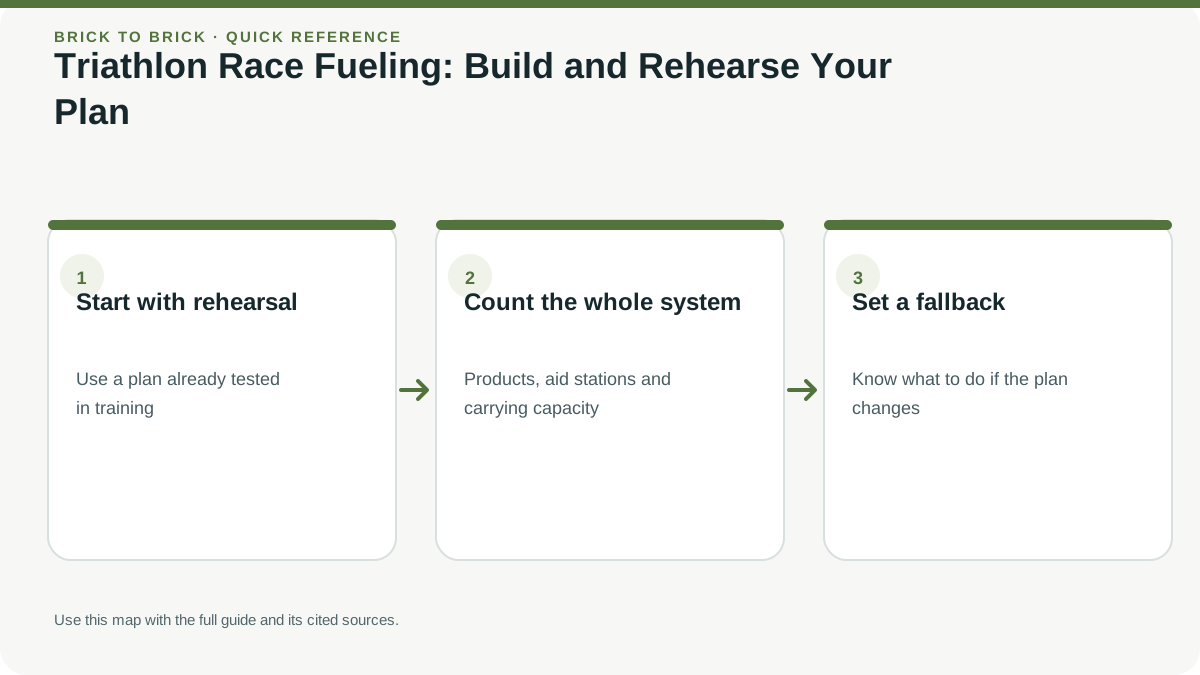
Build race fueling from expected duration, conditions, product tolerance and practical access. Count food and drinks together, rehearse the plan and keep a flexible response for missed supplies or symptoms.
Key takeaways
- 1No carbohydrate, fluid or sodium target is safe and appropriate for every athlete.
- 2Check serving sizes and product instructions; practise one change at a time.
- 3Seek individualized advice for medical conditions, medication or recurring symptoms.
In this article
- 1Start with time on course, not the race label
- 2Turn a chosen target into a packing calculation
- 3Map supplies onto the actual course
- 4Give the run its own plan
- 5Rehearse the complete system
- 6Write a fallback and a stop rule
- 7Audit one race-hour before multiplying the whole plan
- 8Fueling needs depend on event duration, intensity and the person
- 9Plan pre-race food around routine and tolerance
- 10Count drinks, gels and food in one carbohydrate plan
- 11Hydrate to conditions without overdrinking
- 12Treat sodium and supplements as individual decisions
- 13Plan for heat, stomach symptoms and missed supplies
- 14Rehearse the plan and keep the result in perspective
- 15Practise the plan under race-like conditions without forcing it
- 16Plan for conditions and individual medical needs
- 17Use a label-based example without turning it into a prescription
- ?Frequently asked questions
Start with time on course, not the race label
Event distance alone does not determine a safe fueling prescription. Needs depend on duration, intensity, conditions, prior training, health and tolerance. Use published sports-nutrition ranges as context, not a mandatory intake for every athlete. Practise a gradual plan and seek a qualified sports dietitian for individual needs or medical risks.
Turn a chosen target into a packing calculation
Suppose an athlete has already rehearsed 60 g of carbohydrate per bike hour and expects a three-hour bike leg. The planning total is 60 × 3 = 180 g. If two bottles each provide 45 g, they supply 90 g. Three gels labelled 30 g each provide the remaining 90 g. This is an arithmetic illustration, not a prescription for your race.
Check serving size carefully: one packet may contain two servings, and the scoop measurement on a drink mix may assume a different bottle volume. Count what you will consume, not everything packed. A reserve gel carried for a dropped bottle is not automatically extra fuel to eat.
Divide the load into accessible portions. Mark bottles if you need to distinguish carbohydrate drink from plain water. Keep wrappers until a permitted disposal point.
Map supplies onto the actual course
Draw a simple timeline with the start of the bike, each aid station, transition and the run stations. Add the distance between stations and the approximate time you expect that distance to take. A station every 20 km is not the same as a station every 30 minutes.
Find out which products and flavours the organiser intends to supply, their serving sizes, and whether personal-needs bags are available. Do not assume every station has the same drink concentration or that volunteers can supply an exact volume. Build a plan that still functions if one collection fails.
Practise opening packaging and reaching bottles somewhere safe. Slow or stop to eat when handling, traffic or conditions make riding one-handed unsafe.
Give the run its own plan
Do not treat the bike as a chance to bank all the food or fluid for the run. The run has different access, carrying capacity and comfort constraints. Decide what leaves transition with you and what depends on the course.
A runner using aid-station cups needs a realistic collection strategy: walking through a station may make it easier to identify and drink the intended product. If cups are partly full, do not count every cup as a bottle-equivalent serving. Record a workable range rather than false precision.
The race nutrition calculator helps organise the quantities, but its output still needs a label check and a training rehearsal.
Rehearse the complete system
Choose a familiar long session with an easy route home. Record the food, timing, fluid, effort, conditions and symptoms. Change one variable at the next rehearsal so you can identify a useful adjustment. Tolerating a drink on an easy indoor ride does not establish tolerance during a hot race followed by running.
Include the breakfast-to-start gap, the swim period without normal access to food, and the practical transition to riding. You need not simulate an entire long-course race to test a bottle arrangement or a small run portion.
Keep products that work even if a different brand is fashionable. There is no advantage in a theoretically precise plan you cannot stomach or execute.
Write a fallback and a stop rule
If a gel drops, use the reserve or a rehearsed alternative. If you miss a station, adapt the plan at the next safe opportunity; do not gulp several missed portions at once. If mild stomach discomfort develops, reduce effort and reassess what you have consumed instead of adding more concentrated fuel automatically.
Repeated vomiting, confusion, collapse, severe headache or inability to keep fluid down needs medical assessment. These symptoms cannot safely be diagnosed as a simple fueling mistake from a website. Sodium does not make overdrinking safe.
For recurrent gut symptoms, diabetes, relevant medication or a complex long-course plan, work with a qualified sports dietitian or clinician. The useful final output is a short, rehearsed instruction card, not a promise that nutrition can prevent every difficult race.
Audit one race-hour before multiplying the whole plan
A packing plan can look correct while its delivery schedule fails. Use a single hour as a rehearsal unit:
| Item consumed during the example hour | Label carbohydrate | Running total |
|---|---|---|
| Half of a bottle containing 45 g | 22.5 g | 22.5 g |
| One gel containing 30 g | 30 g | 52.5 g |
| Remaining planned drink portion containing 7.5 g | 7.5 g | 60 g |
This checks the arithmetic for an athlete who already tolerates that intake; it does not establish an appropriate target. The drink volume still needs a separate hydration assessment. More carbohydrate powder in the same bottle changes its concentration, while drinking additional bottles changes fluid intake as well as carbohydrate.
Now check the physical sequence. Can you identify the right bottle, access the gel and dispose of its wrapper legally? What happens if a bottle still contains more than expected at the next refill? Count the remainder before mixing or replacing it. Rehearsing these ordinary actions often reveals a larger planning gap than choosing between two similar gel brands.
Fueling needs depend on event duration, intensity and the person
Race fueling is not one fixed hourly number. Needs depend on how long the athlete will exercise, intensity, body size, previous practice, available food, temperature, gastrointestinal tolerance and medical context. Published sports-nutrition guidance offers ranges for carbohydrate intake in longer exercise, but the higher end is not a universal target and should not be copied without training.
Short events may require little or no carbohydrate during the race for some athletes, while longer events usually make planned carbohydrate more relevant. A full-distance race requires a different logistics plan from a sprint. The athlete should test a practical approach in training and adjust gradually.
If you have diabetes, gastrointestinal disease, an eating-disorder history, food allergy, pregnancy, medication interactions or another medical condition, work with a clinician or sports dietitian. This guide explains planning decisions and does not prescribe treatment or an individual diet.
Plan pre-race food around routine and tolerance
A pre-race meal should be familiar, accessible and timed around the event’s schedule. Athletes often choose food they have tolerated before training, but the amount and composition vary. Travel, early start times, nerves, medications and personal dietary needs can change what works.
Test breakfast timing during a relevant training day. Keep the meal and fluids manageable rather than trying a new large serving on race morning. If the swim starts early, identify when and where you can eat without disrupting sleep or check-in. Follow food-safety practices when carrying meals during travel.
Do not assume everyone needs a particular number of grams per kilogram or a meal exactly three hours before the start. Use a routine that you can repeat and that does not cause discomfort. For a medical nutrition plan, get individualized professional guidance.
Count drinks, gels and food in one carbohydrate plan
Carbohydrate can come from sports drink, gels, chews, bars and ordinary food. Read labels and add all sources together. Check packet size, serving size and whether a bottle is mixed at the instructed concentration. A “bottle per hour” plan can change if the bottle size or product recipe differs.
Spread planned portions through the session when that is comfortable. If you miss an item, do not try to make up the full gap at once. Consider where you can safely reach food and whether the product requires water. Keep bike handling and attention on the course; take food before a technical section or stop where required.
For long-course racing, practice the same product combination and timing at an effort similar to the race. Change one variable at a time so you can interpret stomach comfort. The real food versus gels guide compares packaging, storage and texture choices.
Hydrate to conditions without overdrinking
Fluid needs vary with sweat rate, weather, pace, body size, acclimatization and access to aid stations. A fixed volume for every athlete can leave one person underhydrated and another overdrinking. Estimate your pattern during training in similar conditions and use thirst, comfort and race logistics as part of the decision.
Do not force large amounts of water to meet a schedule. Excessive intake during prolonged exercise can contribute to exercise-associated hyponatremia, a serious condition. Sports drinks do not remove that risk if total fluid intake is excessive. If you develop confusion, severe headache, repeated vomiting, seizure or collapse, seek urgent medical help.
Use a sweat-rate estimate as one planning input, not a prescription. Heat, humidity and race duration can change the plan; follow medical advice for conditions affecting fluid or electrolyte balance. For more, see hydration, the sweat-rate guide and aid-station strategy.
Treat sodium and supplements as individual decisions
Sodium intake depends on food, drink, sweat losses, conditions, event duration and health. Salt tablets or concentrated electrolyte products are not automatically needed and can cause problems if used without a plan. A product label does not establish that its amount is right for an individual.
Avoid using supplements to compensate for an unsafe pacing or hydration plan. Check ingredient labels, third-party quality testing and anti-doping rules. Supplements can interact with medications or contain undeclared substances. A sports dietitian or clinician can assess whether a product is appropriate.
Do not use generalized sodium targets as a treatment for cramping, dizziness or suspected heat illness. Stop, seek race medical support and follow their assessment. Symptoms during an event can have multiple causes and are not safely diagnosed by an online electrolyte calculator.
Plan for heat, stomach symptoms and missed supplies
Heat can increase perceived effort and make food less appealing. Rehearse your plan in warm conditions only when it is safe to do so, and do not deliberately expose yourself to dangerous heat. If the event is hotter than expected, consider reducing pace and using cooling resources provided by the organizer. Follow local heat guidance and seek help for confusion, fainting or severe symptoms.
If nausea appears, ease effort and avoid forcing a large dose. Use a familiar, safe option at the next appropriate opportunity and ask medical staff if symptoms persist or worsen. Do not take medication from another athlete or assume the problem is simply a lack of sodium.
Prepare a fallback for a dropped bottle, empty gel or closed station. Know what the event provides and where it is available. A fallback should be something you have already tolerated. If your only plan depends on one product or perfect station timing, simplify the setup before race day.
Rehearse the plan and keep the result in perspective
Practice the plan in training, record the food and drink, timing, effort, conditions and symptoms, and change one feature at a time. Rehearsal can show whether packaging is manageable and whether a particular schedule feels comfortable; it cannot guarantee that race day will feel the same.
After the event, review what happened without equating the result with personal discipline. Heat, pace, course changes, illness, travel and product availability can all matter. If gastrointestinal symptoms recur, consult a sports dietitian or clinician rather than repeatedly changing products at random.
Race fueling supports an overall plan; it cannot guarantee a finish or replace pacing, course knowledge, sleep and medical care. For race-week meals, use race-week nutrition, for full-course choices see real food versus gels, and for weather-specific aid use the aid-station guide.
Practise the plan under race-like conditions without forcing it
A fueling rehearsal is most useful when it resembles the event in duration, effort, equipment and weather, but training does not need to duplicate race day exactly. Start with familiar foods and products. Confirm serving sizes, labels, packaging and water needs. If you plan to use aid-station products, check the current event guide and practise those exact items if available. Do not assume a course will stock the same flavor, brand or formulation as a previous year.
Change one factor at a time. If you alter drink concentration, add a gel and increase effort in the same session, discomfort will be hard to interpret. Record the time, product, amount, fluid, conditions and symptoms in a way that supports learning without creating unnecessary food anxiety. People with a history of disordered eating may wish to work with a professional and avoid detailed tracking.
Do not force an intake target when nausea, severe bloating, vomiting, confusion or other concerning symptoms occur. Reduce effort and seek medical support if symptoms are severe or worsening. A plan is a guide, not an obligation to continue consuming food regardless of how the athlete feels. People with diabetes, gastrointestinal disease, kidney or heart conditions, allergies or medication considerations need individualized advice before using generic sports-nutrition guidance.
A useful rehearsal also tests handling. Can you open a packet without losing control of the bike? Does the bottle stay secure? Can you carry food without chafing? Does the run belt bounce? Practise at a safe location and follow course rules for litter. Keep the plan simple enough to remember when tired. For detailed food choices, compare the real food and gels guide, hydration guide and aid-station strategy.
Plan for conditions and individual medical needs
Heat changes perceived effort and can affect fluid needs, but there is no universal drinking volume or sodium dose that is safe for every athlete. Avoid both deliberate dehydration and forced drinking beyond thirst or a carefully developed plan. Follow event medical guidance, acclimatize when feasible and reduce effort in heat. Confusion, collapse, severe weakness, repeated vomiting or altered behavior call for urgent medical assessment.
Sweat rate can be estimated during training by comparing body mass before and after a representative session while accounting for fluid consumed and urine passed. This is only an estimate for those conditions; rates vary with temperature, pace, clothing and acclimatization. Do not use a single test to prescribe every race. A sports dietitian or clinician can help interpret the data, especially for athletes with health conditions or extreme sweat losses.
Sodium and electrolyte products are not automatically needed in every event, and more is not always safer. Read labels, count what is already in drinks and food, and avoid supplementing beyond a plan developed for the individual. High-dose products can cause problems or interact with medication. Athletes with kidney, heart or blood-pressure conditions should consult a clinician before changing sodium or fluid intake.
Write a fallback for a missed bottle, lost gel or unavailable product. Slow down, use the next safe opportunity and follow event support instructions; do not take multiple concentrated servings at once to make up for a missed amount. A plan should be flexible enough to handle ordinary variation and clear about when to stop. No fueling strategy can guarantee performance or prevent every gastrointestinal issue.
Use a label-based example without turning it into a prescription
Suppose an athlete and their sports dietitian choose a practice target of 50 grams of carbohydrate for a particular training hour. A bottle label lists 28 grams and a gel lists 22 grams, so together they provide 50 grams. If the athlete also eats a bar, its carbohydrate must be counted too; the total is no longer 50 grams. This arithmetic example does not recommend 50 grams per hour for every person or every event.
Read the serving size carefully. Some drink labels describe a prepared bottle, while others show values per scoop or per 100 millilitres. A packet may contain more than one serving. Check the amount of water needed and whether the product is concentrated. Do not assume that two products with similar names have the same carbohydrate, sodium or caffeine.
Practice timing as well as totals. Divide portions across the session in a way the athlete can remember and handle. A missed serving is not a reason to consume several items together. If a product requires water, plan where that water comes from and how it will be carried. Race aid stations may offer different containers, so rehearse opening, carrying and disposing of packaging legally.
If tracking grams becomes stressful or conflicts with medical advice, simplify the plan with a qualified professional. The goal is adequate, tolerable support for the event, not perfect arithmetic. Individual needs and safety take precedence over a sample calculation.
Sources
Sources are listed so readers can verify consequential claims and dated details.
- Sports drinks: how and when to use them — Australian Institute of Sport (accessed September 13, 2026)
- AIS sports gels guidance — Australian Institute of Sport (accessed September 24, 2026)
- Exercise-Associated Hyponatremia: 2019 clinical practice guideline — Wilderness Medical Society (accessed September 13, 2026)
- Nutrition and Athletic Performance position paper — AND, Dietitians of Canada and ACSM (accessed September 24, 2026)
- IOC consensus on sport in extreme heat — International Olympic Committee (accessed September 24, 2026)
Frequently asked questions
How many grams of carbohydrate should I take per hour?
Needs vary with duration, intensity, training, conditions, health and tolerance. Use published ranges as context and develop an individualized plan with qualified support when needed.
How much should I drink during a triathlon?
There is no single fluid volume for everyone. Use a practiced plan that fits conditions and health, and avoid forced overdrinking.