Triathlon Hydration: Sweat Testing and a Safer Fluid Plan
Estimate sweat losses, interpret thirst and rehearse fluid access without treating sweat rate or sodium supplements as mandatory replacement targets.
By Lotte
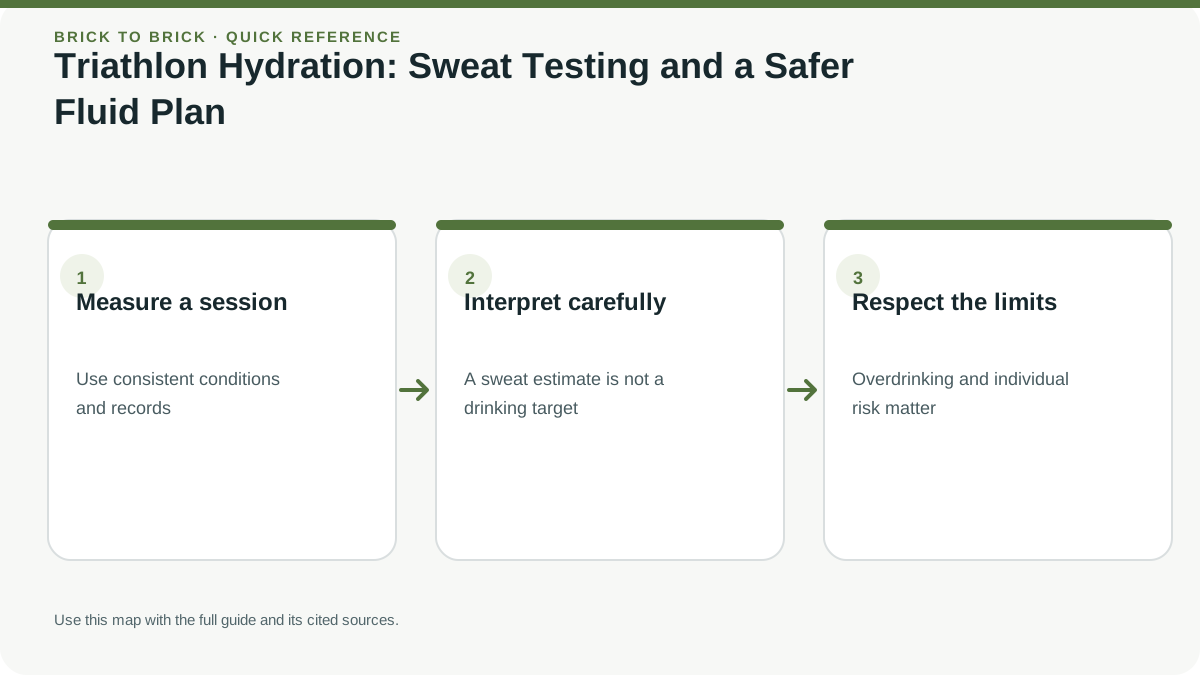
Triathlon hydration means managing fluid access and drinking without forcing intake beyond your needs. Sweat testing can inform a plan, but it does not tell you to replace every millilitre or prescribe a sodium dose.
In this article
- 1Separate the three hydration questions
- 2Measure a representative session without withholding drinks
- 3Worked example: what the number does and does not say
- 4Use thirst and practical access together
- 5Sodium belongs in the whole food-and-fluid picture
- 6Recognise when planning must give way to help
- 7Keep a sweat-test record you can compare
- 8Plan drink access before deciding what to carry
- 9Treat thirst as useful information, not a failure
- 10Plan for heat by adapting the session and expectations
- 11Cold weather can change the plan too
- 12Keep fluid decisions distinct across the three sports
- 13Understand what a post-session weigh-in can tell you
- 14Rehydrate after exercise without chasing a perfect number
- 15Sodium is not a fluid-rate calculator
- 16Check whether race products agree with your stomach
- 17Protect athletes with medical or medication needs
- 18Use a simple race-day record after the event
- ?Frequently asked questions
Separate the three hydration questions
Ask how much fluid you are likely to lose, how you will obtain drinks, and how you will decide whether to drink. They are related but different questions. A bottle cage solves access; it does not establish a physiological requirement. A high sweat estimate also does not mean your stomach will comfortably tolerate the same volume each hour.
The National Athletic Trainers’ Association guidance supports individual fluid planning. The Wilderness Medical Society guideline identifies excessive drinking as an important cause of exercise-associated hyponatremia, a potentially dangerous reduction in blood sodium. Sports drink and salt capsules do not remove that risk.
Avoid a universal fluid or sodium table based only on race distance. Body size, pace, weather, acclimatisation, food and health history all change the context.
Measure a representative session without withholding drinks
Use a familiar session with normal access to fluid. Weigh yourself before and after in comparable dry, minimal clothing, towel off after exercise, measure drinks consumed, and record any urine passed. Wet clothes and an imprecise scale can substantially distort the result.
Approximate sweat loss in litres = pre-session mass in kg − post-session mass in kg + fluid consumed in litres − urine passed in litres. Divide by session hours to estimate litres per hour. This treats 1 kg of mass change as roughly 1 litre and omits other mass exchanges, so it is a field estimate.
Do not deliberately avoid drinking to simplify the calculation. Repeat under comparable conditions before relying on an unusual result.
Worked example: what the number does and does not say
An athlete starts at 70.0 kg and finishes at 69.6 kg after 90 minutes, drinks 0.5 litres and passes no urine. Estimated sweat loss is 0.4 + 0.5 = 0.9 litres. Over 1.5 hours, estimated sweat rate is 0.6 litres per hour.
That describes this session. It is not an instruction to drink 0.6 litres every hour in every race, nor does it measure sweat sodium concentration. A windy outdoor ride and a still indoor session may produce different results even at similar power.
Record the test date, temperature, duration, effort, clothing and measurement method alongside the result. A log of repeatable observations is more useful than one number presented to two decimal places.
Use thirst and practical access together
For many recreational sessions, responding to thirst with ready access to drinks is a reasonable starting approach. Long-course athletes may need a rehearsed access plan because drinks are not always available when wanted. A reminder can prompt a check; it should not compel you to empty a bottle regardless of thirst, comfort or conditions.
Plan where bottles can be refilled, what is in each bottle, and which sections prevent safe drinking. Carrying enough for a gap is different from consuming everything before the next station.
If your expected pace changes, recalculate the time between stations. Do not simply double intake because the forecast is warmer. Heat also changes the pace you can safely sustain.
Sodium belongs in the whole food-and-fluid picture
Count sodium already present in drinks, gels and meals before adding supplements. White salt marks on clothing do not quantify a replacement requirement. A field sweat-rate calculation cannot reveal sodium concentration either.
A professional assessment can be useful for recurrent problems, unusually demanding events or medical conditions. It should consider the complete plan rather than prescribe capsules solely from a photograph of salty kit.
Keep carbohydrate and fluid decisions separate enough to adjust one without unintentionally escalating the other. If your drink supplies most of your fuel, think through what happens when conditions reduce how much you want to drink. The race-fueling guide covers that calculation.
Recognise when planning must give way to help
Confusion, collapse, seizure, severe headache or repeated vomiting during or after endurance exercise needs urgent medical assessment. Heat illness, hyponatremia and other problems can overlap in presentation. Do not diagnose the cause from thirst, sweatiness or a watch reading, and do not force drinks into someone who is confused or unable to swallow safely.
Kidney or heart conditions, fluid restrictions and medications affecting fluid balance warrant individual clinical advice before using an endurance hydration plan. Start from those instructions rather than a generic calculator.
For your next training session, make a small observation sheet and check drink access. Use the hydration calculator as a planning aid, with the limits above visible beside the output.
Keep a sweat-test record you can compare
Use the same scale and a consistent weighing routine for repeat observations. Record the duration in hours, drinks in litres, any urine volume measured, clothing conditions and whether rain or retained water could affect the result. A wet kit can conceal mass loss; a scale on uneven ground can create an apparent change that has nothing to do with sweat.
| Record | Why it belongs in the log |
|---|---|
| Indoor or outdoor, temperature and airflow | Conditions change the meaning of the estimate |
| Session duration and effort | An easy hour does not represent every race hour |
| Pre/post mass and fluid consumed | These are inputs to the calculation |
| Thirst, comfort and practical access | A numerical estimate alone cannot choose a workable plan |
Compare several representative observations rather than reporting one result as a personal constant. Do not deliberately avoid drinking to make the test easier. The purpose is to understand context and access requirements, not to prove that every millilitre of estimated loss must be replaced during exercise.
Plan drink access before deciding what to carry
A fluid plan must work with the course, equipment and rules. Mark where aid stations are located, which side of the course they use, what cups or bottles they provide and whether you may bring your own bottle. Check if the bike segment allows the storage you have practised and how you will carry a drink on the run. A theoretically suitable drink is not useful if you cannot reach it safely.
Practise taking a bottle, opening a cap or collecting a cup without looking away from traffic or tripping. Do not make a new bottle mount or hydration vest part of race morning. If a station is missed, avoid panicking and gulping a large volume at the next one. Continue with the rehearsed approach and follow event medical guidance if you become unwell.
Treat thirst as useful information, not a failure
Thirst is one input into drinking decisions. It varies with the athlete, conditions, food, pace and access to water, but the alternative should not be forcing fluid to satisfy a calculator. Sports-medicine guidance warns that drinking more than needed can contribute to exercise-associated hyponatraemia. A scale estimate or watch alert should not override signs that you are drinking excessively.
If you have a clinician-directed fluid plan, follow that individualized advice. Otherwise, build familiarity with drinking when thirsty and use conditions and access as context. Do not try to prevent every possible loss by finishing each bottle on a timer. A long event can involve both inadequate intake and overdrinking; one athlete's needs do not create a prescription for the person beside them.
Plan for heat by adapting the session and expectations
Hot and humid conditions can increase thermal strain and make a familiar pace feel harder. A hydration plan does not replace acclimatization, pacing adjustments, shade, cooling opportunities or following event heat policies. Consider the forecast and local wet-bulb or heat guidance when available, and use the organizer's current safety decisions. Training through dangerous conditions to collect a sweat number is not necessary.
When the weather is hotter than your preparation, reduce effort or shorten the session where appropriate. Carrying more fluid may not make the effort safe, and adding salt does not neutralize heat illness. If you develop confusion, collapse, severe weakness or other concerning symptoms, stop and seek urgent help. Heat illness and hyponatraemia can overlap in their signs; a web article cannot distinguish them clinically.
Cold weather can change the plan too
Cool air can reduce the feeling of thirst even while you continue to lose fluid through breathing and sweat. Heavy clothing and hard efforts can also raise sweat losses. The answer is not to copy a hot-race bottle schedule. Consider session length, clothing, drink access and how your body responds in those conditions.
Cold water adds another concern: swimming ability and breathing can be affected by cold-water immersion. Follow venue and event advice, enter gradually when appropriate and do not confuse hydration with acclimatization. If the water or weather is outside the event's safe limits, obey officials and local authorities. A bottle plan cannot make an unsafe swim or ride safe.
Keep fluid decisions distinct across the three sports
Swimming limits access to fluid and may involve cold exposure, while cycling allows bottle storage and running may involve cups, hand-held bottles or aid-station products. A single hourly target carried across all three sports ignores these practical differences. It can also be difficult to weigh accurately around a swim because water on skin, hair and kit changes the measurement.
Use the bike and run as separate contexts when you estimate losses, and record conditions for each. For the swim, follow event safety instructions and consider how long you will be in the water and what support is permitted. Do not leave a swim dehydrated by choice to match a target, or compensate with a large amount at T1. If hydration is clinically important, ask a qualified professional to help translate your needs into a workable race plan.
Understand what a post-session weigh-in can tell you
A pre- and post-session body-mass measurement can help estimate the fluid change during a specific workout when drinks and urine are recorded. It cannot tell you blood sodium, hydration status at the start, kidney function or the exact amount you should drink next time. Food, wet clothing, scale precision and measurement technique add uncertainty.
Use the estimate as one observation across comparable sessions. A lower body mass after exercise is not automatically a problem, and finishing heavier can indicate that intake exceeded losses in that session. Avoid repeated weighing if it causes distress or feeds disordered eating. Athletes with a history of eating concerns can choose a non-scale planning method with a sports dietitian or clinician.
Rehydrate after exercise without chasing a perfect number
After a normal training session, thirst, ordinary meals and access to drinks may be enough to restore comfort over time. A deliberate replacement plan matters more after a long, hot session, when another session follows soon or when medical advice makes fluid balance important. The details depend on losses, access, food and tolerance; there is no single drink volume for every athlete.
Do not rapidly consume large amounts of plain water to correct a weight change. Overdrinking can be dangerous. A familiar meal and normal drinks can contribute fluid and electrolytes, but a supplement is not mandatory. If you have vomiting, confusion, severe headache, collapse or worsening symptoms after endurance exercise, seek urgent medical help rather than self-treating with water or salt.
Sodium is not a fluid-rate calculator
Sweat volume and sweat sodium concentration are separate measurements. A salty crust on clothing or a large sweat loss does not reveal a precise sodium replacement requirement. Sodium-containing food or drink may be part of an individualized plan, particularly during prolonged exercise, but it does not make overdrinking safe or prevent every cramp.
Do not add capsules or concentrated salt because of a generic table. Consider all sources together, including food, drink mix, gels and tablets. People with blood-pressure, kidney or heart conditions, relevant medication or a history of hyponatraemia need individualized advice. The separate hot-race sodium guide explains why pre-race loading is not a default protocol.
Check whether race products agree with your stomach
Different drinks vary in concentration, carbohydrate, sodium, flavour and texture. A product that is acceptable in a short cool ride may feel unpleasant during a hot run. Rehearse the exact product and packaging at realistic effort, but do not intentionally drink an uncomfortable amount to prove tolerance. A different familiar option or plain water may be more suitable depending on the session and your nutrition plan.
If you have gastrointestinal symptoms, avoid assuming they mean you need more sodium or water. Pace, heat, food timing, medication and medical causes may matter. Persistent or severe symptoms warrant advice from a qualified sports dietitian or clinician. Keep product labels and note what you used so you can describe the situation clearly.
Protect athletes with medical or medication needs
Kidney, heart, endocrine and blood-pressure conditions can affect fluid and sodium handling. Some medications also change thirst, sweating, urine output or blood pressure. Pregnancy, recent illness and a history of exercise-associated hyponatraemia may alter what is appropriate. A generic race plan cannot safely account for every one of these factors.
Ask the clinician who knows your health history whether you need a specific plan, what signs require stopping and how to handle a hot event. Do not adjust prescribed medication or restrict fluid to meet a training metric. If a medical plan conflicts with race logistics, contact the organizer well in advance about access and support rather than improvising at the start line.
Use a simple race-day record after the event
After a race or long session, note temperature, humidity if available, sport, duration, effort, fluid access, approximate intake, thirst, stomach comfort and how you felt later. Record whether conditions resembled the training session used for your sweat estimate. Do not reduce the outcome to one score or change your plan based on a single unusually hot day.
If the record shows repeated discomfort, substantial difficulty accessing drinks or uncertainty about symptoms, discuss it with a qualified professional. The goal is not to maximize drinking or minimize every scale change. It is to make a plan that is safe, practical and appropriate for the athlete and the event.
Sources
Sources are listed so readers can verify consequential claims and dated details.
- Fluid Replacement for the Physically Active — National Athletic Trainers’ Association (accessed September 24, 2026)
- Exercise-Associated Hyponatremia: 2019 clinical practice guideline — Wilderness Medical Society (accessed September 24, 2026)
Frequently asked questions
Does clear urine mean my race hydration is perfect?
No. Urine appearance alone cannot establish that a race fluid plan is appropriate, and trying to keep it completely clear by drinking more can encourage excess intake. Interpret thirst, recent intake, conditions and symptoms together. Concerning symptoms need assessment rather than a colour-based diagnosis.