Indoor vs Outdoor Triathlon Training: How to Choose
Compare indoor and outdoor cycling for triathlon by workout control, cooling, road skills, safety, equipment and race preparation, then build a practical hybrid approach.
By Lotte
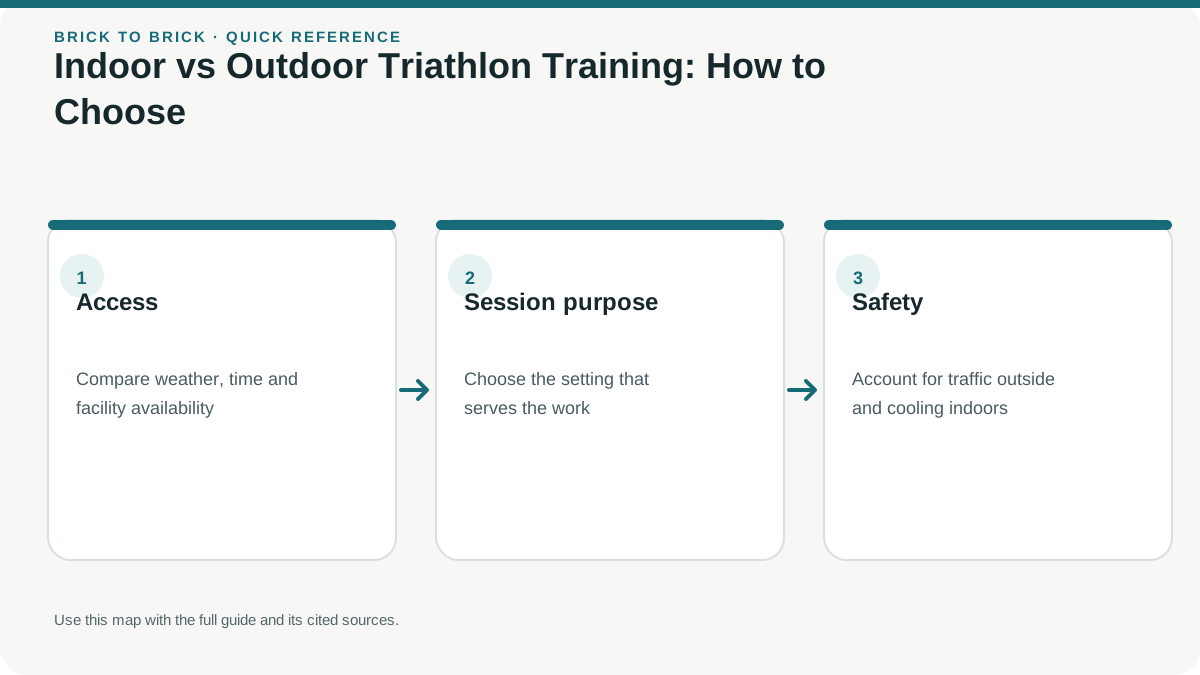
Indoor training can make cycling sessions more controlled and accessible, while outdoor riding develops handling and road awareness. They are not exact substitutes: cooling, power readings, terrain, and safety differ. Choose the setting that serves the session and adapt when conditions change.
Key takeaways
- 1Indoor cycling supports controlled work but does not reproduce road handling or all outdoor race demands.
- 2Power and heart-rate responses can differ because of cooling, equipment, terrain and coasting.
- 3Use a safe, progressive setting to learn outdoor bike handling.
- 4A hybrid approach can match the setting to each session without a fixed indoor/outdoor ratio.
- 5Move a ride indoors or rest when road or heat conditions make outdoor training unsafe.
In this article
- 1Why this debate matters
- 2Indoor training: the case for
- 3Indoor training: the limitations
- 4Outdoor training: the case for
- 5Building a hybrid training plan
- 6Example hybrid training week
- 7Equipment for indoor training
- 8When to prioritize each approach
- 9Match the training setting to the skill you need
- 10Why the same power can feel different indoors and outdoors
- 11Indoor cooling and hydration deserve attention
- 12Make outdoor riding safer without treating risk as training
- 13Use a progression from trainer confidence to road confidence
- 14Protect the bicycle and home setup indoors
- 15A practical indoor-or-outdoor decision checklist
- ⚖Indoor vs outdoor training comparison
- ?Frequently asked questions
Why this debate matters
Indoor and outdoor training can both build triathlon fitness, but they do not reproduce the same conditions. Indoors, a trainer can make effort repeatable and remove traffic, weather, and route interruptions. Outdoors, the athlete practises handling, braking, cornering, shifting, wind, terrain, and attention to other road users. The useful question is which setting best serves this session and your current skills.
An indoor power number does not automatically feel the same as the same number outside. Cooling, bike movement, posture, trainer calibration, and interruptions differ. Small studies comparing simulated and outdoor cycling show that environmental conditions can change physiological strain; they do not establish one conversion factor for all riders. Use the same device and setup when comparing indoor sessions, and avoid treating an indoor workout as a complete substitute for outdoor skills.
Choose based on the session goal, safety, time, weather, access, and available equipment. A hybrid approach can make use of both environments without requiring a perfect schedule. Outdoor riding is not automatically safer or more specific if roads are hazardous; indoor training is not automatically easier on the body if heat and lack of cooling are ignored.
Indoor training: the case for
An indoor trainer offers predictable access to cycling when daylight, weather, travel, traffic, or family responsibilities make a road ride difficult. It can help you complete a planned interval without stop signs and can make duration and power easier to record. A stationary setup can also be useful for learning smooth cadence changes or staying seated through controlled efforts.
The controlled setting still needs preparation. Confirm the bike and trainer are compatible and securely installed according to manufacturer instructions. Use stable flooring, a fan or other appropriate cooling, a towel, and water within reach. Indoor airflow is lower than moving outdoors; research on indoor cycling has found that fan cooling can change physiological and perceptual responses. Do not deliberately remove cooling to make an ordinary workout harder.
Indoor sessions do not teach road positioning, safe group riding, braking under varied conditions, or how to respond to wind and surface changes. Use them for the work they suit, then practise outdoor handling when conditions and local roads allow.
Indoor training: the limitations
A trainer reduces some road risks but introduces other demands. The bicycle stays in one position, cooling may be limited, and long periods without coasting or changing posture can make a session feel different from a road ride. A planned duration may also be mentally harder indoors. If discomfort appears, check the setup and take a safe break rather than assuming that a higher power target is required.
Power readings may differ between devices or between trainer and outdoor meter. Check calibration guidance and use consistent equipment for comparisons. Heart rate can be affected by room temperature and airflow, while indoor apps may prescribe resistance or power targets that do not reflect how the athlete feels. Use perceived effort alongside the data.
Sweat can reach the floor, drivetrain, or frame, and a mounted bicycle must be stable. Follow the trainer and bicycle manuals, inspect connections, protect the floor, and keep children and pets away from moving parts. Stop for pain, dizziness, overheating, or equipment noise that suggests a mechanical issue. Indoor training is not automatically risk-free or suitable for every session.
Outdoor training: the case for
Outdoor riding gives practice with the moving environment you will meet in most triathlon bike legs: balance, steering, braking, shifting, road surface, wind, climbs, descents, and riding while paying attention. It can also help you learn what your race position and equipment feel like outside the trainer. These are skills that an indoor ride cannot fully reproduce.
Outdoor conditions are not automatically a better workout. Traffic, poor visibility, ice, extreme heat, smoke, roadworks, and unsafe routes can make a ride inappropriate. Choose a route that matches your experience, follow local road rules, use required safety equipment, and practise handling in a safe area before riding in traffic. Beginner skills such as starting, stopping, looking behind, and signalling are worth learning at low speed.
Outdoor power and heart rate can vary with gradient, wind, temperature, and coasting. That variability is part of the environment, not necessarily a failure of pacing. Use a route appropriate to the session and avoid chasing exact indoor numbers on a windy or hilly road.
Building a hybrid training plan
A hybrid plan uses each setting for a reason. Indoors can protect a short, focused session from weather or traffic interruptions; outdoors can provide handling practice, climbing, longer steady riding, and familiarity with the bike you will race. The balance should reflect the course, safety, time, and your confidence rather than a fixed indoor-to-outdoor ratio.
If you are a beginner, schedule outdoor practice for basic control before adding speed or technical routes. If you have limited safe road access, indoor riding can provide consistent aerobic work while a supervised skills session addresses handling. If you have a specific race course, include outdoor terrain that resembles it only when the route is safe and appropriate.
Keep the same effort goal across settings rather than forcing identical power. An indoor session may need lower targets if cooling or trainer position differs. An outdoor ride may include unavoidable coasting or stops. Track total effort and recovery, and adjust the next workout if the conditions made a planned session harder than expected. A coach can help coordinate the week; a training app is not a substitute for road judgment.
Example hybrid training week
A sample week is a planning illustration, not a prescribed schedule. An athlete with a key interval session might complete it indoors when traffic or weather would interrupt the effort, then choose a safe outdoor ride for handling, road awareness, and terrain. A beginner could use one short supervised outdoor ride to practise starts, stops, shifting, and braking, with easier indoor pedalling on another day if that fits current training.
Place harder sessions where you can recover from them. Do not make every indoor ride a maximal interval just because the trainer measures power. Keep easy work easy, and use outdoor time for technique as well as fitness. If the weather is unsafe, move the session indoors or rest; do not take a risk to preserve the calendar.
The week should also reflect swim and run training, work, family, sleep, and any health constraints. If a ride causes pain or leaves you unable to run comfortably, review total load and bike fit rather than blaming the environment alone. Start with a plan that can be repeated and adapt it when conditions change.
Equipment for indoor training
Indoor riding may require a trainer or stationary bike, a compatible bicycle setup, a stable floor, airflow, and a way to monitor the session. Requirements vary by equipment. Read the bicycle and trainer manuals for compatibility, attachment, gearing, maintenance, and use restrictions. Do not assume every carbon frame, axle, or bicycle component is approved for every trainer.
A fan helps replace some of the airflow a rider gets outdoors; room temperature and ventilation still matter. Keep a towel or sweat guard from blocking moving parts, and clean the bicycle according to its manufacturer instructions. A device can show power, heart rate, cadence, and virtual speed, but none of those numbers guarantees that the workout matches outdoor conditions.
You do not need a premium smart trainer to begin indoor cycling. A safe, stable stationary bicycle or basic trainer may support simple sessions. If using an app, check the workout format, subscription terms, connectivity, and whether the trainer controls resistance. Prioritize fit, safety, and a usable setup before buying additional sensors or virtual accessories.
When to prioritize each approach
Prioritize indoors when road conditions are unsafe, time is limited, you need a controlled interval, or you are building a consistent routine around an unpredictable schedule. Prioritize outdoors when safe conditions allow you to practise handling, pacing on terrain, equipment use, and the attention needed for real roads. Some athletes will use a supervised group, closed circuit, or skills area as a bridge.
The priority can change by season and workout. A long-course athlete may need regular outdoor practice but still use a trainer for a short weekday session. A beginner in a high-traffic area may need indoor conditioning plus coached handling practice elsewhere. Poor outdoor conditions should not be “trained through” merely to imitate race specificity.
Decide before each session: what is the purpose, what setting is safest, and what adaptation can be made if conditions change? Use the answer to pick the route or equipment. If no safe option is available, rest or do another appropriate activity. The goal is consistent preparation and competence, not loyalty to indoor or outdoor riding.
Match the training setting to the skill you need
Write down the main purpose of a ride before choosing where to do it. If the purpose is a steady effort without interruptions, an indoor trainer may be suitable. If the purpose is learning to brake, corner, shift on a hill, or maintain awareness around other road users, the trainer cannot supply the full skill. You may need a safe practice area, a quiet route, or a coached session.
Many rides have more than one purpose, but trying to develop every skill in every session makes the choice harder. Keep a focused interval session simple and use a separate easy ride for handling practice. New riders should practise at low speed and in a predictable place before attempting crowded roads, steep descents, or group rides.
Race specificity is not only about matching power. It includes course surface, turns, wind exposure, aid-station handling, equipment, and the ability to look around safely. A road ride is useful only if it can be completed within reasonable safety conditions. If a particular skill cannot be practised locally, ask an experienced coach about a controlled alternative instead of taking an unnecessary risk.
Why the same power can feel different indoors and outdoors
An indoor trainer can remove coasting and stop-start variation, while a road ride includes changing resistance and terrain. Indoor airflow may be lower, room temperature may be higher, and the bike is supported rather than moving freely. These factors can alter heart rate, perceived effort, and the power a rider can sustain. Research comparing laboratory-simulated and outdoor cycling is limited and uses specific participants and protocols; it does not provide a universal indoor-to-outdoor correction.
Use the same power source and calibration for repeatable comparisons. If you switch between a trainer and a bike-mounted meter, expect some disagreement and follow each manufacturer's procedure. Keep fan placement and room setup similar when comparing indoor workouts. On the road, interpret power in the context of wind, hills, coasting, and traffic.
Do not raise a target just to make indoor numbers match an outdoor file. If the same prescribed power feels much harder, check cooling, fueling, fatigue, bike position, and measurement setup. Use perceived effort and symptoms as important information. A data mismatch is a reason to investigate, not proof that your fitness has changed overnight.
Indoor cooling and hydration deserve attention
A stationary rider receives less self-generated airflow than someone moving along a road. Room temperature, humidity, fan placement, and session intensity can all affect how hot the workout feels. A study of recreationally active adults found that fan cooling changed responses during submaximal indoor cycling. That result supports attention to airflow; it does not prescribe a specific fan model or temperature for every athlete.
Set up in a ventilated area and use enough airflow to stay comfortable. Keep fluids available and drink according to your usual plan and thirst; do not force large volumes. If you feel dizzy, confused, unusually weak, or overheated, stop the session, move to a cooler place, and seek medical help for severe or worsening symptoms. Do not deliberately remove the fan during ordinary training to create extra heat stress.
Some specialized heat-acclimation work may be used in sport, but it requires careful planning and is outside the scope of a generic indoor cycling session. Speak with a qualified coach and clinician before introducing heat exposure, particularly if health conditions or medication affect temperature regulation.
Make outdoor riding safer without treating risk as training
Choose the route and time of day before putting on a helmet. Check visibility, weather, road surface, traffic, and local rules. Use lights or reflective equipment when required or appropriate, and carry basic repair supplies if your route is remote. Tell someone where you are going when the ride is long or isolated. These choices reduce avoidable surprises but cannot eliminate road risk.
If handling skills are new, practise in a low-traffic, controlled space. Start, stop, shift, look over a shoulder, and signal while maintaining control before applying those skills on busier roads. Do not ride an unfamiliar aero position in traffic until you can steer, brake, and scan safely. Group rides add communication and drafting demands; learn the group's rules before joining.
Cancel or move a ride indoors when conditions make control unreliable. Do not attempt an outdoor workout in ice, poor visibility, dangerous heat, or a route where you cannot ride lawfully and attentively. An indoor alternative may not copy every race demand, but a safer training choice is often the more useful one.
Use a progression from trainer confidence to road confidence
If you are new to cycling, an indoor session can help you learn shifting, cadence, and comfortable pedalling without traffic. It cannot teach balance in motion or real braking, so treat it as one step rather than complete preparation. Begin outdoor practice in a safe area with a correctly fitted helmet and a bicycle that has been checked for mechanical safety.
Progress from basic starts and stops to gentle turns, gear changes, shoulder checks, signalling, and short quiet routes. Add hills, longer rides, aero bars, or group riding only when the prior skill is dependable. A skills coach can give feedback and identify unsafe habits sooner than repeated trial and error.
Keep the first outdoor sessions short enough that fatigue does not undermine attention. If you are tired, cold, distracted, or uncertain about traffic, head back or stop. Before racing, practise the equipment and position you plan to use under safe conditions. The aim is not to spend a fixed number of hours outside; it is to gain the specific control and confidence your event requires.
Protect the bicycle and home setup indoors
A secure trainer setup begins with the instructions for both the bicycle and the trainer. Confirm axle or quick-release compatibility, required adapters, mounting position, and any frame restrictions. Tighten or attach parts only as specified. If the bike rocks, slips, or makes an unfamiliar mechanical sound, stop and inspect it before continuing.
Sweat can corrode components and leave a slippery floor. Use a mat or towel in a way that cannot touch the drivetrain, keep cords clear of wheels and cranks, and wipe the bike after sessions according to manufacturer guidance. Leave enough space to mount and dismount without hitting furniture. Keep children and pets away from the moving bicycle.
Do not use an indoor trainer as a reason to ignore pain or unstable fit. A fixed bike may hold you in one position longer than outdoor riding. Stand or change posture only when the trainer setup and your surroundings permit it safely. If you experience numbness, dizziness, or pain, stop and address the cause. Equipment safety is part of training quality, not an optional accessory checklist.
A practical indoor-or-outdoor decision checklist
Before a ride, answer four questions. What is the session for? Choose intervals, endurance, handling, or course practice. What conditions are present? Consider weather, traffic, visibility, heat, and route safety. What equipment and skills do I have today? Check the trainer setup, bicycle condition, and handling confidence. How will I adjust if the plan changes? Decide whether to shorten, move indoors, substitute another session, or rest.
Use the answers rather than a weekly rule. A hard workout may be better indoors when roads are busy; a skill session needs an appropriate outdoor setting. A long ride may be moved indoors in poor weather but should be adjusted for trainer comfort and monotony. A session can be rescheduled if neither environment is safe.
Afterward, note what the chosen setting changed: interruptions, perceived effort, temperature, handling confidence, and whether the purpose was met. This turns the decision into useful information for next week. There is no requirement that every cyclist split time evenly between indoors and outdoors. The practical balance is the one that builds fitness and event skills while fitting the rider's access and safety conditions.
Indoor vs outdoor training comparison
| Factor | Indoor Training | Outdoor Training |
|---|---|---|
| Time efficiency | Excellent — no travel, no stoplights | Lower — logistics and travel time |
| Weather dependent | No | Yes |
| Structured workouts | Easy to execute precisely | Harder to hit exact targets |
| Race-specific skills | Limited | Excellent — handling, navigation, terrain |
| Mental toughness | Moderate | High — wind, heat, fatigue management |
| Social/group training | Virtual (Zwift, etc.) | In-person group rides and runs |
| Cost | Smart trainer: $300–$1,200 | No extra equipment needed |
| Injury risk | Very low | Higher (road hazards, falls) |
| Best for | Intervals, base building, bad weather | Long rides, brick workouts, race prep |
Sources
Sources are listed so readers can verify consequential claims and dated details.
- Physical Activity Guidelines for Americans, second edition — U.S. Department of Health and Human Services (accessed August 19, 2026)
- Bicycle safety — National Highway Traffic Safety Administration (accessed August 19, 2026)
- World Triathlon competition rules — World Triathlon (accessed August 19, 2026)
- Fan Cooling Improves Submaximal Exercise Capacity in an Indoor Thermoneutral Environment — Medicine & Science in Sports & Exercise / PubMed (accessed September 24, 2026)
- Thermoregulation During Prolonged Actual and Laboratory-Simulated Bicycling — Journal of Applied Physiology / PubMed (accessed September 24, 2026)
- Learn to Bike Safely — National Highway Traffic Safety Administration (accessed September 24, 2026)
- Physiological and Biomechanical Adaptations to the Cycle-to-Run Transition in Olympic Triathlon — Sports Medicine / PubMed (accessed September 24, 2026)
Frequently asked questions
Is indoor cycling as effective as outdoor cycling for triathlon?
Indoor cycling can build fitness and support structured sessions, but it does not fully develop road handling, braking, cornering or outdoor pacing skills. Both settings can serve different purposes.
Why does the same power feel harder indoors?
Cooling, room conditions, trainer setup, coasting and measurement differences can alter perceived and physiological effort. There is no universal indoor-to-outdoor power conversion.
How often should triathletes ride outside?
There is no fixed number. Outdoor practice should match the athlete's safety, access, handling needs and race demands; indoor training can fill gaps when conditions are poor.
Do I need a smart trainer?
No. A safe stationary bicycle or compatible basic trainer can support simple indoor rides. Check equipment instructions and prioritize a stable setup and suitable cooling.
Should I ride outside in bad weather to prepare for a race?
No workout requires riding when weather, visibility, traffic or road conditions make control unsafe. Move indoors, adjust the session or rest.