Runner to Triathlete: A Safe First-Race Transition
Add swimming and cycling without mistaking running fitness for complete triathlon readiness. Includes a staged first-race transition and load checks.
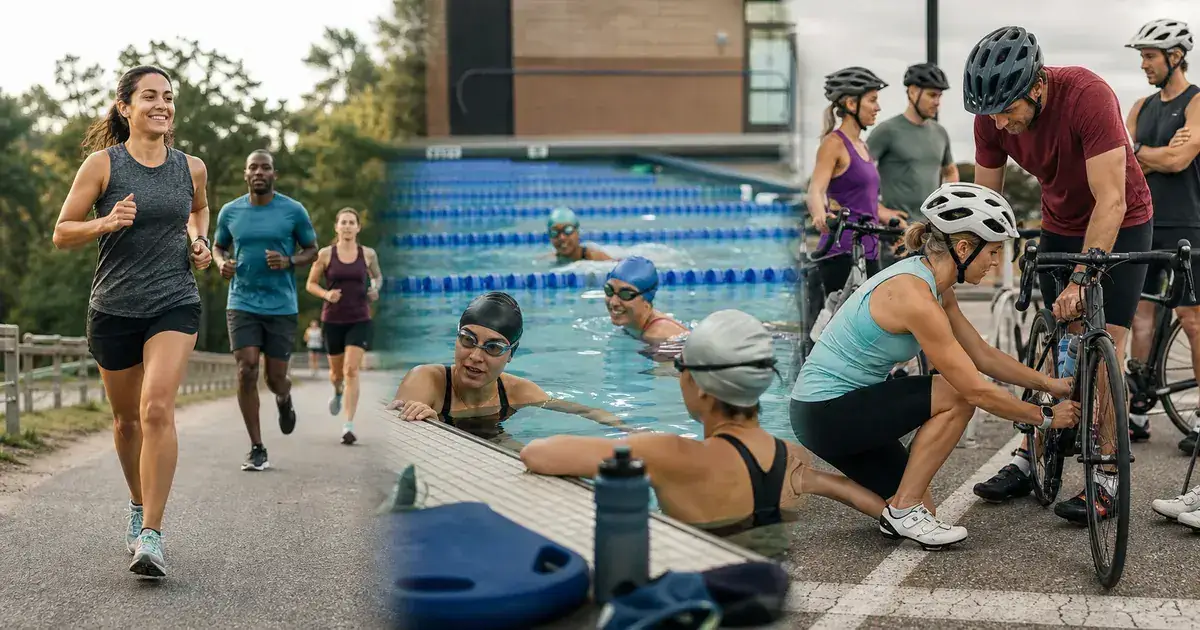
A runner already has useful aerobic fitness and run durability, but still needs swim competence, bike handling and experience running after cycling. Keep enough easy running to preserve consistency while replacing some run load with technique-led swimming and cycling. Choose a short, well-supported first race and progress by skill and recovery—not cardiovascular confidence alone.
Key takeaways
- 1Running fitness does not create water safety or bike handling
- 2Replace some run load instead of stacking two new sports on top
- 3Prioritize swim instruction and outdoor bike control
- 4Introduce short easy bricks after bike competence
- 5Choose a Sprint, pool event, relay or duathlon that fits current skills
In this article
- 1Quick answer: keep the engine, become a beginner again
- 2First build swim competence
- 3Learn cycling as a skill
- 4Protect the running strength you already have
- 5A staged eight-to-twelve-week path
- 6Choose the first event from your weakest discipline
- ⚖Runner strengths and new triathlon needs
- ?Frequently asked questions
Quick answer: keep the engine, become a beginner again
Your aerobic base helps, but swimming is technique-dominated and cycling adds equipment and traffic skills. Begin with two swims and two rides most weeks, retain two or three mostly easy runs, and keep at least one low-load or rest day. That is a framework, not a prescription; your history and schedule control.
Do not add all sessions to full run mileage. Replace load and monitor sleep, soreness, mood and performance.
First build swim competence
Seek qualified instruction if you cannot swim the race distance continuously with calm breathing and reliable form. Start in a supervised pool. Open water adds sighting, temperature, contact and conditions, so progress with appropriate supervision and never swim alone.
A pool-based event or relay can be a sound first step. Fitness cannot compensate for panic or unsafe conditions.
Learn cycling as a skill
Before chasing speed, practise helmet fit, pre-ride checks, braking, cornering, shifting, looking behind and drinking while maintaining control in a traffic-appropriate environment. Build duration gradually on the bike you will race.
An indoor trainer develops pedalling fitness but not outdoor handling. USA Triathlon's beginner cycling guidance is a useful starting point.
Protect the running strength you already have
Keep a small amount of familiar easy and quality running, but reduce volume when swim/bike load rises. Avoid proving run fitness after every ride. Your first brick can be 10–15 easy minutes, focused on cadence and control rather than pace.
Pain that changes gait, persists or worsens needs assessment rather than a harder plan. Rest and nutrition are training inputs.
A staged eight-to-twelve-week path
Weeks 1–3 emphasize swim instruction, bike handling and stable easy frequency. Weeks 4–7 extend one ride and one swim while adding brief bricks. Later weeks practise race-specific water, course and transitions, then reduce fatigue before the event.
This sequence is illustrative; it is not adequate for every athlete or race. Use the beginner training path and match it to the selected distance.
Choose the first event from your weakest discipline
If swimming is least ready, choose a pool Sprint, relay or duathlon. If bike handling is least ready, delay a technical road event. Use the Distance Selector, then compare expectations with time benchmarks only for context.
The first-race goal is competent, safe execution across all three sports.
Runner strengths and new triathlon needs
| Area | Likely carry-over | New work |
|---|---|---|
| Aerobic fitness | Useful base | Discipline-specific efficiency |
| Run | Durability and pacing | Running after cycling |
| Swim | Limited transfer | Technique and water confidence |
| Bike | Some aerobic transfer | Handling, fit and sustained riding |
| Race craft | Pacing experience | Transitions and multisport rules |
Sources
Sources are listed so readers can verify consequential claims and dated details.
- How do I get started in triathlon? — USA Triathlon (accessed August 2, 2026)
- How to learn to bike — USA Triathlon (accessed August 2, 2026)
- Physical activity basics for adults — US Centers for Disease Control and Prevention (accessed August 2, 2026)
Frequently asked questions
How long does it take a runner to train for a triathlon?
It depends on swim and bike competence, event distance and available recovery. Many runners use an 8–12 week Sprint framework, but more time is appropriate when skills are new.
Should runners keep all their mileage when starting triathlon?
Usually not. Replacing some run load with swim and bike work reduces the risk of simply stacking fatigue.
What is hardest for runners starting triathlon?
Often swim technique or bike handling, not aerobic fitness. The limiting skill differs by person.
How soon should a runner do brick workouts?
After basic bike comfort, add short easy runs after selected rides. Bricks do not need to be long or hard to teach the transition.
Is duathlon a good step toward triathlon?
Yes when it matches your goals. It builds multisport transitions and bike-to-run experience without requiring a swim.