Duathlon vs Triathlon: Differences, Training and Cost
Compare run-bike-run duathlon with swim-bike-run triathlon by format, training, gear, cost and beginner fit—especially when swimming is a barrier.
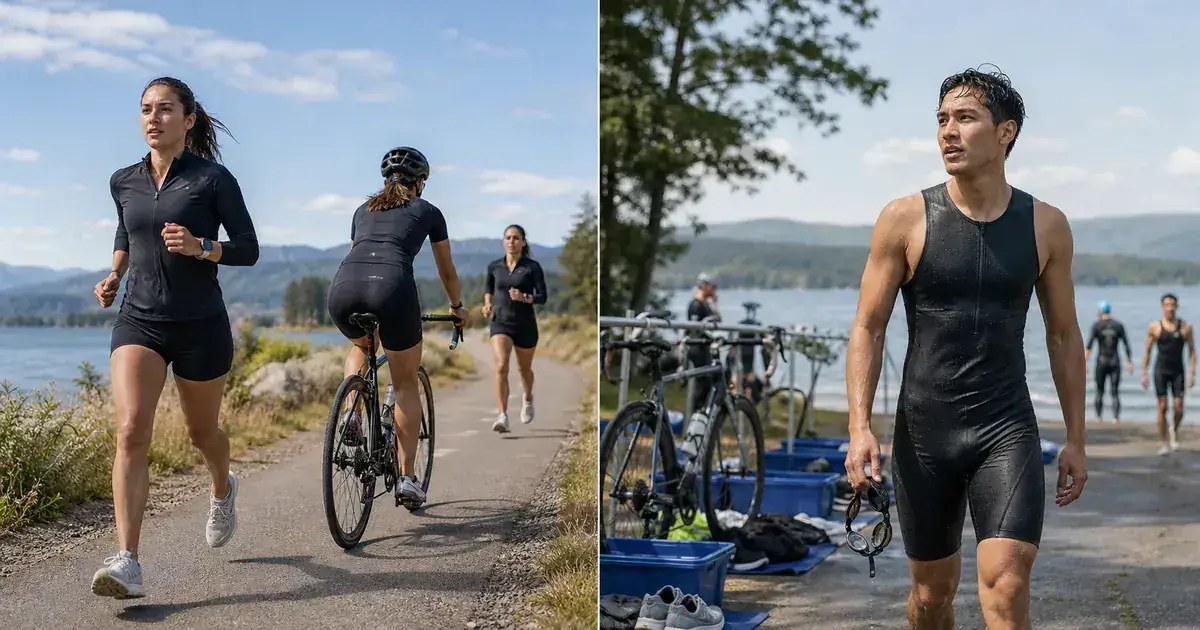
A duathlon is normally run–bike–run; a triathlon is swim–bike–run. Duathlon removes the swim equipment and water-safety requirement, but its second run creates a specific impact and pacing challenge. Choose the format whose disciplines you can train safely and whose nearby event details fit your time, access and budget.
Key takeaways
- 1Duathlon is run–bike–run; triathlon is swim–bike–run
- 2Both include transition and bike safety skills
- 3Removing swimming can reduce access and gear barriers
- 4Duathlon adds a second run and more impact exposure
- 5Official distances and drafting rules vary by organizer
In this article
Quick answer: choose the format you can prepare for
Choose duathlon when safe swim access or water confidence is the limiting barrier and you enjoy running twice. Choose triathlon when you want all three disciplines and can build the swim safely. Neither is automatically easier: duathlon shifts more work onto weight-bearing running, while triathlon adds water skills and equipment.
Search actual nearby races before deciding because course, distance and draft rules matter more than a generic label.
Race order and common distances
Duathlon follows run–transition–bike–transition–run. World Triathlon and national federations recognize several distances and surfaces; local events often use approachable short combinations. Triathlon replaces the first run with a pool or open-water swim.
Distances are not globally fixed outside a published event specification. Confirm every leg in kilometres and miles, lap counts and cutoffs.
Training differences
Both formats need cycling, running, brick sessions and transition practice. Triathlon adds swim technique, water confidence and possibly open-water acclimation. Duathlon needs careful progression because two runs in one race increase impact and the first run can sabotage the bike and final run if paced too hard.
A runner moving into multisport can use the runner-to-triathlete guide; the same conservative run-plus-bike principles help with duathlon.
Gear and cost
Both require a roadworthy bike, approved helmet, running shoes and event entry. A duathlon generally avoids goggles, swim kit and an optional wetsuit. Triathlon can still be affordable when you use an existing bike and simple swim gear.
Compare total ownership, pool membership, travel and event fees in the Cost Calculator, not a single equipment list.
Safety and skill barriers
Triathlon requires the ability to complete the advertised swim safely in its environment; pool competence does not automatically equal open-water readiness. Duathlon removes that exposure but retains traffic-free course rules, bike handling, mounting/dismounting and heat management.
Gradually build running load, especially after cycling. Persistent pain, dizziness, chest symptoms or medical-risk questions warrant appropriately qualified clinical advice.
A simple decision framework
List access to pool/open water, current run tolerance, bike confidence, weekly time, equipment, preferred season and local events. Score each format without assuming you must become a swimmer immediately. An indoor triathlon or relay can bridge the gap.
Then use the race finder guide and let the current event page control distances, eligibility and rules.
Duathlon versus triathlon
| Factor | Duathlon | Triathlon |
|---|---|---|
| Order | Run–bike–run | Swim–bike–run |
| Water skills | Not required | Pool or open-water competence |
| Run exposure | Two runs | One run after bike |
| Core gear | Bike, helmet, running shoes | Plus swim kit; wetsuit if needed/permitted |
| Transitions | Run/bike twice | Swim/bike, then bike/run |
Sources
Sources are listed so readers can verify consequential claims and dated details.
- Multisport disciplines and formats — USA Triathlon (accessed August 2, 2026)
- World Triathlon age-group racing — World Triathlon (accessed August 2, 2026)
- 2026 IRONMAN Competition Rules — IRONMAN (accessed August 2, 2026)
Frequently asked questions
Is a duathlon easier than a triathlon?
Not inherently. It removes swimming but adds a first run and more impact. Difficulty depends on distance, course, conditions and your background.
What is the order of a duathlon?
Run, bike, run, with a transition between each leg.
Do you need a special bike for duathlon?
No. A roadworthy bike that the event permits and an approved, correctly fitted helmet are the essentials.
Can a runner do a duathlon without cycling experience?
They need enough training to handle the bike safely and complete the distance, including mounting, braking, cornering and riding after the first run.
Does duathlon have standard distances?
Governing bodies recognize common formats, but events vary. Verify the published leg distances and rule set.