How Does a Triathlon Relay Work? Beginner Team Guide
Form a triathlon relay team and understand registration, timing-chip handoffs, transition access and each teammate's race-day responsibilities.
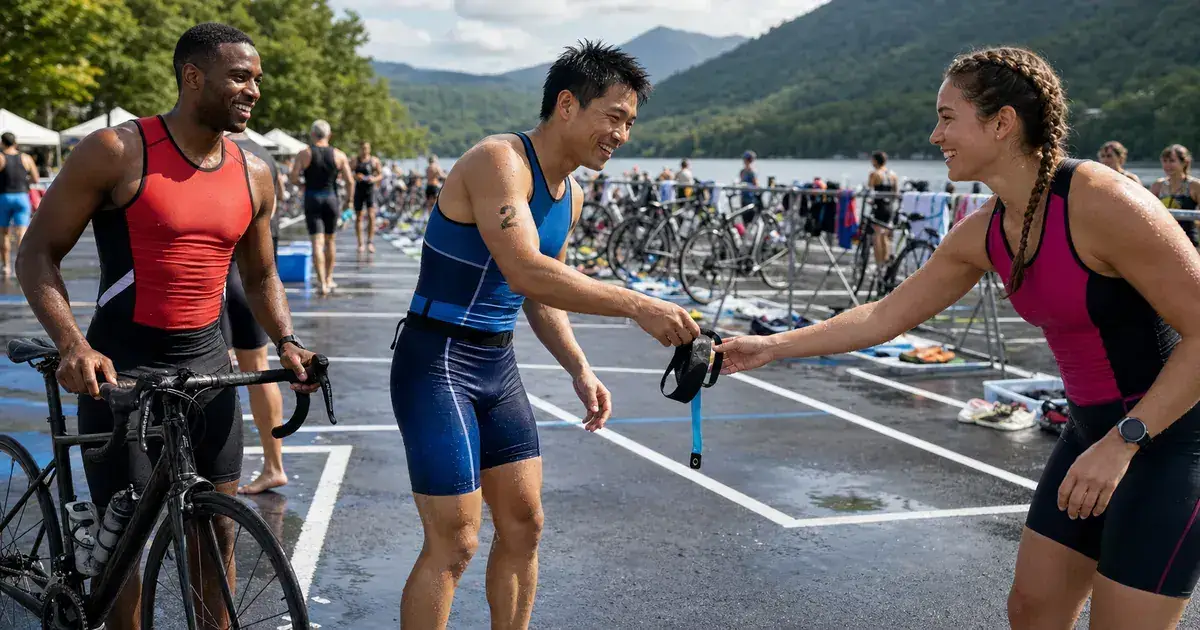
In a typical triathlon relay, one teammate swims, one cycles and one runs while a shared timing chip acts as the baton. Team size, whether one person may complete two legs, handoff location, transition access and equipment rules vary. Register every member correctly and rehearse the exact handoff described in the current athlete guide.
Key takeaways
- 1The normal leg order remains swim–bike–run
- 2A shared ankle chip commonly acts as the baton
- 3Handoffs happen only in the marked relay zone
- 4Every member must satisfy identity, waiver, licence and equipment requirements
- 5Team rules and availability differ by organizer and distance
In this article
Quick answer: three legs, one official team result
A relay divides swim, bike and run among teammates. The common format uses three people, but some events allow two-person teams with one athlete completing two disciplines. Only the designated athlete is on course for each leg. The total normally includes both handoffs and all transitions.
Do not assume a relay is offered because the weekend has an individual race. Find the relay entry on the official page, then check distance, team size, minimum ages, licences and cutoff basis before paying.
Registration and team administration
Some platforms ask a captain to create and pay for the team, then invite members; others require simultaneous entry. Use each person's legal identity and emergency information. Confirm whether substitutions are allowed and by what deadline.
Decide who collects packets, attends briefing and brings the chip. Some events require all teammates at pickup. How to register for a triathlon explains what to save after checkout.
How the timing-chip handoff works
A shared ankle timing chip commonly passes from swimmer to cyclist and cyclist to runner inside a designated relay pen. The incoming athlete stops; the outgoing athlete must not leave until the chip is secure. Other systems may use a separate baton or staff-controlled exchange.
Practice removing and fastening the strap with wet or cold hands. Never exchange outside the marked zone, cross timing mats twice or carry another athlete's chip. The athlete guide controls.
Who can enter transition
Access is normally limited by bib, wristband and time window. Waiting teammates may have a relay pen rather than full access to individual racks. The cyclist still obeys helmet, mount/dismount and bike rules; the runner obeys course and assistance rules.
Draw the route from relay pen to course entry. Record when each athlete must arrive, where spare clothing stays and how finish-area reunion works.
Build a no-missed-handoff plan
Exchange estimated split ranges, not one exact arrival time. The next athlete should be ready before the early edge of the range and track official timing where available. Agree what happens after a lost chip, withdrawal or delayed teammate: alert an official rather than improvising.
Rehearse the verbal cue, which hand steadies the strap and the order: stop, remove, attach, confirm, go. A fast unsafe exchange is never worthwhile.
Choose a relay that fits the team
Compare pool versus open-water swim, draft rules, course difficulty, travel and each member's experience. A relay can be an accessible way to sample multisport, but every leg still requires specific preparation and safe equipment.
Use how to find a triathlon near you to locate current directories. If swimming is the barrier and a relay is unavailable, compare duathlon and triathlon.
Relay role checklist
| Role | Primary equipment | Handoff responsibility |
|---|---|---|
| Swimmer | Swim kit; wetsuit if permitted | Securely transfer chip after swim |
| Cyclist | Roadworthy bike and approved helmet | Receive before bike; transfer after racking |
| Runner | Running shoes and required bib | Receive before leaving relay zone |
| Captain | Registration records and contacts | Confirm team eligibility and schedule |
Sources
Sources are listed so readers can verify consequential claims and dated details.
- Multisport disciplines and formats — USA Triathlon (accessed August 2, 2026)
- 2026 IRONMAN Competition Rules — IRONMAN (accessed August 2, 2026)
- World Triathlon age-group racing — World Triathlon (accessed August 2, 2026)
Frequently asked questions
How many people are on a triathlon relay team?
Three is common, with one athlete per discipline. Some events permit two-person teams or different formats, so check the entry rules.
Can one person do two relay legs?
Only if the organizer explicitly allows it. The registration form should identify permitted team sizes and combinations.
How do triathlon relay teammates hand off?
A shared timing chip commonly passes inside a marked exchange zone. Exact procedure and access are event-specific.
Do all relay members get a finish time?
Results usually show one team total and may show discipline splits. Whether individual names or awards appear depends on the timing platform and rules.
Does every relay member need a licence?
Potentially. Sanctioned events may require a membership or one-event licence for each participant. Verify the checkout and pickup instructions.