Indoor Trainers: How to Choose One and What It's Really Like to Own
A buyer's guide to indoor bike trainers — which type suits you, whether it fits your bike, the specs that matter, the real total cost, and how to set one up and maintain it.
By Lotte
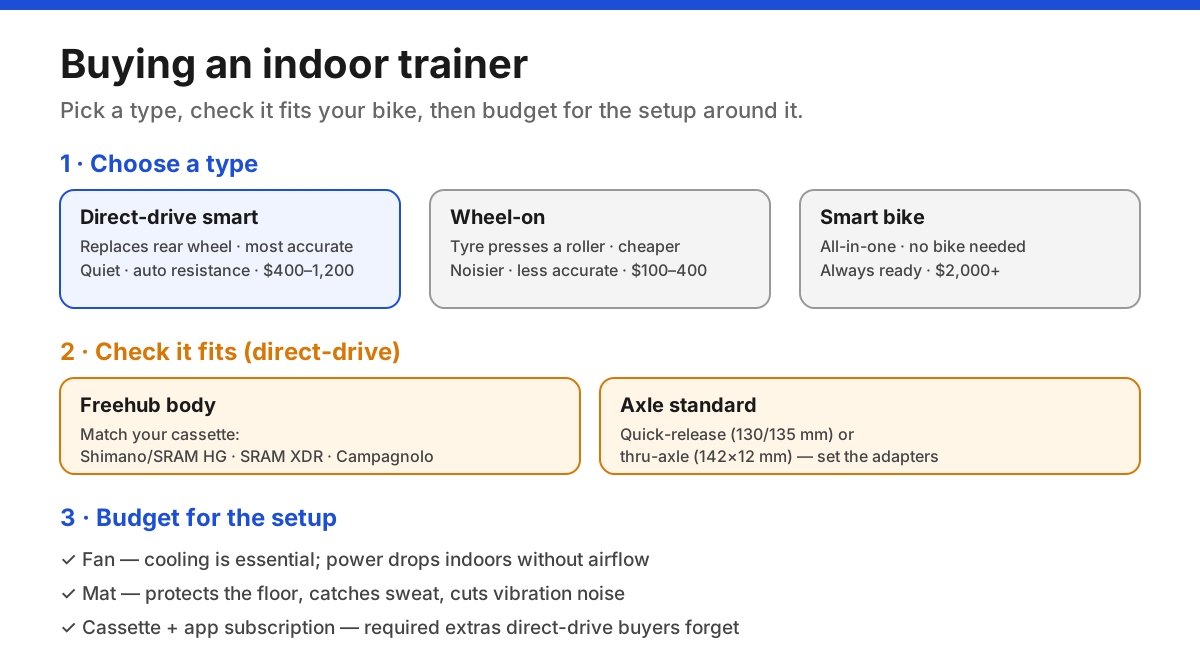
This is the hardware side of indoor training: how to pick a trainer and live with one, rather than how to train on it. It walks through which type of trainer suits your budget and goals, the compatibility checks that decide whether a direct-drive trainer will even fit your bike, the specs that actually matter when you compare models, the real total cost once you add a cassette, subscription and cooling, and the noise, space, heat and maintenance realities of owning one. When you're ready for the training itself — ERG mode, apps and workouts — we point you to the guides built for that.
Key takeaways
- 1There are three real choices — direct-drive smart trainer, wheel-on trainer, or an all-in-one smart bike — plus rollers for skills; match the type to your budget, space and how structured your training is
- 2Before you buy a direct-drive trainer, check two things: your freehub body (Shimano/SRAM HG, SRAM XDR or Campagnolo) and your axle standard (quick-release vs thru-axle) — this is the number-one buying mistake
- 3The specs that matter are power accuracy, maximum wattage and simulated gradient, flywheel weight (road feel), and connectivity (ANT+ FE-C and Bluetooth FTMS); a good direct-drive trainer can measure power almost as accurately as dedicated pedals
- 4The trainer price isn't the real cost — budget for a cassette, an app subscription, a serious fan and a mat before you can ride well
- 5Plan for heat and noise: your power runs lower indoors without airflow, so cooling isn't optional, and floor/neighbour noise decides where a trainer can live
In this article
- 1Which type of trainer is right for you
- 2Will it fit your bike? The compatibility check
- 3The specs that actually matter
- 4The real cost of getting set up
- 5Living with a trainer: noise, space, heat and floors
- 6Setup, calibration and maintenance
- 7Do you need one — and where to go next
- ⚖Which indoor trainer type suits you
- ?Frequently asked questions
Which type of trainer is right for you
Start with the type decision — it sets your budget and everything downstream. There are three mainstream choices plus one skills tool.
- Direct-drive smart trainer. You remove the rear wheel and mount the bike onto the trainer's own cassette. Quietest, most accurate, best road feel, and it controls resistance automatically for structured work. It's the default recommendation for anyone training seriously, and the reason most of this guide focuses on it. Typically $400–1,200.
- Wheel-on trainer. Your rear tyre presses against a resistance roller. Cheaper and more compact, but noisier, less accurate, and it wears your tyre (a dedicated trainer tyre helps). A fine entry point or travel option; $100–400 depending on whether it's 'smart'.
- Smart bike. An all-in-one stationary bike with built-in power and resistance — no bike required. Convenient and always set up, but expensive ($2,000+) and you're not riding your own fit. Best for a dedicated pain cave or a household sharing one unit.
- Rollers. Three drums your bike simply sits on. They build balance and a smooth pedal stroke rather than delivering structured resistance — a skills supplement, not a primary trainer.
For most triathletes the choice is really 'wheel-on to start cheap' versus 'direct-drive to train properly.' If you'll do regular interval work and race by power, a direct-drive smart trainer is worth the stretch. For how these translate into the wider training setup, the complete smart bike trainer guide covers the ecosystem in depth.
Will it fit your bike? The compatibility check
This is the step people skip and regret. A direct-drive trainer replaces your rear wheel, so your bike has to physically and mechanically match it. Check three things before you buy.
Freehub body (which cassette fits). The trainer needs a freehub compatible with your cassette. Most bikes use a Shimano/SRAM HG freehub (11-speed and many 12-speed), but SRAM's road 12-speed uses an XDR driver, and Campagnolo uses its own. Trainers usually ship with a Shimano/SRAM HG freehub and sell XDR/Campagnolo as an add-on — so confirm before ordering.
Axle standard (how the bike clamps in). Older bikes use a 130 mm (road) or 135 mm quick-release skewer; modern disc-brake bikes use 142×12 mm thru-axles. Direct-drive trainers include adapters for the common standards, but you must set them to yours. Thru-axle bikes may need the correct end caps.
Cassette. A direct-drive trainer does not usually come with a cassette. You'll buy one to match your groupset (same speed and, ideally, similar ratios to your outdoor bike so shifting feels the same) and have it fitted. Budget for this — it's a required extra, not optional.
Wheel-on trainers sidestep most of this because your wheel stays on, but they still have skewer/thru-axle requirements. When in doubt, note your bike's rear axle type and groupset before you shop, and check the trainer's compatibility list against them.
The specs that actually matter
Once you've settled the type and fit, a handful of specs separate a good trainer from a frustrating one. Ignore the marketing and look at these.
Power accuracy. Quoted as a percentage (±1% to ±3%). It matters because you'll set training zones and pace races off these numbers, and you want indoor and outdoor power to agree. The good news: a validation study of a high-end direct-drive trainer found its power measurements agreed closely with dedicated power-meter pedals, with no significant differences across power levels — so a quality direct-drive unit can be trusted for structured training. Cheaper wheel-on units are looser (±5% or worse). Note that measurement location matters: a hub/trainer reads slightly lower than the pedals because of drivetrain losses.
Maximum wattage and simulated gradient. How much resistance it can produce, and the steepest climb it can mimic (e.g. 'up to 20%'). Most triathletes never hit the ceiling, but very light riders sometimes want a stronger low-speed simulation.
Flywheel weight / road feel. A heavier flywheel (real or electronically simulated) carries momentum like the road does, so the pedal stroke feels natural rather than 'sticky.' It's the difference between a trainer you tolerate and one you forget you're on.
Connectivity. Look for both ANT+ FE-C and Bluetooth FTMS — the open standards that let any app control the trainer. Multiple simultaneous Bluetooth channels (and WiFi on premium units) mean the trainer, your watch and an app can all connect at once without dropouts.
The real cost of getting set up
The trainer's price tag is only part of the bill. Before you can ride well indoors, budget for the whole setup — surprises here are why people bounce off indoor training.
- The trainer — your main spend, $100–1,200 depending on type.
- A cassette (direct-drive) — required, and fitting it if you can't. Tens of dollars plus labour.
- An app subscription — Zwift, TrainerRoad, Rouvy and similar are monthly costs that recur for as long as you train indoors. This often outweighs the hardware over a few years.
- A serious fan — non-negotiable (see the next section). A cheap box fan works; some buy dedicated cycling fans.
- A trainer mat — protects your floor, catches sweat, and cuts vibration noise.
- A front wheel riser — a small block to level the bike (a few dollars, or improvised).
- Nice-to-haves — a screen or tablet for the app, a sweat guard for your frame, a second fan, a heart-rate strap for accurate intensity.
Add it up before you commit. A '$500 trainer' is often an $700–800 project once the cassette, fan, mat and first year of subscription are in. It's still excellent value for the training it enables — just plan for the whole thing.
Living with a trainer: noise, space, heat and floors
Where and how you'll actually use a trainer decides whether you keep using it. Three practical realities matter more than any spec.
Heat. Indoors there's no wind to cool you, so your core temperature climbs, your heart rate drifts up and the same watts feel harder. Research comparing indoor and outdoor efforts finds perceived exertion tends to be higher indoors for the same work, largely because cooling is worse. The fix is airflow: a powerful fan aimed at your torso and face transforms the experience and lets you hold the power you should. Treat a fan as part of the trainer, not an accessory.
Noise. Direct-drive trainers are genuinely quiet — the loudest thing is usually your drivetrain and the fan. Wheel-on trainers hum louder through the tyre. Either way, the bigger issue in a flat or shared house is vibration through the floor: a mat and a ground-floor or well-insulated spot keep the peace with neighbours.
Space and floor. A direct-drive setup wants a semi-permanent spot — leaving it built encourages you to use it. Protect the floor from sweat (which is corrosive) and vibration with a mat, and keep a towel over the bars and stem. Sweat management isn't cosmetic; salt eats into headset bearings and bolts over time.
Setup, calibration and maintenance
A trainer is low-maintenance, but a few habits keep it accurate and long-lived.
- Calibrate (spindown) when needed. Wheel-on and some direct-drive trainers use a periodic 'spindown' calibration so the power reads true, especially after temperature changes or moving the unit. Many premium direct-drive trainers are self-calibrating and need none — check your model. Do it after the trainer has warmed up for a few minutes.
- Keep firmware updated. Trainer firmware fixes accuracy and connection bugs; update it through the manufacturer's app every so often.
- Match and maintain the drivetrain. On a direct-drive trainer, a clean chain and a cassette matched to your bike's ratios make shifting quiet and accurate. On wheel-on, fit a dedicated trainer tyre and set consistent roller tension.
- Fight sweat corrosion. Wipe the bike and trainer down after every session and use a sweat guard. This single habit prevents most long-term trainer and bike damage.
- Store it dry. If you pack it away seasonally, store it somewhere dry to protect the electronics and bearings.
None of this takes long, and a well-kept trainer holds its accuracy and resale value for years.
Do you need one — and where to go next
An indoor trainer isn't mandatory, but for triathletes it's one of the highest-value purchases you can make: it removes weather, traffic and daylight as excuses and makes precise, repeatable interval work easy. If you struggle to fit riding around work and family, or you want to train by power, it pays for itself in consistency.
This guide is about the hardware — choosing it, fitting it, paying for it and living with it. Once the trainer is set up, use the guides built for the training itself:
- For how indoor training works end to end — ERG mode, apps and integrating it into your plan — read the complete smart bike trainer guide.
- For what to actually do on it, see indoor cycling workouts for triathletes.
- To pick your software, start with Zwift for triathletes.
- To decide how much of your training should be indoors at all, read indoor vs outdoor training.
Buy the trainer that fits your bike, your space and your budget — then spend your energy on the sessions, because that's where the fitness comes from.
Which indoor trainer type suits you
| Type | Best for | Main trade-off | Typical price |
|---|---|---|---|
| Direct-drive smart trainer | Serious, structured, power-based training | Needs a cassette and compatibility check | $400–1,200 |
| Wheel-on trainer | Starting cheap, small spaces, travel | Noisier, less accurate, wears the tyre | $100–400 |
| Smart bike | A dedicated pain cave or shared household | Expensive; not your own bike fit | $2,000+ |
| Rollers | Balance and pedal-stroke skills | No structured resistance; a learning curve | $150–500 |
Sources
Sources are listed so readers can verify consequential claims and dated details.
- The Accuracy and Reliability of the Power Measurements of the TACX Neo 2T Smart Trainer and Its Agreement against the Garmin Vector 3 Pedals — Journal of Functional Morphology and Kinesiology (accessed September 17, 2026)
- Perceived exertion can be lower when exercising in field versus indoors — PLOS ONE (accessed September 17, 2026)
Frequently asked questions
Will an indoor trainer fit my bike?
A wheel-on trainer fits almost any bike, subject to the skewer or thru-axle standard. A direct-drive trainer replaces the rear wheel, so you must match two things: the freehub body to your cassette (Shimano/SRAM HG, SRAM XDR or Campagnolo) and the axle standard (quick-release or thru-axle, using the included adapters). Check both against the trainer's compatibility list before buying.
Do I need to buy a separate cassette for a direct-drive trainer?
Usually yes. Most direct-drive trainers don't include a cassette, so you buy one to match your bike's groupset — ideally the same speed and similar ratios so shifting feels the same as outdoors — and have it fitted. Budget for this as a required extra, not an optional one.
How accurate are smart trainers?
Good direct-drive smart trainers are very accurate — a validation study of a high-end model found its power agreed closely with dedicated power-meter pedals across power levels. Accuracy is quoted as a percentage (±1–3%); cheaper wheel-on units are looser. Because a trainer measures at the hub, it typically reads slightly lower than the pedals due to drivetrain losses.
Why is my power lower indoors than outdoors?
Mostly heat. Without wind to cool you, your core temperature and heart rate climb, so the same watts feel harder and many riders can't sustain their outdoor numbers. Research finds perceived exertion tends to be higher indoors for the same effort. A powerful fan aimed at your torso and face closes much of the gap — treat cooling as essential equipment.
Do I need a subscription to use an indoor trainer?
Not strictly — a smart trainer will provide resistance and record power on its own or with a free app. But the value of indoor training comes from structured workouts and virtual worlds, which come from paid platforms like Zwift, TrainerRoad or Rouvy. Factor that recurring cost into your budget; over a few years it can exceed the trainer's price.
Is a smart bike worth it over a trainer?
For most triathletes, no — a direct-drive trainer plus your own bike is cheaper and preserves your race fit. A smart bike makes sense if you want an always-ready, no-setup unit, are sharing one machine across a household, or don't want to sacrifice a bike to the trainer. Expect to pay several times the price of a good trainer.