Indoor Triathlon Guide: Format, Gear and Race-Day Tips
Understand time-based and distance-based indoor triathlons, how scoring works and what gear and pacing a beginner needs for pool, bike and treadmill racing.
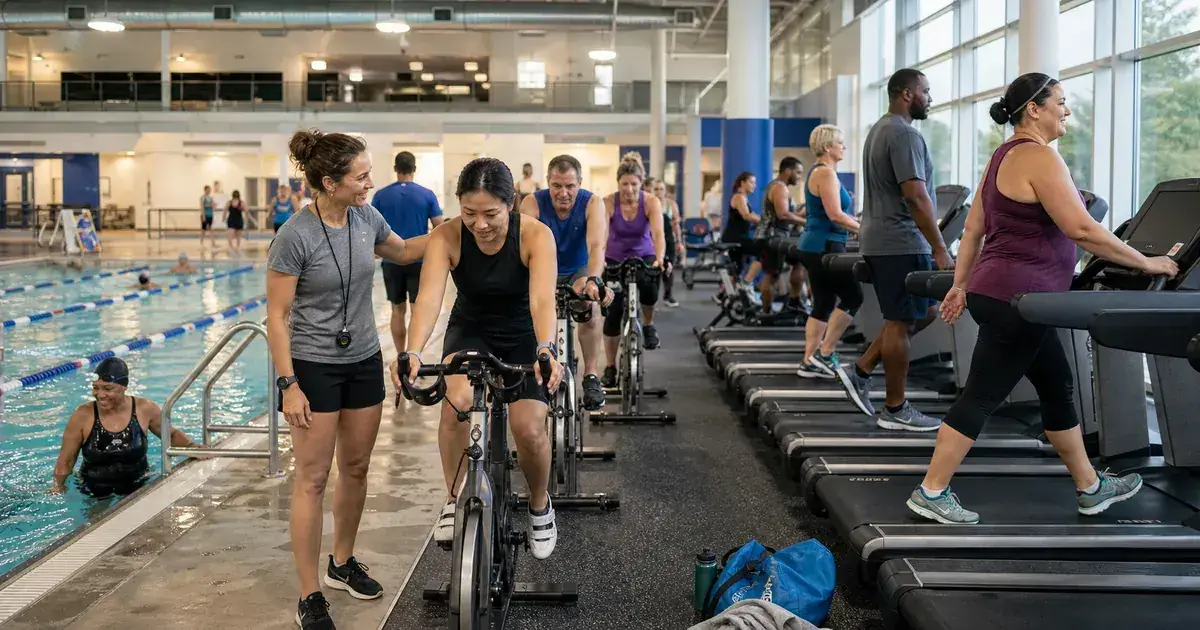
An indoor triathlon usually combines a pool swim, stationary bike and treadmill run. Some events award places by distance covered during fixed time blocks; others time fixed distances. Machines, resistance settings, transitions and scoring vary, so the event brief—not outdoor-triathlon convention—defines the race.
Key takeaways
- 1Confirm whether time or distance is fixed
- 2Machine calibration and resistance rules are event-specific
- 3Transitions may be neutralized rather than timed
- 4Bring pool kit, running kit, fluids and quick-drying layers
- 5Practice controlled changes in a warm indoor environment
In this article
Quick answer: indoor is a family of formats
The common timed format gives every athlete the same swim, bike and run durations, then ranks total distance or points. A fixed-distance format instead times a specified pool swim, bike target and treadmill run. Some venues use heats and neutral transition periods.
Read the athlete instructions for machine model, resistance, treadmill incline, lap counting and scoring. Do not assume a 20-minute bike on one machine compares directly with another event.
Timed versus fixed-distance racing
Timed racing rewards distance within each block and can suit mixed abilities because everyone changes together. Fixed-distance racing looks more like an outdoor event but depends heavily on machine setup and lane counting. A hybrid can award points by rank in each discipline.
Ask how ties, missed laps and machine faults are handled. The scorekeeper's published method controls.
Minimal indoor triathlon gear
Bring swimsuit or tri suit, goggles, towel, running shoes, socks if used, water bottle and a dry layer. The organizer normally supplies stationary bikes and treadmills; confirm pedal type and whether personal pedals or cycling shoes are allowed.
A tri suit reduces changing, but separate swim and exercise clothing may be fine if private changing and time rules allow. Use the Gear Builder for a broader checklist.
Pace the pool, bike and treadmill
Start the swim below all-out effort so you can exit safely and organize yourself. On the bike, learn how resistance and cadence create the displayed distance. On the treadmill, use the controls gradually and secure nothing loose near the belt.
Warm indoor air raises heat load despite the absence of sun. Drink to thirst and event access, and back off for dizziness, chest pain or unusual symptoms.
Transitions and venue etiquette
Some organizers stop the clock and provide several minutes to dry and move; others count transition. Follow the marked flow, wipe equipment as instructed and wait for staff before mounting a moving belt or adjusting machinery.
Tour the pool exit, bike station and treadmill queue before the heat. Know where shoes and water may be placed without blocking others.
Is indoor the right first race?
Indoor racing removes open-water, traffic and weather variables and often requires less personal equipment. It does not teach sighting, bike handling or outdoor transition, so treat it as a distinct event rather than a complete rehearsal.
Use how to find a triathlon near you to search seasonal listings. Compare relay racing or a beginner outdoor event when you want shared responsibilities or course experience.
Common indoor triathlon formats
| Format | What is fixed | Typical ranking |
|---|---|---|
| Timed | Minutes per discipline | Distance or points |
| Fixed-distance | Pool/bike/run distance | Elapsed time |
| Hybrid | Organizer-specific blocks | Rank points |
| Team/relay | Leg allocation | Team score |
Sources
Sources are listed so readers can verify consequential claims and dated details.
- Multisport disciplines and formats — USA Triathlon (accessed August 2, 2026)
- USA Triathlon: how to get started — USA Triathlon (accessed August 2, 2026)
Frequently asked questions
What sports are in an indoor triathlon?
Usually a pool swim, stationary bike and treadmill run, in that order. Venue formats can differ.
How long is an indoor triathlon?
Many use fixed time blocks; others prescribe distances. Check the event brief because there is no single standard.
Do you need a bike for an indoor triathlon?
Usually not; the venue supplies stationary bikes. Confirm machine and pedal rules.
Are indoor triathlon transitions timed?
Sometimes. Some events neutralize transitions while others include them. The schedule should say.
Is an indoor triathlon good for beginners?
It can be, especially for avoiding open water and road riding. You still need safe pool, machine and treadmill competence.