Adaptive Triathlon: How to Find an Event and Get Started
Compare adaptive and para triathlon participation routes, check event details, and use a practical message template to ask an organizer what you need to race.
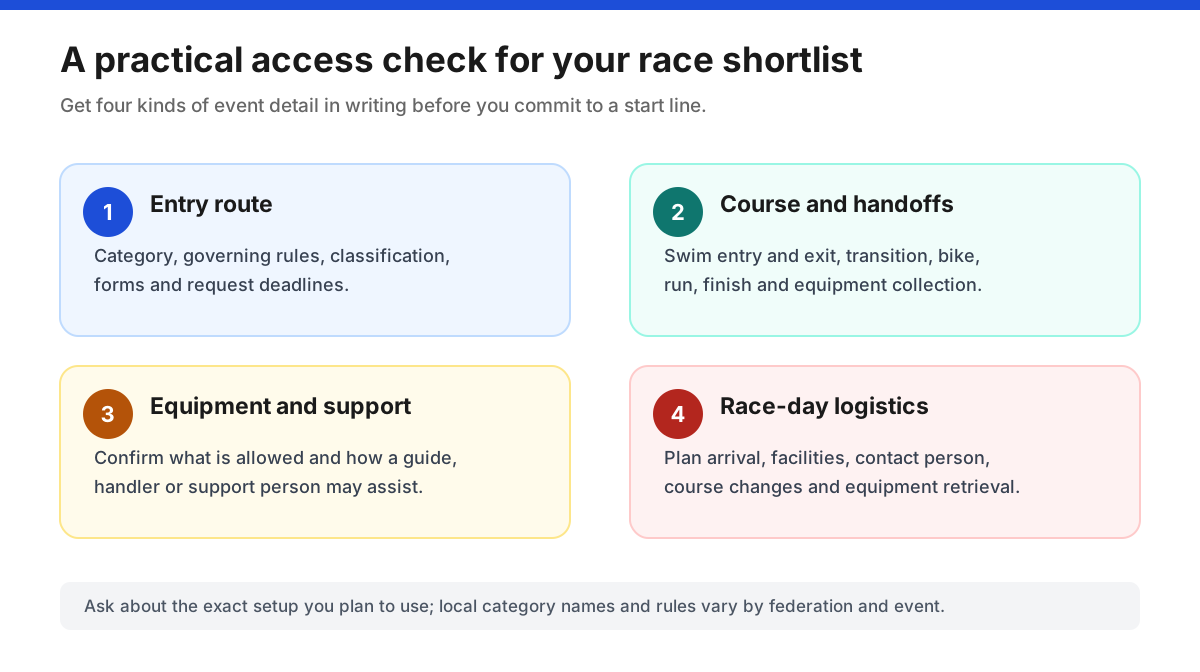
Start with the event you want to take part in and the practical details that would let you use its swim, transition, bike, run and finish safely. Then confirm which participation category and rule system apply, whether formal classification is required, and how equipment or assistance must be arranged. These details vary by country and event; a national federation and the race organizer can confirm the route for your specific race.
Key takeaways
- 1Adaptive triathlon is a broad participation term; paratriathlon can also refer to a formal, classified competition pathway. Categories and terms vary between governing bodies.
- 2You do not have to start by guessing a sport class. Begin with the race format, equipment, assistance and venue details you need to confirm.
- 3Some local events offer adaptive participation without the classification used for championship racing; this is not a rule that applies in every country or event.
- 4Ask the organizer about the swim, transition, bike and run separately. A general statement that an event is accessible may not answer the details that affect your own race.
- 5Describe the practical arrangement you need, then ask which rule, form, deadline and contact person apply. Use the event's official private channel for any required personal documentation.
In this article
- 1The short answer: match your race to the support and access you need
- 2Adaptive triathlon and paratriathlon are related, but not identical labels
- 3Choose the participation question you need answered first
- 4Find candidate events, then check the actual venue
- 5Send an organizer a specific, practical request
- 6Plan equipment, guides and assistance around the rulebook
- 7Turn the organizer's reply into a race-day access plan
- 8A practical first step
- ?Frequently asked questions
The short answer: match your race to the support and access you need
Adaptive triathlon is a broad term for swim-bike-run participation that uses adapted equipment, assistance or event arrangements. Paratriathlon can refer to the formal competition pathway governed by a federation's classification and competition rules. The terms overlap, but a local participation category and an international para sport class are not automatically the same thing.
To get started, choose a race you are interested in, list the exact course or transition details that matter to you, and ask the race organizer which entry pathway and rules apply. Then confirm in writing whether your equipment, guide or other assistance is permitted, what paperwork is required and when the event needs the request.
Do not assume you need a formal classification for every community race, or that a rule from one federation applies everywhere. For example, USA Triathlon describes domestic adaptive divisions separately from its classified paratriathlon competition. Other national federations and events may use different categories and procedures.
Choose the participation question you need answered first
Before comparing categories, write one sentence about your goal. It might be “I want to finish a local open event with my own cycle setup,” “I want to race in a para category,” or “I want to find out whether an event can support a guide or handler.” That keeps the conversation focused on the decision in front of you.
| Your current goal | First place to ask | What to confirm |
|---|---|---|
| Take part in a local community race | Race director or athlete-services contact | Whether the event can accommodate your equipment or assistance, which entry category to use, and who approves the arrangement |
| Enter a domestic adaptive division | Your national federation and the named race | Division rules, event availability, assistance roles, equipment, result status and registration process |
| Pursue classified para competition | Your national federation's para triathlon contact | Classification steps and dates, eligible events, sport-class rules, qualifying criteria and entry authorization |
| Compete internationally or at a championship | National federation, then the event's official guide | Current international rules, classification status, qualification, national selection and event-specific logistics |
These are starting points, not four universal categories. Your federation or organizer may use other terms. You can ask a question about one race without deciding that you want to pursue an elite or championship pathway.
Find candidate events, then check the actual venue
Search your national federation's event calendar, adaptive-athlete resources and local club listings. If an event does not advertise an adaptive category, contact the organizer to ask what participation arrangements it can consider; absence of a label alone does not tell you the answer. In the United States, USA Triathlon publishes adaptive event information and recommends contacting the race director ahead of race day. Use the current event page for any applicable deadline.
For each candidate, check the course as a sequence of separate handoffs. A useful shortlist records what you know, what still needs an answer and who supplied it:
- Arrival and start: route from parking or transport to check-in, staging and the swim start; entry surfaces, distance, queuing and any time constraints.
- Swim: entry and exit points, surface and slope, whether a ramp or other aid exists, start format, permitted support and how to signal for help. Ask the event's safety team about any proposed swim arrangement.
- Transition: surface, slopes, barriers, available space, equipment location, mount and dismount lines, and whether a handler or other support person may enter or assist.
- Bike: course surface, turns, pinch points and temporary barriers; inspection rules for your cycle or adaptation; and where the organizer needs to approve equipment.
- Run and finish: surfaces, kerbs, ramps, turns, aid-station layout, finish chute and the route to post-race support or equipment collection.
- Facilities and travel: accessible toilets and changing arrangements, luggage or equipment storage, transport between venues and a contact person who can help if the plan changes.
Use the current course map, athlete guide, event photographs and a written organizer reply together. A map can show the route while leaving transition surface or support access unanswered. An older race report may point to a good question, but it cannot confirm this year's setup.
Send an organizer a specific, practical request
A useful request names the event, the activity you want to complete and the operational detail you need confirmed. You do not have to send a full personal history to ask where a transition area is or whether a particular cycle setup can be inspected. If the organizer or federation requires documentation for a formal category or safety decision, ask how to submit it through its official private process.
You can adapt this message:
Subject: Participation and access questions — [event name, date]
Hello [event team],
I am considering/registered for [event and distance]. I plan to use [equipment or setup] and would like to confirm a few details before I enter/arrive:
- Is this equipment and participation arrangement permitted under the rules for this event? Is there a form, category or approval deadline?
- What are the surfaces, slopes and access routes at [specific location, such as swim exit or transition]?
- May [guide/handler/support person, if relevant] assist at [specific stage], and do they need to register, meet an eligibility rule or carry accreditation?
- Can you share a current course or transition map, or arrange a suitable course familiarisation?
- Who is the best event contact if the written plan needs checking on race weekend?
I can provide any required information through your official process. Please let me know the next step and any deadline.
Thank you, [name]
Keep the reply with your entry confirmation and athlete guide. If the first contact cannot answer a rules question, ask for the event's technical official or the relevant federation contact. A verbal “that should be fine” is not a substitute for confirmation when equipment legality, category eligibility or race safety depends on the answer.
Plan equipment, guides and assistance around the rulebook
Make two equipment lists: what you use during training and what the event allows in competition. They may differ. A cycle, prosthesis, tether, chair or other adaptation may need to meet detailed specifications, be inspected, or be approved in advance for a particular division. Do not buy specialist equipment or change a working setup based only on a generic list on the internet.
Ask the event to define each support role. In a rulebook, a guide, handler, co-athlete and personal supporter can have different permissions. Check whether that person can enter transition, assist at the swim, help with a handoff, accompany a course segment or meet you only outside the course. Find out whether the person must register, receive a bib or accreditation, attend a briefing, or meet a category-specific requirement.
If an adaptation changes how you mount, transfer, steer, brake, exit water or approach another athlete, rehearse it with appropriate support in the relevant training setting. A coach or equipment professional with relevant experience can help with sport-specific skills and fit. When a medical condition, injury, medication or symptom affects what activity is safe for you, ask a qualified clinician who can assess your circumstances. This guide cannot establish medical readiness or approve a race arrangement.
Turn the organizer's reply into a race-day access plan
Before race week, put the confirmed details in one short plan that you, your support person and the event contact can check. Include the approved entry category, exact equipment, assistance role and boundaries, arrival route, transition location, start instructions, swim safety procedure, course hazards, finish route and equipment retrieval. Add the name and contact method for the person who can resolve a mismatch.
Walk or review the parts of the venue that matter if the event permits it. Confirm that the plan still works from arrival through the finish, rather than checking only the race course. Ask what happens if a barrier, weather change, timing delay or course modification changes the agreed arrangement. Know who can authorize an adjustment on race morning; do not improvise a safety-critical change without an official.
Keep your own stop and help-seeking plan. If equipment fails, a route differs from what was agreed, or conditions become unsafe, stop where safe and contact an official. An entry fee or another person's expectation is not a reason to continue through a hazard. If the event response leaves an important access or safety question unresolved, compare a different event or date while there is still time.
A practical first step
Pick one event and send one clearly scoped question. You might ask whether a course familiarisation is available, which category to select, how an equipment inspection works or whether a support person may enter transition. Save the answer, then decide whether the remaining preparation and event arrangements are workable for you.
For the wider event-selection process, use how to choose your first triathlon. When you are ready to enter, the triathlon registration guide explains categories and the details to save. Our first-race gear guide helps separate event requirements from optional purchases; confirm any adaptive equipment directly with your event and federation.
Your first goal can be to get an accurate answer. You do not need to promise a particular distance, classification pathway or race date before you know what the event can support.
Sources
Sources are listed so readers can verify consequential claims and dated details.
- Adaptive Athletes — USA Triathlon (accessed October 2, 2026)
- Adaptive Divisions — USA Triathlon (accessed October 2, 2026)
- Adaptive Events — USA Triathlon (accessed October 2, 2026)
- Paratriathlon resource hub and getting-started information — USA Triathlon (accessed October 2, 2026)
- World Triathlon Competition Rules 2026 and current para triathlon rules — World Triathlon (accessed October 2, 2026)
- World Triathlon Para Triathlon Classification Rules — World Triathlon (accessed October 2, 2026)
Frequently asked questions
What is the difference between adaptive triathlon and paratriathlon?
Adaptive triathlon is a broad term for participation using equipment adaptations, assistance or event arrangements. Paratriathlon can refer to a formal competition pathway with governing-body classification and sport-class rules. Terms and categories vary by federation, so check the rules for your event and country.
Do you need a formal classification to enter an adaptive triathlon?
Not for every local or community event. Requirements depend on the country, event, division and competition level. USA Triathlon, for example, describes domestic adaptive divisions with different classification requirements from its classified championship paratriathlon pathway. Confirm the exact entry rule with the event and national federation.
How do I find an adaptive triathlon race near me?
Start with your national triathlon federation's event calendar and adaptive-athlete pages, then contact candidate race organizers about your specific equipment, assistance and venue questions. A race that does not advertise an adaptive category may still be able to discuss an arrangement, but you need the organizer to confirm what its rules permit.
When should I contact the race organizer?
Contact the event as early as you can, especially if equipment approval, a guide or handler, classification, course familiarisation or registration paperwork is involved. USA Triathlon's adaptive event guidance recommends contacting a race director at least a month before race day; other events may set different deadlines, so check their current instructions.
What should I tell an organizer about my disability?
Begin with the practical race detail you need the organizer to assess, such as a particular equipment setup, transition access or permitted assistance. Ask how to send any documentation the event requires through its official private process. Classification or eligibility procedures may request specific documents, but a general course-access question does not require you to send an unsolicited medical history.
Can a guide, handler or support person race with me?
Possibly, but each role has specific permissions that depend on the event and category. Ask what that person may do at the swim, in transition and on each course segment, whether they need to register or be accredited, and whether a rule sets any eligibility requirements. Do not assume that ordinary spectator access includes course access.
Can I use my own adaptive equipment in a triathlon?
Ask the organizer and governing body to confirm the exact setup under the rulebook for your category and event. Equipment requirements can differ between local participation and classified competition, and some items may need prior approval or inspection. Keep the written answer with your event plan.