What Happens on Triathlon Race Day? From Check-In to Finish
Follow the race-day process through check-in, transition, swim start, course support and results, including what to do when plans change.
By Lotte
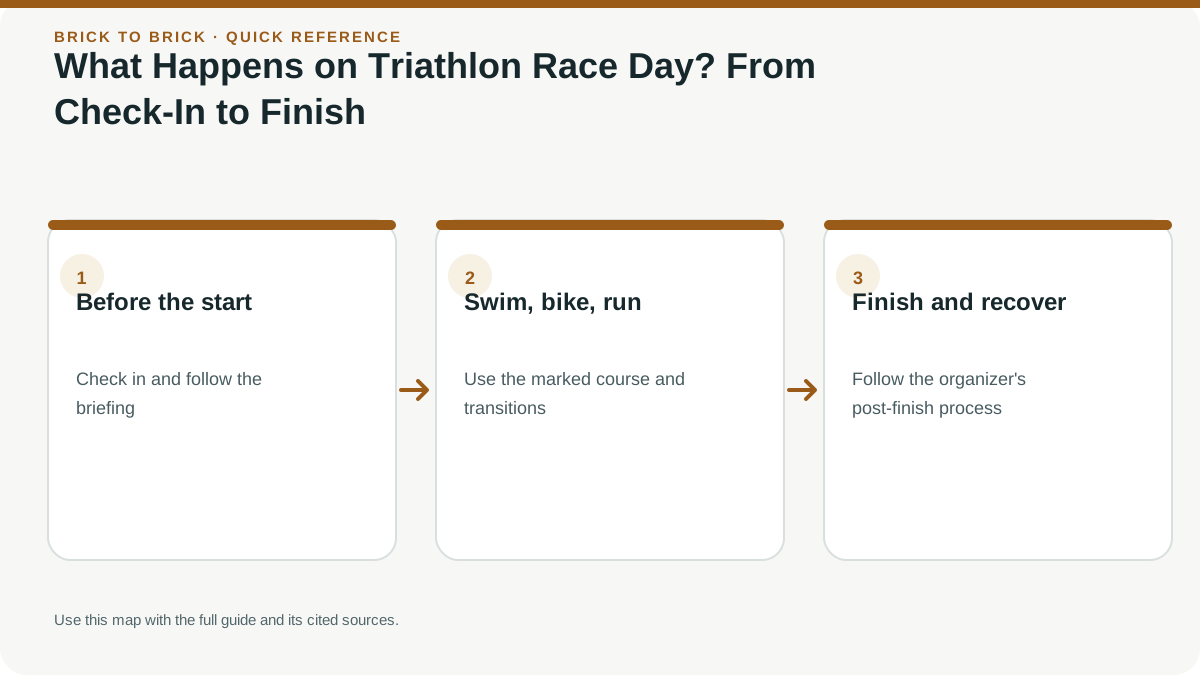
Triathlon race day usually moves through check-in, transition setup, swim start, bike and run, the finish area and equipment collection. The exact schedule, rules, cutoffs and handoffs vary by event, so use the latest athlete guide and briefing for your race.
Key takeaways
- 1Use the latest athlete guide and required briefing for event-specific times, rules, course changes and collection procedures.
- 2Check-in, transition closing, your start time and cutoff times are separate schedule items.
- 3Start formats and timing clocks differ; the guide explains how starts, splits and cutoffs are recorded.
- 4Transition, aid and finish areas may be controlled, with separate processes for equipment and supporter access.
- 5If you withdraw, feel unwell or the course changes, notify event staff and follow the official assistance plan.
In this article
- 1Check-in: turn your entry into permission to start
- 2Transition: understand the one-way routes
- 3Swim start: follow the format you were assigned
- 4Bike and run: navigate the official support system
- 5Finish: the event is not quite over
- 6Know how a changed or unfinished race is handled
- 7Follow your equipment through the whole event
- 8Learn the vocabulary used at each handover
- 9Use the latest event guide and briefing as your operating instructions
- 10Separate check-in, transition access and your race start time
- 11Know which clock controls starts, splits and cutoffs
- 12Expect controlled areas and follow each handoff exactly
- 13If the race changes, wait for the official version of the plan
- 14Close the day by checking results and resolving practical loose ends
- ?Frequently asked questions
Check-in: turn your entry into permission to start
Registration staff check the documents and eligibility required for the event and issue the relevant numbers, timing equipment or race pack. Some events do this the previous day; others allow it on race morning. Bring identification and any licence or registration evidence requested.
Check your details and start category before leaving the desk. Ask about discrepancies immediately. A race number is not always interchangeable with a timing chip, and body marking may follow a different procedure.
Read updates about course changes, water conditions and briefing times. Volunteers can point you toward the right official when a question involves rules rather than general directions.
Transition: understand the one-way routes
Find your allocated space and follow the racking instructions. Identify swim-in, bike-out, bike-in and run-out. Some events have two separate transition locations or bag-based systems, so do not assume everything stays beside one rack.
Lay out only permitted equipment and keep neighbouring spaces clear. Learn the route back to your bike using a fixed landmark. Follow helmet requirements when handling the bicycle and keep riding to the permitted side of the mount and dismount lines.
A race can restrict transition access before and after your own start. Ask when belongings can be collected rather than assuming supporters may enter.
Swim start: follow the format you were assigned
Before entering the water, check which start method applies to you: a lane-seeded pool swim, age-group wave, rolling start or mass start can have different reporting, queueing and timing instructions. Locate the reporting point and start window on the latest guide. For a self-seeded start, choose an honest pace position rather than joining the fastest group for convenience. Follow lifeguard and official instructions and leave enough space for other athletes to enter safely.
Confirm the course direction, turn buoys, swim-exit route and procedure for requesting help. Learn whether a missed or shortened swim changes the event format or your result category. Wetsuit permission depends on the organizer's current decision and applicable rules, not what athletes wore in a previous edition. Do not assume a cap color or start wave means that a wetsuit is allowed.
Take a moment to notice the actual conditions and how you feel. If the water, weather or your own condition makes you uncertain about starting safely, tell event staff before entering and ask what options exist. You may withdraw from the swim; a paid entry does not oblige you to accept a safety risk. Once in the water, begin at a controlled effort within your ability and use the event's signal or exit procedure if you need assistance.
Finish: the event is not quite over
Follow the finish-area flow, return timing equipment if requested and seek help if unwell. Arrange food, drink and comfortable clothing according to your needs; do not force a fixed recovery routine when you feel ill.
Meet supporters at the agreed point. Check when transition reopens and what identification is needed to collect the bike and bags. Keep your race number or collection evidence until everything is recovered.
Results may initially be provisional. Check missing splits or category errors through the official timing or race contact, using the published process and deadlines.
Know how a changed or unfinished race is handled
Weather, water quality, incidents or other conditions can lead to a delayed start, altered course or cancelled discipline. Listen to the official briefing rather than relying on rumours in the queue. A changed format may also change timing and results.
If you stop, tell officials so they can account for you. Ask how your bike, bags and supporters will be reunited. Do not silently leave the venue while still recorded as on course.
Use the race-morning timetable to plan your personal sequence and the packing checklist for equipment. This guide is the explanation of how the event itself operates.
Follow your equipment through the whole event
A first race is easier to understand when you track where belongings go. Some events use a single transition area; others have separate swim-to-bike and bike-to-run locations or labelled equipment bags. Read the collection instructions as carefully as the start instructions.
Before race day, identify who can enter each area, whether bike check-in happens the previous day, what proves ownership at collection, and when bags become available. Give supporters an agreed meeting point that remains accessible if mobile coverage is poor. Keep essential post-race medication or transport arrangements accessible through a suitable permitted plan.
After finishing, leave timing equipment where instructed and collect belongings within the official window. If you withdraw, tell an official rather than simply leaving the course: the event needs to know you are accounted for. Ask how to retrieve a bike or bag located elsewhere. A changed race can create practical problems even when you are physically well, and solving those is part of finishing the day safely.
Learn the vocabulary used at each handover
The start area, transition area, mount line, dismount line, aid station, penalty area and finish chute perform different jobs. Locate them on the map and, where permitted, walk the relevant approaches before racing. Knowing their names helps you ask a volunteer a precise question.
T1 refers to the swim-to-bike transition and T2 to bike-to-run. They can share one physical location or be in different places. The mount and dismount lines control where riding begins and ends; do not assume the edge of your rack is the correct place. Follow the event's instructions for helmet fastening, moving the bike and storing equipment.
Aid stations provide the support described by the organiser. They are not necessarily medical stations, and not every volunteer can assess a symptom. If you need medical help, say that clearly and use the event's assistance procedure. If you have a rules question or receive a penalty, follow the officials' instructions rather than asking another competitor to interpret the procedure mid-race.
At the finish, follow the flow through timing-chip return, refreshments, medical support if needed and equipment collection. Supporters may meet you outside a controlled athlete area. Agree a specific accessible meeting point instead of assuming they can stand immediately beyond the finish line.
Use the latest event guide and briefing as your operating instructions
Triathlon race-day processes vary by organizer, venue, sanctioning body, distance and event edition. Start with the current athlete guide for your exact race. It is where you find check-in documents, timing equipment, transition rules, start format, bag labels, course maps, cutoff clocks, wetsuit decisions and post-race collection. A general web page or last year's guide can explain vocabulary, but it cannot replace the current instructions for your event.
Attend any required briefing and check official event updates again close to the start. A briefing can explain route changes, temporary closures, weather actions or where to request assistance. The World Triathlon FAQs note that officials may announce a wetsuit decision before an age-group start; other organizers can publish different timing or procedures. Do not assume that a social-media post, spectator comment or message from another athlete is authoritative when it conflicts with race staff.
If you see a change, confirm how it affects your own start, timing, equipment and result category. Ask an official using a specific question: “Is my wave using the revised course?” is more useful than “What is happening?” If the answer remains unclear, stay in the designated area and seek the race office or head official. Never improvise a route or enter a closed course because the original map showed it.
Save the guide offline and note the event contact or update channel. Phone coverage may be unreliable at a remote venue, and the written details help you distinguish a last-minute instruction from a rumor.
Separate check-in, transition access and your race start time
Race schedules often contain several times that sound alike: registration or packet pickup, bike and bag check-in, transition opening and closing, athlete briefing, swim reporting, first wave, your wave and course cutoff. They are separate deadlines. A later personal start does not necessarily mean you can enter transition later; many events close it before the first wave. Some races require a visit on the previous day or use a second transition at another venue.
Make a small table from the official schedule:
| Event task | Published time or window | What you need to bring or know |
|---|---|---|
| Athlete check-in | Exact event window | ID, confirmation, licence or required documents |
| Bike or bag check-in | Venue-specific window | Equipment labels, inspection conditions, collection process |
| Required briefing | Time and location | Whether attendance is mandatory and how changes are announced |
| Transition close | Exact deadline | What must be complete before you leave |
| Your start | Wave or rolling-start window | Reporting point, seeding, chip-timing procedure |
Do not use a generic rule such as “arrive 90 minutes early.” The time needed depends on parking, queues, security, transition layout, bag drop and the walk to the start. Use the event schedule, add realistic travel margin and ask the organizer if a conflict makes the plan impossible.
This also helps supporters understand when access is allowed. Athlete-only areas may be controlled, and a family member may not be able to bring a forgotten item into transition after it closes.
Know which clock controls starts, splits and cutoffs
The time shown on an event schedule is not always the same clock used for your personal finish time or a course cutoff. In a wave start, the gun time may be common to a group; in a rolling start, an athlete's timing may begin when they cross a mat. Events can also apply discipline-specific cutoffs, intermediate bike or run closures, transition closing times and a final course close. The official guide defines how each one is measured.
Check whether your timing chip must be worn at a particular point, whether the swim entry mat starts your clock and whether chip time changes a cutoff calculation. Do not assume that crossing the finish mat later than a published cutoff is permitted because your personal chip time began later. Some events calculate cutoffs from a common start, while others may specify a different rule. Use the wording in the current athlete guide and briefing.
Look for every checkpoint, not just the final finish deadline. If a course is multi-loop, turn-around mats and road closures may have their own time limits. A result page can show split times, but it cannot tell you in advance whether your pace is compatible with all checkpoints. If the schedule is unclear, ask before the start rather than trying to negotiate at a closure.
Timing clocks also help explain a result. Chip time, gun time, transition splits and overall placing can differ according to the start format and timing policy. Use the official result definitions when checking your finish, and contact the event's timing office within its published correction window if something appears wrong.
Expect controlled areas and follow each handoff exactly
Transition is usually a controlled athlete space, not a public storage area. Follow the assigned rack or numbered bag system; keep your equipment inside the permitted space; and leave access lanes clear. In an event with separate transitions, a labeled bag can be transported for you, while your bicycle may remain in another location until a scheduled collection window. Do not assume that a supporter can move equipment or enter transition during the race.
Read exactly when and where personal belongings may be accessed. Some organizers issue a collection card, wristband, bib check or other proof before releasing a bike. Keep it secure and give your supporter only the information or authorization the event allows. If a bag is missing, ask the transition or event office instead of opening a neighboring athlete's equipment or leaving without checking the procedure.
On course, marshal directions and marked lanes guide when you enter, dismount or pass through controlled points. Your responsibility is to follow them even if another athlete moves differently. If you receive an instruction or a penalty, listen to the official, ask where and how it must be served, and comply with the event rules. Do not rely on an unofficial interpretation from someone racing beside you.
After the finish, timing-chip return, medical screening, refreshments, bag collection and transition release can happen in separate locations or windows. Walk through the process on the event map and choose a supporter meeting point outside any restricted athlete-only zone.
If the race changes, wait for the official version of the plan
Race directors may delay, shorten, reroute or cancel part of an event when water, weather, road access or an incident changes the risk or logistics. A modified event can affect course distance, start order, cutoff times, rankings, qualification eligibility and how results are recorded. The original course map may remain online while the actual plan changes, so listen for the announcement that applies to your start group and confirm any important detail with staff.
If an event is delayed, do not keep warming up hard or enter the water to stay ready unless staff permits it. Keep warm or cool in a way that suits conditions, protect any necessary medication and follow the new call time. If the swim is cancelled or shortened, ask whether the remaining disciplines still go ahead, what route to use and how timing will work. Do not start the bike or run on the original route without a clear official instruction.
If you need to withdraw, tell a marshal, medical worker or designated official and provide your race number. Ask what happens to your bike, bag and timing chip. This is particularly important if you are at a remote point or if the event is moving athletes off a closed course. The separate DNF guide explains results and practical steps when an athlete does not finish; your own organizer determines the transport and collection process.
For immediate danger or a serious symptom, stop and request medical help. Do not wait for a routine announcement or try to protect a finish time.
Close the day by checking results and resolving practical loose ends
The finish chute may lead through several controlled areas before you meet supporters or reach your bike. Follow the flow and return timing equipment if requested. If you are ill, dizzy, vomiting or otherwise unwell, tell the medical team before leaving. Race guides can require athletes to remain in the post-race area until they are assessed or able to leave safely; follow the guide and medical staff rather than a personal checklist.
Before leaving, check off your bicycle, bags, any streetwear or personal-needs items and the agreed supporter meeting point. Confirm the collection window and identification procedure in advance; transition may reopen later, and a supporter may need your bib or collection credential. If you are withdrawing or have received medical care, make sure the organizer knows you are accounted for and that someone can help with transport.
Results may first display as preliminary. Timing staff can correct missing mats, category details or course status under the event's process. Save your bib number and note the official contact and deadline, then submit a concise query with the relevant split or issue. A result can be marked DNF, DNS, disqualified or provisional for different reasons; do not infer the reason from an incomplete screen. For a DNF, consult the linked guide and the race office's instructions.
Once the logistics are settled, take time to eat and rest according to how you feel. This general guide covers the flow of a triathlon day, while the race's latest guide remains the source for exact times, rules and locations.
Sources
Sources are listed so readers can verify consequential claims and dated details.
- Triathlon FAQs and age-group competition procedures — World Triathlon (accessed September 24, 2026)
- World Triathlon Age-Group Racing: Competition Rules 2026 — World Triathlon (accessed September 24, 2026)
- Race Week Info: 2026 IRONMAN 70.3 Alghero — IRONMAN (event-specific guide) (accessed September 24, 2026)
- 2025 IRONMAN 70.3 Swansea First Timer Guide — IRONMAN (event-specific guide) (accessed September 24, 2026)
- Multisport rules — USA Triathlon (accessed September 24, 2026)
- What to Expect at Your First IRONMAN 70.3 Triathlon — IRONMAN (accessed September 24, 2026)
Frequently asked questions
What happens on triathlon race day?
Athletes follow the event’s check-in and transition instructions, report for their assigned swim start, complete the marked bike and run courses, and follow finish, results and equipment-collection procedures. Exact times and rules vary by event.
How early should I arrive for a triathlon?
Use the check-in, transition and start schedule in your event’s current athlete guide. The right arrival time depends on required check-in, travel, queues, transition layout and your wave; a universal arrival time can be misleading.
Does my cutoff use gun time or chip time?
It depends on the event and start format. Read the current athlete guide and briefing for how your start mat, intermediate checkpoints and final cutoffs are timed.
What should I do if the race is delayed or changed?
Wait in the designated area and follow official announcements for your start group. Confirm the revised course, schedule, timing and equipment instructions with event staff; do not improvise a route.
What if I need to stop or withdraw?
Tell a marshal, medical worker or designated official and give your race number so the event can account for you. Ask how your equipment and transport will be handled, and seek medical help for concerning symptoms.
Can my family enter transition or give me support on course?
Access and assistance rules vary by organizer and sanctioning body. Check the event guide for controlled areas, permitted outside assistance and supporter meeting points.