How to Start Triathlon Training: Your First Practical Steps
Practical first steps for triathlon training: assess your current activity, find instruction and safe practice, organise a manageable routine and choose what to learn next.
By Lotte
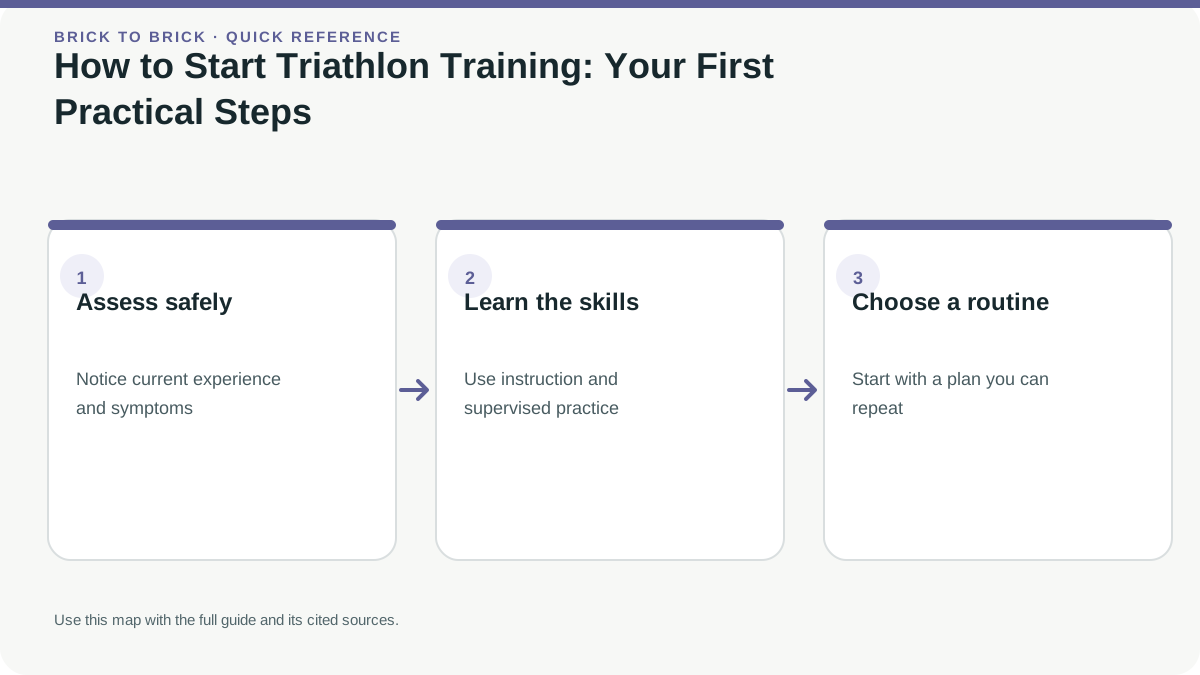
Begin triathlon training by assessing your current experience in swimming, cycling and running separately, arranging safe places to practise and choosing a small routine you can repeat. Learn unfamiliar skills before adding demanding sessions, and select a structured plan only when its assumptions match your current ability, schedule and event.
Key takeaways
- 1Start from current activity and skill in each discipline, not from a fitness label or past best.
- 2Arrange safe swim, bike and run practice and seek instruction where a skill is unfamiliar.
- 3Use early sessions to learn about access, comfort and recovery; they do not need to be fitness tests.
- 4Repeat a manageable routine before increasing demands, and avoid universal percentage rules.
- 5Choose a structured plan only after checking its prerequisites, recovery and fit with your life.
In this article
- 1Take an honest starting inventory
- 2Arrange the places and equipment first
- 3Use a first week to learn your response
- 4Give each session one learning task
- 5Repeat before increasing
- 6Choose a race after the preparation route makes sense
- 7Use the first fortnight as a feasibility check
- 8Set up the first session in each discipline
- 9Use a first-session note to choose the next action
- 10Decide what you want the first sessions to teach you
- 11Start from your recent activity, not a fitness label
- 12Find instruction where the skill is new
- 13Treat swimming confidence and swimming distance as separate
- 14Learn basic bicycle control before adding distance
- 15Let the first runs answer a small question
- 16Make a repeatable appointment, not a perfect calendar
- 17Choose when a structured plan becomes useful
- 18Understand gradual progress without a magic percentage
- 19Keep early equipment decisions practical
- 20Know when to pause and ask for qualified help
- 21What to do if your first plan does not work
- ⚖Pick the next step that matches what you need to learn
- ?Frequently asked questions
Take an honest starting inventory
Write down recent swimming, cycling and running or walking activity. Include how long you can do each comfortably, where you practise and whether any symptoms or injuries affect it.
General activity is a useful foundation, but experience in one sport does not establish competence in the others. If swimming is unfamiliar, instruction is a practical first step rather than an optional extra after fitness work.
Discuss new or concerning symptoms and relevant health conditions with an appropriate clinician before increasing exercise. A beginner plan cannot provide personal medical clearance.
Arrange the places and equipment first
Find a pool or supervised swim programme, a safe cycling location and a suitable walking or running route. Confirm opening hours and travel time. These details determine whether a week can be repeated.
Check that the bike functions correctly and that the helmet fits. Use comfortable familiar footwear and swim kit. The first-race gear guide separates necessary items from optional purchases.
Do not begin open-water training alone. Pool ability and safe open-water participation are different questions.
Use a first week to learn your response
Choose short easy sessions within your current ability, separated as needed for recovery. A first week might contain a swim lesson, a comfortable bike practice and a run-walk session, with ordinary rest days between them.
This is a layout example, not a required minimum or a complete race plan. If you are starting from little activity, begin smaller. If already active, avoid assuming you should immediately double the schedule because it looks easy.
Record duration, effort and how you feel afterward and the next day. The purpose is a usable baseline, not exhaustion.
Give each session one learning task
In the pool, the task might be comfortable breathing. On the bike, it might be controlled stopping and turning. On foot, it might be finding a run-walk pattern you can repeat without symptoms.
Ask for qualified instruction when a skill is unfamiliar. Avoid stacking multiple technique changes in the same session. A simple task makes it easier to know what improved.
Use improving your swim and bike handling for the next level of practice.
Repeat before increasing
If the first week is manageable, repeat the pattern and refine the practical details. When progress is appropriate, change one main demand at a time. More frequency, longer sessions and harder effort all count as changes.
If soreness, pain or unusual fatigue persists, reduce the workload and seek advice where needed. Do not use a universal percentage increase as proof of safety.
The training basics guide explains the principles, and the training-week guide helps distribute the sessions once the baseline is clear.
Choose a race after the preparation route makes sense
Compare a suitable event with your current skills, time and access. A short local race, relay or indoor format may be a useful option, but check the actual demands and rules.
Do not let a registration deadline force an unsafe training deadline. If the gap is too large, a later date is a practical adjustment.
Use the first-triathlon roadmap to organise milestones after these first steps. The initial success is a routine you understand and can repeat.
Use the first fortnight as a feasibility check
Record where each session happened, door-to-door time, what equipment was missing and how you felt afterward. Keep the work manageable enough that you can distinguish a scheduling problem from excessive training demand.
At the end of the first week, choose the biggest obstacle. If it is pool access, solve the booking or lesson arrangement before adding another run. If it is bike confidence, find appropriate instruction or a safe practice setting. If soreness repeatedly interferes with daily activity, reduce the demand and seek advice when symptoms warrant it.
Repeat a workable week before increasing several things at once. The first fortnight does not need to produce a dramatic fitness change. It should establish whether you have a safe, repeatable route into all three disciplines and which support would make the next month more realistic.
Set up the first session in each discipline
For swimming, confirm a suitable venue, booking and supervision or lesson arrangement. Bring the required swim clothing and goggles you can fit comfortably. Ask about lane use, entry procedures and where a new swimmer should begin. If breathing or basic competence is uncertain, instruction is a better starting task than forcing a distance.
For cycling, inspect the bicycle and helmet and choose an appropriate place to practise. Confirm that you can start, stop and use the controls before adding distance or traffic demands. A mechanical service or handling lesson may be the most useful first action, even though it does not create a long workout record.
For running, choose a familiar safe route or suitable venue and comfortable footwear. Start from your current activity tolerance; walking or a manageable run-walk arrangement may be appropriate for some beginners. Do not use another person's pace as the entry requirement. Seek individual advice when symptoms or health circumstances affect the choice.
Before each session, know how you will return and what happens if the plan becomes unsuitable. A short first outing with a clear purpose is easier to learn from than a demanding session that leaves you unable to tell whether the main problem was skill, fitness, equipment or logistics.
Use a first-session note to choose the next action
Write four short entries: what I intended, what I completed, what made it difficult and what I will change. For example, a swim may reveal that the lane was too crowded for the task, while a ride may reveal that reaching a bottle is not yet comfortable. Those observations call for different solutions.
Avoid assigning a fitness judgement to every practical difficulty. Forgetting a towel, misunderstanding a pool booking or using an awkward shoe closure is not evidence that you are unsuited to triathlon. Resolve the practical issue and try an appropriate session again.
If the difficulty is pain, unusual breathlessness, dizziness or another concerning symptom, respond appropriately rather than treating it as a normal learning obstacle. A beginner checklist cannot provide medical clearance.
After several manageable exposures, choose one next priority. That could be a regular lesson, a reliable training appointment or a suitable introductory event to investigate. Keep the plan small enough to repeat and specific enough to reveal progress. The first weeks should build a usable foundation, not require you to behave like someone with years of established training.
Decide what you want the first sessions to teach you
Before choosing a race date or training plan, name the question your first sessions should answer. You might want to know whether a local pool offers adult instruction, whether you can ride a bicycle with control, or whether a run-walk outing fits your current routine. A practical learning goal is easier to review than “get fit” because it identifies an action and a result you can observe.
Choose one purpose per session. A swim lesson can assess comfort and breathing; a quiet bike practice can focus on braking and turning; an easy walk-run can help you learn how your body responds to impact. Do not combine every new skill into a single long outing. That makes it hard to identify whether the main obstacle was technique, environment, equipment or fatigue.
These first exposures are not tests of belonging. If an activity feels unfamiliar, seek instruction or select a more suitable setting. If it reveals pain, unusual breathlessness or another concerning symptom, stop and respond appropriately. The next step can be another lesson, different access or qualified advice rather than a harder workout.
Start from your recent activity, not a fitness label
“Fit” can mean many things: walking regularly, playing football, lifting weights, cycling to work or completing endurance races. Those activities may provide useful experience, but they do not automatically prepare you for each triathlon discipline. A strong runner still has to learn swimming and bike control; a cyclist who has not run recently needs to reintroduce ground impact gradually.
Write down what you have actually done in the past month or two: frequency, duration, terrain, setting and how you felt afterward. Include breaks, travel, illness or major schedule changes. This is not a performance score. It gives you a more accurate starting picture than a memory of a former personal best or a device's fitness estimate.
If you have been inactive, begin with manageable activity and build from what you can repeat. If you are already active, retain appropriate familiar work while learning the other sports. In both cases, training should fit your current situation. A plan designed for an experienced age-group athlete is not automatically the right first step for someone with a strong general fitness base.
Find instruction where the skill is new
Some triathlon tasks are technical enough that instruction saves time and reduces uncertainty. If you cannot swim comfortably, look for adult beginner lessons or a coach who is prepared to teach novices rather than assuming every triathlon club accepts non-swimmers into all sessions. Ask what the lesson covers, whether it is held in a pool, what ability is expected and how the instructor handles water confidence.
For cycling, a basic handling session or quiet practice area can teach control of brakes, gears, starts, stops and turns before road exposure. A mechanic can inspect the bicycle, but mechanical servicing does not teach riding skills. For running, a coach or physiotherapist may help when technique or symptoms raise a specific question; many beginners can start with comfortable walking and gradual running without buying a technique assessment.
Look for qualifications and a teaching approach that fit your experience. USA Triathlon's Get Racing resource points beginners toward local events, clubs and coaching in the United States. Elsewhere, consult the national federation or local sports organizations. Ask about beginner sessions and safe entry points, not only advanced team workouts.
Treat swimming confidence and swimming distance as separate
A distance in a pool does not describe every part of water confidence. You may be able to cover a pool distance but still need practice with breathing, floating, turning, lane sharing or swimming without a wall nearby. Someone who is new to swimming may first need comfort entering the water and following a lesson, not a long continuous swim.
Choose a supervised environment and tell the instructor your experience honestly. A lesson plan can break movement into small tasks, allow rests and give feedback. Do not force breath holding, race-start simulations or open-water swimming as a shortcut to confidence. If a pool is not accessible, look for another qualified programme or decide that a race date needs to wait.
Open water adds conditions such as visibility, temperature, currents, waves, entry and exit, and other swimmers. It is a separate safety and skills question. The RNLI open-water swimming guidance covers practical hazards in its context. Do not practise alone or assume general fitness substitutes for supervised preparation.
Learn basic bicycle control before adding distance
A beginner bike session can focus on controlling the bicycle in a place suited to your current skill. Check that you can start, stop, steer, change gears and look ahead without losing control. Choose a quiet, legal area and wear a correctly fitted helmet. Add traffic, group riding, fast descents or clip-in pedals only after you have learned the relevant skill and can practise safely.
Have a qualified mechanic inspect a bike that has been stored, damaged or has uncertain brakes, tires or steering. Do not assume a bicycle is roadworthy because its tires hold air. Adjusting a saddle or handlebar can affect control and comfort; if you are unsure, ask a shop or qualified fitter.
Cycling to work may provide practice for someone, but it is not automatically a safe training route. Evaluate traffic, lighting, surface, weather, clothing, bike storage and workplace arrangements. Indoor cycling can help you learn pedalling and follow a session, but does not teach road handling. Keep the first outings specific to the skill and environment you need.
Let the first runs answer a small question
If running is unfamiliar, the first outing does not have to be a continuous run. Walking, a gentle run-walk approach or another suitable low-impact activity may help you learn how your body responds. Choose a route where you can slow down, turn back or stop. Do not borrow a friend’s pace, distance or weekly schedule as a starting requirement.
Notice more than speed. Is the surface comfortable? Can you speak at an easy effort? Does your movement remain comfortable later that day and the next? These observations can inform the next session, but they do not diagnose an injury or prove that a particular shoe prevents one. If pain changes your gait or persists, reduce activity and seek appropriate advice.
Cross-training fitness does not guarantee that muscles, tendons and bones are accustomed to repeated running impact. A cyclist or swimmer may feel cardiovascularly capable before the body is ready for much running. Keep those differences visible when planning all three sports, and do not turn a first easy run into a test of endurance.
Make a repeatable appointment, not a perfect calendar
A routine begins with sessions that can happen in ordinary weeks. Choose a few realistic appointment windows and confirm the practical details: facility hours, travel, changing, work, family responsibilities, daylight and equipment. If a swim lesson happens once a week, protect the time needed to get there and return. A session that fits only on a quiet holiday is not yet a reliable routine.
Use one calendar or written plan to show the sessions you intend to do. Mark which are fixed and which can move. When a session is missed, decide whether to omit it, shorten it or place it elsewhere without stacking demanding sessions together. No streak or app notification is more important than safe scheduling and recovery.
After a representative week, compare plan and reality. Ask which appointment failed and why. If the pool is too far away, solve access before adding more training. If work or care repeatedly interrupts a longer session, consider a different training time or race goal. The busy-professional scheduling guide and training week overview cover broader calendar decisions.
Choose when a structured plan becomes useful
A structured plan is most useful when you know the event or goal, can meet its prerequisites and have an idea of the time and facilities available. Before following one, check which disciplines it includes, how it progresses, where recovery appears, what equipment it assumes, and how the author expects you to respond to illness or missed sessions.
Read the plan's starting requirements, not only its race-week schedule. If it assumes continuous swimming, regular running or several hours of cycling that you cannot currently do, a later start date or a different plan may be more appropriate. A plan for an experienced athlete is not made beginner-safe by completing it at a slower pace.
A plan should help organize training, not guarantee a finish or replace individual clinical advice. A coach can adapt it to skills, work, health and event conditions. The training plans guide explains how to compare plan structure; the first triathlon roadmap is the separate guide for organizing preparation after you have selected a suitable event.
Understand gradual progress without a magic percentage
Progress can mean repeating the same manageable session with more comfort, learning a control skill, adding a suitable practice opportunity or slightly changing duration. There is no universal percentage increase that guarantees safety for every sport, athlete or starting point. The useful size and timing of change depend on recent activity, discipline, surface, health and recovery.
Change one main demand at a time when possible. If you add an extra run, keep other work familiar. If you start hills, avoid simultaneously increasing the session length and intensity. This makes your response easier to notice, although it cannot remove all uncertainty or prevent every injury.
Keep rest and easier activity in the plan. If soreness, fatigue or symptoms persist, repeat, reduce or pause the work rather than increasing it simply because a calendar advanced. Ask a qualified coach to help with training structure and a clinician to assess medical concerns. The training basics guide explains how duration, frequency, intensity and specificity interact.
Keep early equipment decisions practical
For learning the sport, use equipment that fits, works and is suitable for the venue. A swimsuit, goggles that seal comfortably, a bicycle in safe condition, a properly fitted helmet and comfortable running footwear may cover many basic practice needs. Requirements differ by training environment and event, so confirm them before borrowing or buying anything.
Do not treat equipment seen in race photos as mandatory. A triathlon-specific bike, smartwatch, wetsuit, race wheels or aerodynamic accessories may be useful for particular goals or courses, but they are not prerequisites for beginning to learn swim-bike-run. Avoid buying items before you understand whether they fit your body, bike, budget and event rules.
Check condition and fit before the session rather than on race morning. If a helmet is damaged or has an uncertain crash history, replace it according to the maker's guidance. If a bicycle has a safety problem, do not ride it until it is checked. The first-race gear guide separates basic equipment from optional purchases.
Know when to pause and ask for qualified help
Starting a sport often includes ordinary effort and unfamiliar sensations, but not every symptom should be treated as a normal beginner issue. Stop if you feel unsafe, develop new or severe pain, faintness, chest discomfort, unusual breathlessness, confusion or another concerning change. Seek urgent medical attention for severe symptoms and discuss recurring or unexplained problems with a qualified clinician.
If a symptom relates to a previous injury, chronic condition, medication or other health circumstance, describe the intended activity and event demands to the clinician. A coach can adjust sport practice but cannot provide medical clearance or diagnosis. Do not use a general training article to decide that a symptom is harmless.
For swimming, water safety also means never training alone in open water, choosing a supervised venue and following local conditions and rules. For cycling, use a route appropriate to current handling ability and obey road rules. The open-water checklist gives a separate pre-session safety review.
What to do if your first plan does not work
A missed lesson, an unavailable pool or an uncomfortable first run is information about the setup—not a verdict on your ability to do triathlon. Write down what prevented the session and choose a practical response. A booking issue may need a different time; bike confidence may call for instruction; an overfull calendar may need fewer sessions or a later event.
Distinguish a logistics problem from a training response. If you felt fine but could not reach the facility, changing the schedule may solve it. If the session repeatedly leaves you unusually exhausted or in pain, reduce or pause the activity and seek appropriate advice. If a skill is confusing, get feedback rather than repeating the same error at higher volume.
Keep the next step small and testable. Change one major feature, such as venue, session purpose or timing, then review. You can ask a club, coach, instructor, friend or organizer for help, while maintaining control of your own goals. There is no requirement to register for a race before you know which part of the sport you enjoy.
Pick the next step that matches what you need to learn
| Current question | Useful next step | What to avoid |
|---|---|---|
| I am new to swimming | Find beginner instruction in a suitable pool or supervised programme | Using a long continuous swim as the first lesson |
| I am new to cycling | Check the bike and practise control in a safe, appropriate place | Starting in traffic or a fast group before basic control |
| I am new to running | Choose a manageable walk or run-walk outing and observe your response | Using someone else's pace or distance as a requirement |
| My week does not fit | Solve access and timing, then repeat a realistic routine | Cramming missed work together or sacrificing recovery |
| I am ready for a plan | Check prerequisites, sessions, progression and recovery | Assuming every beginner plan suits every starting point |
Sources
Sources are listed so readers can verify consequential claims and dated details.
- WHO guidelines on physical activity and sedentary behaviour — World Health Organization (accessed September 24, 2026)
- Open-water swimming safety — Royal National Lifeboat Institution (accessed September 24, 2026)
- Get Racing: find local triathlon events, clubs and coaching — USA Triathlon (accessed September 24, 2026)
- Age-group racing and triathlon formats — World Triathlon (accessed September 24, 2026)
Frequently asked questions
How should a beginner start triathlon training?
Assess swimming, cycling and running separately, arrange safe practice and instruction for unfamiliar skills, then try a small routine that fits your current activity and schedule. Build from what you can repeat rather than copying another athlete's week.
Do I need to be fit before I start triathlon training?
You do not need to meet a single fitness test to begin learning, but you do need a suitable route into each discipline. Experience in one sport does not establish swimming, bike-handling or open-water skills.
Should I choose a race before I start training?
You can explore training before registering. If you are considering an event, check its actual swim setting, distances, rules and cutoffs, then make sure there is enough time and access to prepare appropriately.
How many days per week should a beginner train?
There is no universal number that suits every starting point. Choose a manageable pattern based on current activity, skills, access and recovery; seek coaching or clinical advice when relevant.
Do I need a coach or triathlon-specific equipment to begin?
Neither is a universal prerequisite. Instruction can be valuable for unfamiliar skills, especially swimming and bike handling. Begin with equipment that fits, works and is suitable for safe practice; specialist gear is optional unless a specific event requires it.
Can I practise open-water swimming alone before a triathlon?
Do not train alone in open water. Choose a supervised, permitted setting, check local conditions and follow water-safety guidance. Pool experience does not replace open-water preparation.