How to Find a Triathlon Coach as a Beginner
Shortlist beginner-friendly coaches, verify credentials and safeguarding, and compare communication, services and trial arrangements.
By Lotte
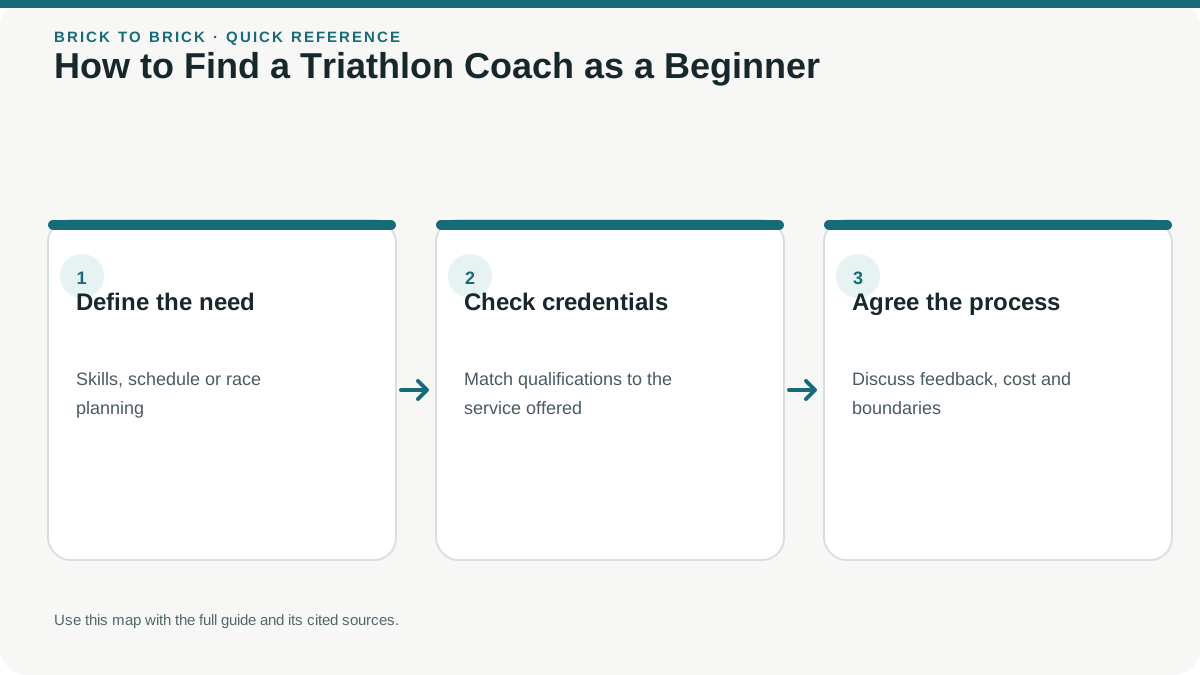
Find a beginner triathlon coach by defining the help you need, checking relevant credentials and interviewing for communication and practical fit. A prestigious race result or a platform badge alone does not establish that someone can coach your starting point.
In this article
- 1Write a brief before searching
- 2Use credible places to build a shortlist
- 3Ask for concrete examples of the working relationship
- 4Compare the service, not just the monthly fee
- 5Check boundaries and safeguarding
- 6Review fit after the first agreed block
- 7Send a coach a brief they can answer concretely
- 8Agree how progress and problems will be discussed
- 9Match the service to the problem you want solved
- 10Use a simple comparison matrix before speaking with coaches
- 11Verify credentials through the issuing organization
- 12Use a short interview to see how the coach thinks
- 13Review a sample plan for explainability, not sophistication
- 14Clarify communication, time zones and response expectations
- 15Check safeguarding and boundaries for the setting you will use
- 16Understand the total commitment before paying
- 17Review the first block using evidence you can discuss
- ?Frequently asked questions
Write a brief before searching
Include your current experience in each sport, event idea, available time, location, budget and main uncertainty. You might need swimming instruction, a whole training plan, or help adapting around work. Those are different services.
Identify whether in-person observation matters. A beginner struggling with breathing in the pool may need local instruction more than a remote calendar of workouts.
Keep medical information private until you know how the coach handles it and what is relevant. A coach should work within their competence and refer clinical or dietetic questions appropriately.
Use credible places to build a shortlist
National federation directories, established clubs and recognised qualification providers can help identify candidates. Verify the coach's current status with the relevant body where possible rather than relying only on a logo on a website.
Ask what the qualification covers, whether insurance and safeguarding arrangements apply to the service, and what experience the coach has with adults at your level. Requirements vary by country and setting.
Recommendations from other athletes can be useful leads, but confirm that their needs resemble yours. Coaching an experienced podium contender is not the same task as teaching a first-time triathlete.
Ask for concrete examples of the working relationship
Ask how the first month is assessed, how plans are adjusted, how quickly questions receive a response, and what happens when you miss training. Request a sample explanation of a session rather than only a sample calendar.
Describe a realistic problem: “My Thursday work shift changes at short notice; how would we adapt?” The answer reveals more than a promise of fully personalised coaching.
A useful coach should be able to explain uncertainty and why a session changes. Be cautious about guaranteed finish times, universal diets or pressure to train through concerning symptoms.
Compare the service, not just the monthly fee
Record assessment, planning, feedback frequency, live sessions, video review, race support, app costs, cancellation terms and any minimum commitment. Confirm what is included in writing.
An inexpensive plan-only service may be appropriate when that is all you need. It should not be compared as equivalent to frequent individual feedback. A higher fee also does not guarantee better fit.
If a trial or initial consultation is offered, agree its scope and cost. Do not assume that an informal conversation creates an ongoing coaching arrangement.
Check boundaries and safeguarding
Ask how communication works, where records are stored and how concerns can be raised. For in-person sessions, know the location, supervision and emergency arrangements. Additional requirements apply when children or vulnerable participants are involved.
The coach should distinguish coaching from medical diagnosis, treatment and regulated nutrition services. Relevant credentials should be verifiable, not implied by the word “expert.”
You should be able to ask questions or decline a session without pressure. If the relationship feels unsafe or inappropriate, use the relevant organisation's reporting process.
Review fit after the first agreed block
Assess whether instructions are understandable, sessions fit the calendar and adjustments reflect your feedback. Look for a relationship that helps you make better decisions rather than dependence on unexplained commands.
Discuss concerns early and use the agreed cancellation or change process if the fit is poor. Keep useful training records so a transition to another coach does not lose context.
For deciding whether ongoing coaching is worth paying for at long distance, use do you need an IRONMAN coach?. This page is the hiring process once you know what help you want.
Send a coach a brief they can answer concretely
A useful first enquiry includes your training background, intended race, weekly availability, equipment and facility access, and the main problem you want help solving. Mention relevant limitations without sending unnecessary sensitive medical detail through an unsuitable channel.
Ask how the coach handles a missed week, how often you can ask questions, what data they review and how plan changes are communicated. Request a clear description of fees, cancellation and what happens during holidays. A sample explanation of their process is more useful than an unsupported promise of a finish time.
Compare responses against the same brief. One coach may be excellent at group technique sessions while another offers detailed remote scheduling. Choose the service that matches your problem and communication needs. Confirm qualifications through the relevant issuing organisation rather than relying on a logo alone.
Agree how progress and problems will be discussed
Before paying for a long commitment, ask what a normal review looks like. Will you discuss session response, technique, confidence, consistency and logistics, or only completed hours? Ask how you should report pain, illness or a change in availability, and what response is included in the service.
A useful relationship allows you to explain that a session is unsuitable without feeling that you must prove toughness. The coach should be able to explain the purpose of the work and the limits of what they can assess remotely. Clear communication is especially important when a plan crosses time zones or relies on messages rather than regular meetings.
After an agreed initial block, review whether the service is solving the problem in your brief. A slower race result in difficult conditions does not automatically mean coaching failed, just as one personal best does not prove every decision was sound. Evaluate the process and the evidence together, including whether the plan stayed appropriate to your life and response.
Match the service to the problem you want solved
“Triathlon coach” can mean several different services. A swim instructor may observe stroke and breathing in person. A club coach may lead group sessions and offer general structure. A remote coach may review training files and adjust a full swim-bike-run plan. A strength coach may focus on lifting or movement, while a sports dietitian or clinician handles nutrition and health questions. These roles can complement each other, but they are not interchangeable.
Write down the decision you want support with. If you are nervous in open water, a coach who can safely supervise water practice may be more useful than a remote plan. If you already train consistently but cannot sequence hard sessions around shift work, you may need planning and regular communication. If recurring pain is limiting training, consult a clinician first and ask the coach how they coordinate after medical assessment.
You can also choose a narrower service: a technique assessment, a one-off plan review or a short skills course. You do not have to buy year-round coaching to get help with one clearly defined gap.
Use a simple comparison matrix before speaking with coaches
Score each candidate against the same practical questions. Do not rate only charisma or race results. Use a notes column for evidence and an “unknown” entry when the coach has not answered yet.
| Question | What a clear answer could include | Why it matters |
|---|---|---|
| What service is included? | Assessment, plan updates, meetings, file review, race support | Prevents comparing unlike offers |
| How do changes happen? | A defined way to report missed or unsuitable sessions | Shows whether the plan can respond to real life |
| What is the coach qualified to do? | Issuer, level, current status and scope | Helps distinguish training education from medical credentials |
| What does the service cost in total? | Monthly fee, app, sessions, minimum term, cancellation | Makes commitment and budget visible |
| How are concerns handled? | Boundaries, safeguarding, referral and complaint route | Protects athlete choice and safety |
Keep the comparison focused on the issue you wrote in your brief. A coach with a lower score on a feature you do not need may still be a good fit; an impressive feature does not compensate for a missing service you specifically require.
Verify credentials through the issuing organization
Ask for the full name of the qualification, the organization that issued it, the coach's current status and how to verify it. A certificate image, social-media badge or claim of “certified” does not tell you whether the qualification is current or what it covered. Requirements vary by country, insurer, work setting and whether the coach works with minors.
World Triathlon education offers different levels and course pathways, while national federations may operate their own recognized programs. USA Triathlon, for example, publishes current certification and compliance information, including requirements related to SafeSport and background checks. Those U.S. requirements should not be assumed to apply in every country; use the athlete's local federation, employer or regulator for the relevant rules (World Triathlon Level 2; USA Triathlon Coaching Hub).
Ask what continuing education or renewal is required and when it was last completed. If the issuing body has a directory, check the listing directly. If no directory is available, request documentation or contact the organization. Do not accept an unrelated fitness or business certificate as proof of triathlon-specific coaching education.
Use a short interview to see how the coach thinks
Ask each candidate to walk through the same scenario. For example: “I can train six hours this week, but I lose pool access and slept poorly after a work trip. What would you ask before changing the plan?” A thoughtful coach will ask about goals, health, recent training and which sessions matter. The exact workout matters less than how they explain the decision.
Other useful scenarios include a missed long ride, a swim skill that feels unsafe, a run that causes pain or a week where childcare changes. Listen for questions about context and recovery, not only instructions to add volume. A coach cannot assess a diagnosis from a text; they should be clear about when a clinician or other professional needs to be involved.
Ask whether an initial consultation is free, paid or part of a trial and how long it lasts. Set expectations about what will be reviewed. A sales call is not the same as a coaching assessment, and you should not have to disclose sensitive details before knowing how they will be handled.
Review a sample plan for explainability, not sophistication
A sample plan may reveal whether sessions are described clearly, but a polished spreadsheet does not prove that the coach can individualize it. Look for purpose, effort guidance, recovery and practical options when conditions change. Check whether swim-bike-run training and strength work appear to be considered together rather than pasted from separate templates.
Ask the coach to explain one session: why it is there, what you should notice, what to do if the effort feels wrong and what it replaces in the week. If the plan uses heart-rate zones, power, pace or perceived effort, ask how those targets are set and updated. A beginner should not need to know every training acronym before getting a clear explanation.
Do not request another athlete's private plan. A redacted generic example or a walk-through of the coach's process is enough. If the coach promises a finish time based on a sample calendar, ask what assumptions support it. A plan can organize preparation; it cannot guarantee the outcome of an event.
Clarify communication, time zones and response expectations
Remote coaching works only if the communication method suits both people. Ask which channel is used for routine questions, what response time is typical, whether calls are included and how urgent concerns are handled. Confirm whether plan changes arrive through an app, email or another system and who owns the training data if you leave.
If you live in another time zone, ask whether feedback is written or synchronous and how long you will wait for a response before a key session. A coach who is excellent in person may not be available at the times you need remote support. Conversely, a well-organized remote coach may be a good fit if you value written feedback and can train independently.
Discuss privacy before sharing health information, videos or location data. Ask where records are stored, who can access them and how long they are retained. For video analysis, follow pool or facility rules and protect the privacy of other athletes. Use a secure channel for sensitive information and share only what is relevant to the coaching question.
Check safeguarding and boundaries for the setting you will use
Safeguarding expectations are not only for youth sport. Ask how the coach handles one-to-one sessions, changing areas, travel, messaging, photographs and complaints. For a minor athlete, confirm parental involvement, supervision, required checks and the governing body's current protection policies before any session begins. Requirements differ by jurisdiction and organization.
World Triathlon updated its safeguarding framework for 2026, and USA Triathlon publishes current SafeSport and participant-protection resources. Use the relevant national policy and organization for your location rather than copying another federation's checklist (World Triathlon Safeguarding Policy; USA Triathlon SafeSport).
Professional boundaries should be clear: where sessions occur, when messages are appropriate, how concerns are reported and what services are outside the coach's competence. You can decline an activity or ask for a different setting. If something feels coercive or unsafe, prioritize your safety and contact the relevant organization or local authorities as appropriate.
Understand the total commitment before paying
Compare the full period you expect to use the service. Add the coaching fee, platform charge, in-person sessions, travel, race-day support and any required minimum term. Confirm whether payment continues during a planned holiday, injury break or coach absence. Ask what happens if either party ends the arrangement and whether training records can be exported.
Request written terms that state what is included, how billing works, the cancellation notice and any refund policy. If the coach offers a trial block, define its length, price, deliverables and what happens at the end. Do not assume that a “free consultation” includes assessment or personalized training.
Consider your budget over the whole season rather than the first month. An affordable limited service you can maintain may be more useful than a high-touch package that creates financial pressure. Coaching should fit into your life without requiring debt or delaying essential medical care, equipment safety or race travel costs.
Review the first block using evidence you can discuss
At the end of the initial agreed period, compare the service with the brief you sent. Did you receive the feedback promised? Were sessions explained and adapted when work, travel or recovery changed? Could you raise concerns without pressure? Did the coach stay within their scope and refer questions appropriately?
Use more than race pace to judge the process. A short block may improve consistency, confidence, technique understanding or planning before it changes a race result. A result can also be affected by course, weather, illness or other factors beyond a coach's control. Ask what evidence the coach uses and what the next review should examine.
If the service is not solving the stated problem, raise it clearly and agree on a change or use the contract's cancellation process. You may keep the useful parts of the plan and ask another qualified person for a second opinion. Coaching is a working relationship; continuing should be an active choice, not an obligation created by sunk cost.
Sources
Sources are listed so readers can verify consequential claims and dated details.
- USA Triathlon coaching resources — USA Triathlon (accessed September 24, 2026)
- World Triathlon safeguarding and TRI CARE — World Triathlon (accessed September 24, 2026)
- World Triathlon Level 2 Coach Certification — World Triathlon (accessed September 24, 2026)
- World Triathlon Safeguarding Policy — World Triathlon (accessed September 24, 2026)
Frequently asked questions
Should I choose the coach with the fastest personal race results?
Personal racing ability does not by itself establish teaching, planning or communication skill. Look for relevant qualifications, a clear process, appropriate boundaries and experience with athletes whose constraints resemble yours. Ask how they adapt plans and evaluate progress, not only what they have raced.