Half Distance Triathlon (70.3): The 1.9km / 90km / 21.1km Guide
What the half-distance (70.3) triathlon really demands — the 1.9km swim, 90km bike and half-marathon run — why it is the sport's sweet spot, and the distance where nutrition and pacing start to decide the race.
By Lotte
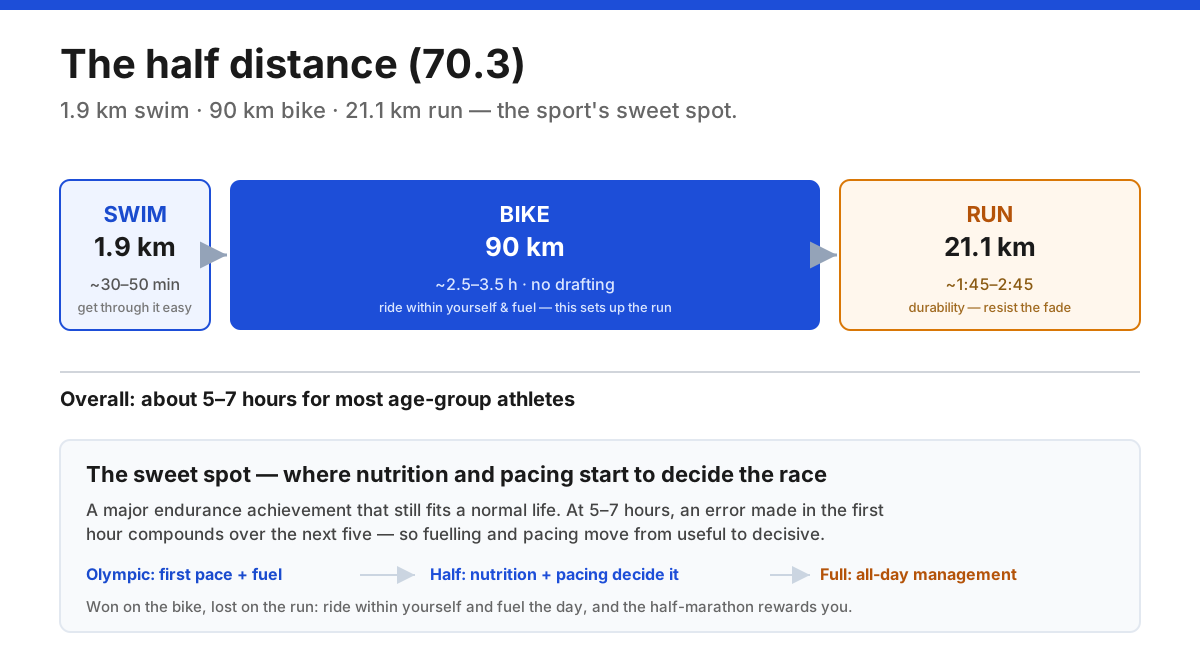
The half distance — a 1.9km swim, 90km bike and 21.1km run, branded Ironman 70.3 — is where triathlon becomes a genuine endurance day while still fitting a normal life, which is why so many athletes call it the sport's sweet spot. At five to seven hours it is the first distance where nutrition and pacing genuinely decide your result: a fuelling or pacing error made in the first hour compounds over the next five. This guide is the overview of the distance itself — its format, typical times and demands leg by leg — and it points you to the dedicated guides that own training, fuelling, pacing and the step up from the Olympic distance rather than repeating them.
Key takeaways
- 1The half distance (70.3) is a 1.9km swim, 90km bike and 21.1km half-marathon run, and most age-groupers finish in about 5 to 7 hours.
- 2It is widely considered the sport's sweet spot: a serious endurance achievement that still fits around a normal life, unlike the full distance.
- 3It is the first distance where nutrition and pacing truly decide the race, because a mistake in the first hour compounds over the five that follow.
- 4The bike sets the race up and the half-marathon off the bike is the real test — run durability and a disciplined, well-fuelled bike leg matter more than raw speed.
- 5This page is the distance overview — use the linked guides for training plans, fuelling, pacing and whether to step up from the Olympic distance.
In this article
- 1The half distance at a glance
- 2Why the half is triathlon's sweet spot
- 3The distance where nutrition and pacing start to decide the race
- 4The swim: 1.9 kilometres
- 5The bike: 90 kilometres
- 6The run: a half-marathon off the bike
- 7Fuelling: the half's real difference-maker
- 8Training for the half — and are you ready?
- 9Where to go next
- ⚖The half distance segment by segment
- ?Frequently asked questions
The half distance at a glance
The half-distance triathlon is a 1.9km swim, 90km bike and 21.1km run — a half-marathon to finish. You will most often see it called a 70.3, after the total of 70.3 miles and the Ironman series branding, though many independent races run the same distance. It sits second from the top of the standard ladder, above the sprint (750/20/5) and Olympic (1.5/40/10) and below the full (140.6).
A few defining facts frame everything else:
- Most age-groupers finish in about 5 to 7 hours. Stronger athletes come in around 4:30–5:30, and the fastest amateurs under 4:30. It is a half-day event, not a half-morning one.
- It takes real preparation. A typical build is around 16 to 20 weeks at roughly 8 to 12 hours a week, assuming you already have a base from sprint or Olympic racing.
- It is a genuine endurance day. The swim alone is longer than a whole super-sprint, the bike is a serious ride in its own right, and the run is a standalone-race distance — stacked on top of everything before it.
For where this distance sits relative to all the others — and to help choose between them — see the triathlon distances overview; this page goes deep on the half distance specifically.
Why the half is triathlon's sweet spot
Ask a room of experienced triathletes for their favourite distance and a large share will say the half. It has a reputation as the sport's sweet spot, and the reason is a genuine balance that no other distance quite strikes.
It is long enough to be a major achievement. Finishing a 70.3 means swimming almost two kilometres, riding ninety, and then running a half-marathon on tired legs — a day that demands real endurance, real pacing and real fuelling, and that feels like a serious accomplishment because it is one.
But it is short enough to still fit a life. Unlike the full distance, whose training volume and recovery demands genuinely take over your calendar, a half can be prepared for on a committed-but-sane schedule. The longest rides top out around three to four hours rather than six or seven, the recovery cost of each session is manageable, and you can hold down a job, a family and a social life while training for one. That combination — the biggest challenge that still fits an ordinary life — is exactly why so many athletes settle here for the long term rather than treating it as a stepping stone.
The distance where nutrition and pacing start to decide the race
Every distance has a character, and the half's is defined by duration. At five to seven hours, it is the first race long enough that how you fuel and how you pace do not just affect your time — they determine whether you finish strong, limp home, or blow up entirely.
The reason is compounding. Over a one-hour sprint, a slightly-too-hard start or a skipped gel costs you a little. Over a half, the same errors snowball: ride the bike ten watts too hard in the first hour and you pay for it across the whole run; fall behind on carbohydrate early and there is no catching up once your stomach and your energy have turned. This is why the old racing wisdom — that a 70.3 is won on the bike but lost on the run — holds: the bike is where you either set up or sabotage the half-marathon to come.
It helps to place the half between its neighbours. The Olympic distance is the first race you must pace and fuel at all; the full distance is an all-day exercise in management and patience. The half sits in between: still, for most people, one sustained and controlled effort rather than a survival march — but the first distance where getting nutrition and pacing genuinely right is the difference between a good day and a bad one. The how-to lives in race pacing strategy and the race fueling and Ironman/long-course nutrition guides; this page's point is simply that at this distance, they move from useful to decisive.
The swim: 1.9 kilometres
The half swim is 1,900 metres, almost always in open water, and most age-groupers take somewhere between about 30 and 50 minutes. It is a real swim — longer than an Olympic swim and far longer than a sprint — but in the context of a five-to-seven-hour day it is a small fraction of the whole, which shapes how you should approach it.
The goal is emphatically not to race the swim. It is to get through it efficiently, calmly and without spending energy you will want six hours later. Sighting a straight line, settling into a sustainable rhythm early, and drafting on another swimmer's feet where you can (legal and sensible in the water) all matter more than swim speed. Composure counts too: a panicked, over-hard start is a poor trade when the day is only just beginning. The open-water skills that make this leg easy are covered in the open-water swimming guide. Exit the water having barely touched your reserves, because the race that decides your day starts on the bike.
The bike: 90 kilometres
The 90km bike takes most age-groupers roughly 2.5 to 3.5 hours, and it is where the half is set up or thrown away. For nearly all age-group races it is ridden non-drafting — an individual effort, not a group ride.
The defining skill is discipline. The single biggest half-distance mistake is riding the bike at an effort that feels comfortably strong in the first hour but is quietly too hard to back up with a half-marathon — and because the consequences only arrive later, on the run, it is an easy trap to fall into. Riding a steady, controlled effort with something genuinely held in reserve almost always produces a faster overall race than chasing the riders who surge past early. The bike is also your main fuelling window — the one place you can comfortably eat and drink for hours — so it carries the double job of pacing conservatively and taking on the bulk of your race nutrition. Aerodynamics start to matter more over 90km, but a good position on the bike you have, and a proper bike fit, matter far more than the type of bike. Set the race up here, and the run becomes possible.
The run: a half-marathon off the bike
The half-distance run is a 21.1km half-marathon — but run on legs that have already swum 1.9km and ridden 90km, which makes it a completely different animal from a standalone half. Most age-groupers run it well outside their fresh half-marathon time, and the size of that gap is the clearest single measure of how well the swim and bike were managed.
This is the leg where the day is decided. The challenge is rarely raw run speed; it is durability — holding form and pace deep into a race when everything wants to slow down, and resisting the back-half fade that catches under-fuelled or over-biked athletes. Starting the run deliberately conservative and building into it, walking aid stations to fuel and drink properly, and breaking the distance into manageable segments are the habits that hold it together. Because a triathlon half-marathon is so specific, it is trained specifically: the progressive long runs and brick sessions that build the ability to run off the bike are covered in long-run progression for the half and the brick workouts guide. Get to T2 well-paced and well-fuelled, and this leg is hard but achievable; arrive having overcooked the bike, and it becomes a long walk.
Fuelling: the half's real difference-maker
If the half has a signature theme, it is nutrition. Five to seven hours is long enough that under-fuelling shows up unmistakably — usually as a run that falls apart — and long enough that your stomach's tolerance for food while racing becomes a limiting factor in its own right.
Two ideas do most of the work. First, the bulk of your fuelling happens on the bike, where digestion is easiest, and shifts to simpler, more tolerable sources on the run. Second, and more important, the whole plan has to be rehearsed — the exact products, timing and quantities practised in long training sessions until they are routine, because race day is never the place to try something new. The capacity to take on and absorb fuel over hours is itself trainable, which is the point of gut training. Because the right amounts are individual and depend on your size, sweat rate and the conditions, this overview deliberately hands the numbers to the dedicated guides: race fueling for the race-day plan, long-course nutrition for coordinating fuel, fluid, sodium and caffeine across a long day, and hydration for fluids and electrolytes. Build your plan there, rehearse it, and the half rewards you for it.
Training for the half — and are you ready?
The half is a significant step up in volume from the Olympic distance, and the best time to attempt one is after you are comfortable racing shorter. Before committing, you generally want:
- A base from sprint or Olympic racing, so the half is a progression rather than a leap into the unknown.
- The time for around 16 to 20 weeks at roughly 8 to 12 hours a week, built up gradually — sudden jumps in training load are a common route to injury and illness, so the progression matters as much as the total.
- Comfort building a long ride toward three to four hours and a long run toward around two hours, plus regular bricks, so race distances feel familiar in training.
Most of that training should still be easy aerobic work, with a smaller, deliberate amount of intensity — the same distribution that serves every endurance athlete — and the season is organised into base, build, peak and taper phases. The mechanics of building and progressing that live in training plans and triathlon periodization, and the run-durability piece specifically in long-run progression. If you are weighing whether you are ready to move up, the Olympic vs half Ironman comparison walks through exactly what changes between the two.
Where to go next
For a great many triathletes, the half is the destination rather than a waypoint — a distance worth racing again and again, chasing a smoother execution or a faster time without the life takeover of the full. If that is you, there is nothing to apologise for in settling here; it is the sweet spot for a reason.
If the half starts to feel comfortable and the full distance is calling, the jump up is a real one — roughly doubling the distance far more than doubles the day, because pacing, fuelling and durability all get harder in tandem. The full-distance guide covers what that entails, and the 70.3 vs full Ironman comparison lays the two side by side so you can judge whether, and when, to make the step.
The half distance segment by segment
| Segment | Distance | Typical age-group time | What it demands here |
|---|---|---|---|
| Swim | 1.9 km | ~30–50 min | Efficient, calm — spend no energy you'll want later |
| T1 | — | 2–4 min | A composed changeover; no rush |
| Bike | 90 km | ~2.5–3.5 h | Disciplined, non-drafting pacing while you fuel |
| T2 | — | 2–3 min | Quick change; brace for the run |
| Run | 21.1 km | ~1:45–2:45 | Durability off the bike; resist the back-half fade |
| Overall | — | ~5–7 h | Nutrition and pacing decide the day |
Sources
Sources are listed so readers can verify consequential claims and dated details.
- The training intensity distribution among well-trained and elite endurance athletes — Frontiers in Physiology (2015) (accessed September 18, 2026)
- Training-load changes and injury: systematic review — International Journal of Sports Physical Therapy (accessed September 18, 2026)
Frequently asked questions
What are the half-distance (70.3) triathlon distances?
A half-distance triathlon is a 1.9km (1,900m) swim, a 90km bike and a 21.1km run — a half-marathon. It is commonly called a 70.3, after the 70.3-mile total and the Ironman series branding, and it sits above the Olympic distance and below the full (140.6) on the standard ladder.
How long does a half-distance triathlon take?
Most age-group athletes finish in about 5 to 7 hours. Stronger athletes come in around 4:30–5:30, and the fastest amateurs dip under 4:30. Your time depends heavily on the course, conditions, and how well you pace the bike and fuel across the day, so it is far more useful to focus on executing your plan than on a target number, especially for a first 70.3.
How long should I train for a half-distance triathlon?
Around 16 to 20 weeks if you already have a base from sprint or Olympic racing, training roughly 8 to 12 hours a week and building the load gradually. If you are starting closer to scratch, budget six to twelve months and race some shorter events first for experience. The progression matters as much as the total hours, because ramping volume too quickly is a common cause of injury.
Is the half a big jump from the Olympic distance?
Yes — it is a genuine step up. The bike roughly doubles, the run doubles to a half-marathon, and the total time can go from under three hours to five or more, which is exactly why nutrition and pacing become decisive rather than merely helpful. Being comfortable at the Olympic distance first makes the half a manageable progression instead of a leap; the Olympic vs half comparison guide covers what specifically changes.
Do I need a triathlon bike for a 70.3?
No. Aerodynamics matter more over 90km than at shorter distances, so an aero position helps, but a good position on a road bike — ideally with a proper bike fit, and clip-on aero bars if you want them — gets you most of the benefit. A bike fit that lets you hold an efficient, comfortable position for hours is more valuable than the type of frame you ride.