Flying With a Triathlon Bike: Airline and Travel Checklist
Plan airline acceptance, bike-case limits, connections, regulated items and arrival contingencies before flying to a triathlon.
By Lotte
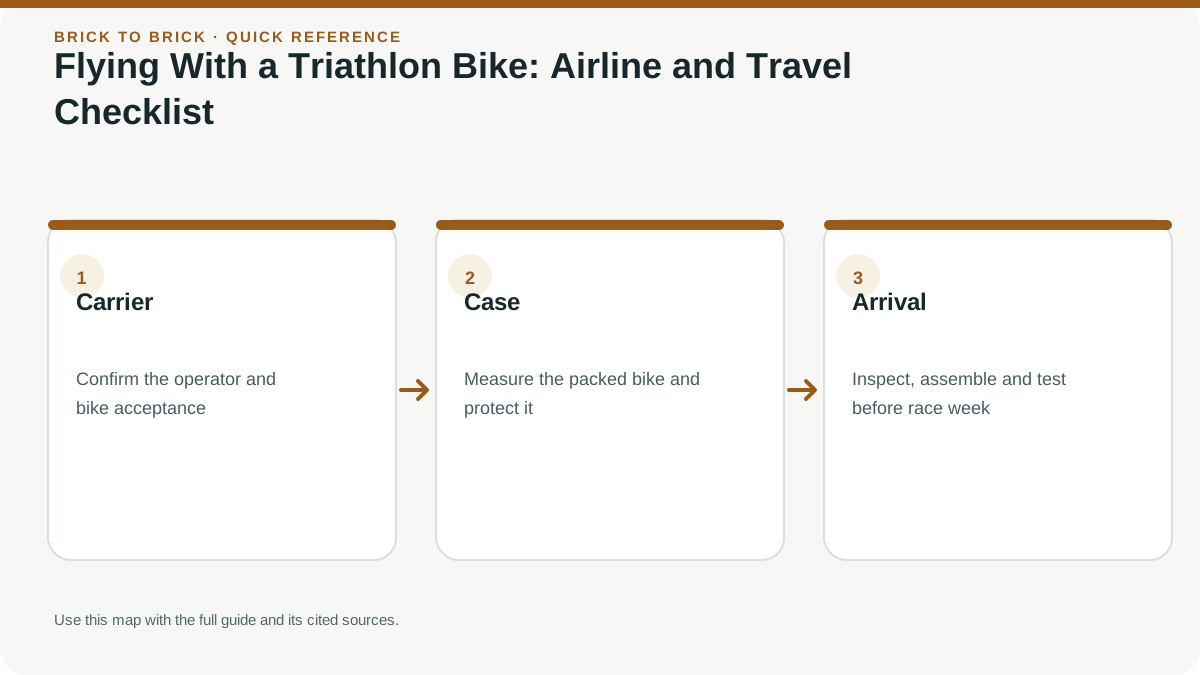
Before booking, get bike-case acceptance and current limits confirmed for every operating flight, then plan baggage handoffs, regulated items, transport and enough time to inspect the bike before event deadlines.
Key takeaways
- 1Confirm bicycle acceptance with every operating carrier, on the outbound and return journeys, before paying.
- 2Measure and weigh the packed case you will actually check; a bike-case label is not airline approval.
- 3Check airline baggage rules separately from airport security, dangerous-goods and customs requirements.
- 4Plan a safe inspection and test ride before the race's equipment deadlines, with a realistic response if the bike is late or damaged.
In this article
- 1Quick answer: confirm the whole itinerary before booking
- 2Choose whether to fly with your own bike
- 3Get a bike reservation for each flight segment
- 4Measure the case you will actually travel with
- 5Check batteries, gas cartridges and tools with the right authority
- 6Plan every baggage handoff and airport transfer
- 7Leave time to inspect the bike and respond to a delay
- 8Use this decision sheet before paying
- ?Frequently asked questions
Quick answer: confirm the whole itinerary before booking
Before buying a ticket, ask every operating airline on the outbound and return journeys to accept your packed bike case. Confirm the case's measured outside dimensions and full weight, whether advance reservation is required, the fee and baggage allowance, connection handling, and restrictions for anything packed with the bike.
Airline baggage acceptance, airport security screening, dangerous-goods rules and border procedures are separate checks. After arrival, leave time to inspect and assemble the bike before the event's check-in deadlines. This guide covers flight and itinerary planning; how to pack a triathlon bike for travel covers the separate packing and reassembly task.
Choose whether to fly with your own bike
Your own bike keeps a familiar setup but adds a case, baggage arrangements, transfers, assembly and a delay risk. A destination rental avoids transporting a case but creates questions about size, fit, pedals, condition, availability and collection hours. Shipping is another option where the route and delivery dates make it practical.
Compare complete arrangements using current quotes. Include the bike fee, case, airport transport, storage, assembly or service, rental delivery or adjustments, insurance terms and the cost of a fallback. There is no universal price point at which one option becomes better. Choose the arrangement you can verify, move and safely use before the race.
Get a bike reservation for each flight segment
A ticket may be sold under one airline's name while another carrier operates a leg. For every flight, including a regional connection and the return trip, record:
- The operating carrier and flight number.
- Whether the packed bicycle is accepted on that aircraft and route.
- The exact packed case dimensions and weight the carrier permits.
- Whether the bicycle must be reserved in advance and by what deadline.
- The fee, baggage-piece allowance, payment timing and packaging conditions.
- Whether the case is tagged through or must be collected and checked again at a connection.
Save the current policy page and any written response with your booking reference and the date you checked. Reconfirm after an aircraft, carrier or schedule change. An ordinary checked-bag allowance does not necessarily reserve space for special baggage.
Measure the case you will actually travel with
Pack the bike in the case you plan to use, then measure and weigh the complete package using the carrier's instructions. Include protruding handles or wheels when the airline's measuring method includes them. A manufacturer's empty-case dimensions do not tell you the packed size or weight, and a case marketed for triathlon does not guarantee acceptance on a particular flight.
Check the case against the limits for every operating carrier, not only the first flight. Confirm whether the bicycle uses a separate sports-equipment allowance or counts as an extra checked piece. If a case is close to a limit, do not rely on an estimate: ask the carrier before travel.
Plan every baggage handoff and airport transfer
Ask whether the case will be tagged to the final airport or must be collected and checked again at a connection. The answer can depend on the carriers, ticketing, airport and border process. A short connection may be risky when oversized baggage follows a separate handling route; choose a connection with a fallback you can use rather than relying on an assumption from a previous trip.
Check that your ground transfer can fit the packed case with passengers and other luggage. Confirm where the case will be stored while you race and whether accommodation allows safe assembly. International routes can have customs or temporary-import requirements; check the official government guidance for the countries on your itinerary. This guide does not determine legal or customs obligations.
Leave time to inspect the bike and respond to a delay
Choose an arrival plan that leaves time to collect the case, inspect it, assemble the bike, resolve a repair and meet the event's official check-in deadlines. There is no universal number of days: route reliability, local mechanic availability, your transport, race procedures and your own schedule differ.
Before departure, save photographs of the bike and case, the serial number, booking and reservation records, the carrier's damage-reporting process, and your insurance terms. At the airport, inspect the case and report visible damage promptly using the carrier's process. Keep the case and receipts until you understand what the carrier or insurer needs.
Do not ride if the frame, fork, wheels, brakes, steering or another safety-critical part may be damaged. Contact the carrier and event organizer, then use a fallback you researched in advance: a correctly sized rental, a local mechanic or a change to your race plan. Do not rush an unfamiliar setup simply to protect an entry fee.
Use this decision sheet before paying
Write the answers in one place for each direction of travel:
| Check | Record before booking |
|---|---|
| Operating carriers | Carrier and flight number for every leg |
| Bike acceptance | Reservation status, current fee and confirmation source |
| Packed case | Measured dimensions, full weight and piece allowance |
| Connections | Through-tagging or reclaim/recheck process and transfer time |
| Restricted items | What can travel in cabin, checked baggage or not at all |
| Ground transfer | Vehicle capacity, case storage and assembly location |
| Race deadline | Bike check-in, briefing and contact details from the current guide |
| Fallback | Rental, mechanic or revised plan if the case is late or damaged |
Recheck the list after a schedule change and shortly before departure. Policies, capacity and fees can change, so treat a saved answer as route- and date-specific.
Sources
Sources are listed so readers can verify consequential claims and dated details.
- PackSafe for Passengers — Federal Aviation Administration (accessed October 7, 2026)
- Carry-On Baggage Tips — Federal Aviation Administration (accessed October 7, 2026)
- CO₂ Cartridges — Transportation Security Administration (accessed October 7, 2026)
Frequently asked questions
Can I check a triathlon bike as ordinary baggage?
It depends on the operating carrier, route, packed dimensions, weight, fare and available capacity. Get the current bicycle policy and reservation requirements for every flight segment before relying on the ordinary baggage allowance.
Can I pack CO₂ cartridges in my bike case?
Do not assume they are allowed. For U.S. passenger screening, TSA says a compressed-gas cylinder must be empty and visibly empty, except for specific life-safety equipment. Check the current rules for your country and every operating carrier.
How early should I arrive before a triathlon if I fly with my bike?
There is no universal buffer. Work backward from the event's equipment deadlines and allow time for baggage collection, inspection, assembly, a controlled test ride and a repair or rental fallback.
Should I rent a bike instead of flying with mine?
Compare the complete trip cost and the practical fit of each option. For a rental, verify size, pedals, gearing, condition, collection hours and service support; for your own bike, include the case, airline arrangements, transport and delay plan.
What should I do if my bike arrives damaged?
Report it promptly through the carrier's process, document the damage and keep relevant records. Do not ride if safety-critical damage is uncertain; contact the event organizer and use a fallback you planned before travel.