Triathlon Race-Day Packing Checklist: Bags, Timing and Final Checks
Pack by location and timing for registration, transition, start and finish, then verify event-specific bags and conditions.
By Lotte
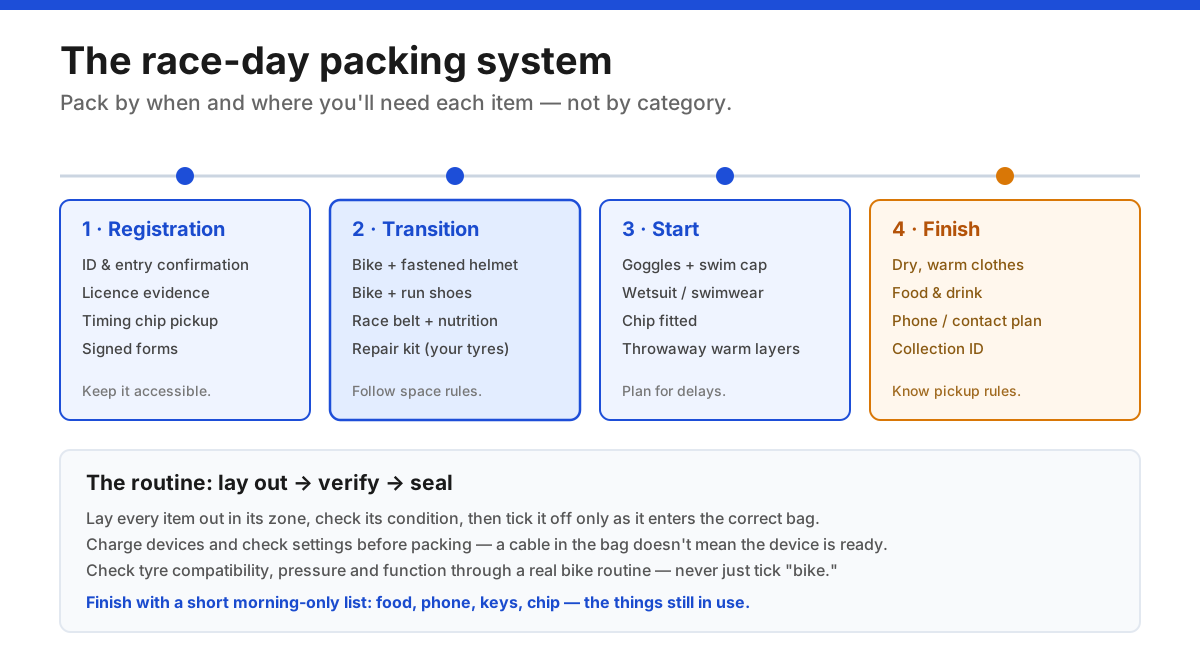
Pack for a triathlon by when you'll need each item and where you can reach it, not by category. Sort everything into four zones — registration, transition, start and finish — get split-transition handoff bags right, add only the condition-specific extras your race needs, and run a pack-verify-seal routine so nothing is missing, buried or against the rules. Travel packing for a destination race is a separate job.
Key takeaways
- 1Pack by when and where you'll need each item, sorting everything into four zones: registration, transition, start and finish.
- 2Registration admin (ID, entry proof, licence, chip) is the one thing you can't improvise — sort it first and keep it accessible.
- 3In transition, pack a repair kit matched to your exact tyre system and follow the event's allocated-space rules.
- 4For split-transition races, pack labelled bags by destination, confirm which takes your wet swim kit, and photograph each before sealing.
- 5Run a lay-out, verify, seal routine and keep a short morning-only list; travel packing for a destination race is a separate checklist.
In this article
- 1Pack by when and where, not by category
- 2The four packing zones
- 3Registration and pre-race admin
- 4The transition bag: the big one
- 5What stays with you to the start
- 6The finish and morning-clothes bag
- 7Split-transition and point-to-point events
- 8Add only the condition-specific items that apply
- 9Travelling to the race is a different job
- 10The pack, verify, seal routine
- 11The bottom line
- ⚖The race-day bags and what to confirm before you seal each one
- ?Frequently asked questions
Pack by when and where, not by category
The mistake that leaves people missing a swim cap at the start line isn't forgetting to buy it — it's packing everything into one bag by type ("all the clothing," "all the bike stuff") instead of by when and where they'll need it. On race morning you don't reach for "clothing"; you reach for the specific thing this moment requires, and if it's buried under wet kit two bags away, it may as well be at home.
The fix is to think in zones along the race-day timeline: registration, transition, the start, and the finish. Every item gets a known destination in one of those zones before it goes in a bag. One physical bag can serve more than one zone, but nothing goes in without an answer to "when do I need this, and can I reach it then?"
This checklist assumes you've already chosen and tested your equipment — if you're still assembling it, start with the first-triathlon gear essentials and what to wear during a triathlon. Here we're organising kit you already own so nothing is missing, buried, or against the rules on the day.
The four packing zones
Everything you bring belongs to one of four moments, and sorting by these makes the whole day calmer:
- Registration / check-in — the admin you need before you're an athlete on the course: ID, entry confirmation, licence, timing chip pickup.
- Transition — everything you set up at your bike rack and leave there: bike, helmet, shoes, nutrition, repairs.
- The start — the small set of things that stay with you until you enter the water, and the layers that then travel to the finish.
- The finish — what you want waiting for you: dry clothes, food, your phone, and whatever you need to collect your bike and get home.
Write the four zones on paper (or in your notes app) and list items under each. The act of assigning every item to a moment is what catches the gaps — a swim cap with no home in the "start" column is a swim cap you'll forget. Label your physical bags to match, using the organiser's system where they provide one. The rest of this guide walks each zone in turn.
Registration and pre-race admin
Registration items are easy to underrate because they're not "gear" — but turning up without the right document can mean you don't start at all. Pack, and keep accessible (not under wet kit or tools):
- Photo ID and your entry confirmation (printed or on your phone, plus a backup).
- Licence evidence if your event or federation requires it — a day licence or an annual membership card.
- Any signed forms or waivers the organiser specified.
- Your timing chip if it's collected at registration, plus the ankle strap.
Read the athlete guide for exactly what's required and when check-in closes — many events have a strict cutoff the day before, and some require you to be there in person to collect your race numbers and body-marking. Sort this zone first, because it's the one thing you genuinely cannot improvise on the day. Everything downstream in this checklist assumes you've actually made it onto the start list.
The transition bag: the big one
This is the bag most of your kit lives in, because it's everything you set up at your rack and leave behind while you race. Work through it by discipline:
- Bike: the bike itself (checked and roadworthy), a compliant helmet you can fasten, bike shoes or your familiar pedal setup, and filled bottles per your rehearsed plan.
- Run: run shoes (with elastic laces if you use them), a race belt for your number, and a hat or visor if you wear one.
- Both: sunglasses, socks if you wear them, sunscreen, and any nutrition that lives in transition.
- Repairs: a spare matched to your exact tyre system — a tube of the right valve length, or approved tubeless repair — plus an inflation method you can actually use and any tools. A spare with the wrong valve is not a working backup.
Crucially, follow the allocated-space rules. Your kit belongs in your own boxed area or on your hook; don't bring a big mat, stool or crate without checking it's allowed, and keep neighbouring athletes' run-throughs clear. How you lay all this out for fast, legal transitions is its own skill — see the transition setup guide and, for executing it, T1 and T2 mastery.
What stays with you to the start
A small, critical set of items must travel from transition to the swim start and stay accessible until the moment you use them:
- Goggles (and a spare pair if you have them — a snapped strap at the start is race-ending otherwise).
- Your required swim cap (events usually issue one; wear it over your own if you like).
- Timing chip, fitted as instructed — double-check it's on before you leave transition.
- Your wetsuit or permitted swimwear, and any pre-start throwaway warm layers for standing around.
The detail people miss: work out how your warm layers reach the finish once you enter the water. Many events have a morning-clothes bag you hand in before the swim; know where it goes and when it closes. And build a weather plan for delays — swim starts get held for fog, cold water or safety, and you don't want all your warm or waterproof kit locked in a bag you can't reach while you wait. Keep what you'd need during a 30-minute delay on you.
The finish and morning-clothes bag
After the finish line you'll be tired, possibly cold or overheated, and not thinking clearly — so pack this bag for the person you'll be then, not the organised one packing it now:
- Dry, warm, easy clothes — a change of top, something with a zip, dry socks. You'll be grateful even on a warm day once you stop moving.
- Food and drink you actually want post-race, plus anything for the journey home.
- Your phone (or a clear plan to meet supporters) and enough charge or a battery pack.
- Collection ID: many events need your race number or a wristband to release your bike from transition.
Check the bike-collection window and whether someone else may collect your equipment for you. And plan for the harder case: if you have to withdraw, your finish bag and your bike may be in different places, so write down how the event returns athletes and kit. A supporter who knows the plan beats one guessing at a barrier.
Split-transition and point-to-point events
Bigger and long-course races often have T1 and T2 in different locations, sometimes miles apart, with the organiser providing labelled bags you drop in advance. This is where packing by destination matters as much as by discipline, and where a wrongly packed bag can't be fixed on the day.
The golden rule: follow the organiser's bag labels exactly, and confirm which bag receives your wet swim kit after T1. Then check each bag against what it must contain before you seal it (see the table below).
Two habits save races here: photograph each bag's contents before sealing it — a memory aid, not a substitute for physically checking — and if an item moves between bags, update your list immediately, because otherwise a ticked box tells you where something used to be, not where it is now. When bags are dropped the day before, you're trusting your past self completely, so slow down and verify.
Add only the condition-specific items that apply
Start from the four core zones, then add only what your specific race and forecast demand — an over-stuffed transition area is harder to work in, not safer:
- Cold or wet: check permitted layers, keep dry kit in a sealed bag, and consider warm throwaway clothes for the start. A dry top for the bike can matter in a cold rain.
- Heat: accessible sun protection, extra fluid, and knowing the event's official cooling arrangements — pair this with racing a triathlon in heat.
- Medical, accessibility or individual needs: follow your own clinical plan, carry what you need, and raise event arrangements with the organiser early rather than trusting a generic list.
- Early or late finishes: lights or reflective kit if allowed and relevant, and a plan for a finish in the dark.
The principle is subtraction, not addition: a shorter, correct list you can actually run through beats an exhaustive one you skim.
Travelling to the race is a different job
There's an important line between race-day packing (this guide) and travel packing for a race away from home — and mixing them up is how the wrong things get forgotten.
If you're flying or driving to a destination event, the priority shifts to what you can't replace at the destination, a carry-on strategy for irreplaceables, and a packing timeline over several days. That's a separate checklist: see the triathlon travel packing list for the destination-race strategy, and the guides to packing a bike for travel and flying with a triathlon bike for the bike itself.
One travel trap worth flagging here: race legality does not equal flight legality. CO2 inflation cartridges, tools, batteries and liquids all have airline restrictions that have nothing to do with your event's rules. Check those separately, well before you pack, so a compliant race kit doesn't get confiscated at security.
The pack, verify, seal routine
A checklist only works if you use it as a process, not a list you glance at. The routine that actually catches errors is three steps per item:
- Lay it out in its zone, everything visible at once.
- Verify its condition — not just that it exists, but that it works. Goggles intact, tube the right valve, shoes with laces, number legible.
- Seal it — tick the item off only as it enters the correct bag, then close and label the bag.
Two specifics that trip people up: charge devices and check their settings before packing — a charging cable in the bag doesn't mean your watch or bike computer is race-ready — and check the bike properly (tyre compatibility, pressure, brakes, gears) through a real mechanical routine rather than ticking a box marked "bike."
Finish with a short morning-only micro-list for the things still in use overnight and at breakfast: food, phone, keys, chip, kit you slept in. Place those final grabs against the race-morning routine so nothing essential is left charging on the counter as you walk out the door.
The bottom line
A triathlon packing checklist isn't about owning more; it's about making sure every item you already have is present, working, reachable at the right moment, and legal where you'll use it. Sort by the four zones — registration, transition, start, finish — verify each item as it enters the correct bag, add only the condition-specific extras your race actually needs, and keep travel packing as a separate job.
Do this once carefully and race day gets quieter: no frantic searching, no forgotten cap, no illegal setup, no battery panic. Then confirm the specifics for your event, because bag systems, collection rules and split-transition arrangements all vary by organiser.
To build the rest of your race-day flow around a well-packed bag, see the transition setup guide, the race-morning routine, and race-day preparation for the full picture.
The race-day bags and what to confirm before you seal each one
| Bag / zone | What goes in it | Confirm before sealing | Where it ends up |
|---|---|---|---|
| Registration | ID, entry proof, licence, chip | Kept accessible, not buried | With you at check-in |
| Transition bag | Bike, helmet, shoes, nutrition, repairs | Everything to start the bike legally | Your rack space |
| Start / with you | Goggles, cap, chip, wetsuit, warm layers | Chip fitted; delay plan set | You, then swim start |
| Morning-clothes bag | Warm layers handed in pre-swim | What's retrievable, where and when | Finish or bag drop |
| Finish bag | Dry clothes, food, phone, collection ID | Bike-collection ID included | Finish area |
Sources
Sources are listed so readers can verify consequential claims and dated details.
- World Triathlon race and equipment information — World Triathlon (accessed September 20, 2026)
- Multisport Competition Rules — USA Triathlon (accessed September 20, 2026)
Frequently asked questions
What should I pack for race day at a triathlon?
Organise everything into four zones: registration (ID, entry confirmation, licence, timing chip); transition (bike, fastened helmet, bike and run shoes, race belt, nutrition, a repair kit matched to your tyres); the start (goggles, swim cap, wetsuit or swimwear, warm throwaway layers); and the finish (dry clothes, food, phone, and ID to collect your bike). Add only the weather or medical extras your specific race needs.
Should I pack every spare I own in transition?
No — check the space and equipment rules and pack for plausible needs. Too many loose items obstruct other athletes and make your essentials harder to find. Keep sensible reserves where they're permitted and useful, and practise your setup so you know exactly what belongs at each stage.
How do split-transition (point-to-point) bags work?
When T1 and T2 are in different places, the organiser provides labelled bags you drop in advance — typically a bike/T1 bag, a run/T2 bag, and a morning-clothes bag. Pack by destination, follow the labels exactly, confirm which bag takes your wet swim kit, and photograph each bag's contents before sealing it. Once dropped, you can't fix a mistake on the day.
What's the difference between this and a travel packing list?
This checklist organises your kit for race day itself, by when and where you'll use each item. Travel packing for a destination race is a separate job focused on what you can't replace at the destination, a carry-on strategy and a multi-day timeline — see the triathlon travel packing list and the bike-travel guides for that, and remember airline rules for CO2, tools and batteries differ from race rules.
How do I make sure I don't forget anything on race morning?
Use a pack-verify-seal routine: lay each item out in its zone, check it actually works (not just that it exists), and tick it off only as it enters the correct bag. Charge and set up devices before packing, check the bike mechanically rather than ticking 'bike,' and keep a short morning-only list for items still in use — food, phone, keys, chip.