Triathlon Cutoff Times: Calculate Every Checkpoint Margin
Calculate cutoff deadlines from the current athlete guide, distinguish elapsed time from clock time and plan realistic safety margins.
By Lotte
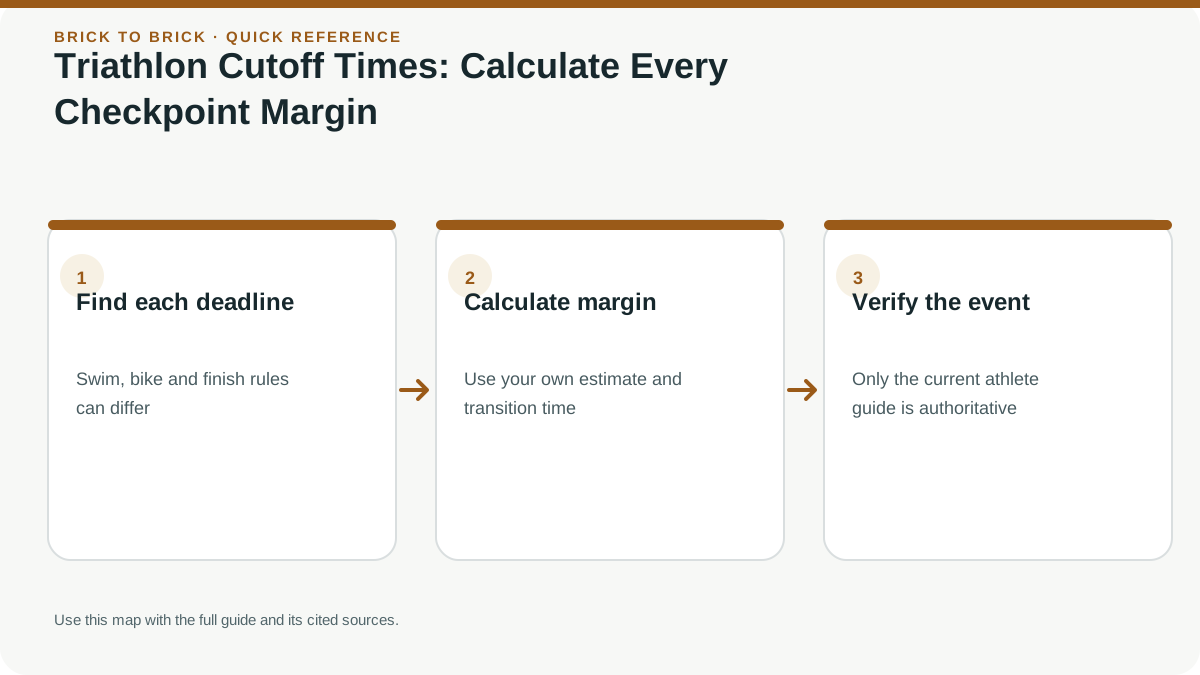
Triathlon cutoff times are event-specific deadlines for checkpoints and the finish. Copy each time from the current athlete guide, confirm whether it is elapsed or clock time, then plan realistic margins and a safe withdrawal option.
Key takeaways
- 1A start wave or individual start can change how elapsed cutoffs are calculated.
- 2Include transitions, stops and course conditions in the planning timeline.
- 3A cutoff is not a reason to continue through illness or unsafe symptoms.
In this article
- 1Copy the deadlines from the current athlete guide
- 2Distinguish elapsed time from the time of day
- 3Calculate cumulative arrival, including stops
- 4Test an earlier checkpoint, not only the finish
- 5Use the smallest margin to guide preparation
- 6Know the withdrawal process in advance
- 7Calculate the cost of a late start against a fixed closure
- 8Ask a cutoff question with the clock reference included
- 9Why cutoffs are different from one race to another
- 10Build a personal cutoff timeline from the athlete guide
- 11Include realistic stops, aid stations and course conditions
- 12Understand what happens when a deadline is missed
- 13Choose an event with time margin that fits your current preparation
- 14Calculate each deadline with an explicit clock reference
- 15Use cutoff time to make a safer race choice
- 16A worked example for planning a cutoff buffer
- ?Frequently asked questions
Copy the deadlines from the current athlete guide
Create a table with checkpoint location, distance, deadline, whether it is elapsed or clock time, and what happens if it is missed. Note swim exits, intermediate bike checks, transition closure and run turnarounds as well as the finish.
Race distance does not establish one universal cutoff. Course permits, start format and event arrangements can change deadlines. A familiar number from another IRONMAN or local sprint is not evidence for your event.
If the guide is unclear about your rolling start or wave, ask the organiser before booking around an assumed finish time. Keep the answer with your race notes.
Distinguish elapsed time from the time of day
An elapsed cutoff is measured from a specified start reference. A clock-time closure happens at a fixed time of day. Those can create different margins for athletes who start at different times.
In an illustrative event, an athlete starts at 07:20 and a checkpoint closes at 12:00. Their available time is 4 hours 40 minutes. If they start at 07:40 instead, it is 4 hours 20 minutes, unless the event has an individual allowance that changes that interpretation.
Do not subtract the advertised first-wave start automatically. Use the reference stated in the rules and include uncertainty about when you will cross the start line.
Calculate cumulative arrival, including stops
For each checkpoint, add all preceding segments, transitions and planned delays. On the bike, time in hours equals distance in kilometres divided by average speed in kilometres per hour. For the run, time in minutes equals kilometres multiplied by minutes per kilometre.
Example: a 50-minute swim, 6-minute T1 and 90 km bike at 25 km/h gives 50 + 6 + 216 = 272 minutes, or 4 hours 32 minutes to bike finish. Against an illustrative elapsed bike deadline of 5 hours 30 minutes, the margin is 58 minutes. These deadlines are invented solely to show the method.
A puncture, toilet stop and walking through transition consume that same margin. Add each once; do not hide them inside both a slower pace and a separate delay.
Test an earlier checkpoint, not only the finish
Suppose the course climbs sharply before an early turnaround. Your whole-course average speed may look adequate while your arrival at that turnaround is too late. Split the course where the official checkpoints occur and use terrain-appropriate estimates.
Make a realistic case and a slower case using comparable training, expected conditions and necessary stops. Avoid using a solo personal best for every discipline as if the three best efforts can simply be joined.
The finish-time predictor helps with total-time scenarios. Transfer the relevant split estimates into your checkpoint table rather than interpreting its total as an event eligibility guarantee.
Use the smallest margin to guide preparation
Highlight the checkpoint with the smallest realistic margin. If it is the swim, assess whether your open-water ability and course familiarity are adequate. Faster cycling cannot repair a swim cutoff missed before you reach your bike.
If the bike is tight, review course suitability, gearing, handling and mechanical preparation rather than relying on dangerous descending. If the run margin is tight, include a realistic run-walk pattern and aid-station time.
A plan with almost no margin may call for a different event or more preparation. It does not call for ignoring illness, overheating or race officials.
Know the withdrawal process in advance
Find out how to notify officials, return the timing chip, recover your bike and meet supporters if you stop. Do not leave the course without telling the event team; they need to account for athletes.
If an official withdraws you, follow the instructions. Continuing unofficially can place you on roads without the promised support or protection. The organiser's terms govern results, transport and any refund or deferral; do not assume a universal policy.
Afterward, record the limiting checkpoint and circumstances before changing the next training block. A missed cutoff can reveal an unsuitable course assumption or logistical problem, not only a fitness shortfall.
Calculate the cost of a late start against a fixed closure
Consider a fictional event with a bike checkpoint closing at 12:30. An athlete starts at 07:20 and estimates 55 minutes swimming, 8 minutes in T1 and 3 hours 45 minutes to that checkpoint. Estimated arrival is 12:08, leaving 22 minutes before closure.
If the athlete starts at 07:40 with the same performance, arrival becomes 12:28 and the margin falls to two minutes. A rolling-start delay can therefore matter greatly when a checkpoint is governed by a fixed clock time. This example does not describe any particular race's cutoff policy.
Repeat the calculation with a slower swim, a mechanical stop or a longer transition. Keep the delays visible rather than burying them in an optimistic average speed. If the smallest margin disappears under a plausible scenario, the useful response is to review event fit and preparation before entering. Racing recklessly to recover a few minutes is not a sound contingency plan.
Ask a cutoff question with the clock reference included
A useful enquiry says which checkpoint you mean and what start time you expect. For example: “Does the 12:30 closure at the bike turnaround apply to every athlete regardless of rolling-start time, and does the swim-plus-bike limit include T1?” That is easier to answer than asking whether the race is beginner friendly.
Keep the answer with the current athlete guide and check for later updates. Do not assume a volunteer can grant an exception to a published closure on race day. If your estimate only works with an exception, treat event fit as unresolved before paying for travel or starting the final training block.
Why cutoffs are different from one race to another
Cutoffs help organizers manage road permits, water safety, daylight, venue access, staffing and the timing of later activities. They can change from year to year when a course, start format or local restriction changes. A familiar series may use common limits, but that does not make them universal across all events of the same advertised distance.
The athlete guide may list a swim limit, a cumulative bike deadline, intermediate course points, transition closure and a final finish cutoff. Some events count from an individual rolling start; others use a wave start or a fixed time of day. The clock reference is as important as the number. A deadline written as “five hours after the final starter” is not the same as “by 11:30 a.m.”
Check the version for your event year close to race day and look for organizer updates. Save a copy offline. If the guide has a correction or the course changes, use the latest official notice. Do not plan from last year’s screenshot, another athlete’s result or an online average.
Build a personal cutoff timeline from the athlete guide
Write each deadline in one table with the location, time reference and what must be completed. For example, “bike out checkpoint: 5 hours after my swim start, including T1” is clearer than “bike cutoff: five hours.” Add transitions and any required intermediate points exactly as the guide defines them. If your start time is uncertain, use the event’s method for calculating an individual deadline.
| Checkpoint | Official deadline wording | Your expected arrival | Margin |
|---|---|---|---|
| Swim exit | Copy from current guide | Estimate from recent, comparable swims | Arrival estimate minus deadline |
| Bike checkpoint | Record whether it is cumulative | Include swim, T1, ride and stops | Compare to official limit |
| Bike dismount | Note fixed time or elapsed time | Include all course interruptions | Compare to official limit |
| Finish | Record the exact start reference | Include T2, aid and run pacing | Keep a practical margin |
The example is a worksheet, not a prediction. Estimates should include course conditions and normal stops. If a cutoff calculation is unclear, contact the organizer. Do not infer the rule from chip time alone.
Include realistic stops, aid stations and course conditions
An estimate based only on moving speed can be too optimistic. Include changing a flat, waiting at a crossing, congestion, walking a steep section, taking on water, using a toilet or stopping for medical assistance. The event may count every one of these minutes toward its cutoff. Race-day conditions can make the course slower than your training route.
Use a conservative range rather than one precise predicted split. If the plan only works with a perfect swim, zero mechanicals and no aid-station time, it has little margin. A course map can help identify where delays are possible, while a finish-time calculator can estimate segments but cannot know the organizer’s live closures.
Do not skip food, fluid or safety steps solely to reach a deadline. Nor should you force an excessive intake or continue with concerning symptoms. Cutoff planning is part of event selection: if the margin is very small based on your current preparation, consider a different event, distance or season rather than relying on a last-minute pace increase.
Understand what happens when a deadline is missed
When an athlete misses a cutoff, race staff may stop them from continuing, record a DNF or apply another result status. Exact procedures depend on the event. Staff may direct the athlete to a sweep vehicle, transport point or medical assessment. A course may also close because of weather or a safety decision even if an athlete is within their personal estimate.
Learn how to withdraw voluntarily and how to alert officials from each leg. Do not leave the course without telling staff, because organizers need to account for every participant. Return a timing chip or race equipment if instructed. If you feel unwell, seek medical help rather than bargaining for extra time.
For qualification, awards, insurance or future registration, check the event’s official rules and policies. One race’s cutoff outcome does not establish how another organizer will classify or treat a result. See what happens if you DNF for the withdrawal process and the practical questions to ask after a race.
Choose an event with time margin that fits your current preparation
When comparing races, consider the cutoff alongside swim entry, course terrain, travel, water conditions, aid support and your recent training. A generous overall limit does not make a race suitable if the swim environment is unsafe for your current ability. A short event can still have a tight intermediate cutoff or a difficult course.
Estimate your plausible range from recent training, not from a personal best years ago. Include the time you need for transitions, fueling and any expected walk breaks. Account for course changes, weather and the organizer’s timing reference. If your estimate sits close to a cutoff, ask the organizer for clarification and decide whether you have enough time to prepare safely.
Choosing a race is not a test of toughness. A different event, shorter distance or later date may provide a better learning experience. For selection criteria, use choosing your first race, distance comparisons and event preparation.
Calculate each deadline with an explicit clock reference
Cutoff math is only useful when the clock reference is clear. An event may measure time from an athlete’s individual start, a wave start or a fixed time of day. Copy the wording from the current athlete guide. If a swim starts at 07:12 and the published swim cutoff is 1 hour 10 minutes after that athlete’s start, the calculated deadline is 08:22. If the same document instead gives a fixed 08:30 closure, use 08:30. Do not add the start time twice or compare elapsed time with a wall-clock deadline.
For a cumulative checkpoint, add the relevant segment time to the previous checkpoint arrival, including transitions and realistic stops. Use the course’s official distances and timing points rather than a generic race-distance assumption. A worked planning line might be: start 07:12; swim exit target 08:05; transition 8 minutes; bike arrival target 11:20; stop allowance 5 minutes; run checkpoint 13:45. This is an example of arithmetic, not a prediction that an athlete will achieve those times.
Check whether intermediate deadlines are cumulative or independently stated, whether athletes who start later have a different time allowance, and what happens if an athlete misses a checkpoint by seconds. The organizer’s current instructions control. Ask the race office if a cutoff calculation depends on ambiguous wording, and retain the answer with your event notes.
Leave margin for congestion, weather, mechanicals, aid stations and personal needs. A plan that reaches a cutoff with no buffer is fragile even if its arithmetic is correct. Do not respond to a lost margin by riding recklessly, skipping needed medical help or drinking beyond your plan. If a race’s cutoffs appear incompatible with safe preparation, choosing another event or distance is a sound decision.
Use cutoff time to make a safer race choice
Compare the deadline with realistic training and event conditions, not with an optimistic best-case split. A course can be slower because of hills, wind, heat, current, congestion, surface or transition distance. A participant may need time for a puncture, restroom stop, clothing change or support. These are uncertainties rather than guaranteed delays, so build a reasonable margin without inventing an exact probability.
A cutoff is an operational boundary, not a personal performance target. It may reflect road closure permits, daylight, medical coverage and organizer logistics. Being near a cutoff does not mean an athlete should ignore distress. If an official directs you to stop, follow that instruction. If you develop concerning symptoms before the deadline, seek medical support rather than attempting to finish for a result.
For each candidate race, record the swim, bike, run and finish deadlines; start format and clock reference; distance between checkpoints; terrain; and transport plan if withdrawn. Compare the requirements with recent training data under relevant conditions. A coach can help estimate readiness, but no pace calculator can guarantee a finish. If the margin is small, select a shorter distance or a later date.
The withdrawal plan belongs in the same preparation as the pacing plan. Know where course support is stationed, how to identify yourself and how to return safely. Keep emergency contact information accessible if the organizer requests it. Cutoff planning works best when it helps an athlete choose an appropriate event and respond calmly, not when it pressures someone to continue through illness or unsafe conditions.
A worked example for planning a cutoff buffer
Suppose a fictional event has an individual start at 07:20, a swim exit deadline 1 hour 15 minutes later, and a bike course closure at 13:30 fixed by time of day. The athlete calculates a swim deadline of 08:35. If their realistic swim estimate is 08:10 and transition takes 12 minutes, they begin the bike near 08:22. The bike closure therefore leaves about 5 hours 8 minutes for cycling and any stops. This is only a demonstration of the arithmetic; actual races publish their own times and clock references.
Next, identify the narrowest margin rather than averaging all margins. A comfortable swim buffer does not help if the bike checkpoint is tight. Add realistic transition, restroom and repair time, and use the event’s official distances. Do not base the calculation on the course distance from a third-party mapping app when the race guide gives a different route.
Run a second scenario for a modest delay: a slow swim, brief mechanical, crowded transition or extra aid-station stop. The point is not to predict every problem but to see whether the event remains feasible without unsafe pacing. If a small delay turns the plan into an all-out effort, the athlete may need more preparation, a shorter event or a different race.
Share the deadline table with a family member or support person if they are tracking the athlete. Include the athlete’s individual start time, event time zone, checkpoint names and withdrawal instructions so they do not confuse a fixed closure with elapsed time. Recheck the guide near race week because organizers can revise operational details.
Sources
Sources are listed so readers can verify consequential claims and dated details.
- Competition rules and current downloads — IRONMAN (accessed September 13, 2026)
- Race-day and age-group questions — World Triathlon (accessed September 13, 2026)
- World Triathlon competition rules — World Triathlon (accessed September 24, 2026)
- USA Triathlon rules — USA Triathlon (accessed September 24, 2026)
- IRONMAN competition rules — IRONMAN (accessed September 24, 2026)
Frequently asked questions
Are cutoff times measured from my start or a fixed clock time?
Either approach may be used. Read the wording for each checkpoint in the current athlete guide and ask the organizer if it is unclear.
What happens if I miss a cutoff?
Follow race staff instructions and the event’s withdrawal process. Do not continue on a closed course without permission.