How to Pace Your First Olympic Triathlon, Leg by Leg
Build a rehearsal-based pacing plan for your first Olympic triathlon around training, course conditions and a sustainable run.
By Lotte
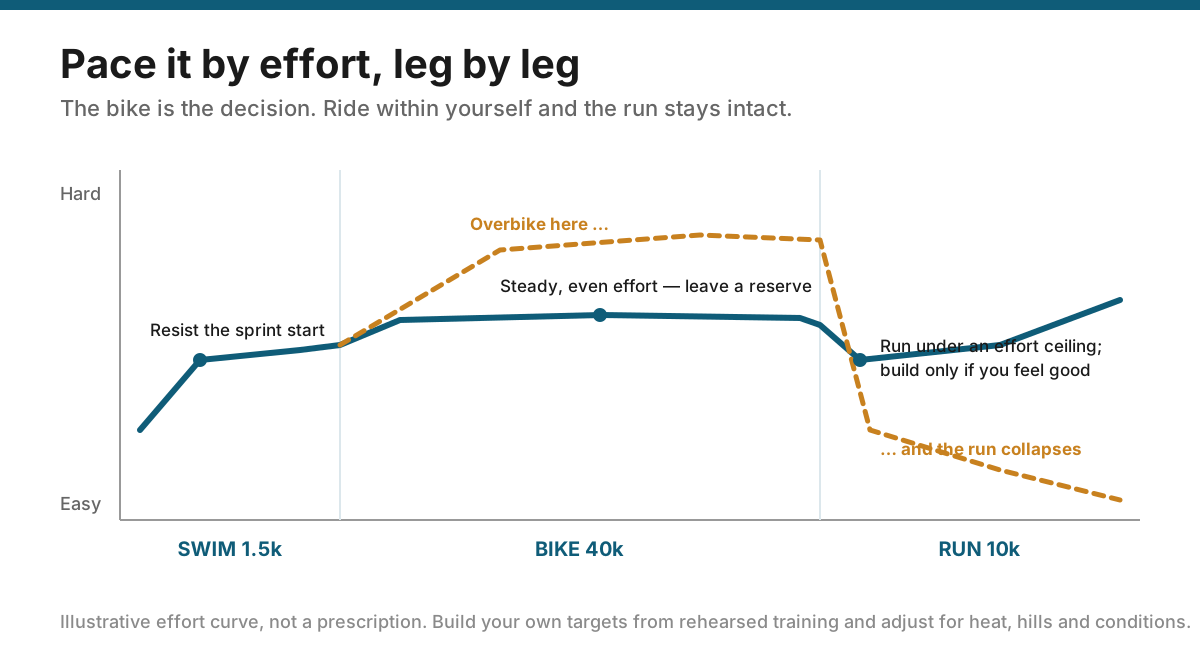
The Olympic distance is the first triathlon that genuinely punishes bad pacing: at roughly two-and-a-quarter to three-and-a-half hours it is far too long to sprint, but short enough that you will be tempted to. Pacing it well is not about hoping for a time — it is about executing a rehearsed, effort-based plan leg by leg, with the bike as the single decision that makes or breaks the run. This guide shows how to build a realistic estimate from your ordinary training, how to pace by effort rather than ego, and how to arrive at the 10k with legs that still work.
Key takeaways
- 1Olympic is the first race that punishes overpacing — too long to sprint, short enough to tempt you
- 2Pace by rehearsed effort first; treat heart rate, power and GPS as backup, not the boss
- 3The bike is the whole race's pivot: ride within yourself and the run survives; overbike and it collapses
- 4Build your estimate from recent training, not by adding three separate personal bests together
- 5Carry a three-decision race card: opening effort per leg, reassessment points, and your stop rule
In this article
- 1Why your first Olympic is really a pacing test
- 2Build a realistic estimate from ordinary training
- 3Pace by effort first, instruments second
- 4Swim: control before you chase a split
- 5T1 and the opening bike: settle, don't attack
- 6The bike is the decision that makes or breaks the race
- 7Fuel and drink as part of the plan
- 8T2 and the run: start under an effort ceiling
- 9Adjust for heat, hills and rough water
- 10Your race card, rehearsal and review
- ⚖Pacing your first Olympic triathlon, leg by leg
- ?Frequently asked questions
Why your first Olympic is really a pacing test
A sprint triathlon is short enough that fitness and composure carry you through even if you go out too hard. The Olympic distance — 1.5km swim, 40km bike, 10km run — is the first step up where that stops being true. For most first-timers it takes somewhere around 2:15 to 3:30, which is long enough that an over-eager opening quietly compounds into a walk on the run, yet short enough that adrenaline will beg you to race it like a sprint. That gap between how it feels early and what it costs later is exactly what pacing manages.
So treat pacing not as a time you hope to hit, but as a plan you execute. This page is the deep, first-Olympic-specific execution guide. It assumes you already know the format and demands of the distance — that lives in the Olympic distance overview — and the universal principles of pacing across every distance, which live in the pacing-by-distance guide. Here we turn those into a concrete, leg-by-leg race you can rehearse and follow.
Build a realistic estimate from ordinary training
Before you can pace a race you need an honest picture of what you can sustain. Build it from recent, comparable training, not from three unrelated personal bests bolted together — your best-ever pool 100m, your best solo bike time trial and your best fresh 10k will never happen on the same day, in that order, off each other.
Use a sustainable swim pace from a continuous swim, a comparable outdoor ride, and a run done after cycling (a brick), and note the conditions. As an illustration only: an athlete swimming 2:20/100m covers 1.5km in about 35 minutes; riding 28km/h covers 40km in about 1:26; running 6:30/km covers 10km in 65 minutes; add roughly 7 minutes of transitions and the planning total is about 3:13. That is arithmetic, not a benchmark or a promise — your numbers will differ, and course distances are rarely exact. Sanity-check a slower scenario too with the finish-time predictor. The point of the estimate is not the time; it is to reveal the efforts each leg requires so you can rehearse them.
Pace by effort first, instruments second
Your most reliable pacing tool on race day is perceived effort — how hard your breathing and legs feel on a simple 1-to-10 scale — because it already accounts for heat, nerves, sleep and terrain. Devices are useful, but each has a catch. Heart rate lags behind effort by a minute or more and drifts upward in heat and excitement, so an early spike is often adrenaline, not overexertion. Power is honest and immediate but only if your targets come from your own training, never from a percentage a calculator assigns to a finish-time goal. And open-water GPS is too imprecise to dictate individual strokes.
So build your plan in the currency of effort, and let the numbers confirm rather than command. A practical rule for a first Olympic: the swim and opening bike should feel controlled and conversational-ish, the bulk of the bike steady but never straining, and the run a shade below what you think you can hold — because on tired legs, what you think you can hold is usually too much for the first few kilometres.
Swim: control before you chase a split
The swim is the shortest leg and the easiest place to spend energy you will desperately want back on the run. Line up according to the event's start instructions and your honest ability — toward the side or back if you are unsure — and begin at an effort where you can establish smooth breathing and orientation in the first hundred metres. The near-universal first-timer error is sprinting off the line because everyone else did; that surge spikes your heart rate, wrecks your breathing rhythm, and buys you seconds you repay with interest.
Sight off the next buoy or landmark rather than staring at the far shore, and in unfamiliar water prioritise safe navigation over pace. If your breathing becomes uncontrolled, roll onto your back, reset, and continue — a time target never justifies pushing through panic or unsafe conditions; use the organiser's safety procedures if you need help. The goal of the swim is simple: exit the water with your heart rate under control and your legs and mind fresh for the two legs that decide the day.
T1 and the opening bike: settle, don't attack
Come through T1 briskly but calmly — rehearsed transitions save more time here than any surge on the bike, and with far less cost. The first few kilometres of the ride are for settling, not attacking: establish steering, braking and traffic awareness, let the swim's elevated heart rate come down, and ease your effort up gradually to your planned bike level rather than hammering out of transition on adrenaline.
This is where the mistake that ruins first Olympic runs begins. Passing feels good, being passed feels bad, and both tempt you to ride above your rehearsed effort. Resist it. Average speed is an outcome of the course, the wind and your fitness — it is not a target to defend on every rise. Ease sensibly for corners, descents and congestion, get your effort under control, and then hold it. If your legs feel amazing in the first 10km, that is not proof you should ride harder; on a well-paced Olympic they are supposed to.
The bike is the decision that makes or breaks the race
If you take one thing from this guide, take this: your bike effort affects what you can do on the run. The 40km ride is a major part of the race, and riding harder than you can sustain may leave less capacity for the 10k. Use an effort you have rehearsed and a plan that leaves room for the run; an individual target depends on your experience, training and the course.
Research has measured changes in running economy and mechanics after cycling, but findings and sensations vary with the study protocol and athlete. They do not give every racer a predictable pace loss or symptom timeline. Avoid repeated surges, follow your event's drafting and passing rules, and rehearse your dismount and transition routine. Finishing the bike in control can support your run plan, but does not guarantee a particular result.
Fuel and drink as part of the plan
A sprint is short enough to race on what is already in you; an Olympic is not. Two to three hours is long enough that fluid and some carbohydrate become part of pacing, because a body that is running low or dehydrated cannot hold the effort you rehearsed — the pace falls apart even when the plan was sound.
The bike is your window: it is the only leg where eating and drinking are comfortable, so take rehearsed sips and food there at points where handling is easy, and never reach for a bottle in a corner or a crowd. Keep it simple and, above all, rehearsed — race day is not the time for a new gel or drink. Exact amounts depend on your body, the heat and the duration, and belong in the dedicated race-fuelling guide; the pacing point is only that fuelling and effort are linked, and a plan that ignores fuel is only half a plan.
T2 and the run: start under an effort ceiling
Some athletes notice that running feels different after cycling; others may not. The sensation and time course vary, so do not assume it is harmless or expect it to pass by a particular kilometre. Use an opening effort you have practised, adjusted for the course and conditions, and reassess as the run develops. A planned run-walk pattern can be part of your pacing plan if you have practised it. See jelly legs after the bike for the research limits and warning signs.
Check in with your breathing, coordination, temperature and overall wellbeing rather than chasing a watch target. Ease off, walk or stop if needed; tell race staff if you feel unwell. A strong finish is a bonus, not a requirement.
Adjust for heat, hills and rough water
A pacing plan is a starting hypothesis, not a contract. Conditions change what a given effort produces, and the skill is adjusting early, before the damage is done, rather than defending numbers that no longer fit the day.
In heat, everything runs hotter for the same effort: drink more, ease your targets, and treat the heat-specific guidance as part of the plan, not an afterthought. On a hilly bike, ride the effort not the speed — let your speed fall on climbs and resist the urge to make it back on every descent — and expect a hillier course to mean a slower, and that is fine, finish. In rough or cold water, prioritise safe, controlled swimming over pace. The athletes who handle bad conditions best are not the toughest; they are the ones who revised the goal at kilometre three instead of kilometre eight.
Your race card, rehearsal and review
Distil the whole plan onto a card small enough to actually use — waterproof, taped to your top tube or written on your arm. Keep it to three things: the opening effort for each leg, the points where you will reassess, and the single condition (uncontrolled breathing, chest pain, dizziness, a mechanical you cannot fix) that makes you slow down or stop and seek help. Add your transition plan and check the official cut-off times. If the course changes on the day, re-run the estimate — adapting is smart execution, not a failure of the plan.
None of this works unrehearsed. Practise the efforts and the bike-to-run feeling in brick workouts so race day is a repeat, not an experiment, and if you are still building the fitness, follow a structured build such as the 12-week Olympic plan. Afterwards, review honestly: where did your effort change, and did a hill, a fast swim start or heat explain it? That decision log — not whether one split matched a calculator — is what makes your next race pace better. Line the whole day up with the race-day preparation guide so pacing is the only thing you have to think about.
Pacing your first Olympic triathlon, leg by leg
| Leg | Target effort (1-10) | The temptation to resist | Your cue | If it's a hard day |
|---|---|---|---|---|
| Swim 1.5k | Controlled, ~5-6 | Sprinting off the start line | Settle breathing in the first 100m | Roll over, reset, swim easier |
| Bike 40k | Steady, ~6-7 with a reserve | Chasing riders who pass you | Ride effort, not speed; keep a reserve | Shift earlier, accept slower splits |
| Run 10k | Ceiling first, ~6 then build | Going out at your fresh 10k pace | Reassess at 1k and halfway | Walk aid stations deliberately |
Sources
Sources are listed so readers can verify consequential claims and dated details.
- Race organisation and athlete information — World Triathlon (accessed September 22, 2026)
- Cycling-to-running transition in triathlon: a systematic review of the effects on running — PubMed (accessed September 22, 2026)
Frequently asked questions
How hard should I ride the bike in my first Olympic triathlon?
Ride an even, steady effort that leaves a genuine reserve — you should finish the 40km feeling you could have gone a little harder. The bike is the biggest block of the race and the run pays for overbiking, so err on the side of control. Base your target on efforts you have rehearsed in training, not on a percentage assigned to a goal time.
Should I try to negative-split my first Olympic run?
Start under an effort ceiling so you have the option to build, but a faster second half is not compulsory. Heat, hills and how hard you rode can make even effort the smarter aim. Reassess breathing, form and stomach at the first kilometre and halfway rather than forcing a pace just to satisfy a label.
How do I stop going out too fast?
Pace by effort, not by the athletes around you. Line up honestly on the swim, ease your effort up gradually out of T1 rather than attacking, and remember that legs feeling great in the first 10km of the bike is what a well-paced race is supposed to feel like — not a signal to push. A three-decision race card helps you hold the plan when adrenaline argues otherwise.
Do I need to eat during an Olympic-distance triathlon?
At two to three hours, fluid and some carbohydrate help you hold your rehearsed effort, unlike a shorter sprint. Take rehearsed sips and food on the bike where handling is easy. Keep it simple and never try anything new on race day; specific amounts belong in a dedicated race-fuelling plan built around your body and the conditions.
Why do my legs feel different at the start of the run?
Some athletes notice heaviness or awkward coordination after cycling, but the sensation and timing vary. It does not identify one cause or show whether a symptom is safe. Use a rehearsed opening effort, and stop or alert event staff for serious or concerning symptoms. Brick sessions can provide practice but are not a guaranteed cure.