Tri Shorts vs Cycling Bib Shorts: Which to Wear for Triathlon
Tri shorts vs cycling bib shorts explained: how the pad and straps differ, why tri shorts win for racing, when bibs are the better training choice, and the bathroom and Ironman trade-offs.
By Lotte
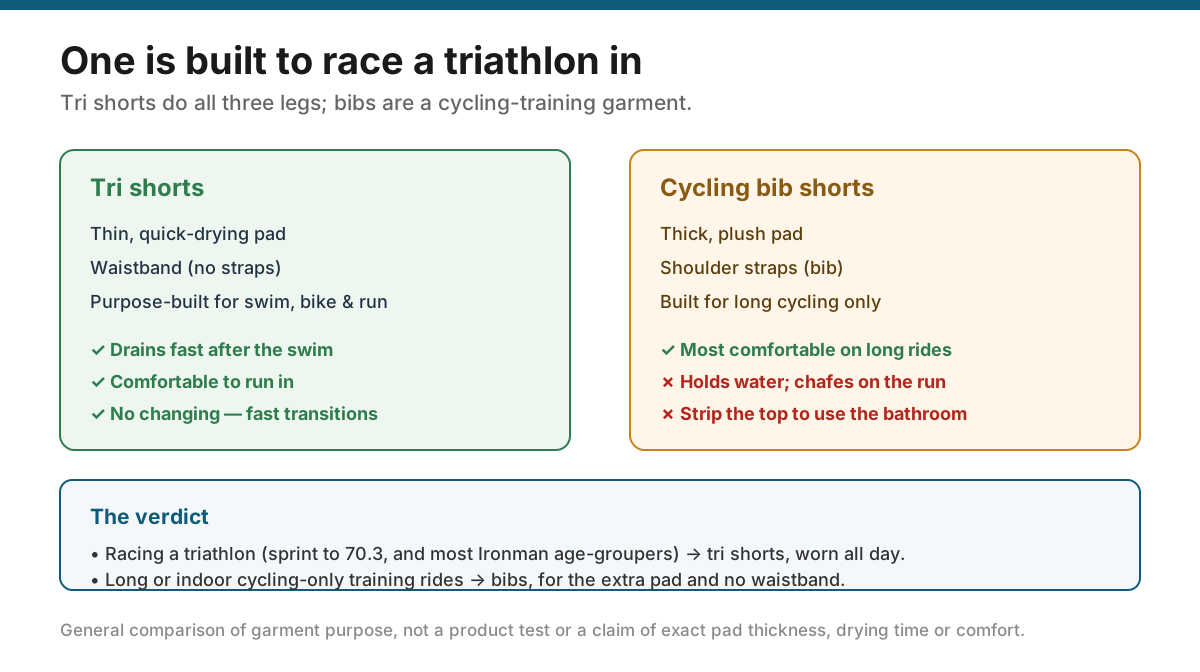
Tri shorts and cycling bib shorts look similar but are built for different jobs. Tri shorts have a thin, quick-drying pad and a waistband so you can swim, bike and run in the one garment with no changing — which is why, for a triathlon, they win almost every time. Cycling bibs have a thicker pad and shoulder straps for long-ride comfort, but they hold water in the swim and chafe on the run, so they're a cycling-training garment. This guide explains the design difference, when each is the right tool, the nuanced Ironman case, and the practical trade-offs — without pretending exact pad thicknesses or prices are universal.
Key takeaways
- 1Tri shorts are made to swim, bike and run in — thin quick-dry pad, no straps, worn the whole race
- 2Cycling bibs have a thicker pad and shoulder straps: more comfort on long rides, but no good for swimming or running
- 3For sprint, Olympic and 70.3, tri shorts (or a tri suit) are the standard choice
- 4For most Ironman age-groupers tri shorts still win; changing into bibs trades transition time for bike comfort
- 5Bibs are the more awkward option for bathroom stops — worth weighing for long races and events
In this article
- 1The short answer
- 2The fundamental design difference
- 3Why tri shorts win for racing
- 4When cycling bibs are the better tool
- 5The pad trade-off, explained
- 6The Ironman question
- 7The bathroom and practicality factor
- 8What to look for when buying each
- 9Bottom line, and where to go next
- ⚖Tri shorts vs cycling bib shorts, at a glance
- ?Frequently asked questions
The short answer
For an actual triathlon, tri shorts win almost every time — this is a decision beginners tend to agonise over far more than it deserves. Tri shorts (or a one-piece tri suit) are made to be worn through all three legs with no changing, while cycling bib shorts are a specialist garment for long cycling and can't be swum or run in comfortably.
The only real nuance is at the full Ironman distance, and even there most age-groupers race in tri shorts. Cycling bibs earn their place in your drawer for training — long or indoor rides where you're not swimming or running afterwards. The rest of this guide explains why, so you can choose confidently and move on. For the broader race-outfit picture, see what to wear for a triathlon.
The fundamental design difference
Both garments solve the same core problem — a pad (the chamois) between you and the saddle — but they're engineered around different sports.
Tri shorts use a thin, quick-drying pad that won't soak up water from the swim or turn into a soggy, chafing nappy on the run. They sit on the hips like running shorts, and the pad is deliberately minimal so it drains fast and doesn't get in the way when you're off the bike. The whole design is a compromise built to be good enough at cycling while still being swimmable and runnable.
Cycling bib shorts use a thicker, plush pad optimised purely for hours in the saddle, plus suspender-style straps over the shoulders that hold the shorts up without a tight waistband pressing on your stomach in an aero position. That makes them excellent for long rides — and poor for anything else: the thick pad holds water and chafes badly the moment you try to run in it. In short, tri shorts are a triathlon tool; bibs are a cycling tool.
Why tri shorts win for racing
In a race, the tri short's whole reason to exist is that you never take it off:
- One garment for all three legs. You swim, bike and run in the same shorts — no changing, which keeps your transitions simple and fast.
- It drains and dries. The thin pad sheds swim water quickly rather than staying heavy and cold on the bike.
- It runs comfortably. Minimal, quick-dry padding means no bulky seam chafing your stride on the run.
- It's simpler under pressure. Fewer decisions and no changing tent means less to rehearse and less to go wrong on race morning.
That's why tri shorts (or a one-piece tri suit) are the standard for sprint, Olympic and 70.3 racing, and for race-pace brick workouts where you want race feel. They're also handy for open-water swim training, standing in for a swim brief without holding water.
When cycling bibs are the better tool
Bibs aren't a mistake to own — they're just for training on the bike, where their comfort advantages actually matter:
- Long training rides. The thicker pad and waistband-free fit fend off the saddle soreness that can otherwise derail your next few sessions.
- Indoor trainer sessions. Sitting and grinding for a long indoor block with few standing breaks is exactly where a plush pad earns its keep.
- Group rides and base miles. When cycling is the whole session and you're not running afterwards, prioritise comfort.
If you regularly ride long, a pair of bibs for training alongside tri shorts for racing and bricks is a sensible two-garment setup. If your rides are mostly shorter, tri shorts alone will cover both jobs.
The pad trade-off, explained
The reason you can't have one perfect garment comes down to the pad, and it's worth understanding because it drives every other difference.
A thicker pad cushions your sit bones for hours on the saddle — but it's bulky, it soaks up and holds water, and it bunches and chafes as soon as your legs are running rather than pedalling. A thinner pad drains fast, disappears on the run and packs down for the swim — but gives up some saddle cushioning on very long rides. You are trading cushioning against swim-and-run compatibility, and no single pad wins both.
Tri shorts sit deliberately on the thin end of that trade-off because they have to do three sports; bibs sit on the thick end because they only do one. On long triathlon rides, chamois cream is the practical bridge — it reduces friction so a thinner tri pad stays comfortable for longer without you needing a thick cycling pad you can't run in.
The Ironman question
The full Ironman is the one distance where the choice is genuinely debatable, because the bike leg is long enough that a thin tri pad can start to feel it. There are two approaches:
Race in tri shorts (what most age-groupers do). You keep transitions simple and fast, skip the changing-tent faff, and rely on a good-quality tri pad plus generous chamois cream to stay comfortable. Simpler logistics and no time lost changing.
Change into bibs for the bike, then back for the run. This buys you a more cushioned bike leg at the cost of the time and hassle of changing twice, and it only makes sense if you have a proven history of saddle problems over long distances. Most people — including most of the front of the field — simply race the whole day in tri shorts or a tri suit.
Unless you know you have a saddle-comfort issue over many hours, default to tri shorts even at Ironman and put the saved transition time and simplicity to better use.
The bathroom and practicality factor
One difference that rarely makes the spec sheet but matters a lot in practice is how you relieve yourself. Tri shorts just need the waistband pulled down. Cycling bibs, because the straps go over your shoulders under your top, require you to pull your jersey or top up and the straps down to get them off — awkward on a long ride and genuinely disruptive in a race.
This weighs especially heavily for longer events and for many athletes on long rides. Some women's and unisex bibs now use halter clasps or drop-tail designs to make bathroom stops easier, and they're worth seeking out if you ride long in bibs — but for racing, the tri short's simple waistband is one more reason it's the practical winner. If you're weighing a one-piece instead, the tri suit comparison covers that garment's own bathroom trade-off.
What to look for when buying each
Prices span from budget to premium in both categories (check current pricing), so match the spend to how much you'll use them and, above all, to fit — a pad that suits your anatomy matters more than a spec number.
In tri shorts, look for: a genuinely quick-drying pad sized for your longest race, flat or bonded seams that won't chafe on the run, leg grippers that hold without digging in, and a snug compressive fit through the thigh. A thicker pad rated for longer time in the saddle is worth it if you'll race 70.3 or beyond.
In cycling bibs, look for: a quality pad from a reputable maker, comfortable non-twisting straps, a leg length and cut that suit your riding position, and a fit that's snug without pinching. Whatever you buy, try it on a real ride (or run, for tri shorts) before committing to a long day in it — comfort is individual, and the only reliable test is wearing it.
Bottom line, and where to go next
If you race triathlon, buy tri shorts (or a tri suit) and stop worrying about it — they're built to swim, bike and run in, and they win from sprint through Ironman for all but a few athletes with specific saddle issues. Add cycling bibs only if you also do long or indoor training rides and want the extra saddle comfort for those cycling-only sessions.
From here: the what-to-wear-for-a-triathlon guide puts your whole race outfit together, the tri suit vs separates comparison weighs the one-piece option, first triathlon gear essentials covers the rest of your kit, and the race-day packing checklist makes sure it all reaches the start line.
Tri shorts vs cycling bib shorts, at a glance
| What matters | Tri shorts | Cycling bibs | Better for a triathlon |
|---|---|---|---|
| The pad | Thin, quick-drying | Thick, plush | Tri shorts |
| How they stay up | Waistband | Shoulder straps | Tri shorts |
| Swim | Drains fast | Holds water | Tri shorts |
| Run | Designed for it | Chafes | Tri shorts |
| Long cycling-only ride | Fine with chamois cream | Most comfortable | Bibs (training) |
| Bathroom stop | Drop the waistband | Strip the top + straps | Tri shorts |
| Transitions | No changing | Requires changing | Tri shorts |
Sources
Sources are listed so readers can verify consequential claims and dated details.
- World Triathlon competition rules — World Triathlon (accessed August 19, 2026)
- IRONMAN competition rules — IRONMAN (accessed August 19, 2026)
Frequently asked questions
Can I race a triathlon in cycling bibs?
You can, but you shouldn't for most races: bibs hold water from the swim and chafe on the run, so you'd have to change into and out of them, losing time in transition. The overwhelming majority of age-groupers race in tri shorts or a one-piece tri suit and are more comfortable for it.
Do I need both tri shorts and cycling bibs?
Only if you regularly do long or indoor training rides. In that case, use bibs for those cycling-only sessions and tri shorts for races and race-pace bricks. If your rides are mostly shorter, a good pair of tri shorts covers both training and racing.
What about a one-piece tri suit instead?
A tri suit is the most aerodynamic race option and is popular from sprint to Ironman, but a one-piece is a little more awkward for bathroom stops than two-piece tri shorts. Many age-groupers prefer tri shorts plus a top for flexibility; the choice mostly comes down to comfort and how aero you want to be.
Why can't tri shorts just have a thick cycling pad?
Because a thick pad holds water and chafes the moment you run, which defeats the point of a garment you swim and run in. Tri shorts deliberately use a thin, quick-drying pad, and chamois cream bridges the comfort gap on long rides — you trade some saddle cushioning for swim-and-run compatibility.
Are cycling bibs harder to use for bathroom breaks?
Yes. Because the straps go over your shoulders under your top, you have to pull your top up and the straps down to get bibs off, which is awkward on a long ride or in a race. Tri shorts only need the waistband pulled down. Some bibs now use halter or drop-tail designs to make this easier.