Wetsuit Rental vs Buying for Triathlon: The Honest Cost Breakdown
Should you rent, buy used, or buy your first triathlon wetsuit? Compare total cost, fit, hygiene, training use, event rules, and a practical break-even calculation.
By Lotte
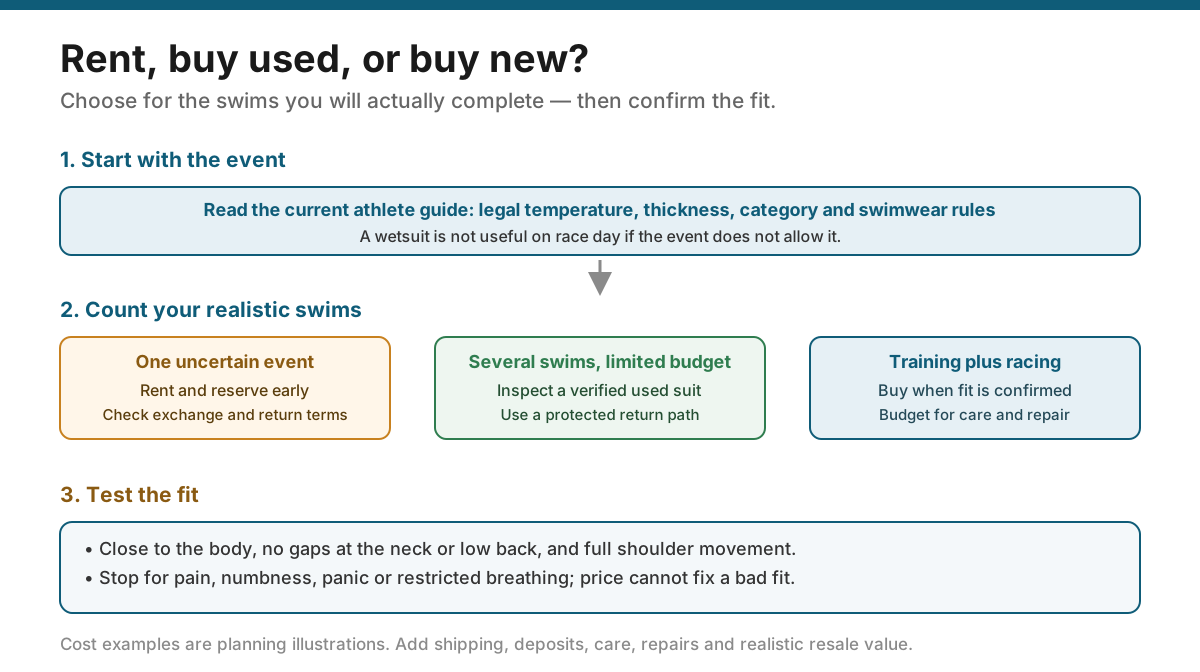
Renting is often the sensible first step when you have one race, uncertain water conditions, or a changing body size. Buying becomes easier to justify when you will train in open water, race repeatedly, or need a suit available for a mandatory swim. The answer is not a universal race count: it depends on your all-in rental price, purchase price, likely use, fit confidence, and the value of being able to practice in the same suit.
Key takeaways
- 1Rent for a one-off experiment, uncertain water temperature, travel, or a body size that is still changing.
- 2Buy when repeated racing or open-water training makes the all-in rental total approach the cost of a suit you can fit and test.
- 3Calculate break-even with the purchase price, rental fees, shipping, deposits, care, resale value, and the number of swims you actually expect.
- 4A correct fit matters more than a premium label: the suit should feel close without restricting breathing, shoulder movement, or neck comfort.
- 5Check the event's athlete guide for water-temperature, thickness, category, and swimwear rules before choosing either rental or ownership.
In this article
- 1Quick answer: should you rent or buy a triathlon wetsuit?
- 2The break-even calculation: use your own numbers
- 3What a rental quote may leave out
- 4When renting is genuinely the better choice
- 5What you are actually buying: access, fit, and repeatability
- 6Buy new, buy used, or keep renting?
- 7Fit is the decision: a rental and purchase test
- 8Rental hygiene, care, and return etiquette
- 9Race rules can change the value of ownership
- 10A practical renter's race-week checklist
- 11A buyer's checklist: spend on the problem you actually have
- 12Five common athlete profiles and the sensible default
- 13The decision in one minute
- ⚖Which option fits your situation?
- ?Frequently asked questions
Quick answer: should you rent or buy a triathlon wetsuit?
Rent when your commitment is low or your conditions are uncertain. Buy when you have a repeatable need and can confirm the fit. A first-time athlete doing one wetsuit-legal race can reasonably rent. An athlete who plans several races, regular open-water sessions, or a very cold mandatory swim usually gets more value from ownership — even if the cash break-even is not immediate.
Use this short decision rule:
- Rent: one event, unknown size, uncertain water temperature, destination race, or you are still deciding whether triathlon is for you.
- Buy used: you expect several swims but want to limit depreciation, and you can inspect the suit and use a protected return window.
- Buy new: you will train and race in it, your body size is stable, and you can try the exact suit before the return period closes.
There is no magic “four-race rule.” A $70 rental used once is cheaper than a $300 purchase. Six $70 rentals are $420 before shipping, travel, deposits, or training use. Your own numbers matter more than a generic threshold.
Start with our triathlon wetsuit buying guide for construction and fit fundamentals, then use this page for the ownership decision. Our wetsuit swimming speed guide explains why comfort and body position can matter without promising a fixed time saving.
The break-even calculation: use your own numbers
The useful question is not “How many races until I should buy?” It is “What will each option cost for the swims I realistically expect?”
Use this simple model:
Rental total = (rental fee + outbound shipping + return shipping + non-refundable fees) × number of rental periods
Ownership total = purchase price + care/repair allowance − realistic resale value
Then divide the ownership total by the all-in cost of one rental period. That gives an illustrative break-even count, not a promise. A suit that costs $300, has $20 set aside for care, and could later sell for $100 has an estimated ownership cost of $220. At $70 per all-in rental, the arithmetic break-even is 3.14 rental periods. If you need a $15 rental wetsuit bag, pay a $40 return shipment, or lose a deposit because of late return, the comparison changes.
Here is a worked example using hypothetical US-dollar amounts, not a market quote:
| Assumption | Rent once | Buy once |
|---|---|---|
| Suit or rental fee | $65 | $300 |
| Shipping/fees | $20 | $0 |
| Care and storage | included/unknown | $20 allowance |
| Resale after use | $0 | −$100 estimate |
| Effective cost | $85 | $220 |
At one swim, renting wins. At three comparable rental periods, renting costs $255 while the ownership example costs $220 before the value of training access. Change any assumption to reflect your shop, currency, return policy, and local resale market. Our triathlon cost calculator can help you model the rest of your race budget.
What a rental quote may leave out
A rental price is not always the final price. Before comparing it with a shopping-cart total, ask what the quote includes:
- Delivery and return: Is a prepaid return label included? What happens if the suit arrives late or the carrier misses the return scan?
- Deposit or damage hold: Is a card authorization required, and what counts as damage rather than normal wear?
- Cleaning and drying: Is the suit professionally cleaned, or are you expected to rinse and dry it before return?
- Rental window: Does “race weekend” mean three days, seven days, or a fixed calendar period? Extra training swims may require a second booking.
- Size exchange: Can you change size before the event, and who pays the shipping?
- Race cancellation: Is the fee refundable if the swim becomes non-wetsuit legal or is cancelled?
- Travel logistics: Does a destination rental include a pickup appointment, or is there a narrow delivery window at your accommodation?
These details can outweigh a $10 headline-price difference. Save the confirmation, measure the return deadline in your calendar, and photograph the suit's condition when it arrives if the provider asks you to document pre-existing marks.
These questions matter for a purchase too. A low-priced suit with no return window, no repair path, or a size chart that does not match your body can be more expensive than a slightly higher-priced option you can fit and maintain. For a race-week plan that leaves time for a fit check, use our triathlon race week schedule.
When renting is genuinely the better choice
Renting is not a failure to commit. It is a useful way to buy information before buying equipment. It is usually the cleaner choice when:
- This is your first wetsuit swim. You can learn whether neoprene feels comfortable, whether you can remove it under pressure, and whether the event experience suits you before tying up money in gear.
- You have one destination race. A local rental can avoid airline baggage, storage, and transporting a wet suit after the finish. Compare both options rather than assuming the destination price is lower.
- The swim may be non-wetsuit legal. Do not buy a suit solely because a long-range forecast looks cold or warm. Wait for the event's published information and have a non-wetsuit plan.
- Your size is changing. Pregnancy, recent weight change, injury recovery, or a planned training-related body change can make an expensive suit a poor fit for the season.
- You need an unusual size for a single date. A specialist rental inventory may be more realistic than buying a suit that will be difficult to resell.
Ask whether the provider offers an early fit shipment, a size exchange, or a rent-to-buy credit. Treat those as contract terms: read the conditions, including the date by which a purchase must be made, rather than assuming every rental company offers them.
A rental also lets you learn what you need from a suit. You may discover that shoulder flexibility matters more than extra buoyancy, that a high collar irritates your skin, or that removing the suit is your limiting skill. That information is worth more than a confident but poorly fitting purchase.
What you are actually buying: access, fit, and repeatability
A new suit is not automatically better than a rental. The ownership case comes from having a known piece of equipment available when you need it. That can be valuable for three different reasons:
1. You can rehearse the complete swim. You can test the suit in a controlled session, practise sighting and starts, and learn how to remove it without discovering a shoulder restriction on race morning. This is especially useful when a wetsuit swim is mandatory under an event's rules.
2. You can choose the fit rather than accept the nearest inventory size. Manufacturers use different height, chest, hip, and torso proportions. A technically expensive suit that gaps at the neck or restricts your stroke is a poor purchase. A less expensive suit with the right shape and return policy may be the better tool.
3. You can use the suit for training. If you swim outdoors weekly, the per-use cost of an owned suit falls quickly, while a race-only rental gives you no opportunity to build familiarity. Check local water-safety rules and never swim alone in open water.
Do not choose by price tier alone. Compare the manufacturer's size chart, panel thickness and intended temperature range, shoulder flexibility, zipper design, warranty, repair policy, and return conditions. Our open-water swim practice without a lake guide offers alternatives when outdoor access is limited.
Buy new, buy used, or keep renting?
A used triathlon wetsuit can be a sensible middle route, but only when you can evaluate it. Neoprene can look fine in a listing and still have compressed panels, a stretched neck, brittle surface coating, repaired seams, or damage hidden in photographs. Ask for the suit's age, swim frequency, storage method, repairs, and reason for sale.
Buy new when: you need a dependable return or warranty path, your fit is hard to find, or you expect to use the suit frequently.
Buy used when: your size is stable, you can inspect it in person or use a protected return process, and the discount is large enough to cover the shorter remaining service life.
Keep renting when: your calendar has one uncertain swim, you cannot confirm a good fit, or the used listing does not provide enough information.
Before paying for a used suit, inspect it inside and out:
- Hold the neoprene up to light and look for pinholes, cuts, thinning, and delamination.
- Flex the shoulders, armpits, crotch, and lower back gently; look for cracked rubber or seam separation.
- Check that the zipper runs smoothly and the pull cord and closure are intact.
- Look for persistent odor, sunscreen residue, or discoloration that suggests poor cleaning or storage.
- Try it on with clean hands and follow the manufacturer's fit method; do not yank the material with fingernails.
A low price is not a bargain if the suit is illegal for your event, cannot be returned, or fails during the first swim. For panel thickness and construction differences, use our triathlon wetsuit thickness guide.
Fit is the decision: a rental and purchase test
Fit is not just a comfort preference. A suit should sit close to the body so it does not balloon with water, while still allowing a full stroke and calm breathing. Manufacturer guidance commonly emphasizes bringing the legs and crotch fully into place, pulling the sleeves all the way over the shoulders, and checking for gaps; use the maker's instructions for the exact model.
Use this test for either a rental or a purchase:
- Put it on slowly. Use the pads of your fingers or a plastic bag supplied by the provider; never pinch or pull thin neoprene with fingernails.
- Set the torso before judging the arms. Work excess material up from the ankles and wrists in small sections. The crotch should be high and the suit should not hang at the shoulders.
- Check breathing and rotation. Zip it, reach overhead, mimic a relaxed catch, rotate your trunk, and take several deep breaths. Neck pressure that feels alarming or shoulder restriction that persists after adjustment is a reason to change size or model.
- Look for gaps. Empty space at the lower back, chest, neck, or ankles can admit water and create drag or cold spots.
- Do a short, safe water test. Follow the rental provider's terms and local open-water safety rules. A ten-to-fifteen-minute easy swim is more informative than standing in a changing room.
Do not “solve” a tight suit by tolerating numbness, breath restriction, pain, or panic. Stop, exit the water, and ask the provider or a qualified fitter for help. Our wetsuits guide covers putting on and removing a suit without damaging it.
Rental hygiene, care, and return etiquette
A rental suit has a shared history, so care instructions are part of the purchase decision. Ask the provider which cleaning products are allowed; do not improvise with household detergent, fabric softener, solvents, oils, or hot water. Those can damage neoprene, adhesives, coatings, or the next athlete's skin.
After a swim, follow the rental company's written process. A common low-risk routine is to rinse both sides with cool fresh water, keep the suit out of direct heat and harsh sunlight, and let it dry fully before packing. Do not leave it balled up in a transition bag or car. Use a wide hanger only if the maker or provider permits it; some suit makers prefer the suit folded or supported in a particular way to avoid shoulder stretch.
Check the return instructions before the event:
- Confirm whether the suit must be dry before it is boxed.
- Keep the packaging, return label, and any included care sheet.
- Note the drop-off time and obtain a carrier receipt or tracking scan.
- Report a tear, failed zipper, or unusual seam issue immediately rather than trying to repair it yourself.
- Use approved lubricant sparingly and keep products away from the neoprene unless the provider says they are compatible.
Owners need the same discipline. Care does not make a suit immortal, but rinsing, drying, gentle handling, and sensible storage reduce avoidable damage. Our triathlon wetsuit care guide covers the longer-term routine.
Race rules can change the value of ownership
A wetsuit is only useful on race day if the event allows it, and “allows it” can depend on water temperature, athlete category, suit thickness, and whether a separate non-competitive wave is offered. Rules are not interchangeable between organizers.
For example, the 2026 IRONMAN Competition Rules state that age-group athletes may wear a wetsuit up to and including 24.5 °C / 76.1 °F, prohibit wetsuits above 28.8 °C / 83.8 °F, cap thickness at 5 mm, and make wetsuits mandatory below 16 °C / 60.8 °F. They also set a lower optional-use threshold for professional athletes. That is an IRONMAN rule set, not a universal rule for every triathlon. USA Triathlon events and local races may publish different thresholds or procedures.
Before renting or buying, check:
- the current event athlete guide and governing-body rules;
- the athlete category you are entering;
- the maximum permitted thickness and coverage;
- what happens if the swim is non-wetsuit legal or cancelled;
- whether a wetsuit wave affects awards or qualification;
- when the official water-temperature decision will be announced.
If the swim is likely to be borderline, plan both options. Bring legal non-wetsuit swimwear, and never rely on an old event page or a retailer's generic temperature chart. The organizer's current athlete guide is the final practical reference. Our triathlon wetsuit rules by water temperature guide sets out each governing body's thresholds side by side and explains how the official temperature is measured, and the triathlon wetsuit thickness guide explains why thickness and panel layout deserve separate attention.
A practical renter's race-week checklist
If renting is the right choice, reduce the main risk: discovering a fit or logistics problem too late. Start by booking earlier than the minimum advertised window, especially for popular race dates and less common sizes. Ask whether the provider can ship the suit early enough for a fit check and what the exchange deadline is.
Two to three weeks out: confirm the exact model, size, rental dates, address, deposit, cancellation terms, and return label. Read the event's latest swim rules.
Seven to ten days out: put the suit on carefully and perform a dry fit. If the provider allows it, complete a short easy swim in a safe supervised location. Do not wait until the day before the race to report shoulder restriction, neck gaps, or a zipper problem.
During your final swim: practise a calm start, sighting, buoy turns, and removing the suit after exiting. Notice whether the collar rubs, whether the suit rides down, and whether your breathing feels normal at race effort.
Race morning: apply only the lubricant permitted by the provider, arrive with enough time for a deliberate fit, and follow the event's wetsuit ruling. Do not cut, glue, tape, or modify a rental.
After the race: rinse promptly, dry it as instructed, photograph any new damage if required, and return it with a tracked hand-off before the contractual deadline. A smooth return protects your deposit and the next athlete's booking.
A buyer's checklist: spend on the problem you actually have
If you decide to own a suit, begin with the same requirements a good fitter would ask about:
- How often will you swim in it? Race-only use may justify a simpler model; weekly open-water training makes comfort and repair support more important.
- What temperatures and rules apply? Choose a legal thickness and coverage for the races you actually enter, not just the coldest water you can imagine.
- What does your body shape need? Compare the manufacturer's height, weight, chest, waist, hip, and torso guidance. A women's-specific or different-cut model may reduce gaps for some bodies; this is a fit question, not a performance promise.
- What movement matters? If shoulder mobility is limited, prioritize a non-restrictive upper body and test a full stroke. If you feel cold easily, check the suit's intended temperature range and consider a legal cap only when the event permits it.
- Can you return it after swimming? Some retailers only accept unused gear. Confirm the policy before treating a home or water test as risk-free.
- What happens after a tear? Warranty, repair service, and local access can be worth more than a small discount.
Set a realistic total budget: suit, approved lubricant, storage, possible repair, and any swim-safety equipment. Do not buy a top-tier suit to compensate for an unknown fit. First learn what you need, then spend on the feature that solves that need. The broader triathlon wetsuit buying guide covers construction, cut, and fit in more depth.
Five common athlete profiles and the sensible default
Use these profiles as starting points, then substitute your own prices and rules:
The one-and-done beginner: One race, no planned outdoor training, and uncertainty about the sport. Rent, reserve early, and use the swim to learn what fit and temperature feel like.
The returning age-grouper: Two or more races across the season, with a stable size and a local retailer that permits a real fit check. Compare the all-in rental total with a mid-priced new suit and a good used option. Ownership often becomes easier to justify because you can train in it.
The cold-water specialist: A race has a realistic chance of a mandatory wetsuit swim, or the athlete trains outdoors in cold water. Prioritize legal thickness, warmth, fit, and a reliable repair/return path. A rental may still work, but do not make race morning the first full swim.
The frequent open-water swimmer: The suit is training equipment, not just race equipment. Ownership normally offers more control over availability, familiar fit, and cost per swim. Set aside money for care and eventual replacement rather than treating the purchase as one permanent expense.
The changing-size athlete or traveller: Rent for the immediate event, or buy used only if the fit is verifiable and the return path is protected. Revisit ownership when body size, race calendar, or home-water access is stable.
The goal is not to own the most expensive wetsuit. It is to have legal, comfortable, tested equipment for the swims you will actually complete.
The decision in one minute
Answer these questions in order:
- Will the event definitely allow a wetsuit for your category? If you do not know, read the current athlete guide before paying a deposit or buying gear.
- Will you use the suit beyond one race? Include safe open-water training, not just your optimistic race calendar.
- Can you get a reliable fit? If not, rent with an exchange option or use a retailer/fitter who allows an appropriate test.
- What is the all-in cost? Add shipping, deposits, care, repairs, and resale rather than comparing headline prices.
- What happens if the swim changes? Keep a legal non-wetsuit plan and check cancellation/return terms.
If the answer is “one uncertain race,” rent. If it is “several swims and a stable fit,” compare ownership. If it is “several swims but a limited budget,” evaluate a verified used suit. If it is “mandatory or cold-water training,” place fit, warmth, availability, and safety ahead of a small arithmetic saving.
For a broader gear decision, use our first triathlon gear essentials guide. For a personalized starting point, continue to the wetsuit selector.
Which option fits your situation?
| Situation | Best starting option | Main reason | Check before committing |
|---|---|---|---|
| One uncertain race | Rent | Low commitment | All-in fee and return deadline |
| Several races, stable size | Compare new and used | Known repeat use | Fit test, warranty, resale |
| Weekly open-water training | Buy if fit is confirmed | Availability and cost per swim | Water safety and care plan |
| Changing body size | Rent temporarily | Avoid an unusable fit | Exchange policy and sizing |
| Cold or mandatory swim | Buy or reserve early | Reliable tested equipment | Current event rules and thickness |
Sources
Sources are listed so readers can verify consequential claims and dated details.
- 2026 Competition Rules — IRONMAN (accessed September 23, 2026)
- 2026 IRONMAN Competition Rules (PDF) — IRONMAN (accessed September 23, 2026)
- Multisport Rules — USA Triathlon (accessed September 23, 2026)
- How to put a triathlon wetsuit on — Orca (accessed September 23, 2026)
- How should a wetsuit fit — Orca (accessed September 23, 2026)
Frequently asked questions
Is renting a wetsuit better for a first triathlon?
Often, yes, if this is your only planned wetsuit swim or you are unsure about fit and comfort. Reserve early, confirm the exchange terms, and complete a short safe test swim before race day. Buy instead when you already know you will train and race in the suit repeatedly.
How do I calculate when buying beats renting?
Add the purchase price, a realistic care and repair allowance, and subtract the resale value you might actually receive. Divide that ownership total by the rental's all-in cost, including shipping and non-refundable fees. Treat the result as an estimate, not a universal race count.
Is a used triathlon wetsuit worth buying?
It can be, if the suit's size, age, storage, repairs, seams, zipper, and return protections are clear. Inspect the shoulders, armpits, crotch, lower back, and coating. A cheap suit with hidden damage or no recourse is not a reliable saving.
How early should I book a rental?
Book as soon as your race date and size are reasonably certain, especially for popular events or uncommon sizes. Ask when the suit will arrive, how long you can test it, and the deadline for an exchange. The exact lead time depends on the provider.
What water temperature allows a wetsuit in a triathlon?
There is no single global cutoff. The current event rules can vary by organizer, athlete category, thickness, and whether a separate wave is offered. The 2026 IRONMAN rules, for example, use 24.5 °C / 76.1 °F and 28.8 °C / 83.8 °F thresholds for different decisions, but you must check your event's athlete guide.
Should a wetsuit feel tight when I try it on?
It should be close to the body without restricting breathing, shoulder rotation, or normal stroke mechanics. Work the neoprene into place before judging it, and look for gaps at the neck, back, chest, and ankles. Pain, numbness, panic, or persistent breathing restriction means stop and change the fit.
Can I use a rental wetsuit for training?
Only if the rental terms allow it and the provider gives you enough time. Training in the suit can help you practise, but follow local open-water safety rules, never swim alone, and rinse and return the suit exactly as instructed.
Do I need a wetsuit if my race may be non-wetsuit legal?
Not necessarily. Read the current event guide, consider the likely water-temperature range, and keep a legal non-wetsuit plan. Renting can reduce commitment for an uncertain swim; buying can still make sense when you will use the suit for training or other races.