Triathlon Helmet Types: Road vs Aero Road vs TT — Which to Choose
Which type of triathlon helmet do you actually need? Road, aero road and time-trial helmets compared honestly — safety first, then fit and ventilation, with aero kept in perspective.
By Lotte
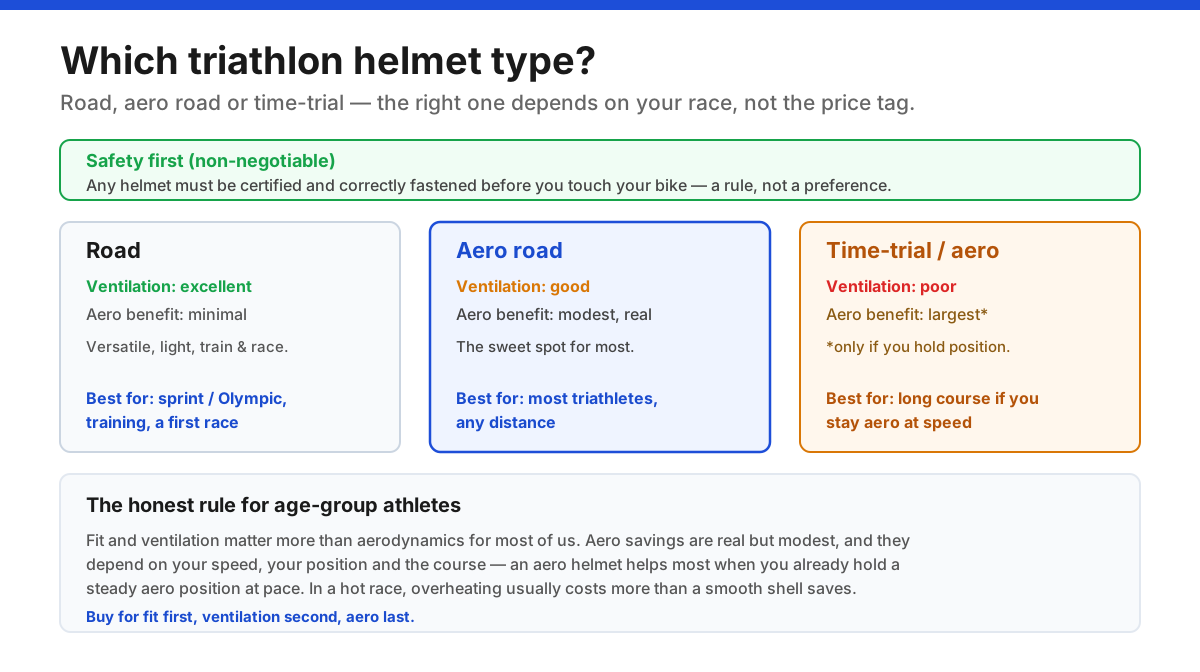
Choosing a triathlon helmet is a decision about type, not brand: a road helmet, an aero road helmet, or a full time-trial helmet. Safety and fit come first for every athlete; aero benefits are real but modest and depend on your speed, position and course. This guide compares the three types honestly so you can match one to your racing — and links out to a dedicated fit guide and an aero-model roundup for the details.
Key takeaways
- 1It's a choice between three types — road, aero road and time-trial — and for most age-groupers the aero road helmet is the practical sweet spot.
- 2Safety is the baseline: any helmet must be certified and correctly fastened before you touch your bike, whatever type you pick.
- 3Fit and ventilation matter more than aerodynamics for most athletes; a well-fitting road helmet beats a poorly fitting aero one.
- 4Aero savings are real but modest and depend on speed, position and course — a TT helmet only helps if you hold a steady aero position.
- 5In hot races, overheating usually costs more than an aero shell saves — don't seal your head for a marginal drag gain.
In this article
- 1Quick answer: which type do you need?
- 2Safety is the baseline, whatever type you buy
- 3The three helmet types, honestly
- 4Road helmets: the versatile default
- 5Aero road helmets: the sweet spot for most
- 6TT and aero helmets: most aero, most conditional
- 7Is aero actually worth it for you?
- 8Match the helmet to your distance and course
- 9Ventilation and heat: the underrated factor
- 10Budget: what more money actually buys
- 11Common mistakes and the bottom line
- ⚖The three triathlon helmet types compared
- ?Frequently asked questions
Quick answer: which type do you need?
Choosing a triathlon helmet isn't really about picking a brand — it's about picking one of three types: a road helmet, an aero road helmet, or a full time-trial (TT) helmet. Here's the short version:
- First triathlon, sprint or Olympic? A well-fitting road helmet is all you need — even one you already own.
- Most triathletes, any distance? An aero road helmet is the practical sweet spot: a little faster than a road helmet, still cool enough to live with.
- Long course and you truly hold an aero position at speed? A TT helmet offers the most aero, with real trade-offs.
The single most important factor across all of them is fit — a poorly fitting aero helmet is both slower and less safe than a well-fitting road helmet. This page compares the types and the decision; for the mechanics of getting fit and certification right, see how to choose a triathlon helmet, and for specific aero models, the beginner aero helmet roundup.
Safety is the baseline, whatever type you buy
Before any conversation about aerodynamics, a helmet's real job is protecting your head — and in triathlon it's also a hard rule. Under World Triathlon and USA Triathlon competition rules, your helmet must be approved/certified and correctly fastened before you unrack your bike, and it stays fastened until the bike is racked again. Race officials enforce this, and it's a common avoidable penalty.
So two non-negotiables apply to every type:
- Certification. Look for a recognised safety standard sticker (such as CPSC, CE/EN 1078, or AS/NZS). Crucially, these safety standards are met across the price range — a budget certified helmet protects you to the same standard as a premium one.
- Condition and fit. Replace a helmet after any crash, even with no visible damage, and every few years as the foam ages. And it only protects you if it fits and is buckled correctly.
Many helmets also add rotational-impact systems (MIPS and similar). They're a reasonable safety feature rather than a speed feature; treat them as a nice-to-have, not a box you must tick. The detailed fit and certification checks live in the helmet fit guide.
The three helmet types, honestly
Each type trades ventilation, weight and aerodynamics differently:
- Road helmet — lots of vents, light, cool and versatile. It has the least aero shaping but is comfortable everywhere and doubles as your training helmet.
- Aero road helmet — looks like a road helmet with fewer vents and a smoother shell. It gives a modest, real aero improvement while staying cool enough for long days. For most triathletes it's the best all-round choice.
- Time-trial (TT) / aero helmet — the pointed or tailed shape with minimal venting. It offers the largest aero potential, but only under specific conditions, and it's hot and restricts vision.
The comparison table below sums up the trade-offs. Notice what's deliberately not in it: precise "seconds saved" figures. Real-world aero savings depend heavily on your speed, position, body shape and the course, so a single number would be misleading — which is exactly why the next section treats aero as a question, not a promise.
Road helmets: the versatile default
A road helmet is the sensible starting point for most people entering the sport, and it never becomes a wasted purchase.
Its strengths are ventilation, low weight and versatility: it keeps you cool, it's comfortable for hours, and the same helmet does your training rides and your race. The only thing you give up is a small amount of aerodynamic smoothness — which, at the speeds and durations of a first sprint or Olympic race, barely matters.
The practical advice: if you already own a road helmet that fits well, use it for your first race. Don't let helmet choice become a barrier to starting. You can always upgrade later, once you know which distance you love and whether the bike is where you want to invest — a point echoed in first-triathlon gear essentials.
Aero road helmets: the sweet spot for most
Aero road helmets are where most triathletes land, because they resolve the real tension in helmet choice: they're smoother and a little faster than a road helmet, but still ventilated enough to wear comfortably over an Olympic, 70.3 or even full-distance bike leg.
They achieve this with fewer, better-placed vents and a rounder, cleaner shell. The aero gain over a standard road helmet is genuine but modest — useful if you race for time, invisible if you don't — and you keep enough cooling for hot days. That balance is why they're a safe recommendation for almost anyone past their first race.
If you decide an aero road helmet is right for you, choosing a specific model is its own task: the beginner aero helmet roundup compares options on ventilation, fit and value rather than marketing claims.
TT and aero helmets: most aero, most conditional
A full TT helmet offers the biggest aerodynamic potential — but it's the most conditional piece of kit in triathlon, and easy to buy for the wrong reasons.
The catch is in the shape. A TT helmet's tail is designed to sit cleanly behind a still head in an aero position. The moment you sit up, look around a lot, or move your head, that tail can create turbulence and give back much of the benefit — sometimes leaving you slower than a well-fitting aero road helmet. It's also hot, with minimal venting, and it changes your field of vision.
So a TT helmet makes sense only if you're racing longer distances, ride fast enough for aero to matter, and can genuinely hold a steady aero position for the duration. If that's you, practise in it well before race day so the vision and heat are familiar. If it isn't, an aero road helmet will usually serve you better.
Is aero actually worth it for you?
This is the question the marketing skips. Aerodynamic drag is the biggest force you fight on the bike, and a smoother helmet does reduce it — but how much that helps you depends on several things:
- Speed. Aero savings scale with speed. The faster you ride, the more a smooth helmet returns; at gentler speeds the benefit shrinks.
- Position. A helmet can only be aero if your head and body are. Time spent sitting up, or a helmet that doesn't match your position, erodes the gain.
- Course and conditions. A hot, hilly or technical course can flip the maths — cooling and control may matter more than a marginal drag saving.
- Everything else first. Position, fit and simply riding within yourself dwarf helmet choice. A pricey aero helmet on an athlete who hasn't sorted those is slower than a basic one on an athlete who has.
The honest conclusion for most age-groupers: buy for fit first, ventilation second, and aero last. Aero is a genuine but small marginal gain that matters most to those already doing the big things right. It's not where a first-timer finds their time.
Match the helmet to your distance and course
Distance and course shape the decision more than any spec sheet:
- Sprint and Olympic: a road or aero road helmet is ideal. The race is short enough that ventilation and comfort win, and aero gains are small.
- 70.3 and full distance: an aero road helmet is the usual best all-round pick — some aero, plenty of cooling for a long day. A TT helmet is worth it only if you truly hold position at speed and manage the heat.
- Hot, hilly or technical courses: lean toward ventilation and a road/aero road helmet regardless of distance. Overheating and poor vision cost more than a smooth shell saves.
In other words, let the conditions you'll actually race in — not the distance label alone — steer you toward cooler or more aero, and confirm nothing is unusual in your event's athlete guide.
Ventilation and heat: the underrated factor
It's easy to obsess over drag and forget the thing that wrecks more age-group bike-to-run performances: overheating. On a hot race, a poorly ventilated helmet can raise your head temperature and perceived effort enough to cost you far more time on the run than the shell ever saved on the bike.
This is the quiet argument for road and aero road helmets for most people. Their vents move air over your head, and a cooler athlete paces better, fuels better and runs better off the bike. A sealed TT helmet is a fair trade for a fast, cool-day time trialist; it's a poor one for an age-grouper baking through a mid-pack Ironman.
So weigh ventilation as a performance factor, not just comfort — especially if you race in heat. Pair the helmet decision with how you manage the day in racing a triathlon in heat.
Budget: what more money actually buys
Because certification is identical across the price range, spending more never buys you more safety — it buys lower weight, better or more refined ventilation, aero shaping, nicer retention systems and finish. Those are real but marginal comforts, not protection.
That reframes the budget question. A modest, well-fitting certified helmet is genuinely enough to start and to race, and fit at any price beats features at any price. Spend up only when you've decided the bike is where you want to invest, you race longer distances for time, and you've already handled the bigger levers — position, training and fuelling.
The blunt version: an expensive helmet on an unprepared athlete is slower than a cheap one on a prepared athlete. Buy the helmet that fits, meets the standard and suits your race, and put the rest of your budget where it moves the needle — see is triathlon expensive for where that tends to be.
Common mistakes and the bottom line
The recurring helmet mistakes are easy to avoid once you've read the above:
- Buying a TT helmet for a first or short race — you won't hold the position long enough to benefit, and you'll cook.
- Choosing style or price over fit — a helmet that doesn't fit is both less safe and slower.
- Ignoring ventilation in hot races, where overheating outweighs aero.
- Not practising in a race helmet, especially a TT lid that changes your vision.
- Racing an old or crashed helmet — replace after any impact and as it ages.
The bottom line: pick the type that fits your racing — road or aero road for most, TT only if you truly hold position at speed — get it certified and fitted properly, and keep aero in perspective behind safety, fit and ventilation. From here, use how to choose a triathlon helmet for the fit and certification detail, the aero helmet roundup for specific models, and bike fit and tri bars for the position gains that dwarf any helmet.
The three triathlon helmet types compared
| Type | Ventilation | Aero benefit | Best for | Main trade-off |
|---|---|---|---|---|
| Road | Excellent | Minimal | Sprint/Olympic, training, first race | Least aero |
| Aero road | Good | Modest, real | Most triathletes, any distance | Slightly warmer than road |
| Time-trial | Poor | Largest (if you hold position) | Long course, steady aero at speed | Hot; needs a still aero position |
Sources
Sources are listed so readers can verify consequential claims and dated details.
- World Triathlon Competition Rules 2026 — World Triathlon (accessed September 20, 2026)
- Multisport Competition Rules — USA Triathlon (accessed September 20, 2026)
Frequently asked questions
Can I use a regular road helmet for a triathlon?
Yes, absolutely — as long as it's certified and fits well. A road helmet is perfectly legal and appropriate for any triathlon distance, and most age-group athletes race in road or aero road helmets. For a first race, a well-fitting road helmet is often the best choice, full stop.
Is an aero helmet worth it for a triathlon?
It depends on you. Aero savings are real but modest and scale with your speed, position and the course — a smooth helmet helps most if you ride fast and hold a steady aero position. For most age-groupers, fit, ventilation and not overheating matter more, so an aero road helmet is a sensible upgrade and a full TT helmet is only worth it for long-course athletes who truly stay aero.
What's the difference between an aero road and a TT helmet?
An aero road helmet is a smoother, less-vented road helmet — a little faster but still cool and comfortable, and the sweet spot for most triathletes. A TT helmet has a tail and minimal venting for maximum aero, but only when you hold a still aero position; move your head or sit up and it can slow you down, and it's much hotter.
Do I need a MIPS helmet for triathlon?
It's not required. MIPS and similar rotational-impact systems are a reasonable added safety feature, not a performance one. If it's within your budget it's a fine thing to have, but a certified helmet without it still meets the same core safety standard — prioritise fit and certification first.
Are TT helmets allowed in all triathlons?
Generally yes — TT helmets are legal, provided they meet a recognised safety standard (such as CPSC, CE/EN 1078 or AS/NZS) shown by a certification sticker. As with any helmet, it must be correctly fastened before you unrack your bike. Always check your specific event's athlete guide for any local requirements.
How often should I replace my triathlon helmet?
Replace it immediately after any crash, even with no visible damage, because the protective foam can be compromised. Otherwise, replace it every few years as the materials age. A cracked, previously crashed, or very old helmet may not protect you as intended.