Sleep and Recovery for Triathletes: A Practical Review
Audit sleep opportunity, training timing and persistent fatigue, with a simple diary and clear reasons to seek professional help.
By Lotte
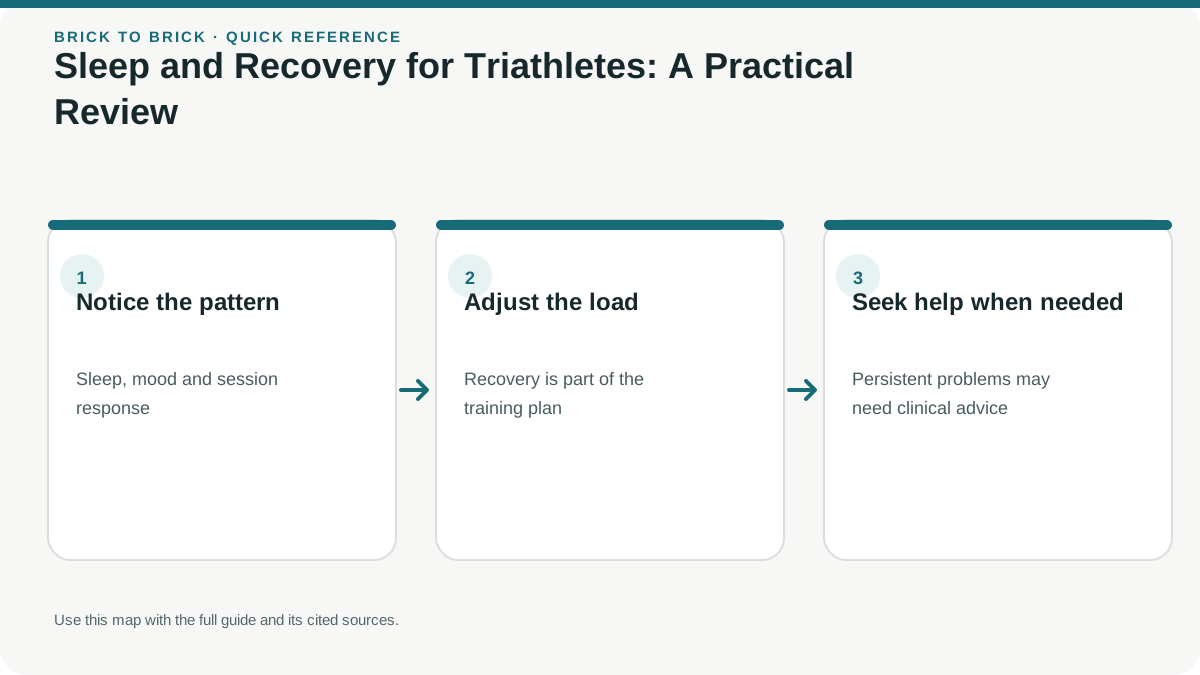
Sleep supports recovery, but a triathlete’s needs and sleep problems cannot be reduced to one nightly target or wearable score. Start by protecting sleep opportunity and identifying patterns that leave you unrefreshed.
In this article
- 1Separate time in bed, sleep and daytime function
- 2Keep a simple diary for a representative period
- 3Adjust the training schedule before adding complexity
- 4Make the sleep environment and wind-down practical
- 5Know when fatigue needs assessment
- 6Prepare for race travel without chasing perfect sleep
- 7Audit the cost of an early-morning workout
- 8Make a travel sleep plan from controllable arrangements
- 9Separate a sleep opportunity problem from a sleep quality problem
- 10Design the training week so sleep is not the hidden trade-off
- 11Use sleep extension and naps carefully, without turning them into targets
- 12Understand what a watch can and cannot tell you about sleep
- 13Recognize reasons to ask for professional sleep or medical help
- 14Plan race-week sleep around logistics, not perfection
- 15Separate ordinary tiredness from a pattern that keeps getting worse
- 16A concise sleep-and-training check-in
- ?Frequently asked questions
Separate time in bed, sleep and daytime function
Time in bed is an opportunity for sleep, not a measurement of sleep obtained. A watch estimate is also not a clinical assessment. Note whether you feel alert and functional during the day alongside the overnight record.
The athlete sleep consensus recommends an individual approach, recognising that training schedules, travel and other demands can affect sleep. It does not justify promising that a fixed extra hour will produce a particular performance gain.
Begin with the problem you observe: too little opportunity, difficulty falling asleep, repeated waking or persistent daytime sleepiness.
Keep a simple diary for a representative period
Record bedtime, approximate time to sleep, wake time, awakenings, naps, training timing and how you feel. Include shift work, travel, late caffeine or alcohol where relevant.
Do not make the diary another source of pressure. Approximate observations are enough to identify a repeated pattern. A clinician can advise whether more formal assessment is useful.
For example, if early swims repeatedly follow late work calls, the schedule may leave too little sleep opportunity even before considering sleep quality. Moving one session can be more useful than adding another recovery product.
Adjust the training schedule before adding complexity
Look for sessions that require sacrificing sleep repeatedly. Consider a later start, a shorter workout or moving the session to another day. Protect the workouts that matter while simplifying optional additions.
If late intense exercise seems to disturb your sleep, compare a different timing or a gentler session in a similar week. Responses vary, so avoid a universal ban on evening training.
Use the work-and-training guide for negotiating the calendar. A sustainable programme includes the time needed to recover from it.
Make the sleep environment and wind-down practical
Aim for a comfortable, quiet and suitably dark space where possible. Establish a repeatable transition away from work or training that helps you settle. Address obvious interruptions such as equipment charging lights or a noisy room.
Keep caffeine and alcohol in the picture if they affect your sleep. Do not use supplements or sedating products as a routine solution without appropriate advice, especially with medication or health conditions.
A nap may be useful for some athletes, but its timing and effect on nighttime sleep vary. Observe whether it helps rather than treating a prescribed nap length as mandatory.
Know when fatigue needs assessment
Persistent unrefreshing sleep, loud snoring with witnessed breathing pauses, marked daytime sleepiness or ongoing difficulty sleeping deserves clinical advice. So does fatigue that remains unusual despite a manageable schedule.
Do not diagnose overtraining, iron deficiency or a sleep disorder from a wearable score. A clinician can assess the wider context and decide whether testing is appropriate.
Avoid driving, road cycling or swimming when sleepiness makes those activities unsafe. A missed training session is preferable to treating impaired alertness as something to push through.
Repeated infections through a season belong in the same category: treat them as a load, sleep and fuelling signal rather than a discipline problem, and see the guide to training when you are sick for how to handle an individual episode without extending it.
Prepare for race travel without chasing perfect sleep
Plan arrival, meal access and the first morning's obligations. Reduce avoidable late tasks by packing and completing registration early where possible. Use the race-week schedule to make that concrete.
One disrupted night should be interpreted in context rather than treated as proof that the race is lost. Equally, persistent poor sleep is not something to dismiss with reassurance alone.
Review the diary and choose one practical change. The useful outcome is more reliable sleep opportunity and a clearer response to ongoing problems, not a perfect nightly score.
Audit the cost of an early-morning workout
An early session only saves time if its preparation and bedtime are realistic. Add the alarm time, travel, changing, workout and return to the calendar. Then work backwards to see whether the evening actually allows adequate sleep opportunity.
Try a practical change before adding sleep technology: prepare equipment earlier, move one session to lunch, shorten an optional workout or choose a nearer pool. Keep a short record of bedtime, waking, perceived sleep and daytime function to see whether the change helps.
Avoid treating a wearable's nightly score as a verdict. If it contradicts how you function, use the discrepancy as a question rather than automatically changing training. Persistent excessive daytime sleepiness, loud snoring with breathing interruptions or fatigue that does not improve deserves clinical assessment. A darker bedroom cannot explain or treat every sleep problem.
Make a travel sleep plan from controllable arrangements
Before a race trip, identify the parts of sleep you can influence: room sharing, noise, light, temperature, meal access and the timing of required appointments. Ask about quiet accommodation or practical room arrangements when booking if those are important to you.
Keep familiar items that help your routine and can be packed easily. Avoid making race week the first test of an unfamiliar supplement or sleep aid. Medication questions belong with an appropriately qualified clinician, especially when other conditions or medicines are involved.
A disrupted night does not automatically determine the next day's performance. Reassess how you feel, keep the practical plan simple and respond to symptoms rather than treating a sleep score as destiny. After returning home, review whether travel arrangements repeatedly remove adequate sleep opportunity and change the next trip where possible. The goal is a workable pattern across preparation and travel, not a requirement to achieve a perfect night before every event.
Separate a sleep opportunity problem from a sleep quality problem
A practical first step is to identify which part of the night is difficult. Someone who works late and sets a very early alarm may have too little time available for sleep. Someone else may spend enough time in bed but repeatedly wake, take a long time to fall asleep, or feel markedly sleepy during the day. These patterns can look similar on a training calendar but suggest different questions.
For one or two representative weeks, keep a brief record: time you tried to sleep, approximate waking time, major interruptions, naps, training timing, work or family disruption, and daytime alertness. Add context such as travel, a late shift, illness or a room change. Exact minute-by-minute estimates are unnecessary; the point is to see what repeats. If keeping records makes you more worried about sleep, stop tracking and discuss that effect with a clinician.
Compare the record with the schedule. If the night is short because the alarm follows a late work call, moving or shortening a session may help create opportunity. If you regularly allow time for sleep but have persistent difficulty or unrefreshing nights, adding stricter bedtime rules may not address the cause. The athlete sleep consensus calls for an individualized approach because athletes' sleep is affected by training, competition, travel and life context (Walsh et al., athlete sleep consensus).
Bring a concise pattern to a qualified health professional when the problem persists. A diary can help explain what is happening; it cannot diagnose insomnia, sleep apnoea, a circadian disorder or another medical condition.
Use sleep extension and naps carefully, without turning them into targets
Some athletes may benefit from having more time available for sleep, especially when training or travel has reduced the usual opportunity. That does not mean every triathlete should add the same number of hours, keep a fixed bedtime or schedule a nap every day. The 2021 athlete sleep consensus notes individual differences and identifies sleep extension and napping as areas where further research is needed.
If you want to see whether a slightly earlier wind-down helps, make it a practical experiment: protect a modest additional window for several ordinary days, keep wake obligations and training roughly comparable, then note daytime function as well as the sleep estimate. Avoid interpreting one good or bad night as a verdict. If going to bed earlier simply creates a long period of wakefulness or worry, revert and seek advice for persistent difficulty.
A nap can be a tool for some people, but it can also interfere with nighttime sleep, be impractical at work or leave someone groggy when they wake. If you already nap, record its timing and how you feel afterward; do not use it to rationalize a chronic schedule that repeatedly cuts nighttime opportunity. Avoid napping in a place or situation where drowsiness could create a safety risk.
Do not pursue a perfect numerical sleep score. Your useful test is whether you are alert enough for daily activities, whether you recover from normal training, and whether a persistent sleep problem needs assessment. A clinician can help decide whether a sleep intervention is appropriate for your circumstances.
Understand what a watch can and cannot tell you about sleep
A wearable can make estimated bed and wake times easier to review over weeks, but it does not observe sleep in the same way as a clinical sleep study. Sleep stages, readiness scores and recovery labels are calculations that depend on the device, software and signals it collects. They may be useful for noticing a broad pattern; they are not proof of how much restorative sleep you obtained.
The American Academy of Sleep Medicine says consumer sleep technologies are not a substitute for clinical evaluation and should not be used to diagnose or treat sleep disorders. If your device repeatedly reports an unusual result, note the pattern and discuss it with a clinician alongside symptoms and history, rather than buying another tracker or changing training based on the number alone (AASM position statement on consumer sleep technology).
Use an uncomplicated decision rule: if the tracker and your functioning both look stable, keep your routine; if the tracker looks unusual but you feel well, review settings and context; if you feel persistently unwell or sleepy regardless of the tracker, seek appropriate care. A low score does not make a workout compulsory or forbidden. Symptoms, safety and the wider pattern matter more than a single algorithm.
Do not wear a device so tightly or in a way that causes skin irritation, and follow the manufacturer's instructions. If tracking increases bedtime checking, anxiety or repeated attempts to “correct” a score, turn it off at night. Measurement is useful only when it helps you make a sensible decision.
Recognize reasons to ask for professional sleep or medical help
Seek clinical advice when sleep difficulty continues and affects daytime function, when excessive sleepiness is persistent, or when fatigue remains unusual despite a reasonable training and life schedule. Loud snoring together with witnessed pauses in breathing, gasping or choking during sleep, repeated waking or marked daytime tiredness can be reasons to ask a clinician about possible sleep apnoea. Those symptoms need assessment; they cannot be confirmed by a watch or this article (NHS guidance on sleep apnoea).
Also talk with a clinician about fatigue accompanied by concerning changes such as unexplained weight change, repeated illness, persistent pain, mood changes or reduced ability to do ordinary activities. Several different causes can produce fatigue, including non-sleep health conditions and training stress. Do not self-diagnose “overtraining,” iron deficiency, depression or a hormone problem from one metric or one bad block.
If you are dangerously sleepy, do not drive, ride in traffic, swim alone or operate equipment. Change the session or use a safer way to travel. Seek urgent help for severe symptoms such as fainting, chest pain, serious breathing problems or sudden confusion.
People taking medicines, managing a chronic condition, pregnant or postpartum, or dealing with a known sleep disorder should discuss training changes and sleep products with an appropriately qualified professional. Supplements and prescription sleep medicines can interact with health conditions and other drugs. Do not stop prescribed medication or start a sedative based on sports advice online.
Plan race-week sleep around logistics, not perfection
Race week often changes ordinary routines: travel, shared rooms, early registration, unfamiliar beds and a different meal schedule. Reduce avoidable uncertainty earlier in the day. Check the athlete guide, lay out equipment, confirm transport and identify meal access before the evening. A prepared checklist can prevent late-night packing without requiring you to follow a rigid bedtime ritual.
If the event is away from home, ask about room arrangements that matter to sleep, such as a quiet location, room sharing or a way to reduce light. Bring familiar items that are safe and easy to pack. Do not trial a supplement, sleep medication, earplug or unfamiliar recovery technique for the first time the night before a race. If a prescribed medicine is involved, follow the prescriber's instructions and ask questions well ahead of travel.
One short or disrupted night does not establish that you cannot participate or predict a specific result. Reassess how alert and well you feel, follow event safety advice and adjust activity if you are impaired or unwell. Likewise, reassurance should not dismiss persistent symptoms. The practical next step depends on both the race demands and your health.
Use the race-week schedule to reduce administrative surprises. After the event, note what disrupted the routine and choose one improvement for future travel. The aim is a sustainable pattern that supports daily life and training, not a guarantee of ideal sleep on command.
Separate ordinary tiredness from a pattern that keeps getting worse
An isolated tired day after a late night or a long session is not enough to identify a disorder or a training problem. Look for recurrence and consequences: are easy sessions repeatedly difficult, are you struggling to stay awake during the day, or are you less able to work and care for yourself? Is the pattern connected to an early alarm, repeated night work, a new medication, travel, pain or a change in mood?
Keep the record short. Three lines can be more helpful than a detailed dashboard: what changed, how you felt during the day, and what you did with training. After a week, ask whether the pattern has an obvious schedule explanation, whether it is improving, and whether outside help is needed. If the answer is unclear and the problem is persistent, take that uncertainty to a clinician.
Avoid stacking multiple interventions at once. Moving training, adding supplements, buying a new tracker and changing the bedroom all together makes it harder to tell what helped and may increase worry. Choose one low-risk environmental or scheduling change, observe its practical effect, and keep the rest of the routine stable where possible.
For coaches and training partners, useful support is to help the athlete adjust demands and access care, not to diagnose from an app or demand that they prove how tired they are. Sleep problems can affect health and safety beyond athletic performance. The appropriate response may be a lighter week, professional assessment, a work-schedule change or several of these together.
A concise sleep-and-training check-in
Use this check-in once a week or when the routine changes. It can be recorded on paper and does not require a sleep score.
| Question | What to note |
|---|---|
| Did I have a realistic chance to sleep? | Bedtime and wake obligations, late shifts, caregiving or travel. |
| How did I function during the day? | Alertness, concentration and any unsafe sleepiness. |
| How did planned training feel? | Ordinary, unusually difficult, interrupted or missed; include context. |
| Is there a repeated symptom or concern? | Persistent insomnia, snoring with breathing pauses, pain, mood change or illness. |
| What is the smallest useful next action? | Move one session, protect time, change the room setup, discuss a concern with a clinician. |
The check-in is a conversation starter, not a scorecard. If the week was disrupted by a race, illness or long journey, label it and avoid treating it as a typical baseline. If the same problem appears in several different weeks, consider whether a deeper schedule or health issue deserves attention.
You can bring this note to a coach or healthcare professional. Include the parts of training and daily life that matter, and ask a specific question such as, “Could these breathing pauses explain my daytime sleepiness?” or “How should I alter training while this symptom is assessed?” That is more useful than asking a consumer app to explain a complex health pattern.
Sources
Sources are listed so readers can verify consequential claims and dated details.
- Sleep and the athlete: 2021 expert consensus — British Journal of Sports Medicine (accessed September 14, 2026)
- Sleep disorders in athletes — Sleep Medicine Clinics (accessed September 14, 2026)
- Consumer sleep technology position statement — American Academy of Sleep Medicine (accessed September 24, 2026)
- Sleep apnoea — NHS (accessed September 24, 2026)
Frequently asked questions
Can a nap replace a consistently short night?
A nap may be useful for some people, but it does not solve a schedule that repeatedly leaves too little sleep opportunity. Consider its timing and whether it interferes with nighttime sleep. Review the overall pattern and seek help for persistent sleep or daytime-function problems.