How to Structure a Triathlon Training Week Around Real Life
Build a repeatable triathlon training calendar around work, family, facility access, recovery, and the sessions in your plan. Includes a scheduling worksheet and ways to adapt when the week changes.
By Lotte
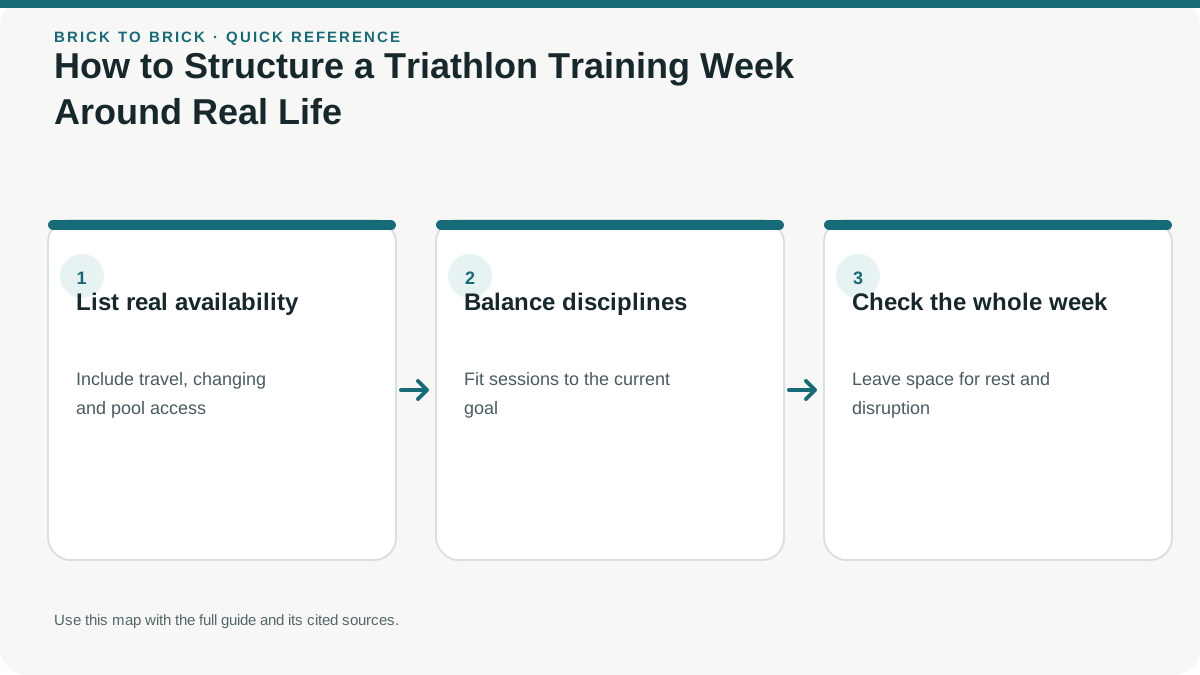
Build a weekly calendar from your real constraints: mark fixed commitments and protected recovery, place priority sessions, add flexible work only where it fits, and review how the plan performed before repeating it.
Key takeaways
- 1Map work, care, travel, pool access, daylight, and recovery before adding workouts
- 2Use fixed, anchor, flexible, and protected labels to show what can actually move
- 3Training minutes are not the full calendar cost; include travel, changing, setup, and recovery
- 4Choose distributed sessions, doubles, or an access-led calendar by their practical trade-offs
- 5When a session is missed, move it, modify it within your plan, or drop it rather than automatically cramming it in
- 6Use day-by-day sample weeks as illustrations, not as individualized training prescriptions
In this article
- 1Map availability before assigning workouts
- 2Choose the week’s priorities
- 3Create session slots before you assign weekdays
- 4Use doubles only when they solve a real constraint
- 5Rearrange by purpose rather than by guilt
- 6Review whether the layout actually worked
- 7Distinguish workout time from calendar time
- 8Choose a calendar pattern by its trade-offs
- 9Check the pattern against your real constraints
- 10Keep the next week connected to the one you completed
- 11Count the whole load, including work and travel
- 12Schedule strength and support work as real appointments
- 13A disruption plan: move, modify, or drop
- 14Use a blank weekly-planning worksheet
- 15Separate public-health guidance from race preparation
- ⚖A planning sequence for a realistic triathlon training week
- ?Frequently asked questions
Map availability before assigning workouts
Mark work, care responsibilities, travel, pool access, daylight, and sleep before adding training. Count the whole appointment: travel, changing, setup, showering, equipment care, and the time needed to eat or return to work. A 45-minute swim may take much more than 45 minutes out of the day, and a session that depends on someone else's schedule is not fully flexible.
Separate fixed commitments from usable training windows. Mark one or two reliable longer slots and the shorter periods that recur most weeks. Leave some open space for ordinary delays, chores, and recovery; filling every blank square makes the plan brittle. Include your existing movement and non-triathlon sport rather than treating them as invisible time.
For each possible slot, note its earliest start, latest finish, equipment or facility access, and what has to happen immediately before or after it. A morning swim may depend on pool opening and a work commute; an outdoor ride may depend on daylight and a safe route. Put the least flexible windows on the page first, then build around them. For workplace negotiation and household arrangements, use training while working; this page focuses on how to make the weekly layout fit.
Avoid turning a weekly schedule into a test of discipline. If training repeatedly requires cutting sleep, skipping meals, or relying on a childcare arrangement that does not exist, change the plan's size or timing rather than assuming you can force the calendar to cooperate.
Choose the week’s priorities
Choose the sessions from the training plan or coaching guidance that are most important for your present goal, then identify the access or recovery conditions each one needs. A beginner may be learning to swim efficiently and getting comfortable with regular movement. An experienced athlete near a target race may have a specific, practiced endurance session to protect. These are different planning problems, not different levels of commitment.
Write each session's purpose and constraints before selecting a weekday: required sport or equipment, minimum practical time window, fixed coach or class time, whether it is demanding or familiar, and which other sessions it should not crowd. Place the hard-to-replace sessions first. Add supporting work only if it does not break the recovery or travel conditions that make the priority useful.
Do not infer a personal workout dose from an example calendar. Use training basics to distinguish duration, intensity, and skill demand, and the training-week examples to see sample calendars at different experience levels. Those examples show possible patterns; they cannot establish what volume or session content is appropriate for you.
Create session slots before you assign weekdays
| Day | Example purpose | Adjustment option |
|---|---|---|
| Monday | Rest or ordinary light activity | Keep free after a demanding weekend |
| Tuesday | Short coached swim | Shorten the set if technique deteriorates |
| Wednesday | Easy run or run-walk | Use the currently tolerated duration |
| Thursday | Easy bike with handling practice | Move indoors if road conditions are unsafe |
| Friday | Swim technique and optional familiar strength | Omit the extra work if recovery is poor |
| Saturday | Comfortable longer ride | Keep within established capacity |
| Sunday | Easy run or rest | Choose from the response to Saturday |
This layout is not a starting dose for everyone. It illustrates separation of purposes and the option to remove work.
Use doubles only when they solve a real constraint
Two sessions on one day can reduce the number of trips to a pool, leave a day available for work or family, or pair sports when a plan specifically calls for a transition. It also makes that day longer and may leave less recovery before the next session. Do not add a second workout just to imitate an advanced calendar or to compensate for work missed earlier in the week.
Before combining sessions, ask: does this pairing serve a clear purpose in the current plan; can I complete both without rushing the warm-up, food, hydration, travel, or changing; and what happens to the next day's session? A short technique session beside another workout has a different cost from two demanding sessions. Count the time between them and the total time away from other responsibilities, not just the minutes in each workout.
If the reason for a double is to practise bike-to-run transition, use the brick guide to understand that session's distinct purpose. If a second workout simply makes the week look fuller, leave it out. Count commuting, strength, recreational sport, and extra club sessions when considering the total training demand.
Rearrange by purpose rather than by guilt
When a session becomes impossible, first ask what role it played. A missed easy session may be dropped; an important coached swim may have another access window; a priority session may need to move with an adjustment to the sessions around it. There is no requirement to preserve every box in the original calendar.
Do not compress multiple demanding sessions into the remaining days just to reach the planned weekly total. Moving a run beside a hard ride changes the spacing even if the minutes stay identical. After illness, pain, or unusually poor recovery, reduce or pause training as appropriate and seek qualified advice when symptoms or health history make that necessary. Avoid using a missed session as a reason to double the next workout or to exercise through concerning symptoms.
Write a fallback for the most fragile appointment before the week starts: a safe indoor alternative, a shorter option permitted by your plan, another facility window, or permission to skip it. For guidance on temporary schedule changes, use the minimum busy-week plan. A fallback should solve the actual barrier; an unsafe outdoor ride does not become a good plan just because the trainer is unavailable.
Review whether the layout actually worked
At the end of the week, compare the plan with what happened, not with the ideal week you hoped to complete. Note which sessions fit, which were missed or changed, and the reason: facility access, travel, work, weather, fatigue, pain, illness, or a deliberate choice. Those reasons point to different adjustments. A repeated pool-timetable conflict needs a different solution from poor recovery after a hard session.
Check whether the calendar preserved the intended priority and enough room to recover. Did travel take longer than expected? Did a double make another appointment rushed? Were several demanding sessions crowded together after a change? A schedule can have reasonable total minutes and still create a difficult sequence. Keep a note about how the week felt and any symptoms that affected training; persistent or worsening concerns deserve attention rather than a simple calendar shuffle.
Change one recurring friction point at a time. Keep successful placements, adjust a slot or its duration only within the applicable training guidance, and observe the next week. If the plan consistently cannot fit ordinary life, reduce its scope or ask a qualified coach to help reshape it. For organizing across a season, use triathlon periodization; this page stays with the weekly calendar.
Distinguish workout time from calendar time
A 40-minute swim can occupy 80 minutes once travel, changing, and showering are included. A 60-minute indoor ride can need extra time for setup, getting changed, and cleaning equipment. These are examples of calendar accounting, not predictions for every athlete. Add the full door-to-door time and the least flexible dependency for each appointment: pool hours, commute, daylight, childcare, changing facilities, or access to a safe route.
Place sessions that depend on another person or facility first. Add a realistic buffer for changing locations and for returning to work or caregiving. Include time for meals and ordinary daily activities rather than assuming every gap between sessions is available for recovery or more exercise. If a plan fits only when you remove all buffers, it probably needs resizing or a different arrangement.
After a trial week, compare planned and actual calendar time. If the same session is repeatedly missed, adjust its location, duration, or priority instead of expecting effort alone to solve a structural conflict. A smaller repeatable schedule is more useful than a detailed one that relies on perfect conditions.
Choose a calendar pattern by its trade-offs
The following calendars illustrate scheduling choices for an already active athlete who tolerates the listed work. They are not starting prescriptions or a promise of readiness for a particular distance. Each contains 240 minutes of exercise, but the distribution and logistical cost differ.
Calendar A: one session on each training day
| Day | Example session | Exercise minutes |
|---|---|---|
| Monday | Familiar easy swim | 35 |
| Tuesday | Controlled bike session | 50 |
| Wednesday | Rest | 0 |
| Thursday | Familiar easy run | 35 |
| Friday | Rest | 0 |
| Saturday | Comfortable longer ride | 80 |
| Sunday | Familiar swim | 40 |
The total is 35 + 50 + 35 + 80 + 40 = 240 minutes. There is only one run exposure, which may be unsuitable for the athlete's goal or history. The calendar demonstrates that a total can fit while the discipline mix still needs review.
Calendar B: distribute shorter sessions
| Day | Example session | Exercise minutes |
|---|---|---|
| Monday | Swim | 30 |
| Tuesday | Bike | 45 |
| Wednesday | Run | 25 |
| Thursday | Swim | 30 |
| Friday | Rest | 0 |
| Saturday | Bike | 75 |
| Sunday | Run | 35 |
This also totals 240 minutes. It includes two exposures to each discipline but occupies six days. An athlete may value that distribution, or find the repeated changing and travel difficult. The extra session does not create extra calendar time automatically.
Calendar C: combine one transition practice
| Day | Example session | Exercise minutes |
|---|---|---|
| Monday | Swim | 35 |
| Tuesday | Run | 30 |
| Wednesday | Rest | 0 |
| Thursday | Bike | 50 |
| Friday | Swim | 30 |
| Saturday | Rest | 0 |
| Sunday | Bike, then short easy run | 75 + 20 |
The total remains 240 minutes. Combining the final two disciplines changes the transition task and recovery demand. It is not equivalent to doing the run fresh on another day. Use the arrangement only if that combination serves a purpose and is appropriate to current capacity.
Check the pattern against your real constraints
The examples show why “four hours available” is not enough information to select a week. Count facility visits, early starts, outdoor daylight needs and the recovery required by each arrangement. Calendar B may suit someone living beside a pool; Calendar A may fit another person's work better but leave a running preparation gap. Calendar C may save one setup cycle while making Sunday less flexible.
Choose the limiting constraint before moving sessions. If the pool only offers suitable lane time on two mornings, place swimming first and assess the remaining week. If safe outdoor riding is limited to daylight at the weekend, decide how to preserve those skills while using indoor work appropriately. Indoor time does not teach every handling or traffic task.
When a session moves, inspect its neighbours. A hard ride moved from Tuesday to Saturday may now sit beside a long run. The weekly total has not changed, but the spacing has. Decide whether to reduce, replace or move another demand rather than assuming equal minutes mean equal recovery.
Use your actual completion record after a trial week. Mark why a session changed: access, fatigue, weather, illness or choice. Those reasons lead to different adaptations. If the problem is consistently a facility timetable, changing effort targets will not solve it.
Keep the next week connected to the one you completed
Before copying a calendar forward, record what you actually completed and how the arrangement worked. If an optional session was omitted, do not count it as completed when planning the next week. If a ride became more demanding because of terrain or conditions, note that context even when its duration stayed the same. These details help distinguish a scheduling issue from a change in workload.
Write one thing that worked, the main friction point, and one change to try. Avoid rebuilding the whole week after one missed workout; repeated conflicts or a sustained inability to recover are different signals. If the plan needs a change in training dose, intensity, or progression, use the guidance for your specific plan or ask a coach rather than making a large adjustment from the calendar alone.
The training week is a repeatable arrangement of purposeful sessions and real recovery. Its quality comes from fit, execution, and appropriate adjustment—not from the number of colored blocks in an app.
Count the whole load, including work and travel
A calendar can look light while the overall week is demanding. Training minutes are only one part of the load you are managing. Consider recent exercise outside the plan, a physically active job, a long commute, travel across time zones, poor sleep, caring responsibilities, and unusual psychological stress. You do not need to turn every life event into a number; the point is to notice when an ordinary training week is landing on an unusually difficult week.
The International Olympic Committee consensus on load discusses training and competition load alongside travel, psychological load, well-being, and injury. It was written for sport broadly and does not prescribe a recreational triathlon schedule, but it supports the practical habit of reviewing more than workout duration. Record a simple note such as “work travel and poor sleep this week” next to the plan rather than pretending the calendar occurred under normal conditions.
If the week has an unusual extra demand, preserve the purpose of the plan by asking whether to maintain, modify, or reduce a session—not by forcing the same work into fewer days. An athlete with a medical condition, return from injury, persistent symptoms, or substantial fatigue may need individualized advice from a clinician or qualified coach. For general guidance on managing training alongside injury risk, see the broader injury-prevention guide.
Schedule strength and support work as real appointments
Strength, mobility, rehabilitation exercises, and skills practice take time and can affect how you feel in the next endurance session. Put them on the calendar if they are part of your current plan, and count preparation, equipment, and travel. Do not hide them in a “free” day and then wonder why the day is no longer restful.
Where a supporting session sits depends on its purpose, your training history, and the following workout. A familiar short routine may fit after an easier session for one athlete; a new or demanding strength session may need more space from a key run or bike session for another. There is no universal rule that strength must always follow a particular discipline or that a recovery day can hold any amount of extra work. Follow the dose and sequencing guidance in your plan, and keep the session easy enough to remain supporting work when that is its intended role.
When new work is introduced, avoid changing several parts of the week at the same time. That makes it easier to notice whether the total schedule still fits and whether the next training sessions feel as intended. See the triathlon strength-training guide for exercise selection; this article focuses on where planned support work sits in the calendar. If strength work is prescribed for an injury or medical condition, use the instructions from your treating professional.
A disruption plan: move, modify, or drop
Choose a response before the week gets busy. When a session becomes impossible, these options are usually clearer than trying to “make it up” automatically:
- Move it when there is another appropriate slot and the change does not create an unsuitable sequence or displace recovery.
- Modify it when your plan allows a shorter or simpler version that still serves the session's purpose. Do not invent a new intensity target just to finish something.
- Drop it when no suitable slot remains, when the session is optional, or when trying to fit it would create more cost than value.
Then inspect the day before and after the change. A missed easy ride might disappear without affecting the rest of the week. A priority session moved to the weekend could sit beside another demanding workout and require a second adjustment. If the only option involves cutting sleep, rushing through meals, training in unsafe conditions, or exercising with concerning symptoms, it is not a suitable replacement slot.
Keep a short note about what happened and why. Several missed sessions because of the same pool schedule may justify a different routine or a change to the plan. One missed workout during travel does not automatically justify rebuilding the whole week. This approach protects consistency by avoiding last-minute compression and helps you bring useful information to a coach if the conflict repeats. It does not provide medical return-to-training advice; consult an appropriately qualified professional when illness, injury, or health concerns affect the decision.
Use a blank weekly-planning worksheet
Before adding workouts, fill in these lines for the week you are about to plan:
| Planning prompt | Your note |
|---|---|
| Current goal and phase | Event or training purpose; what this week is meant to support |
| Fixed commitments | Work, care, travel, booked facilities, coached sessions |
| Protected time | Sleep, recovery, family time, treatment or appointments |
| Reliable training windows | Start and finish, location, travel, and equipment access |
| Priority sessions from the plan | Purpose, flexibility, and recovery conditions |
| Supporting or optional sessions | Why they are included and when they can move |
| Likely disruption | Weather, variable shifts, facility closure, or care change |
| Fallback | Move, modify within the plan, or drop |
| Review note | What to check at week's end |
Now put the fixed and protected items on the calendar, add priority sessions, and place flexible sessions only where they fit without removing the necessary recovery and buffers. Leave genuinely open time blank. If the plan cannot fit after that, return to the plan or your coach and discuss its scope; do not treat every empty square as a missed workout. This worksheet is a scheduling aid, not a training plan or a way to decide a safe dose.
Separate public-health guidance from race preparation
The World Health Organization's physical-activity guidelines describe activity recommendations for public-health benefits across age groups and populations. They are useful context for general health, but they are not a triathlon program, a race-readiness test, or a prescription for how much swimming, cycling, or running an individual should do. Do not convert a public-health activity target directly into a week of event training.
Triathlon preparation adds sport skills, equipment access, event distance, training history, and recovery to the planning question. A person returning after illness or injury, managing a chronic condition, or new to a discipline may need a different entry point from an experienced athlete. Examples from another athlete can make a calendar easier to picture, but they cannot determine what is appropriate for you. The WHO guideline overview explains the public-health scope of its recommendations.
Use your established training plan or qualified coaching for the session content and training dose, and use this article to place that work around your actual week. If your health, medication, pregnancy, symptoms, or a return from injury changes what exercise is suitable, ask an appropriately qualified clinician before treating a generic schedule as personal guidance.
A planning sequence for a realistic triathlon training week
| Step | Put on the calendar | Question to ask |
|---|---|---|
| 1. Map | Fixed commitments, access, travel, and protected time | Which windows are genuinely available door to door? |
| 2. Prioritize | Sessions from your current plan that are hard to replace | What purpose and recovery conditions does each need? |
| 3. Arrange | Flexible work and any purposeful doubles | Does this pattern fit without compressing recovery? |
| 4. Prepare | A fallback for the most fragile session | Should I move, modify within the plan, or drop it? |
| 5. Review | Actual sessions, barriers, and response | What one calendar change would help next week? |
Sources
Sources are listed so readers can verify consequential claims and dated details.
- WHO Guidelines on Physical Activity and Sedentary Behaviour — World Health Organization (accessed September 24, 2026)
- IOC Consensus Statement: Load in Sport and Risk of Injury — British Journal of Sports Medicine / International Olympic Committee (accessed September 24, 2026)
Frequently asked questions
How many days a week should a triathlete train?
There is no universal number of training days for every distance, experience level, or life situation. Start from your current plan and training history, then check whether its sessions fit with recovery and ordinary responsibilities. The day-by-day examples linked from this article are illustrations, not personal prescriptions.
Should I train all three triathlon sports every week?
That depends on your current phase, plan, experience, and event goal. Use the session guidance from your plan or coach rather than adding a sport-specific workout to every available opening. This page helps place planned sessions; it does not set a weekly training dose.
Is it okay to do two triathlon workouts in one day?
A double can reduce travel or serve a planned transition goal, but it creates a longer day and changes what follows. Combine sessions only when the pairing fits your plan, schedule, and recovery; do not use doubles simply to replace every missed workout.
What should I do if I miss a workout?
Decide whether it can move without creating a poor sequence, be modified within your plan, or be dropped. Avoid compressing several demanding sessions or sacrificing sleep to preserve a weekly total. Repeated conflicts may mean the schedule or plan needs revision.
Do I need a rest day every week?
Recovery needs and schedules vary, and this article does not prescribe a fixed rest-day pattern. Include the recovery your current plan requires and notice how you respond. If persistent symptoms or inability to recover are affecting training, seek appropriate professional guidance.
How do I fit training around a full-time job or caregiving?
Start with fixed work and care windows, include travel and preparation time, then place the least flexible planned sessions. Leave buffers and decide what can move or be dropped during a difficult week. See the linked guides on training while working and on minimum busy-week plans for those specific constraints.
Can I use public-health activity guidelines as my triathlon plan?
No. Public-health recommendations address activity for general health benefits, while triathlon preparation depends on sport-specific skills, training history, event goals, and recovery. Use an appropriate training plan or qualified professional for individualized session content.