Triathlon Race Numbers and Body Marking: What Goes Where
What body marking is, where your race number, bike sticker and helmet sticker go, why the bib moves from back on the bike to front on the run, and how to prepare — with practices that vary by event.
By Lotte
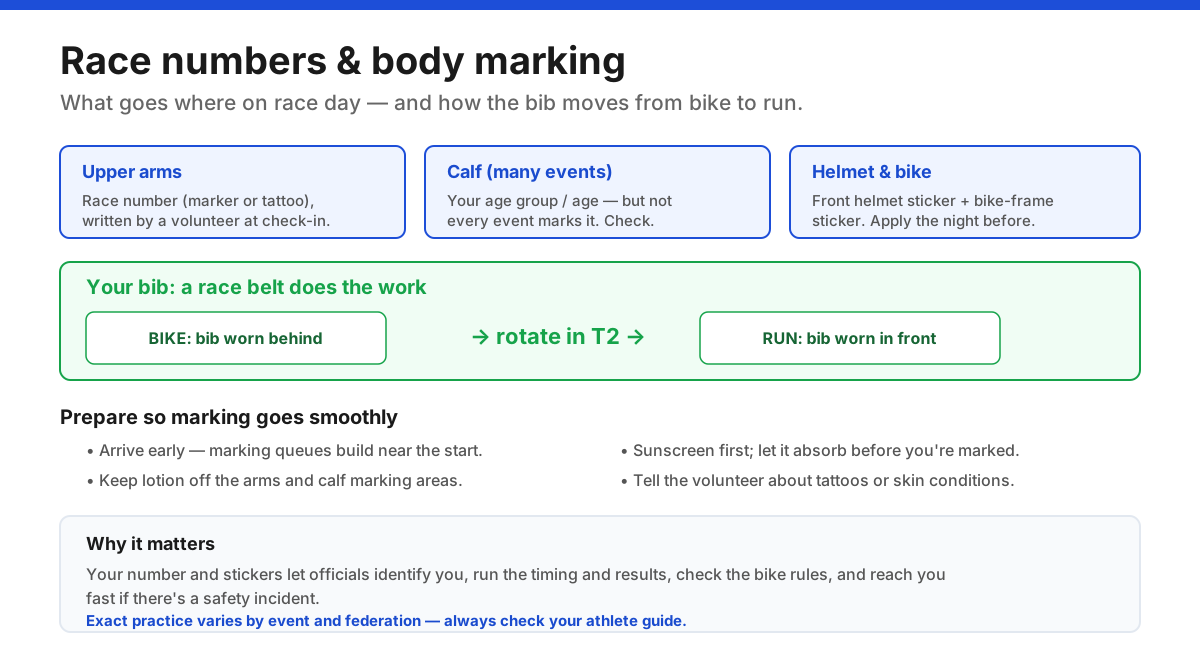
Body marking is when a race volunteer writes your race number on your body — commonly on both upper arms, and at many events your age on a calf. Alongside it you'll get a bike-frame sticker, a helmet sticker and a bib worn behind on the bike and in front on the run. It all exists so officials can identify you, run the timing and results, check the bike rules and reach you fast in an emergency. Exact practice varies by event and federation, so this guide explains the common setup and the details to confirm in your athlete guide.
Key takeaways
- 1Body marking commonly puts your race number on both upper arms, and at many events your age on a calf — but the exact practice varies by event and federation.
- 2Your bib is worn behind you on the bike (so officials can check the rules) and in front on the run (for finish cameras); a race belt makes the swap effortless.
- 3Bike-frame and helmet stickers need to be visible and applied before racing — a missing one can hold you up at bike check, so confirm your event's requirements.
- 4Apply sunscreen first and let it absorb before you're marked, and keep lotion off the marking areas so the ink binds.
- 5Practices differ between events, so always check your athlete guide rather than assuming — and pick up everything at check-in.
In this article
- 1Quick answer: what to expect
- 2What body marking actually is — and why
- 3Where everything goes on race day
- 4Why the bib moves: back on the bike, front on the run
- 5The race belt: the piece that makes it easy
- 6Bike and helmet stickers
- 7How to prepare so marking goes smoothly
- 8The age-on-your-calf question
- 9Removing body marking after the race
- 10Common mistakes to avoid
- 11The bottom line
- ⚖Race-day identification: what goes where
- ?Frequently asked questions
Quick answer: what to expect
On race day you'll be given, and asked to wear, a few pieces of identification: a race number written on your body (body marking), a bib on a race belt, a sticker for your bike frame and one for your helmet. Each has a place it belongs, and getting them right is simple once you know the pattern.
The short version: your race number goes on your upper arms; at many events your age or age-group goes on a calf; stickers go on the bike and the front of the helmet (apply them the night before); and your bib sits on a race belt, worn behind you on the bike and rotated to the front for the run.
The important caveat that runs through this whole guide: exact practice varies by event, series and federation. A local sprint, a World Triathlon age-group race and a long-course event can each do this slightly differently. Use this page to understand the common setup and the why, then confirm the specifics in your event's athlete guide. For the wider race-day flow this sits inside, see what happens on triathlon race day and race-day preparation.
What body marking actually is — and why
"Body marking" is simply a volunteer writing your race number onto your body when you check in — usually in large digits on both upper arms, and at many events your age or age-group on a calf. Some events use rub-on temporary tattoos instead of a marker pen, and some smaller races let you self-mark.
It exists for practical reasons that are worth understanding, because they explain the rules around it:
- Identification — photographers, finish-line officials and spectators can recognise you, and your photos get tagged to your number.
- Safety — if you're hurt on the course, medical staff can identify you quickly.
- Officiating — on the run, officials and other athletes can see the field, which matters most where age-group is marked.
Body marking in some form is common across most organised triathlons, but the details — whether age is marked, what goes on which limb, marker versus tattoo — genuinely differ between organisers. Don't assume the setup from one race carries to the next; the athlete guide is the source of truth.
Where everything goes on race day
Here's the common layout, limb by limb and item by item — with the comparison table below as a quick reference:
- Upper arms (both): your race number, in marker or as a tattoo.
- A calf (many events): your age or age-group. Not every event marks this, and the exact rule for which age varies (see below).
- Bike frame: an adhesive number sticker, usually wrapped around the top tube or seat post.
- Helmet: a sticker on the front, so it's visible as you ride toward officials.
- Bib: on a race belt — behind you on the bike, in front on the run (the next section explains why).
- Timing chip: usually a strap on the ankle. This is a whole topic of its own — how it records your splits and results is covered in the timing chip and results guide.
- Swim cap: the event-issued cap (often colour-coded to your wave) for the swim.
Apply the stickers the night before so nothing is rushed on race morning, and pick everything else up at check-in.
Why the bib moves: back on the bike, front on the run
One rule confuses almost every first-timer: your bib is worn behind you on the bike but in front of you on the run. There's a clear logic to it.
On the bike, officials ride the course watching for rule violations such as drafting, and they're mostly behind you — so your number needs to face backward to be read. Under World Triathlon and USA Triathlon competition rules, race numbers must be worn and clearly visible as the event specifies, and a bib that's hidden or missing can draw a penalty. On the run, the finish-line cameras and aid-station volunteers are ahead of you, so the number needs to face forward.
The problem: a bib pinned to your tri suit can only face one way, and a wet, pinned bib tends to tear. That single rule is the entire reason race belts exist — which is the next section.
The race belt: the piece that makes it easy
A race belt is a simple elastic strap with two clips that hold your bib. You thread the bib on once, put the belt on in T1 after the swim, wear it with the number behind you for the bike, then rotate the belt around your waist in T2 so the number sits in front for the run. No pins, no re-attaching, no torn bib, no choosing which discipline to satisfy.
It's an inexpensive bit of kit and one of the highest-value small purchases in triathlon: it removes fiddly pinning, speeds up your transitions and eliminates a whole category of race-day stress. Most also have loops you can use to carry a gel or two.
If you don't have one, you can pin a bib for the run only and go without on the bike where the rules allow a rear number another way — but honestly, a race belt is worth getting. It's a staple of any budget gear list, and it earns its place in your race-day packing checklist.
Bike and helmet stickers
Two adhesive stickers usually come in your race packet, and both need to be on and visible before you race:
- The bike-frame sticker identifies your bike in transition and on the course; it typically wraps around the top tube or seat post.
- The helmet sticker goes on the front of your helmet so it faces officials as you ride.
Apply both the night before rather than fumbling with adhesive on race morning. The reason to take them seriously: at many events an official can stop you at bike check-in or on course if your identification isn't right, and sorting it out under time pressure is exactly the stress you don't want before a swim start. As always, the precise requirement — what must be visible, where — is in your athlete guide, so give it a read rather than guessing. This dovetails with laying the bike out correctly in the transition setup guide.
How to prepare so marking goes smoothly
A few small habits make body marking quick and hassle-free:
- Arrive early. Marking queues build up close to the start, and rushing it is stressful. Give yourself time.
- Sort sunscreen first. Apply it and let it absorb before you're marked, and keep it — and any lotion — off the arms and calf areas that will be marked. Ink won't bind to a freshly-creamed, greasy surface, and you'll end up with a smudged number that has to be redone.
- Have your details ready. Know your race number and, where relevant, the age the event marks.
- Flag tattoos or skin sensitivities. If you have a tattoo where they'd normally write, or sensitive skin, just tell the volunteer — they'll use the next clear spot. It's routine and no problem.
Done calmly and early, marking takes a minute and you can get on with the rest of your race-morning routine.
The age-on-your-calf question
Where age is marked, the most common convention (used by USA Triathlon) is your age on 31 December of the race year — not your age on race day. So if you'll turn 40 in November but race in June, your calf reads "40," because age-group triathlon places you in the category you'll be by year-end.
But two honest caveats: not every event marks age at all, and the exact age rule can differ between federations and series, particularly outside the USA. So don't assume — the athlete guide (or the age-group rules for your federation) will tell you whether age is marked and which age applies.
If the age-group system itself is new to you — how the categories work, why they exist, and how results are scored within them — that's covered in triathlon age groups explained.
Removing body marking after the race
Marker-pen numbers are stubborn but come off without drama. Common methods:
- Baby oil or any mild oil rubbed in and then wiped away is gentle and effective.
- Rubbing alcohol on a cotton pad works faster but is drying on the skin.
- Some athletes swear by insect repellent containing DEET as a last resort, though it's harsh — oil is kinder.
Tattoo-style numbers lift off easily after a warm shower: find an edge and roll it back gently.
Whichever you use, go easy. Race-day skin is often already irritated from sun, salt water and chafing, so don't scrub hard — remove gently and follow with a moisturiser. There's also no rush to remove it at the finish: photographers tag images by number, so leave your markings on until you're clear of the finish area.
Common mistakes to avoid
Most race-number problems are avoidable:
- Sunscreen or lotion over the marking areas, so the ink won't bind — cream everywhere except where you'll be marked.
- Wearing the bib under your wetsuit, which destroys it — the bib goes on a race belt put on in T1, after the swim.
- The helmet sticker on the back instead of the front where officials can see it.
- Forgetting the bike or helmet sticker, which can hold you up at bike check — apply them the night before.
- Removing your markings too early, before finish-line photos are taken.
- Assuming another race's setup applies — always confirm this event's requirements in the athlete guide.
Get these right and the whole numbering side of race day becomes a non-event, which is exactly what you want when your attention is on the race itself.
The bottom line
Race numbers and body marking look confusing the first time and are simple once you see the pattern: your number goes on your arms (and often your age on a calf), stickers go on your bike and the front of your helmet, and your bib rides behind you on the bike then rotates to the front for the run on a race belt. It all exists so officials can identify you, time you, check the rules and help you in an emergency.
Prepare the stickers the night before, arrive early, keep lotion off the marking areas, and — above all — read your event's athlete guide, because the details genuinely vary between organisers.
From here: race-day preparation for the whole plan, the race-morning routine for the timeline, the timing chip and results guide for how your splits are recorded, and triathlon age groups explained if the age side is new to you.
Race-day identification: what goes where
| Item | Where it goes | Provided by | Apply when |
|---|---|---|---|
| Race number | Both upper arms | Volunteer at check-in | Race morning |
| Age / age-group (many events) | A calf | Volunteer at check-in | Race morning |
| Bike-frame sticker | Top tube or seat post | Race packet | Night before |
| Helmet sticker | Front of helmet | Race packet | Night before |
| Bib (on a race belt) | Behind on bike → front on run | Race packet | In T1, after the swim |
| Swim cap | Head (event-issued) | Race morning | Before the swim |
Sources
Sources are listed so readers can verify consequential claims and dated details.
- World Triathlon Competition Rules 2026 — World Triathlon (accessed September 20, 2026)
- Multisport Competition Rules — USA Triathlon (accessed September 20, 2026)
Frequently asked questions
What is body marking in a triathlon?
It's when a race volunteer writes your race number on your body at check-in — commonly on both upper arms, and at many events your age or age-group on a calf. Some events use rub-on tattoos instead. It lets officials, photographers and medical staff identify you, and it's a routine part of checking in. Exact practice varies by event, so check your athlete guide.
Why do I wear my race number on my back for the bike and my front for the run?
On the bike, officials are mostly behind you watching for rule violations like drafting, so the number faces backward. On the run, the finish-line cameras and aid stations are ahead of you, so it faces forward. A race belt lets you simply rotate the bib around your waist in T2 instead of re-pinning it.
Do I need a race belt?
It's not strictly mandatory, but it's one of the best small purchases in triathlon. It holds your bib and rotates from back (bike) to front (run) in seconds, with no pins and no torn, wet bib. It removes a real source of transition fuss and stress, and many belts also carry a gel or two.
What age gets written on my calf?
Where age is marked, the common convention (used by USA Triathlon) is your age on 31 December of the race year, not your age on race day — because age-group racing places you in the category you'll be by year-end. But not every event marks age, and the rule can differ by federation, so confirm in your athlete guide or age-group rules.
What if I have a tattoo where they need to mark me?
Just tell the volunteer — they'll use the next clearly visible spot, such as a forearm or thigh. It's completely routine and not a problem; officials handle it all the time.
How do I remove body marking after the race?
Marker pen comes off with baby oil or a mild oil rubbed in and wiped away, or rubbing alcohol on a pad (faster but drying). Tattoo-style numbers peel off after a warm shower — lift an edge and roll gently. Go easy, since race-day skin is often already irritated, and moisturise afterward.