Need to Pee on the Bike? A Safe Triathlon Plan
Plan toilet access during a triathlon bike leg, stop and rejoin safely, and avoid risky in-motion techniques or fluid restriction.
By Lotte
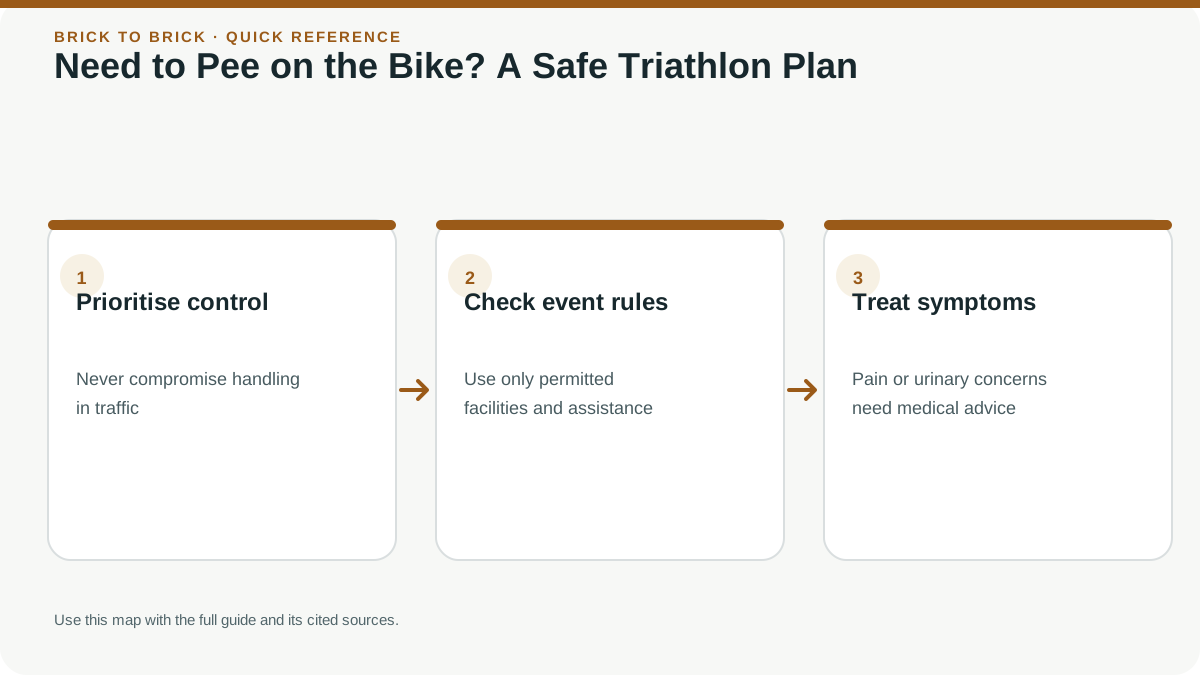
If you need to urinate during a triathlon bike leg, the general safe plan is to stop at an official toilet or a location the organizer permits. Check the current athlete guide, plan for time and access, and do not use unsafe riding techniques or restrict fluid to avoid a stop.
Key takeaways
- 1Use an official toilet or a location the race organizer explicitly permits; facilities and rules vary by event.
- 2Find course toilets and cutoff points in the current athlete guide before race morning.
- 3Stop fully and predictably, then check clothing, belongings and traffic before rejoining.
- 4Do not dehydrate yourself or force extra drinking to control toilet timing.
- 5Seek medical advice for painful urination, blood, persistent difficulty or other concerning symptoms.
In this article
- 1Locate toilets while planning the course
- 2Stop without creating a collision risk
- 3Choose clothing you can manage while stationary
- 4Account for time without exaggerating its importance
- 5Do not distort hydration to avoid a toilet
- 6Prepare an alternative for queues or an unexpected need
- 7Design the stop into your equipment rehearsal
- 8Plan privacy and accessibility as part of the stop
- 9The direct answer: get off the bike and use an official facility
- 10Decide what to do when the urge arrives
- 11Account for the stop without making up a universal time penalty
- 12Use a short checklist before you leave the facility
- 13Protect privacy, access and dignity during a stop
- 14Know when urinary symptoms need medical attention
- 15Rejoin the ride deliberately after a stop
- ?Frequently asked questions
Locate toilets while planning the course
Look for toilets at transition, aid stations and permitted personal-needs areas in the athlete guide. The exact location matters: a toilet behind an aid station may require slowing well before the bottle collection lane.
Ask the organiser if the map is unclear. Note which facilities are accessible, whether there are toilets before the swim queue, and where you can stop without obstructing other athletes. Public urination may violate event rules or local law; privacy and consideration for others matter.
Keep the plan simple enough to remember when tired. One known location early and another later in the bike leg is more useful than assuming a toilet appears whenever needed.
Stop without creating a collision risk
Look ahead for the designated area, check surrounding riders and signal your intention when appropriate. Slow predictably while retaining control and follow volunteer directions. Do not brake abruptly in the main riding line.
Dismount where it is safe and permitted, then place or hold the bike so that it cannot obstruct a path. Keep your helmet fastened while handling the bike as required by the event rules.
When returning, inspect the route, wait for a safe gap and accelerate gradually. Rejoining is part of the stop: avoid treating the lost time as a reason for an immediate sprint into passing traffic.
Choose clothing you can manage while stationary
Rehearse the process in your actual race kit at home. Check how a one-piece suit opens, whether sleeves need removing, and whether a two-piece option would be easier for you. Comfort and dignity are legitimate gear criteria.
Think about pockets, number belts and items that could fall into a toilet or onto the ground. Keep essential medication and valuables secure. Do not make race morning your first attempt to remove a unfamiliar suit.
For a wetsuit swim, separate the toilet plan from the time needed to put the wetsuit back on. Use the race-morning routine to leave a realistic buffer.
Account for time without exaggerating its importance
A stop consumes elapsed race time, but the length varies with access, queues, clothing and the athlete. Use a rehearsal or a modest contingency rather than a claimed universal “30-second” penalty.
For example, adding an illustrative four-minute bathroom allowance to a predicted five-hour finish gives 5:04. It does not mean every athlete should budget exactly four minutes. If cutoffs matter, include the allowance before the relevant checkpoint rather than only at the finish.
Use the cutoff worksheet to see whether your overall plan already depends on an unrealistic absence of stops.
Do not distort hydration to avoid a toilet
Do not deliberately dehydrate yourself to skip stopping, and do not force extra fluid in an attempt to trigger urination before the start. The hydration guide explains why drinking needs an individual plan.
Urination frequency during a race is not a stand-alone measure of hydration or a target to chase. Heat, fluid intake, medications and other factors affect the picture. A website cannot diagnose the cause of a change.
Painful urination, blood in urine, persistent difficulty passing urine, or concerning symptoms after prolonged exercise warrants clinical advice. Confusion, collapse or severe illness needs urgent help.
Prepare an alternative for queues or an unexpected need
If a planned toilet is occupied, use the next official option only if waiting is comfortable and safe. Ask a volunteer for directions rather than riding off course or entering private property. Athletes with medical or accessibility needs can contact the organiser in advance about arrangements.
After a stop, confirm that clothing, straps and pockets are secure before remounting. Resume your established effort and food-and-fluid plan without trying to repay the delay through a risky surge.
This page intentionally focuses on stopping and practical access. Saving a small amount of race time is not a useful reason to learn a distracting moving-bike technique.
Design the stop into your equipment rehearsal
Use the race kit rehearsal to verify that you can make a stationary stop without losing anything. Put on the exact suit, race belt and outer layers; load the pockets as you will for race day; then practise removing and replacing the layers in private at home. Notice whether a phone, nutrition or medication shifts when you bend, and where your hands need to go. Do not practise while moving on a bicycle.
The second rehearsal is the bike-side routine: choose a safe place to stop, move fully out of the riding line, secure the bike, and check that your helmet remains fastened while you are handling it. When ready to continue, look for approaching riders and follow marshal directions. The goal is to make the return predictable, not to chase a time target.
If your event offers a personal-needs location, read how athletes reach it, whether a stop is required, and whether access changes by race year. These details differ by organizer and venue. Add the stop to your race plan only after checking the current athlete guide.
Plan privacy and accessibility as part of the stop
Check more than the toilet symbol on a map. Consider whether the facility is inside the competitor route, whether you can reach it without crossing barriers and whether its layout meets your needs. An accessible facility shown at a venue may be in a spectator area with a different entrance.
If you need a specific accommodation, contact the organiser early with a clear description of the practical requirement. Ask how it works during the event rather than assuming the general venue arrangement remains available after roads close. Avoid waiting until you are tired and urgently need a stop to discover the answer.
After using a facility, return to the course under the event's instructions. Rejoin with awareness of approaching athletes and check that clothing, race belt and supplies are secure before accelerating. A planned stationary stop should reduce the handling problem, not move it to the moment you leave the toilet.
The direct answer: get off the bike and use an official facility
If you need to urinate during the bike leg, the safe general plan is to stop at an official toilet or other location the event explicitly permits. There is no single in-motion technique that is safe, hygienic, private and allowed at every race. Trying to urinate while steering or riding close to other people adds distraction and may expose other athletes, spectators, volunteers or residents to something they did not consent to. Some venues may also restrict where a competitor can leave the course or stop.
Check the current athlete guide and ask race staff if you cannot find the facilities on the course map. “There is an aid station” does not always mean there is a toilet there, and a spectator toilet may be on the other side of a barrier. If the next official facility is too far away for comfort, use the nearest safe permitted option and accept the time cost. Do not ride off course, trespass, stop in a narrow lane or assume that a previous year's arrangement still applies.
Before the start, locate a toilet in transition and identify the expected bike-course options. If you have a medical condition, disability or medication-related need, contact the organizer early to ask what accommodation is possible. The specific answer belongs to the event and its rules. The race-day guide and race-week schedule can help you leave a realistic buffer for these practical details.
Decide what to do when the urge arrives
A mild urge gives you time to choose the next official facility. Keep riding predictably until a safe stopping point, tell a marshal if you need help locating the entrance, and avoid suddenly braking in the main riding line. If the urge becomes urgent, uncomfortable or hard to control, make safety the first decision: signal where appropriate, move out of the traffic lane and stop somewhere permitted. A missed split is less serious than a collision or an avoidable medical problem.
Do not try to solve the problem by cutting water before the race, skipping fluid all day or drinking extra to “flush out” your system. Fluid needs vary with the person, duration, temperature and work rate, and overdrinking can also cause harm. Urination during endurance exercise is not a reliable hydration test by itself. Follow a practiced plan that avoids forced drinking, and use the hydration guide for general context rather than turning toilet timing into a target.
Pain, blood in the urine, persistent difficulty urinating, fever, or a major change from your usual pattern needs advice from a qualified clinician. Severe illness, confusion, fainting or collapse during a race calls for immediate medical support from event staff. Do not try to diagnose the cause on the course or mask symptoms in order to keep racing.
Account for the stop without making up a universal time penalty
A toilet stop adds elapsed time, but the total depends on whether the facility is available, how far it is from the course, the queue, your clothing, and how safely you can rejoin. Rather than building a mythical “quick stop” into every prediction, use a conservative personal allowance when cutoffs are close. Compare your plan against the event's actual cutoff points, not only the overall finish limit.
For example, if a course has an intermediate cutoff and your realistic estimate reaches that point with almost no margin, a stop or a short delay could matter. The sensible response is to understand the cutoff and assess whether the event is appropriate for your current preparation—not to suppress a bodily need or ride dangerously. The organizer may calculate cutoffs from the start signal, chip time or another event-specific rule; confirm the wording in the current athlete guide.
After stopping, return to your planned effort gradually. Do not accelerate hard to “win back” every second, particularly if you are fatigued, on a descent, or entering a crowded aid station. Resume the fueling and pacing routine you had rehearsed. A brief pause can feel frustrating, but chasing it with an uncontrolled surge may cost more than the pause did. Use the cutoff-times guide to understand how checkpoints affect an individual race.
Use a short checklist before you leave the facility
A stop is not finished when you stand up. Before moving again, take a moment to confirm that your race number is visible as required, clothing is seated comfortably, pockets and zippers are closed, and any food, phone or medical item you carry is secure. Check that you have not left a bottle or piece of kit behind. If you removed gloves or eyewear, retrieve them before rejoining rather than trying to put them on while riding.
Then check the exit itself. Follow the marked route, listen for volunteer instructions, look for riders arriving from both directions and wait for a clear gap. Do not use the exit as a place to check messages, eat, adjust a mechanical issue or sort out clothing; those tasks need their own safe moment. If you discover a bike problem while stopped, ask a marshal or use the event's mechanical support procedure when available.
This checklist can be shortened to four words in a race note: secure, scan, signal, rejoin. It is a memory aid, not a substitute for the event's instructions or normal road awareness. The principle applies whether the stop is for a toilet, a dropped item, a mechanical issue or a volunteer's safety instruction: move predictably and do not create a second hazard while solving the first.
Protect privacy, access and dignity during a stop
A toilet stop should be practical for your body and usable in the event environment. Check whether the facility is accessible from the competitor route, whether there is enough room for your clothing and equipment, whether the entrance is marked, and whether queueing or a step-free route changes the time you need. Ask the organiser before race day about accessible facilities, privacy arrangements or a support person if you need them. A map icon alone may not answer those questions.
If a facility is occupied or not accessible, stay on the approved course, slow or stop only where it is safe, and ask an event marshal or volunteer for directions. Do not leave the course, cross a barrier or enter a private area to find a more convenient location. Follow the event’s instructions and the laws of the host location. Respect other athletes, volunteers and members of the public.
Rehearse the clothing and equipment sequence in private before the race. The point is to find an approach that preserves privacy and keeps the road clear, not to make a stop look effortless. If your disability, medication or medical needs affect toilet access, contact the event well in advance to agree on a workable arrangement.
Know when urinary symptoms need medical attention
Race-day urgency is not always just a logistics problem. Pain or burning when urinating, a persistent change in frequency, trouble passing urine, fever, side or lower-back pain, or blood in the urine deserves medical advice rather than a hydration experiment. The NHS urinary tract infection guidance lists symptoms that can need assessment; blood in urine should be checked urgently, even when it happens once or appears in a small amount. Local healthcare systems use different contact routes, so follow the urgent-care guidance where you live.
Do not try to solve unexplained symptoms by restricting fluids, taking an unprescribed diuretic, forcing extra water or adding salt. If a medical condition or medication affects bladder function, ask your clinician about training and race planning ahead of time. A race guide cannot diagnose dehydration, a urinary infection or another cause of symptoms.
If you develop severe pain, cannot urinate, feel faint or seriously unwell, tell event medical staff or seek urgent local care. Safety takes priority over completing a bike leg.
Rejoin the ride deliberately after a stop
When you leave an official toilet, give yourself space to check clothing, race number, pockets, bottles and equipment before moving. Walk the bike if the facility opens onto a busy or narrow area. Look for marshals and other competitors before re-entering the course, then merge only when it is safe and allowed. Do not step directly into a rider’s path or use a phone while moving.
Resume at a controlled effort rather than trying to recover every second with a sudden sprint. A brief stop does not require an unscheduled surge, and pushing hard immediately may make the rest of the ride less comfortable. Follow the pacing plan you practised and the event’s course instructions; no article can predict the time lost to a particular queue or facility.
If a volunteer directs you differently from your route notes, follow event staff and ask for clarification when it is safe. Recheck your course direction after the stop so you do not accidentally ride against traffic or miss a turn. The aim is a safe return to the race, not a fast exit from the toilet.
Sources
Sources are listed so readers can verify consequential claims and dated details.
- Competition Rules and Policies — IRONMAN (accessed September 24, 2026)
- National Athletic Trainers’ Association Position Statement: Fluid Replacement for the Physically Active — Journal of Athletic Training / PubMed (accessed September 24, 2026)
- Urinary tract infections (UTIs) — NHS (accessed September 24, 2026)
- Blood in urine — NHS (accessed September 24, 2026)
Frequently asked questions
Should I reduce breakfast drinks to avoid needing a toilet?
Do not deliberately distort a rehearsed hydration routine to avoid a normal bodily need. Check toilet access and leave appropriate time instead. An unusually frequent or painful need to urinate, or symptoms that concern you, should be discussed with a clinician rather than managed by simply restricting fluids.