Triathlon Race Morning Routine: A Flexible Hour-by-Hour Plan
Work backward from your event's reporting and transition deadlines to build a race-morning timetable, with separate plans for pool, rolling, shuttle and overnight-bike events.
By Lotte
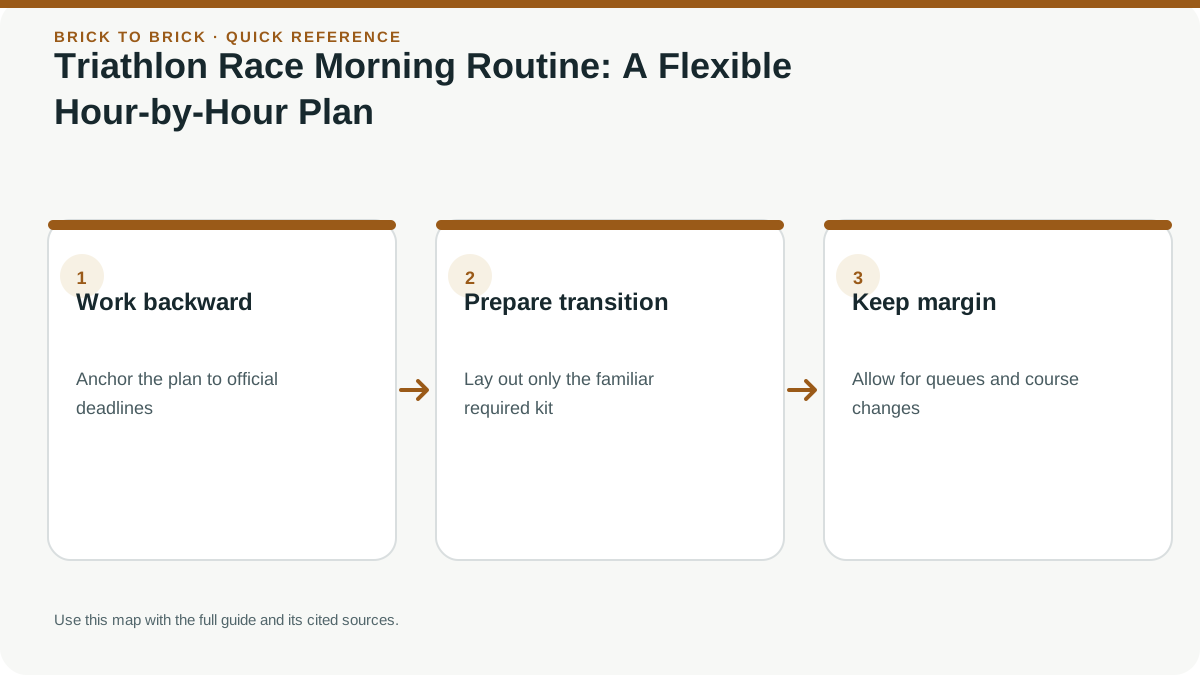
A useful race-morning schedule works backward from the event's actual reporting, transition and start requirements. Build in travel margin, familiar routines, safety checks and a contingency for official changes.
Key takeaways
- 1Build backward from the current reporting and transition deadlines in the athlete guide.
- 2Calculate travel, parking, queues, changing and walking rather than relying on a fixed arrival rule.
- 3Prepare a delay, weather, equipment and supporter plan that follows event instructions.
- 4Official medical and course staff take priority over a personal timetable if safety or withdrawal becomes an issue.
In this article
- 1Identify the deadlines that cannot move
- 2An example worked backward from reporting
- 3Keep breakfast familiar and fluid flexible
- 4Use a fixed order inside transition
- 5Create a delay version of the same timetable
- 6Carry one page, then stop re-planning
- 7Separate the transition bag from the start-queue bag
- 8Build a complete sample timetable around transition closure
- 9Use a priority order when the timetable slips
- 10Adapt the morning for a pool start with a later assigned time
- 11Adapt the morning for a shuttle or separate transition site
- 12Adapt the final checks to a bike racked the previous day
- 13Make the final instruction card readable while distracted
- 14Adapt the timeline to the start format
- 15Plan for accessibility, medication and individual needs
- 16Give supporters a simple plan and a fallback meeting point
- 17Use a weather decision, not a weather guess
- 18Know what to do if the bicycle or equipment has a problem
- 19Create a contingency for official changes and withdrawal
- 20Keep a post-finish plan separate from the race plan
- 21Prepare for swim warm-up and wetsuit decisions
- ?Frequently asked questions
Identify the deadlines that cannot move
Find transition opening and closing times, swim reporting time, briefing requirements, bag drop and your start procedure. These deadlines may come before your individual wave starts. Put them into the calendar first.
Check whether registration and bike check-in happen the previous day. A long-course event with overnight racking needs different morning tasks from a local pool triathlon with same-day check-in.
Save the final guide offline and confirm where updates appear. If transition closes at 06:30, arriving at 06:45 is not rescued by a 07:30 swim start.
An example worked backward from reporting
The following is an invented schedule to demonstrate the method. Suppose swim reporting is 07:10 and transition closes at 06:45. Allow 15 minutes to walk from transition and queue, so aim to leave transition by 06:40. If setup takes 30 minutes plus a 15-minute contingency, arrive there at 05:55.
If parking and walking take 20 minutes and driving takes 35 minutes, leave accommodation at 05:00. Breakfast and waking must fit before that according to your rehearsed routine, or include a practical familiar portable option.
The arithmetic exposes the real constraint: distance from parking to transition. Copying a “wake three hours before the race” rule would not reveal it.
Keep breakfast familiar and fluid flexible
Choose food and timing you have tested before a similar session. Arrange access to it if the hotel kitchen opens after you need to leave. Pack utensils and a practical backup rather than depending on an unfamiliar buffet.
Do not treat a fixed amount of water or an electrolyte tablet as mandatory on waking. Follow your rehearsed hydration approach and any clinical advice. A delayed start changes the waiting period, not automatically the amount you must force down.
The race-fueling guide covers product quantities. The purpose here is ensuring your chosen food and drink are available at the right place and time.
Use a fixed order inside transition
Find your rack and identify both entry and exit routes. Check wheel retention, brakes, starting gear, bottle security and the tire pressure appropriate to your actual system. Do not use a generic high road-tire pressure.
Lay out permitted equipment within your allocated space. Put items in the order you will need them, and remove anything the organiser does not allow to stay. Walk the route to your rack from swim entry and bike entry using a fixed landmark rather than the neighbouring bike.
Leave enough time to take your pump and outer clothing to the designated bag area. A last-minute reorganisation often creates more confusion than it solves.
Create a delay version of the same timetable
Mark optional tasks that can be shortened if traffic or queues consume the buffer: extra photographs, browsing stalls or an elaborate warm-up. Keep safety checks and mandatory reporting intact.
If the organiser delays the start, seek shade or shelter, keep track of announcements and adjust waiting arrangements. Do not remain overheated in a wetsuit simply because it is already on. Follow venue access and swim-warm-up instructions.
If a mechanical issue appears, ask official support early. Repeatedly checking a problem without making a decision can consume the whole margin.
Carry one page, then stop re-planning
Your final card needs the reporting deadline, transition closure, travel departure, parking location, key tasks and a supporter meeting point. A phone copy and a paper backup can be useful where battery or reception is uncertain.
Rehearse the sequence once in training without reproducing the entire race. Time getting dressed, preparing food and loading the car; these are observable quantities you can improve.
For the wider days before the event, use the race-week schedule. For what officials and volunteers do throughout the event, read what happens on race day.
Separate the transition bag from the start-queue bag
The final half hour can become chaotic when one bag contains everything. Lay equipment out by the time it will leave your hands.
| Destination | Examples to verify against event rules |
|---|---|
| Left in transition | Bike shoes if used, helmet, run shoes, permitted race supplies |
| Carried to the start | Goggles, required cap, permitted swim equipment, warm layer if useful |
| Handed into bag drop | Dry clothing and items needed after the finish |
| Kept by a supporter | Only items that can be transferred legally and retrieved reliably |
Check how identification, timing equipment and any locker key stay with you. A phone placed in a bag that cannot be retrieved until afternoon may also contain your transport ticket; resolve that dependency beforehand.
For a fictional 07:10 transition closure, being at the venue at 07:05 is not a five-minute setup plan. Parking, walking, queues and finding the correct entrance must happen first. Use the last fixed deadline, not the race start, to work backwards. Write a minimum viable routine for a delay: required equipment checks and official reporting take precedence over optional photographs or an elaborate warm-up.
Build a complete sample timetable around transition closure
The following is a fictional local event with a 07:30 start, a 07:10 transition closure and a 07:15 reporting time. It illustrates dependencies, not a universal breakfast or warm-up prescription. Substitute your organiser's actual deadlines, travel time and rehearsed food routine.
| Time | Task | What must be true before moving on |
|---|---|---|
| 04:45 | Wake and begin a familiar food routine | Food and drink are tolerable and available |
| 05:30 | Leave accommodation | Essential bags, documents and travel route checked |
| 06:00 | Arrive at parking or drop-off | Allow the walk and any queue before transition |
| 06:20 | Enter transition | Registration and required identification complete |
| 06:20–06:45 | Inspect bike and arrange equipment | Required items accessible and exit routes understood |
| 06:45–07:00 | Toilet and final start preparations | Start equipment remains with you |
| By 07:10 | Be out of transition | All work requiring access is finished |
| By 07:15 | Report as instructed | Correct start group and permitted equipment confirmed |
| 07:30 | Start under official direction | Adapt to any live organiser instruction |
The gaps are intentional. A schedule using every minute for a named activity has no room for a queue, a misplaced entrance or a second equipment check. For an event requiring registration or bike check-in on the previous day, complete those tasks then; do not put them into an impossible morning slot.
Use a priority order when the timetable slips
Separate mandatory tasks from optional routines before a delay occurs. Required reporting, timing equipment, a secure bike and helmet, and appropriate swim equipment belong in the first group. Photographs, a long social catch-up and a particular warm-up ritual usually belong in the second, subject to your event and individual needs.
If parking takes longer than expected, recalculate from the nearest fixed deadline. Do not drive unsafely or run through transition carrying equipment to protect a timetable you invented. Ask an official about the correct process if access or reporting has become uncertain.
An equipment problem also deserves triage. A missing optional accessory may be manageable; a brake or wheel-retention problem requires a proper fix before riding. Avoid disguising that difference with the instruction to stay calm and carry on. Calm planning includes the possibility of not starting when an essential condition cannot be met.
Give supporters a simple plan for a delayed start, missed meeting or withdrawal. Identify an accessible meeting point and how you will retrieve transport tickets and belongings. Keep those arrangements separate from the athlete-only transition process so supporters do not depend on access they do not have.
Adapt the morning for a pool start with a later assigned time
A pool-based event may assign a particular reporting or start time, but you still need the current organiser instructions. Check whether registration, bike setup or transition access closes earlier than your swim slot. A later start does not necessarily mean you can arrive shortly before entering the pool.
Build the schedule around those fixed requirements. Identify where you wait, what you can keep with you and whether warm clothing or food can be stored and retrieved. Follow the venue's pool-deck rules and the event's instructions for timing equipment and start order.
Keep any warm-up compatible with the waiting period and available space. Do not assume you can use the competition pool for an extra swim or enter transition after it has closed. If the timetable changes, update the tasks affected rather than rebuilding the entire morning from a generic checklist.
The useful output is a short sequence containing arrival, setup completion, reporting and the assigned start. Add the official source and a way to check live updates. That is more dependable than copying an early open-water race timetable with all the clock times shifted later.
Adapt the morning for a shuttle or separate transition site
When the event uses a shuttle, include its departure, boarding location, queue and permitted baggage in the schedule. Confirm whether the ticket or pass must be collected in advance and whether supporters use the same transport. A route map showing a short distance does not tell you how long event transport will take.
Separate what has already been delivered to transition from what must travel with you. Check the organiser's bag labels and collection process. If your phone, keys or transport ticket will be stored, make sure you can still retrieve what you need at the end of the day.
Plan the last practical toilet opportunity and where final clothing changes are allowed. Facilities near the finish may not be accessible before the swim start. Use the actual event information rather than assuming every aid station or spectator area is open to competitors at all times.
If transport is delayed, follow official guidance. Do not improvise an unsafe shortcut across a closed road or course to recover time. A shuttle-based event requires a logistics plan as well as a wake-up alarm, and it is worth resolving those dependencies before race week.
Adapt the final checks to a bike racked the previous day
Check which equipment can remain with the bike overnight and which items must be brought in the morning. Rules and security arrangements vary, so use the event's instructions. Do not assume everything left beside the rack will remain in the same position or condition.
On returning, inspect the bicycle and intended setup. Check tires, wheel security, brakes, controls and anything disturbed during transport or storage, within your competence and the available rules. A suspected mechanical problem requires an appropriate fix rather than simply more air or a quick adjustment you do not understand.
Place food and drink according to the rehearsed plan and current conditions. Confirm that labels, bottle placement and access remain clear. Keep start equipment separate so you do not accidentally leave goggles or a required cap in an area you cannot re-enter.
Once the checks are complete, leave enough time for the route to the start and official reporting. Repeatedly returning to inspect an optional detail can consume the buffer you deliberately built. Use the checklist to know when the necessary work is finished.
Make the final instruction card readable while distracted
Use large, short entries for the few facts you must recall: transition closure, reporting time, start group, the essential bag handoffs and an agreed post-race meeting point. Put reference material elsewhere so the card remains readable at a glance.
Check the card against the latest organiser information before leaving for the venue. If an official update changes a time or location, amend the card and tell anyone whose plan depends on it. Avoid carrying several conflicting screenshots with no indication of which is current.
The card is a memory aid. It should help you follow the event process and your familiar preparation, while leaving room to respond sensibly if conditions change.
Adapt the timeline to the start format
A mass start, rolling start, wave start and pool start create different waiting and reporting needs. Confirm which format your event uses, when the clock begins for you, whether start groups are assigned, and how long you may wait after arriving at the swim venue. For a rolling or individual start, being early does not always mean you should enter the staging queue early; follow the organizer's call-up instructions. For a pool start, transition may close well before your lane or start slot. A mass start may involve a longer assembly, briefing or warm-up window. Build the timetable around the actual reporting time and accessible facilities, not only the advertised first start. If you have an accommodation or need assistance, contact the organizer before race week to ask how to reach the start and where a support person may wait. World Triathlon and IRONMAN event procedures differ, and local rules can add requirements. The athlete guide and official announcements take precedence over another athlete's routine or a schedule from a past edition.
Plan for accessibility, medication and individual needs
Race morning can be more manageable when necessary support is arranged in advance. If you use adaptive equipment, need extra time to move through transition, require a support person, have a medical condition or need an accommodation for food, medication or communication, contact the event organizer early and ask what documentation or approval is required. Rules and available assistance differ by event and jurisdiction. Keep essential medication in its labeled packaging and follow your clinician's and organizer's instructions for storage and access; do not change a prescribed medicine because of a race schedule. Identify medical support and know how to ask for it. If symptoms appear before the start, stop and speak with event medical staff rather than deciding that the schedule must continue. Build any agreed assistance into the timetable so you are not trying to arrange it in a queue. A generic “arrive two hours early” template cannot account for every athlete's mobility, sensory, health or care needs.
Give supporters a simple plan and a fallback meeting point
A support person can help with travel, reminders and post-race logistics, but should not be responsible for rules or decisions the athlete has not shared. Give them the current event schedule, a map, the permitted viewing locations, the athlete number, an emergency contact and an agreed meeting point after the finish. Choose a fallback location in case phone service is poor or the finish area is crowded. Tell supporters where they may and may not enter transition, hand items to an athlete or cross the course; outside assistance is often restricted by event rules. Decide what happens if the race is delayed, shortened or the athlete withdraws. A tracker app can be useful but may lag or lose signal, so it should not be the only communication method. Our timing-chip and results guide explains tracking limitations; check the event organizer’s official spectator information for venue access, viewing locations and course restrictions.
Use a weather decision, not a weather guess
Check the forecast and organizer alerts, then prepare a small set of clothing options appropriate to the event's rules and conditions. A forecast can change, and a cool pre-dawn start does not guarantee a cool run later. Follow the organizer's instructions for wetsuit decisions, swim caps, warm-up access, rain gear and any course modification. Do not wear or carry equipment prohibited by the athlete guide, and do not stay in a wetsuit or insulated layer longer than is comfortable simply because you planned to start that way. If weather makes travel, swimming or cycling unsafe, use official instructions and ask staff rather than improvising. Keep extra clothing accessible but outside the transition area unless the rules allow it. Review the rain and wet-weather guide and heat-safety guidance before race week; a morning routine cannot make an unsafe course safe.
Know what to do if the bicycle or equipment has a problem
A pre-race issue can feel urgent, but rushing can create a larger problem. Use a short checklist of checks you know how to perform: tire condition and pressure suited to the actual tire and rim system, wheel retention, brakes, shifting, helmet fastening and bottle security. Follow the bicycle and component maker's guidance. If a tire is damaged, a brake is not working, the wheel is loose or the bike makes an unfamiliar mechanical noise, contact the official mechanic or event staff if available. Do not attempt an unfamiliar repair under pressure or ride a bicycle you believe is unsafe. Ask the organizer where mechanics are located, what service is offered and whether check-in deadlines allow time. Pack only tools you know how to use. The beginner bike maintenance guide covers basic checks, and the tire-pressure guide explains why a generic pressure number should not replace a system-specific check.
Create a contingency for official changes and withdrawal
Race schedules may change because of weather, water conditions, transport, safety or operational needs. Keep the event's official notification channel available and check for updates before leaving, on arrival and while waiting. Know how to hear announcements if your phone battery is low or the site is noisy. If the organizer delays or modifies the event, follow staff instructions and revise food, clothing and waiting plans without trying to force the original timetable. If you decide to withdraw or staff remove you from the course, find the official process for reporting that decision, returning timing equipment and reaching your supporter. Never leave the course without telling race staff; they need to know you are safe. Medical symptoms or a sense that continuing is unsafe outweigh the desire to preserve a start time or race goal. A timing app, friend or coach should not override event medical staff.
Keep a post-finish plan separate from the race plan
The morning checklist should end with a simple post-race arrangement. Confirm where you will meet a supporter, how you will get back to lodging, where you can collect a bag or bicycle and how you will access food, clothing and medical support if needed. Event procedures may keep athletes in a finish area or recovery zone for a period of time. Do not make a tight flight or work commitment based on an optimistic finish estimate; course conditions and timing vary. Agree on a way to communicate if you finish later than expected or withdraw. If you have a medical concern, tell event medical staff before leaving. Your supporter should know the official venue exit and bag-collection rules. This planning reduces the temptation to rush away while tired or separated from equipment. Use the race timing guide to understand live tracker limits and the organizer's official results process.
Prepare for swim warm-up and wetsuit decisions
Check whether the event permits an in-water warm-up, when the swim venue opens, where athletes may enter and how officials announce wetsuit conditions. Rules depend on the event, governing body, water temperature and athlete category; bring the legal equipment listed in the athlete guide and follow the official decision on race morning. Do not assume a prior year's wetsuit status or another athlete's interpretation applies. If an in-water warm-up is not permitted, use only a familiar dry-land routine that fits the available space and your health needs. A warm-up is optional where the organizer allows it; it should not create a rushed trip to transition or push you beyond your comfort. If cold water, breathing anxiety or a health concern changes your willingness to start, talk with event medical staff or the organizer rather than entering simply because the timetable says it is time. Include the walk to staging, cap and timing-chip checks, and any permitted extra layer in the schedule, then put on a wetsuit only at the time that makes sense for conditions and event instructions.
Sources
Sources are listed so readers can verify consequential claims and dated details.
- World Triathlon FAQs: athlete guides and event-day procedures — World Triathlon (accessed September 25, 2026)
- IRONMAN 2026 Competition Rules — IRONMAN (accessed September 25, 2026)
- World Triathlon Education Hub: The Athlete's Guide — World Triathlon (accessed September 25, 2026)
Frequently asked questions
How early should I arrive for a triathlon?
There is no universal arrival time. Work backward from your event's reporting, transition and check-in deadlines, adding realistic travel, parking and queue time.
What should I do first on race morning?
Follow the current athlete guide. Confirm the required check-in, transition access, timing equipment and start procedure, then complete your rehearsed setup in a calm order.
Should I eat a set number of hours before a triathlon?
Use familiar food and timing you have practised and can tolerate. Event start times and individual needs differ; do not force a generic meal schedule or fluid amount.
What if my triathlon start is delayed?
Follow official announcements, adjust your waiting, clothing and food plan, and ask event staff if uncertain. Do not remain overheated or ignore symptoms to preserve your original routine.
What should I do if my bike has a problem before the race?
Do not ride a bike you believe is unsafe or attempt an unfamiliar repair under pressure. Contact the official mechanic or event staff and follow their guidance.
Can supporters enter transition on race morning?
Access rules vary by event. Check the athlete guide and tell supporters where they may wait and meet you.