Triathlon Swim Start Positioning: Where to Line Up (2026)
Choose a safe triathlon swim start position, understand event seeding and practise sighting, spacing and a clear plan for distress in open water.
By Lotte
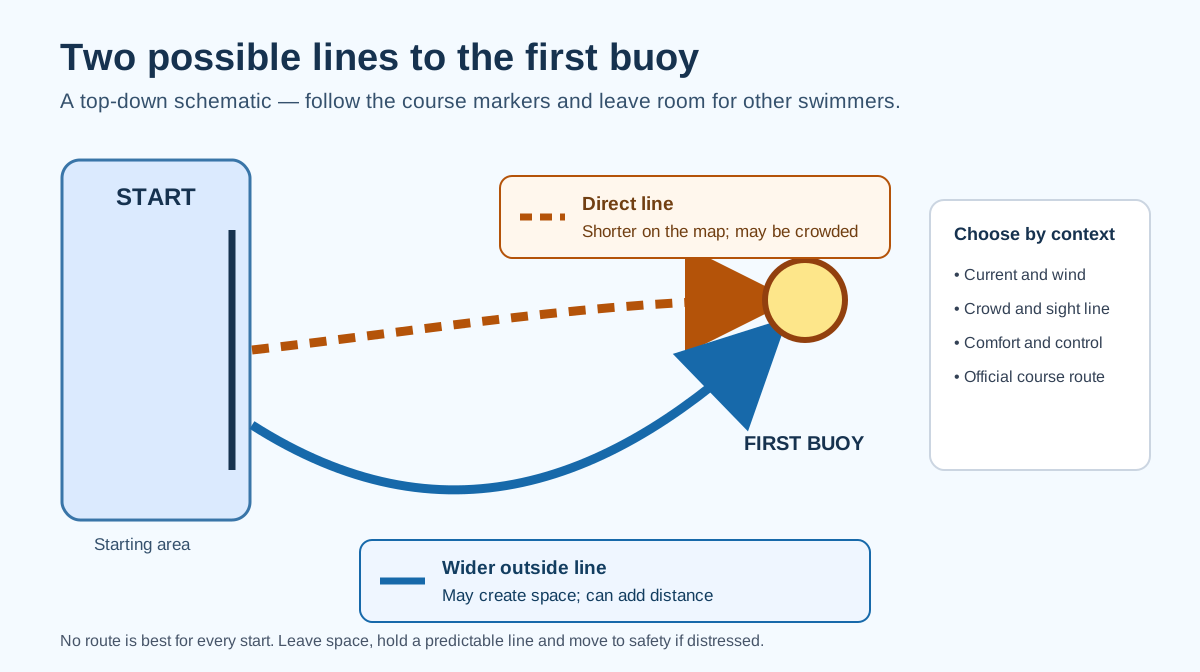
Choose a swim-start position that matches the event procedure, your recent ability and comfort in open water. A wider line may offer more space but add distance; no starting position prevents all contact or distress.
Key takeaways
- 1Self-seed honestly when the event asks; do not copy a friend or choose an aspirational pace.
- 2Read the current start format, course map, warm-up rules and safety instructions.
- 3Practise sighting, spacing and asking for assistance in supervised conditions.
In this article
- 1The 4 triathlon swim start formats
- 2The self-seed rule: use your 100 m pool pace
- 3Inside vs outside line to the first buoy
- 4Rolling-start tactics (modern Ironman/70.3)
- 5The pre-start 60-second routine
- 6Common start-line mistakes
- 7Read the start layout before choosing where to enter
- 8Manage contact without escalating it
- 9Use landmarks and buoy lines to keep navigation simple
- 10Choose a start plan that leaves room for changing conditions
- 11Rehearse the first minutes, not just the full distance
- 12A practical start decision tree for race morning
- 13Build confidence with small, controlled open-water steps
- 14Use a simple sighting and line-selection routine
- 15Use the organizer’s staging instructions as part of warm-up
- ⚖Choose a starting area using the event layout and your comfort
- ?Frequently asked questions
The 4 triathlon swim start formats
Triathlon swims may use mass, wave, rolling or pool starts, but formats and labels vary by organizer. Check the event briefing for the exact entry procedure, start order, timing method and water access. A crowded start can feel different from a spread-out rolling start, yet none removes the need to follow the marked course and safety instructions. The organizer may also change or cancel a swim when conditions require it.
The self-seed rule: use your 100 m pool pace
Do not convert one pool split to a fixed open-water pace by adding a standard number of seconds. Pool pace, turns, wetsuit use, temperature, sighting, chop and crowding all affect speed. If the organizer asks athletes to self-seed, use recent, honest swim information and select a group in which you can swim without forcing your way through others. It is safer to start conservatively than to choose an aspirational corral.
Inside vs outside line to the first buoy
The inside route may be shorter on a map but can put more swimmers in the same space; the outside route can create more room while adding distance. Wind, current, buoy placement and other athletes change the tradeoff. Choose a line you can hold comfortably, leave lateral space and avoid cutting across swimmers. If the pack becomes uncomfortable, move to open water or stop safely and signal for help.
Rolling-start tactics (modern Ironman/70.3)
Rolling starts and self-seeding are event-specific. Read the athlete guide for how athletes enter and how individual time is recorded. Choose your position from a recent, realistic estimate rather than moving into a faster group because it appears desirable. Keep moving forward only when instructed, do not overtake through a dense entry lane, and allow your breathing and stroke to settle before increasing effort.
The pre-start 60-second routine
Use the final minute to check the course direction, your goggles and cap, the start instruction and the location of safety support. A brief familiar warm-up is optional and depends on access and conditions; do not enter closed water or attempt a hard effort at the last minute. Identify one stable landmark behind the first turn and start at a controlled effort. Follow any updated instructions from officials.
Common start-line mistakes
Avoid copying a friend’s seed, sprinting before you can control breathing, sighting only from a buoy hidden by the pack, or making a sudden stop in the main line. Do not assume contact is inevitable or acceptable; keep space, change line calmly and ask for help if distressed. Cold, rough or crowded water can change your plan. The safe choice is to leave the water or accept assistance when you cannot continue safely.
Read the start layout before choosing where to enter
A swim start is a moving crowd in a changing water environment, so choose a position from the actual course layout and your comfort—not a fixed pace chart. At the briefing or course preview, identify the direction to the first turn, the distance to that turn, the entry and exit points, where the sun or chop may come from, and whether athletes start on land, in shallow water or from the water. Ask officials how the start is staged and whether the course or start order can change.
A straight route to the first buoy is not always the safest or fastest route if it places you in a dense pack beyond your ability to hold position. An outside start can add a little distance while giving room to settle. A central start may reduce the distance to a buoy but can create more contact. Those are tradeoffs, not guarantees: other athletes move, buoys can shift, and currents or wind can alter the apparent line.
Do not make a late move across other swimmers to reach a preferred lane. Enter the water where instructed, start behind athletes whose pace is similar to yours, and leave enough room to swim freely. If the organizer offers self-seeding, use an honest estimate from recent, comparable swimming rather than an aspirational pace. Event signs are there to spread the field, not to rank an athlete’s worth.
Manage contact without escalating it
Brief incidental contact can happen in a crowded open-water start. Protect your space by staying composed, keeping a comfortable stroke and looking where you are going when you sight. If another swimmer’s feet are directly ahead, avoid repeatedly touching them; adjust to one side or ease off until a safe gap opens. If you are caught from behind, keep swimming straight and avoid stopping suddenly where you could be hit.
If contact becomes uncomfortable, move laterally toward open water when safe. You can pause, tread water or roll onto your back if needed to regain composure, while remaining clear of the main line of swimmers. Signal for help if you are in distress and follow event safety procedures. Do not grab another athlete, pull on a kayak or use a deliberate kick to create space. If you have a panic response, breathing difficulty or injury, stop racing and accept assistance rather than pushing through.
Practise the response before race day in a supervised session with willing partners. Agree on a few gentle shoulder or foot touches, then rehearse looking, changing line and breathing out slowly. A coach or lifeguard can keep the practice controlled. Do not create rough contact drills without consent, supervision and an appropriate venue. The purpose is to learn that a small interruption does not require an abrupt stop or an aggressive response.
Choose a start plan that leaves room for changing conditions
Before entering, decide what you will do if the water feels colder, rougher or more crowded than expected. You might start farther from the first buoy, take a few easy strokes to settle, then increase effort only after breathing feels controlled. If a rolling start lets you enter at your own time, do not treat the clock or another athlete’s speed as a reason to surge immediately. A mass or wave start may require a different plan because the group moves together; the athlete guide and officials explain the format.
If the swim is shortened or cancelled, use the revised instructions and do not enter the water on your own to “complete the distance.” Organizers can change a course for safety and permits. If the start is delayed, stay warm and hydrated in a way that suits the conditions and listen for the new call time. Do not warm up in a closed section of water or enter a course when officials have prohibited it.
A brief, familiar warm-up may help some athletes feel settled, but its timing and access depend on the venue. Avoid a hard, exhausting swim right before a long race or a cold-water exposure you have not practised. Athletes with heart or lung conditions, a history of fainting, cold sensitivity or other medical concerns should ask a clinician about open-water racing and event-specific exposure before race day.
Rehearse the first minutes, not just the full distance
A race rehearsal can be short and controlled. In a supervised open-water session, practise entering, swimming easily for a few minutes, sighting a landmark, changing direction around a buoy and settling again after a brief interruption. Then practise exiting without rushing over slippery ground. You do not need to simulate a violent mass start to prepare for ordinary crowding.
Use the goggles, cap and any permitted suit you plan to race in. Adjust the strap before entering and test that the goggles remain comfortable when you look forward. If the water is cold, follow venue rules and get out if you become numb, confused, unusually breathless or unable to control movement. Do not treat a tow float as a substitute for a lifeguard, buddy or a venue’s safety plan.
After practice, note what actually helped: a wider route, fewer strokes before the first sight, a slower opening or a different goggle fit. Keep the next session focused on one change. Athletes who have no safe open-water practice should not try to learn crowd management on race day; look for a coached or supervised familiarisation, an accessible pool-start event or another race format. The safest preparation is specific to the environment you can access.
A practical start decision tree for race morning
Use the following sequence after you hear the briefing. First, confirm the start format, course direction and any current safety instruction. Second, estimate a comfortable pace from training you have actually completed. Third, choose a location with enough water around you to swim that pace without forcing a gap through others. Fourth, decide on one landmark and the first safe opportunity to check your line. Finally, identify how you will signal or move aside if you need help.
| Situation | A conservative response |
|---|---|
| You feel calm and have space | Start at your rehearsed effort and follow the marked course |
| The group is denser than expected | Ease off, leave a little lateral room and let the pack spread |
| You lose the buoy behind swimmers | Sight a stable landmark or pause safely to reorient |
| You cannot control breathing or feel unsafe | Stop, signal for support and follow the safety crew |
| Officials change the start or course | Follow the new briefing instead of the plan you memorized |
This is a decision aid, not a substitute for event instructions or medical advice. A successful swim start means beginning under control and reaching the bike course safely; it does not require winning the first few minutes. For related preparation, see open-water swimming, swimskin and tri-suit rules and bilateral breathing options.
Build confidence with small, controlled open-water steps
A calm start comes from familiar skills and a clear exit plan, not from forcing yourself to tolerate distress. Begin in a supervised venue with a qualified open-water coach or lifeguard, a visible shoreline and conditions that are appropriate for your ability. Practise entering, floating, swimming a short distance, sighting and returning to shore. Use a visible swim buoy where permitted, but do not treat it as a substitute for event safety support or a flotation device that has not been designed for rescue.
Add other swimmers gradually. Start beside one trusted partner, then practise swimming parallel to a small group with enough space to stop. Work on holding a line, changing direction around a marker and allowing another swimmer to pass without contact. Do not try to recreate a mass-start crush in training. If anxiety rises sharply, stop at a safe location, signal for support and return to shore with the coach or lifeguard. The aim is confidence through competence, not pushing through panic.
Check conditions before every open-water practice. Cold, current, waves, poor visibility, boat traffic and sudden weather changes can make a familiar route unsafe. Swim with a responsible buddy or organized group, tell someone the route and expected return, and follow local restrictions. If you are cold, disoriented, unusually breathless or unable to continue comfortably, leave the water and get help. A wetsuit can affect heat and movement and does not remove the risk of cold-water shock or other problems.
On race day, use the actual start procedure and listen for last-minute changes. Warm up only if the organizer permits it and conditions are suitable. Locate safety craft, exit points and a stable landmark. If you become distressed, roll to your back or stop only if that is safe in the situation, signal clearly and accept assistance. The timing consequence of pausing is less important than preventing a dangerous escalation. Athletes with a history of panic, asthma, cardiac symptoms or other relevant conditions should discuss a safe plan with a qualified clinician and coach before the event.
Use a simple sighting and line-selection routine
Before entering the water, identify the first turn buoy and one larger landmark beyond it. The buoy may disappear behind swimmers, chop or glare, while a fixed landmark can help you keep direction. Check the course map for the sequence of turns and any return leg; do not rely on another swimmer to navigate. During the swim, lift your eyes only enough to locate the reference, then return to a relaxed breathing pattern. Practise this in training because lifting too high can disrupt balance and waste effort.
Choose a route you can maintain without cutting across other athletes. The shortest line on a map may be crowded or directly into chop. A wider line may offer space but add distance. Current, wind, buoy placement and event instructions can alter the tradeoff. Keep a buffer when turning around a buoy and look before changing direction. If someone is overtaking, hold a predictable course where safe rather than making a sudden sideways move.
Set a personal effort cue for the opening minutes, such as controlled breathing and an easy stroke rhythm. If the start is crowded, settle into space before trying to pass. If a cap or goggle issue occurs, move clear of traffic if possible and fix it without pushing into other swimmers. If contact happens, protect your own space, stay calm and follow the event’s conduct rules. Repeated forceful contact or an unsafe maneuver is not part of a good start.
After each practice, note whether you held the intended line, how often you needed to sight, and which conditions changed the route. That information is more useful than guessing at a precise open-water pace conversion. A swim coach can review video or technique; the event director can clarify the course and start procedure. For race preparation, combine this positioning guide with open-water swim skills, triathlon swim warm-ups and the event’s own briefing.
Use the organizer’s staging instructions as part of warm-up
Warm-up access and start staging are controlled by the organizer. Some races allow a brief warm-up swim; others prohibit entering the water before the start or use a narrow corral with limited time. Read the athlete guide for check-in, cap color, seeding, wave order, access points and where to leave warm-up gear. Arrive with enough time to understand the process, but do not enter closed water because another athlete appears to be doing so.
A useful warm-up, if allowed and safe, is familiar and brief. It may include easy swimming and a few controlled pickups, but it should not leave the athlete tired or gasping. Do not try a hard open-water interval as the final preparation for a crowded start. If the water is cold, choppy or unsafe, follow the organizer’s instructions rather than insisting on a warm-up. Wetsuit use and temperature decisions are event-specific.
While waiting, keep the athlete’s space clear and listen for instructions. Check goggles, cap and start position before leaving the staging area. Identify the safety craft and nearest exit point. If you have a medical issue, panic concern or accommodation need, tell race staff before the start and agree on a plan. Do not wait until entering the water to ask for help.
If the start is delayed, stay warm and avoid repeated nervous activity. Recheck the event update, keep fluids and food consistent with your practiced routine, and do not make abrupt changes because of a schedule shift. The first strokes should follow the plan for a controlled start, with permission to move aside or accept assistance if the athlete cannot continue safely.
Choose a starting area using the event layout and your comfort
| Consideration | Possible choice | Tradeoff to weigh |
|---|---|---|
| Comfortable swimming in a group | Seed near swimmers with a similar expected pace | A crowded center may shorten the route but increase close contact |
| Want more space | Choose a wider edge or a later start where the event permits | The route may be longer; sighting and course markers still matter |
| Unsure about contact or conditions | Ask the organiser about a wave, rolling start, or supported alternative | Options vary; confirm eligibility and instructions before race morning |
| Open-water experience is limited | Use supervised practice and follow the event’s safety brief | A start position cannot replace water confidence or a safe exit plan |
Sources
Sources are listed so readers can verify consequential claims and dated details.
- World Triathlon competition rules — World Triathlon (accessed September 24, 2026)
- CDC drowning prevention — Centers for Disease Control and Prevention (accessed September 24, 2026)
- USA Triathlon rules — USA Triathlon (accessed September 24, 2026)
Frequently asked questions
Where should a nervous swimmer start?
Choose a position with room to swim at a controlled effort, based on the event’s seeding procedure and your experience. There is no fixed lane or delay that is right for everyone.
What should I do if I become distressed?
Signal clearly and accept safety support. Follow the event’s instructions and prioritize leaving the water safely over protecting a time.