Triathlon Bikes Explained: How They Work and Whether You Need One
What a triathlon bike actually is: the aero geometry, how it differs from a road bike, the road-to-tri spectrum, the trade-offs it makes, and whether you need one for your first race.
By Lotte
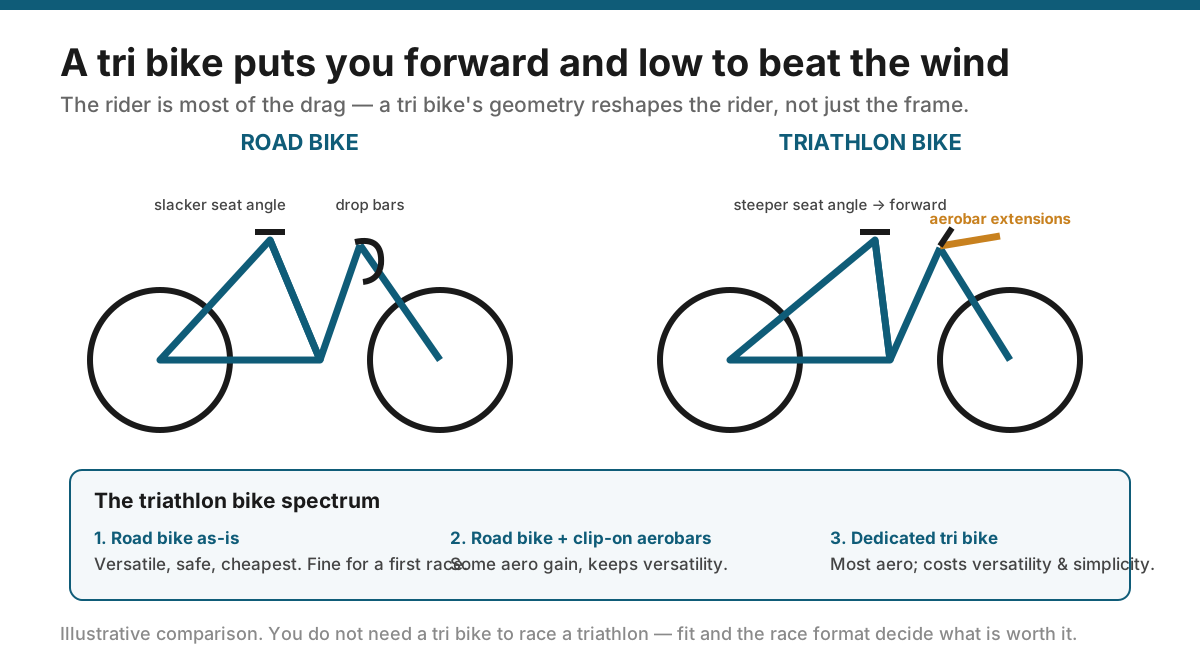
A triathlon bike is not simply an expensive road bike — it is a machine engineered around one goal: holding an aerodynamic riding position for a long, solo, non-drafting effort so your legs are fresher for the run. This guide explains what actually makes a tri bike a tri bike (the steep-seat-angle geometry, the aerobars, the integration), how that differs from a road bike, the real trade-offs it makes, and the road-to-tri spectrum you can move along. It is the category explainer: it tells you how these bikes work and links you to the dedicated guides for the buying decision, the fit and each component.
Key takeaways
- 1A tri bike is built to hold an aero position — the rider is most of the wind resistance, so reshaping the rider matters most
- 2Its defining feature is a steep seat-tube angle that rotates you forward onto aerobars, saving your legs for the run
- 3There is a spectrum: road bike as-is, road bike plus clip-on aerobars, or a dedicated tri bike
- 4Aero comes at a cost — handling, comfort, versatility, price and travel/maintenance complexity
- 5You do not need a tri bike to race a triathlon; race format and fit decide whether one is worth it
In this article
- 1What "triathlon bike" actually means
- 2The one job a tri bike is built for: aerodynamics
- 3The anatomy: what makes a tri bike different
- 4Geometry: why the seat angle changes everything
- 5The trade-offs: aero is not free
- 6The road-to-tri spectrum: three ways to ride
- 7How race format decides what's worth it
- 8Why fit beats frame, every time
- 9A bike is a system, not just a frame
- 10So — do you need one? Where to go next
- ⚖Anatomy: what makes a tri bike different from a road bike
- ?Frequently asked questions
What "triathlon bike" actually means
The phrase covers more than one thing, and clearing that up removes most beginner confusion. Strictly, a triathlon bike (or TT bike) is a bicycle designed around an aggressive, forward aerodynamic position for solo, non-drafting racing. But in practice, triathletes race on a spectrum of setups: an ordinary road bike, a road bike fitted with clip-on aerobars, or a dedicated tri bike. All three are legitimate triathlon bikes in the sense that matters — a bike you can race a triathlon on.
So the useful question is not "road bike or tri bike?" in the abstract, but "what is a tri bike built to do, and is that worth its trade-offs for my racing?" This page answers the first half — how these bikes work and what makes them different. The decision half lives in the dedicated guides: triathlon bike vs road bike for the head-to-head, and the beginner bike decision guide for choosing your first one. And the short version of the most common question: no, you do not need a tri bike to do a triathlon.
The one job a tri bike is built for: aerodynamics
To understand a tri bike you have to understand where the resistance comes from. On flat ground at triathlon speeds, the overwhelming majority of the force you fight is aerodynamic drag — pushing air out of the way — and most of that drag is the rider, not the bike. Your body is the sail.
That single fact drives the entire design. Because reshaping the rider matters far more than shaving grams off the frame, a tri bike is engineered to get your body into a low, narrow, forward tuck and let you hold it comfortably for hours. A road bike can be made aero for short bursts, but its geometry is not built to sustain that position over a long, steady, solo effort. Everything distinctive about a tri bike — the geometry, the bars, the tube shapes — exists to serve that aero position. How much time that actually saves a given rider is covered in the tri bike vs road bike guide; the point here is why the bike is shaped the way it is.
The anatomy: what makes a tri bike different
Line a tri bike up next to a road bike and the differences are deliberate, each serving the aero position:
- Steep seat-tube angle. The defining feature — more on it below. It rotates you forward over the pedals rather than sitting you back.
- Aerobars (extensions and armrests). Instead of drop handlebars, you rest your forearms on pads and hold extensions out front, pulling your arms in narrow and your torso low. This is where you spend most of a race.
- Aero tube shapes. Deeper, airfoil-profiled frame tubes, hidden brakes and cables, and integrated cockpits reduce the frame's own drag.
- Integrated storage and hydration. Bento boxes, frame-mounted bottles and between-the-arms hydration let you eat, drink and carry tools without leaving the position or adding drag.
- Different gearing and handling geometry. Often set up for sustained flat/rolling power rather than twitchy, responsive group riding.
None of these is magic on its own; together they make a bike that is fast only if the rider can hold the position — which is why fit matters more than any single feature.
Geometry: why the seat angle changes everything
If you remember one technical detail, make it the seat-tube angle. A road bike typically places the seat tube around 72–74 degrees from horizontal, sitting you back for balanced handling and all-day comfort across varied terrain. A tri bike steepens that to roughly 76–78 degrees, which rotates your whole body forward over the bottom bracket.
That forward rotation does two things. It lets you drop your torso low onto the aerobars without closing your hip angle so tightly that you cannot breathe or produce power — you effectively bring the bike forward under you rather than folding yourself in half. And it shifts some of the workload in a way many athletes find leaves their legs feeling fresher for the run off the bike, which is the whole reason the position exists in triathlon. The trade-off is that this forward, low position is less stable and less comfortable for casual and group riding — the price of specialisation, which the next section covers.
The trade-offs: aero is not free
A tri bike is a specialist, and specialists give things up. Being honest about the costs is what separates a good buying decision from an expensive regret:
- Handling. The forward position and geometry make a tri bike twitchier and slower to react — less confidence-inspiring in traffic, tight corners, crosswinds and technical descents.
- Comfort and versatility. It is built for one position on relatively open roads. It is poor for group rides (aerobars are often banned in bunches for safety), commuting or hilly, technical routes.
- Cost. For the same component level, a tri bike usually costs more than a road bike, and the aero integration continues costing you later.
- Maintenance and travel. Proprietary integrated cockpits, hidden cables and special seatposts can make servicing, adjusting and packing the bike harder and pricier.
Whether those costs are worth the aero gain depends entirely on your racing and how much you ride outside of racing — which is exactly the judgement the decision guide is built to walk you through.
The road-to-tri spectrum: three ways to ride
Because a tri bike's benefits and costs both scale with specialisation, you do not have to jump straight to one. There are three sensible points on the spectrum:
- Your road bike, as it is. Safe, versatile, cheapest, and completely race-legal. For a first triathlon, a well-fitted road bike you can handle confidently is often the smartest choice — nothing about the entry requires more.
- A road bike with clip-on aerobars. Bolt-on extensions give you some of the aero position and a meaningful chunk of the benefit while keeping the road bike's versatility and handling. A popular, low-cost stepping stone — see clip-on aerobars.
- A dedicated tri bike. The most aero, the most specialised, and the most expensive to buy, maintain and travel with. It earns its place when you race non-drafting events regularly and ride enough to justify a second, single-purpose machine.
Most triathletes move up this spectrum over years, not all at once. The beginner bike decision guide and the best beginner bikes under $1,500 help you pick a starting point.
How race format decides what's worth it
One rule shapes bike choice more than any spec: whether your race is draft-legal or non-drafting. In non-drafting racing — the format for most age-group triathlon — you ride alone and cannot shelter behind other riders, so aerodynamics matter enormously and a tri bike's advantage is real. In draft-legal racing (common at elite and some age-group events), riders work together in packs, aerobars are not permitted, and a standard road bike is required; a tri bike would be both illegal and pointless there.
Those rules, and the equipment specifics, are set by the governing body and the individual event, and they do change, so always confirm your race's format before you spend. The broader rules picture is covered in the triathlon rules guide; the takeaway for bike choice is simply that the format tells you whether aero equipment helps you or is banned outright.
Why fit beats frame, every time
A tri bike only delivers its aero benefit if you can actually hold the position — comfortably, with control of the bike, and while breathing and producing power. An aggressive setup you abandon halfway through the ride is slower than a moderate one you can maintain, because a position you are not in saves you nothing.
This is why experienced triathletes say fit before frame. The right frame is the one that lets a good fit put you in a sustainable position for your flexibility and your event; the wrong one forces compromises no components can fix. Getting fit and position right — on whatever bike you own or buy — does more for your riding than upgrading the machine. Start with the bike fit guide, check whether a professional fit is worth it in is bike fitting worth it, and remember that fit, not the badge on the frame, is what makes any of this work.
A bike is a system, not just a frame
Once you understand the frame, it helps to see the bike as a system of parts you will tune over time — and each has its own dedicated guide, so this pillar just points the way rather than repeating them:
- Gearing — matching your cassette and chainrings to your terrain: gearing explained.
- Wheels — deep aero rims versus shallow, and when each helps: race wheels deep vs shallow.
- Contact points — shoes and cleats where your power meets the bike: tri bike shoes.
- Data — computers to pace by: bike computers.
- Keeping it running — the basics that prevent race-day failures: bike maintenance for beginners.
None of these is worth chasing before you have a bike that fits and a position you can hold; they are refinements, not foundations.
So — do you need one? Where to go next
For most people entering the sport, the honest answer is not yet. A safe, well-fitted bike you already own — a road bike, or even a sturdy hybrid for a first sprint — plus good handling skills will get you to a finish line, and often faster than a tri bike you cannot yet ride confidently. A tri bike earns its cost when you race non-drafting events regularly, ride enough to justify a specialist machine, and have the fit dialled in to actually use the position.
When you are ready to decide, follow the spokes this pillar links to: compare the two types in tri bike vs road bike, choose a first bike with the beginner decision guide and the best bikes under $1,500, and make sure the rest of your kit is sorted with first triathlon gear essentials. Understanding how a tri bike works is the foundation; buying one is a later, smaller decision.
Anatomy: what makes a tri bike different from a road bike
| Feature | Road bike | Triathlon bike | Why it matters |
|---|---|---|---|
| Seat-tube angle | Slacker (~72–74°) | Steeper (~76–78°) | Rotates you forward onto the aerobars |
| Handlebars | Drop bars | Aerobar extensions + armrests | Holds a low, narrow, sustainable aero tuck |
| Tube shapes | Round, all-round | Deep airfoil profiles | Cuts the frame's own drag |
| Handling | Stable, versatile | Twitchier, specialised | Road bike is safer in traffic and turns |
| Best race format | Draft-legal or any | Non-drafting | Aerobars are banned in draft-legal racing |
Sources
Sources are listed so readers can verify consequential claims and dated details.
- Competition rules and equipment documents — World Triathlon (accessed September 22, 2026)
- Bicycle safety and equipment checks — NHTSA (accessed September 22, 2026)
Frequently asked questions
Do I need a triathlon bike for my first triathlon?
No. A safe, well-fitted road bike — or even a hybrid for a first sprint — is completely race-legal and often the smarter choice while you learn the sport. Handling confidence and a sustainable position matter more than the type of bike, and a tri bike you cannot yet ride comfortably can be slower than a road bike you can.
What actually makes a triathlon bike faster?
Mostly the riding position, not the frame. Because the rider creates most of the aerodynamic drag, a tri bike's steep seat angle and aerobars get your body low and narrow and let you hold that aero tuck for hours, which cuts wind resistance in solo, non-drafting racing. The bike's aero tube shapes add a smaller further gain.
Can I put aerobars on my road bike instead?
Yes — clip-on aerobars are a popular, low-cost middle step. They give you part of the aero position and benefit while keeping your road bike's versatility and handling. Get the fit checked so the position is safe and sustainable, and note that aerobars are not allowed in draft-legal racing.
What is the difference between a tri bike and a TT bike?
They share the same aero, forward-position concept and look very similar. Time-trial bikes are built to the strict rules of cycling time trials, while tri bikes are optimised for long, solo triathlon riding with features like extra hydration and storage and slightly more comfort-oriented fit. For most triathletes the practical differences are small.
Is fit or the frame more important?
Fit, without question. A tri bike only delivers its aero benefit if you can hold the position comfortably and control the bike. An aggressive setup you keep abandoning saves nothing, so a good fit on a modest bike beats a poor fit on an expensive one. Sort fit and position before spending on a frame.