Deep vs Shallow Triathlon Wheels: How to Choose
Compare triathlon wheel depth by course, crosswind control, tire compatibility and total setup cost, without assuming a universal speed gain.
By Lotte
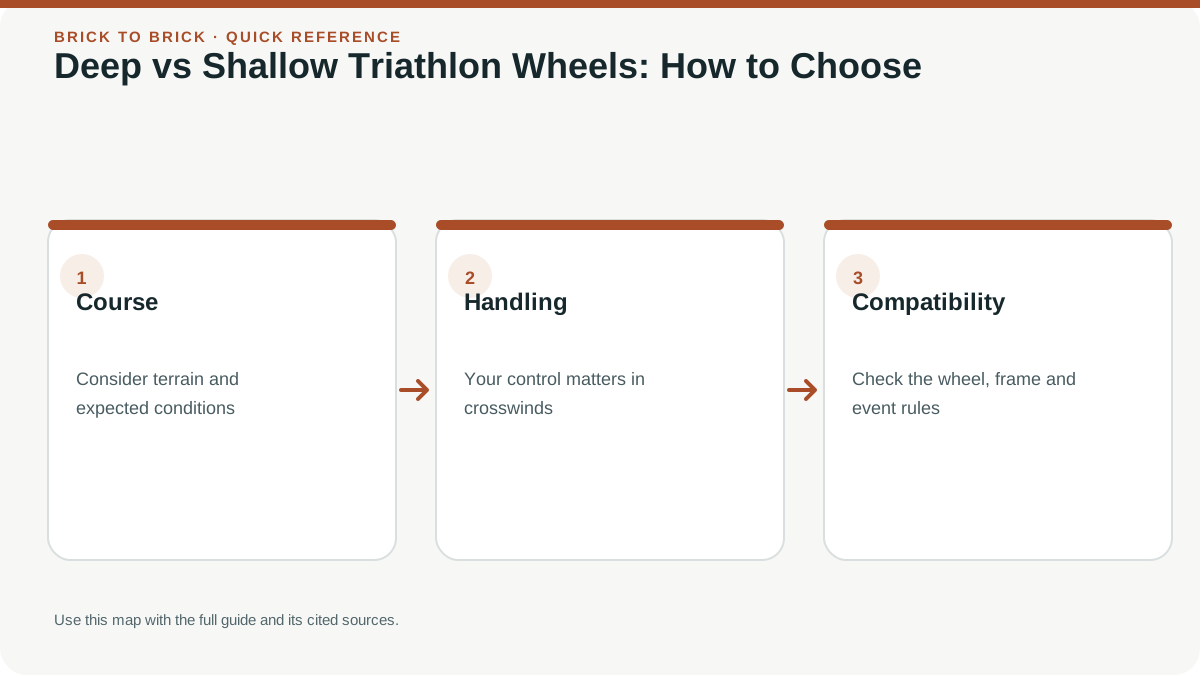
Choose triathlon wheel depth by comparing the complete wheel-tire-bike setup against your course, handling confidence and service needs. Deeper rims can change aerodynamic forces, but no depth promises a personal time saving or has a universal crosswind limit.
Key takeaways
- 1Rim depth is only one design variable; wheel shape, tire, rider position, speed and wind angle also affect aerodynamic behavior.
- 2Crosswind performance includes lateral forces and handling, so do not judge a wheel by drag numbers alone.
- 3Front and rear wheels can affect steering and stability differently; mixed-depth setups are options to test, not universal rules.
- 4Verify exact tire approval, pressure limits, frame clearance, brake or rotor setup, axle and cassette before riding.
- 5Compare ride-ready cost, maintenance and a safe practice opportunity before buying or renting race wheels.
In this article
- 1Define the problem before changing wheels
- 2Compare wheels with a complete compatibility worksheet
- 3Use an aero claim as a question about the test
- 4What wheel depth measures—and what it leaves out
- 5Understand apparent wind and yaw before reading a chart
- 6Aerodynamic drag is only one part of the wheel response
- 7Use course details to identify the trade-off that matters
- 8Compare broad depth choices without a universal cutoff
- 9Treat the front and rear as different decisions
- 10Check the complete tire, rim and frame interface
- 11Include braking, valves and repair access in the choice
- 12Compare the ride-ready cost, not the wheel-only price
- 13Choose from the demands you can name
- 14Use a controlled test when borrowing or renting
- 15A concise wheel-choice checklist
- 16Sources and scope
- ⚖Start a wheel-depth decision from your actual use
- ?Frequently asked questions
Define the problem before changing wheels
Ask whether your current wheels are unreliable, incompatible with desired tires, difficult to service or simply less aerodynamic than a possible upgrade. Those are different reasons to spend money.
If your main limitation is uncomfortable bike position, poor braking or uncertainty in crosswinds, an expensive wheelset may not solve it. A mechanically sound familiar setup can be a sensible race choice.
Treat this as a decision framework, not a product test. Brick to Brick has not measured time savings for your rider, bike and course combination.
Compare wheels with a complete compatibility worksheet
Plan the service and travel side of the purchase as well as its performance. Check which workshop can true the wheel, source spokes, service the hub and inspect the rim in the country where you train and race. A proprietary spoke or hub that takes weeks to arrive can make a race upgrade a poor fit for your calendar.
If you fly with a bike, check case space and handling instructions before choosing a deeper or wider wheelset. Confirm whether the race permits the wheel type you plan to bring, and whether a disc or other wheel requires a separate event check. Transport damage, a missing valve extender or an incompatible spare can erase the value of arriving with a race wheel.
Keep your familiar set ready if it remains mechanically sound. That backup can help if a new tire loses air, a wheel is damaged in transit or the event conditions change. The point is not to carry every possible part; it is to know what is replaceable locally and what you would do if the new setup could not start.
Use an aero claim as a question about the test
When a wheel maker gives a drag figure, look for the tire, size, speed and test conditions used. Check whether the comparison concerns a front wheel, rear wheel or complete bicycle. A number from one setup is not automatically a prediction for your position, tires or course.
Keep handling, compatibility and serviceability in the comparison even when aerodynamic data is available. The fastest-looking chart does not tell you whether you can use the equipment comfortably throughout the event. If the test context is absent, describe the claimed advantage as unverified for your use rather than turning it into a promised time saving.
What wheel depth measures—and what it leaves out
Rim depth describes how far the rim profile extends outward from the tire bed toward the rim's outer edge. It is a useful way to describe one part of a wheel, but it is not a complete aerodynamic rating. Two rims with the same nominal depth can use different shapes, widths, spoke layouts and tire transitions. Those details change the airflow and the way the wheel responds when wind arrives from the side.
A deeper rim gives designers more surface and shape to manage airflow around the wheel. That can reduce drag in some combinations of speed, wind angle, tire and bike position. The same geometry can also change lateral forces and steering sensations in crosswinds. A shallow rim does not automatically handle perfectly, and a deep rim does not automatically become unsafe. The model, rider, front or rear location, bike and conditions matter together.
This is why a rim-depth number should begin a comparison, not finish one. Look at the complete wheel-tire system, the test method and your own course demands. Treat claims based only on millimetres of depth as incomplete unless the manufacturer explains how that shape performs in relevant conditions.
Understand apparent wind and yaw before reading a chart
The wind a moving cyclist feels is a combination of ambient wind and the airflow created by forward speed. The angle between that relative airflow and the direction of travel is commonly called yaw. It can shift during a ride as direction, gusts, speed and road exposure change. A forecast that reports average wind speed does not show the full sequence of wind angles that reaches the front wheel.
A wind-tunnel result taken at one angle is therefore a narrow sample. A wheel that performs well at one yaw angle may compare differently at another. Some test summaries combine measurements across a range of angles, but their overall result depends on the speeds, angles and weighting selected. If a product page provides only one attractive number, you do not know how representative it is of your ride.
Do not attempt to calculate a personal crosswind limit from a simple wind-speed conversion. The gust direction at road level, shelter, trees, bridges, rider speed and your ability to control the bike all matter. Use weather forecasts to plan awareness and alternatives, not to certify a wheel as safe at a particular number.
Aerodynamic drag is only one part of the wheel response
A wheel test can measure forces in more than one direction. Drag acts against forward motion; lateral force pushes across the bike; moments can influence how the bicycle turns or leans. These measures help explain why the lowest drag result is not automatically the best real-world choice for every rider.
A primary wind-tunnel study compared several bicycle wheel styles across yaw angles and measured both aerodynamic drag and side force. The authors concluded that wheel design affected the drag and stability of the rider-bike system, and that wheel performance should not be judged from drag alone. It is an illustrative study of the tested equipment and setup, not a ranking of current consumer models and not a personal handling threshold.
For an age-group athlete, the practical question is whether the wheel lets you hold a safe, predictable line while reaching the brakes and maintaining the position you intend to use. If a wheel's sensations make you tense, sit upright unexpectedly or avoid riding in exposed conditions, the theoretical aero gain may not be useful to you. A qualified fitter or mechanic can help separate fit, tire and wheel issues when handling changes after an equipment swap.
Use course details to identify the trade-off that matters
A flat course is not automatically a calm course. Coastal roads, open farmland, bridges and exposed causeways may have crosswind gusts even where the elevation profile looks simple. A short exposed section can matter more to your confidence than the course's average wind. Read the map, course notes and current event updates for changes in surface, shelter and technical sections.
A hilly route introduces different demands: repeated braking, corner entry, rough pavement, climbing pace and the length of descents. The wheel's weight and brake system may matter alongside aerodynamic shape, but published wheel weight is only useful if the complete setup is comparable, including tires, tubes or sealant, cassette and rotors. Do not let a weight claim distract from tire condition or safe braking.
A technical course may call for predictable handling and familiar equipment. A steady, open course can make a more aerodynamic setup attractive to an athlete who can hold a suitable position and has already tested the wheel. In either case, the event forecast is a planning input, not a guarantee. Review organizer communications near race day and follow any equipment restrictions or safety changes.
Compare broad depth choices without a universal cutoff
Instead of treating a specific rim depth as universally shallow, medium or deep, use the manufacturer's dimensions and compare the roles you need the wheels to perform. Labels differ by brand and product family. These broad patterns can help frame questions, but they are not rules for a particular rider:
- A lower-profile rim may be attractive when a rider values a familiar feel, ventilation is irrelevant to the wheel itself, or conditions and handling confidence take priority over an unverified aero gain.
- A mid-profile wheel may be a practical compromise for athletes who want to compare aerodynamic shaping with serviceability and all-round use.
- A deeper rim may be worth evaluating for a rider who expects sustained speeds, has a stable position and can control it comfortably in the likely course conditions.
Ask whether the wheel will be used mainly on the front, rear or both; whether you can test it; and whether the model's tire and pressure rules fit your current equipment. No one of these descriptions tells you which option is fastest for your event. The table below is a starting framework, not a wheel-depth prescription.
Treat the front and rear as different decisions
The front wheel is connected directly to steering, so changes in front-wheel side force may be felt differently from the same force at the rear. This is one reason athletes sometimes consider a shallower front with a deeper rear. It is a possible configuration to assess, not a universal formula or a guarantee of better control.
The rear wheel still affects the whole bicycle, and a rear disc can involve distinct rules, cost, transport and handling considerations. A frame, fork and wheel can also interact aerodynamically. Never assume that the rear is irrelevant to stability or that all front wheels of one depth behave the same. Shape, tire, fork clearance and the rider's posture influence the system.
If you compare mixed-depth setups, change one wheel at a time where practical and keep the rest of the system constant. Ask a mechanic to confirm fit, axle, brake, tire and rotor compatibility. Test each setup on a safe familiar route before a race. If you cannot confidently control either setup, choose the one that supports predictable handling or stay with equipment you already know.
Check the complete tire, rim and frame interface
A wheel is not ready to ride because its axle fits. Verify the exact tire size and model against the wheel maker's compatibility information, then check the bicycle frame and fork clearance for that inflated tire. Nominal tire widths can measure differently on rims with different internal widths, and clearance can change with frame design, mud or wheel flex. Use the manufacturer limits for the exact parts rather than estimating by sight.
Hookless or tubeless straight-side rims have model-specific tire and pressure requirements. SRAM/Zipp states that its hookless rims should only be used with compatible tires and directs riders to its current compatibility guide. That Zipp instruction applies to Zipp's products; check the instructions for the manufacturer of your own wheel and tire. Do not assume that a tire that mounts on one rim is approved for another.
Before inflating, check the wheel and tire maximum pressures and stay within the lower applicable limit. Confirm whether a tube is allowed in the specific rim-and-tire combination. Follow the maker's bead seating, tape, sealant and inspection instructions, and do not use an unapproved tire as an experiment. If compatibility is unclear, ask the wheel or tire manufacturer or a qualified mechanic.
Include braking, valves and repair access in the choice
Brake type changes the preparation. With rim brakes, use pads and cleaning instructions approved for the rim material, inspect the braking surface and check wear indicators where the manufacturer provides them. With disc brakes, verify rotor size, mounting interface, axle and caliper clearance. A wheelset that requires an unfamiliar brake adjustment should be installed and checked before the event, not at transition.
Rim depth also affects valve access. You may need a valve stem of a compatible length or an approved extender. Check whether your pump head fits, whether you can reach the valve with the tire inflated, and whether your spare tube matches the tire and wheel system. Practise a flat repair with the exact tools you plan to carry.
These are simple details, but they determine whether you can inflate, inspect and repair the setup when needed. Keep the manufacturer's manual available and have a mechanic inspect any questionable rim, tire bead, spoke, rotor or brake surface. Do not race a damaged component because a replacement is inconvenient.
Compare the ride-ready cost, not the wheel-only price
Build a total-cost list before choosing a wheelset. Include the cassette or freehub body, rotors, compatible tires, valves or extenders, sealant, brake pads, installation, transport case and any service tools you do not already own. Check warranty coverage and local availability for spokes, hubs and replacement parts. A used wheel may need immediate tire or bearing work that changes the apparent bargain.
If you are renting, ask whether the wheel arrives with the cassette, rotors, tires and valve setup you need. Confirm the rental period leaves time for installation and a practice ride. Clarify what happens if the wheel is damaged or incompatible, and do not assume the venue will have a matching spare.
Compare the expected use across a season, not just one race. If a wheel would sit unused, rental or familiar training wheels may be a better financial choice. If the upgrade solves a repeated need and remains practical to service, the purchase may make sense even without a precise time-saving claim. The gear-upgrade calculator can help organize a budget, but it cannot establish an aerodynamic return.
Choose from the demands you can name
A useful selection starts with a problem you can describe. Consider these examples:
- If you are entering your first race and your current wheels are sound, compatible and familiar, there may be no urgent reason to replace them. Spend time learning the course and practicing bike control.
- If you regularly feel unsettled by gusts on your current deep front wheel, do not buy an even deeper front wheel because a chart says it has low drag. Compare a more manageable option with a mechanic or experienced fitter, then test safely.
- If your goal race is relatively exposed and you can comfortably hold your riding position, compare candidate models using complete-system data and real handling practice. Keep the confidence and service questions beside the aero result.
- If you race varied terrain and conditions, assess how often you can use the wheel and whether carrying, servicing and replacing its parts is practical.
These are decision examples, not outcome guarantees. Course, speed, tire choice, wind, equipment rules and individual confidence can change the answer. If the wheel choice still feels uncertain, prioritize the option that you can inspect, maintain and control predictably.
Use a controlled test when borrowing or renting
A useful test is about familiarity and control, not proving speed from one casual ride. First have the wheel installed by someone who can confirm compatibility, brake function, rotor alignment and tire seating. Check clearance while the bike is loaded and the wheel is spinning. Inspect for rubbing or unusual sound before riding.
Start on a familiar route with low traffic and an easy exit. Ride at a comfortable pace, use the brakes in a controlled area, and notice whether steering, vibration or noise differs from your usual setup. Avoid starting with fast descents, gusty exposed roads or a technical group ride. Build up only if the wheel remains predictable and you can reach the controls normally.
For a performance comparison, hold the route, tires, pressure, position, clothing, effort and test conditions as constant as practical. Weather changes can overwhelm the signal in an informal ride. A repeated, controlled test or qualified wind-tunnel support is more informative than comparing two unrelated GPS files. Record the method and its limits rather than claiming a universal number of seconds saved.
Choose race-day wheels early enough to rehearse the complete setup, including tire repair and packing. If the rental arrives too close to the event for a meaningful inspection and practice ride, your familiar wheels may be the more dependable choice.
A concise wheel-choice checklist
Before you decide, write down answers to these questions:
- What specific problem should the wheel solve: compatibility, reliability, handling, service access or aerodynamic testing?
- What are the course surface, exposed sections, descents and likely race conditions?
- Can you comfortably control this front and rear setup in practice?
- Are the exact tire, rim, frame, brake, rotor and axle combination approved and clear?
- Do pressure limits, valves, spare parts and repair tools match the setup?
- What is the total ride-ready cost and can you service the wheel locally?
- What does the evidence actually compare, and how close is that test to your own position and use?
If you cannot answer a compatibility or safety question, pause the purchase and ask the manufacturer or mechanic. If your only reason is an unsupported time-saving claim, gather better evidence before spending. Once the system checks out, choose the wheel you can ride with confidence and maintain.
Sources and scope
A controlled study of bicycle wheels at different yaw angles measured both drag and side force, showing why wheel performance cannot be judged from drag alone: Effect of Crosswinds and Wheel Selection on the Aerodynamic Behavior of a Cyclist. Its findings apply to the wheels and wind-tunnel setup studied, not every current model or rider.
For product-specific requirements, use the exact SRAM/Zipp road-wheel user manual and its live hookless tire compatibility guide. These are Zipp sources and do not replace another manufacturer's documentation. Check the governing body's current competition rules and the event's latest athlete guide before racing.
Sources checked 24 September 2026. Brick to Brick has not tested or ranked wheel models and has not measured a personal time saving.
Start a wheel-depth decision from your actual use
| What matters most | Options to compare | What to verify |
|---|---|---|
| Familiar control in gusts or technical sections | A lower-profile front against the candidate front wheel | Handling on a safe practice route; fit and event rules |
| Aero testing for a steady position | Candidate complete wheel-tire systems, not rim depth alone | Matched tires, yaw range, speed, rider position and test method |
| Mixed terrain and frequent training | Durable all-round wheelsets with local support | Service parts, brake setup, tire clearance and total cost |
| One event with a rental option | Rental against the familiar wheelset | Compatibility, lead time, practice opportunity and return terms |
Sources
Sources are listed so readers can verify consequential claims and dated details.
- Effect of Crosswinds and Wheel Selection on the Aerodynamic Behavior of a Cyclist — Procedia Engineering (accessed September 24, 2026)
- Zipp Road Wheels User Manual — SRAM / Zipp (accessed September 24, 2026)
- Hookless Tire Compatibility — SRAM / Zipp (accessed September 24, 2026)
- Competition Rules — World Triathlon (accessed September 24, 2026)
- Competition Rules — IRONMAN (accessed September 24, 2026)
Frequently asked questions
Are deeper triathlon wheels always faster?
No. Rim depth is only one part of a wheel-tire-bike system. Drag results depend on wheel shape, tire, speed, yaw angle, rider position and test method, and they do not guarantee a personal race-time saving.
What depth of triathlon wheel should I choose?
There is no universal depth recommendation. Compare the exact wheel model, your course, handling confidence, tire compatibility, riding position and service needs. Verify the setup in safe practice before racing.
Are deep front wheels harder to control in crosswinds?
Wheel design can affect lateral forces and stability, but depth alone does not define handling or create a universal wind-speed limit. The front wheel influences steering, and the rider, tire, bike and gust pattern matter. Test a candidate safely and stop if you cannot maintain control.
Should I use a shallower front wheel and deeper rear wheel?
That is one setup some athletes compare, not a rule for everyone. Front and rear wheels interact differently with steering and the bike frame. Confirm compatibility, follow the manufacturers' instructions and test the complete combination.
Can I use a disc wheel in any triathlon?
Do not assume so. Check the current competition rules and event athlete guide for any wheel-type restrictions, then consider course conditions, handling and transport.
Can I use any tire on a hookless wheel?
No. Use only tire models approved for the exact rim system and follow both manufacturers' pressure and setup limits. Compatibility is model-specific; a tire fitting physically does not prove that it is approved.
Is it worth renting race wheels?
It can be, if the wheel is compatible, installed in time and tested before race day. Include the rental, setup and transport costs. If you cannot inspect handling and braking in a safe practice ride, your familiar wheels may be the more dependable choice.
How can I tell whether a wheel test applies to me?
Look for the exact tire and wheel tested, bike and rider setup, speed, yaw angles, measured forces and how results were combined. A result from one setup does not directly predict performance on your bike or course.