Triathlon Bike Shoes: How to Choose the Right Pair
How to choose triathlon cycling shoes: tri shoes vs road shoes, closures, sole stiffness (what the evidence really says), sockless fit, drainage, flying-mount features, and budget.
By Lotte
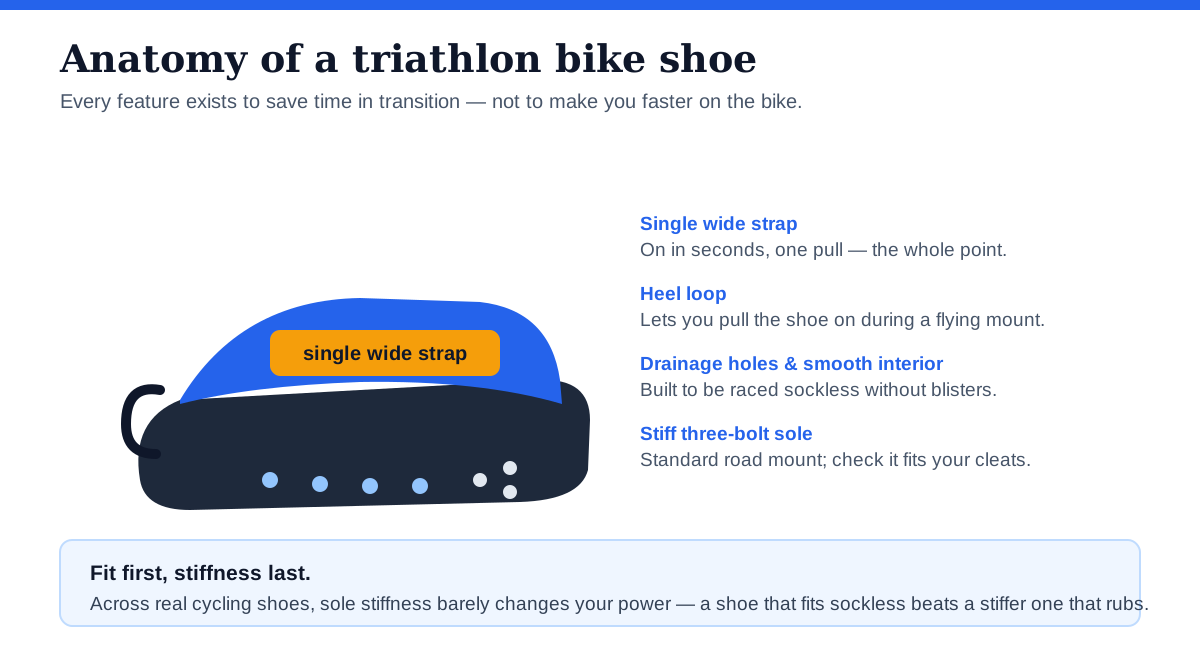
A triathlon bike shoe is a cycling shoe re-engineered for one thing: getting on and off fast, sockless, in a race. That means a single wide strap, a heel loop for flying mounts, drainage holes and a smooth interior — not extra stiffness or a special sole. You can race any triathlon in ordinary road cycling shoes, so tri-specific shoes are an upgrade for when transition time matters, not a requirement. This guide focuses on the shoe itself — the transition-first features, closures, how much sole stiffness really changes (less than the marketing suggests), sockless sizing and fit, and how to spend your money — and hands the pedal and cleat decisions to the guides that own them.
Key takeaways
- 1Tri shoes are built for fast, sockless transitions, not for extra power — a single wide strap, heel loop, drainage and a smooth lining are the whole point
- 2You can race any triathlon in ordinary road cycling shoes; tri-specific shoes are an upgrade for shaving seconds off T1, not an entry requirement
- 3Across real cycling shoes, sole stiffness has only a small effect on power, so buy for fit and comfort first and treat stiffness numbers as a tie-breaker
- 4Because most triathletes ride sockless, size and try shoes on with bare feet — fit is the decision that actually matters
- 5The shoe, the pedal system and the cleat are three separate choices; get the shoe here and confirm cleat and pedal compatibility separately
In this article
- 1Quick answer: do you need tri-specific bike shoes?
- 2What makes a triathlon shoe different
- 3Tri shoes vs road cycling shoes — and when each wins
- 4Closures: single strap, BOA dial or ratchet
- 5Sole stiffness and material: how much does it really matter?
- 6Sockless racing, drainage and no-sock comfort
- 7Getting the fit right
- 8Heel loops and flying-mount readiness
- 9Cleats and pedals: what to check before you buy
- 10What you're actually paying for: a budget guide
- 11Care, longevity and common mistakes
- ⚖Which cycling shoe suits your triathlon?
- ?Frequently asked questions
Quick answer: do you need tri-specific bike shoes?
For your first triathlon, no. Any cycling shoe that fits your pedals will get you round the bike leg perfectly legally, and if you already own road shoes, use them and spend your attention on training instead.
Tri-specific shoes earn their place once transition time starts to matter to you — usually after your first two or three races, when you want to shave seconds off T1 and race comfortably without socks. What you are really buying is a set of transition-first features bolted onto an otherwise normal cycling shoe: a single large strap you can close in one pull, a heel loop for flying mounts, drainage holes and a smooth interior for sockless racing. You are not buying more speed on the bike itself — that is the single most useful thing to understand before you spend, and the rest of this guide explains why.
What makes a triathlon shoe different
Every design choice in a tri shoe traces back to the clock in transition, not to the road.
- One wide strap instead of two or three. A road shoe uses multiple closures for a dialled-in fit over a long ride; a tri shoe trades a little of that precision for a strap you can find and close in seconds with cold, wet hands.
- A heel loop at the back. This lets you yank a shoe on while already rolling, and is what makes a flying mount possible.
- Drainage and a smooth, seamless lining. You will often come out of the swim with wet feet and no socks, so the shoe is built to shed water and not chew up bare skin.
- An outward-angled strap and a wider throat. The opening is shaped so your foot drops in quickly rather than needing to be threaded.
None of these touch the sole or the power you produce. A tri shoe is a road shoe optimised for the twenty seconds around the mount line — useful, but only if that is where you want to save time.
Tri shoes vs road cycling shoes — and when each wins
Road cycling shoes prioritise a secure, adjustable fit for hours in the saddle. Two straps or a pair of BOA dials let you fine-tune pressure across the foot, which is genuinely nice on long rides and for riders who wear socks.
Tri shoes give up some of that adjustability for transition speed and sockless comfort. The single strap is quicker but blunter, so a foot that needs precise tensioning in different places may prefer a road shoe.
How to choose between them:
- Racing short and chasing transition time? A tri shoe is the natural pick, especially if you race sockless.
- Racing long, or you run hot spots and numbness on the bike? A well-fitted road shoe with two closures can be the more comfortable choice over 70.3 and Ironman distances, and plenty of strong long-course athletes race in them.
- Just starting, or on a budget? Use whatever you have. The difference is measured in seconds of transition, which is not where a first-timer's race is won or lost.
There is no rule that a triathlon requires a tri shoe. Match the shoe to how you actually race.
Closures: single strap, BOA dial or ratchet
The closure is the feature you interact with most, so it is worth understanding the trade-offs.
- Single velcro strap — the tri standard. Fast to open and close, forgiving with wet hands, cheap and reliable. The downside is coarse adjustment: it tightens the whole shoe at once rather than in zones.
- BOA (or similar dial) — a wire and dial that tightens evenly and can be micro-adjusted on the move, even mid-ride. Some tri shoes now use a single dial to combine transition speed with finer fit. It costs more and, rarely, a dial can fail; most riders never have an issue.
- Ratchet or buckle — common on road shoes, precise and durable, but slower and fiddlier in transition, so uncommon on dedicated tri shoes.
For most age-groupers a single strap is all they need. Consider a BOA model if you have had pressure or numbness problems and want the ability to adjust fit without stopping.
Sole stiffness and material: how much does it really matter?
Shoe marketing leans hard on stiffness and carbon soles, implying that a stiffer shoe transfers more power. The evidence is more modest than the sales pitch.
Across the range of stiffness found in real, commercially available cycling shoes, sole stiffness has only a small effect on sprint power output — one controlled study across shoes spanning roughly 200 to 500 N·m/rad found no meaningful difference between them, and an earlier study found no effect on sprint performance at all. Power only starts to drop once a sole is genuinely floppy — below the stiffness of a firm nylon shoe — where researchers measured single-digit percentage losses. In other words, a very flexible running-type shoe would cost you power, but the difference between a mid-priced composite cycling shoe and a top-end carbon one is marginal for almost everyone.
What that means for buying:
- Composite or reinforced-nylon soles are plenty stiff for sprint through Ironman for the vast majority of athletes.
- Carbon buys weight savings and a firmer feel, not a reliable power gain — treat it as a comfort-and-preference upgrade, not free speed.
- Fit and comfort beat stiffness numbers, because a shoe that creates hot spots or lets your foot move will cost you more than a slightly softer sole ever will.
Buy for fit first, comfort second, and let stiffness be the tie-breaker.
Sockless racing, drainage and no-sock comfort
Most triathletes ride sprint and Olympic distance without socks to save transition time, which is exactly the case tri shoes are built for. The smooth, seamless interior and the drainage holes exist so that wet, bare feet stay comfortable and any swim water clears out rather than pooling.
But sockless is a choice, not a rule:
- Short and fast (sprint/Olympic): most people skip socks and accept a tiny blister risk for the time saved.
- Long (70.3/Ironman): many athletes wear thin socks, because hours of pedalling turn a small rub into a race-ruining blister, and the seconds saved barely register over a five-hour-plus day.
If you plan to race sockless, rehearse it in training well before race day — including running through transition and pedalling with bare feet — so you discover any rubbing at home rather than mid-race. A little anti-friction balm on known hot spots helps, and the wider principles are covered in how to prevent chafing.
Getting the fit right
Because fit is the decision that actually matters, treat sizing carefully.
- Try shoes on the way you will race them. If you race sockless, fit them barefoot. Many riders find they need about a half size smaller than a socked road shoe, because a snug fit stops the foot sliding under pedalling load.
- Aim for snug, not tight. Your toes should reach near the end without jamming, and the shoe should hold the midfoot securely with no pressure points after twenty minutes.
- Mind the width. Brands vary a lot — some run narrow, others are cut wide — so if standard shoes pinch or leave dead space, look specifically for a wide or narrow last rather than sizing up or down.
- Check the walkability. You will jog a short distance across transition in these, so the sole should let you move without skating; heavily protruding road cleats make that harder, which is one reason to read the cleat types guide before committing.
If you can, buy from a shop or retailer with easy returns so you can test fit on the bike, since a shoe that feels fine in the kitchen can reveal hot spots under real load.
Heel loops and flying-mount readiness
The heel loop is the feature that connects your shoe to the fastest transition technique. In a flying mount, you leave the shoes clipped to the pedals, run out of transition barefoot, jump on, and pedal on top of the shoes before sliding your feet in and closing the straps once up to speed — the loop is what lets you pull each shoe on while moving.
That technique saves real time, but it is a skill, not a purchase: buying tri shoes does not make you fast in transition, practising does. This guide is about choosing the shoe; the actual mount-and-dismount method, including how to hold the shoes level with rubber bands, belongs to the dedicated flying mount and dismount guide, and how it fits into your wider T1 and T2 plan is covered in transition strategies. If you are a beginner, it is completely fine to skip the flying mount, put your shoes on standing at the rack, and add the technique later once the basics feel calm.
Cleats and pedals: what to check before you buy
A shoe, a pedal system and a cleat are three separate decisions, and mixing them up is the classic beginner mistake. The shoe simply needs the right bolt holes to mount whatever cleat your pedals use.
The short version: most road tri shoes are drilled for a 3-bolt pattern (Look Kéo, Shimano SPD-SL and similar), which gives a large, stiff platform and is the usual triathlon choice; some shoes also accept 2-bolt (SPD-style) cleats, which are easier to walk on and popular for indoor training. Before you buy, check the bare sole of the shoe against the cleat your pedals require.
Rather than repeat the detail here, use the guides that own each decision: bike cleat types explained for how 2-bolt and 3-bolt systems differ and what mounts to what, and clipless vs flat pedals if you are still deciding whether to clip in at all. If any of this is new, it is a strong argument for starting on flat pedals and ordinary trainers and adding clipless shoes once you are confident.
What you're actually paying for: a budget guide
Prices vary by market and change often, so think in tiers rather than exact numbers, and know what each tier actually buys.
- Entry level: a reinforced-nylon or composite sole, a single strap and basic drainage. This is genuinely all a beginner or a sprint/Olympic racer needs, and — per the stiffness evidence above — it is not meaningfully slower than the expensive options.
- Mid range: a stiffer composite or partial-carbon sole, better ventilation and lighter weight, sometimes a BOA dial. A sensible sweet spot if you have decided you love the sport.
- Premium: full carbon sole, dial closures and the lowest weight. Real refinements, but you are paying for grams and feel, not a dependable power advantage.
The honest ranking is fit first, comfort second, stiffness and brand last. A well-fitting entry shoe you race sockless without blisters will do more for you than a premium shoe that rubs. If you are still assembling your kit, see first triathlon gear essentials for where shoes sit in the wider list of what to buy, and when.
Care, longevity and common mistakes
Bike shoes last for years if you look after them, and a few habits protect both the shoes and your race.
Care: rinse and air-dry them after sweaty or wet sessions (never bake them on a radiator, which can warp the sole), loosen the strap between rides so it keeps its shape, and check the cleat bolts periodically — a loose cleat is a common cause of a creaky pedal stroke and can move your foot position without you noticing.
Common mistakes to avoid:
- Buying tri shoes before you need them — a first-timer's time is better spent training than shaving transition seconds.
- Chasing stiffness and carbon for a power gain the research does not support, instead of buying the shoe that fits.
- Sizing to socks then racing sockless, so the shoe is loose on race day.
- Not rehearsing sockless riding, then discovering a blister mid-race.
- Confusing shoe, pedal and cleat and ending up with parts that do not mate.
- Forgetting the bike fit. Comfort, power and knee health are set far more by your bike fit and cleat position than by which shoe you choose — sort the fit first.
Which cycling shoe suits your triathlon?
| Shoe type | Best for | Transition speed | Walkability | Typical closure |
|---|---|---|---|---|
| Tri-specific shoe | Short races, sockless, chasing T1 time | Fastest | Moderate (3-bolt cleat) | Single wide strap or dial |
| Road cycling shoe | Long races, socked, precise fit | Slower | Moderate (3-bolt cleat) | Two straps or BOA dials |
| MTB/gravel shoe | Indoor training, walking, all-round use | Slower | Easiest (recessed 2-bolt cleat) | Strap, dial or ratchet |
| Flat pedals + trainers | Absolute beginners, first race | N/A (no clip-in) | Easiest | Your normal laces |
Sources
Sources are listed so readers can verify consequential claims and dated details.
- The effect of cycling shoe sole stiffness on sprint power output (Footwear Science, 2024) — Footwear Science (accessed September 19, 2026)
- No effect of cycling shoe sole stiffness on sprint performance (Footwear Science, 2020) — Footwear Science (accessed September 19, 2026)
Frequently asked questions
Can I wear regular cycling shoes in a triathlon?
Yes. Ordinary road cycling shoes are perfectly legal and work fine for any triathlon. Tri-specific shoes simply make transitions faster and are more comfortable to race sockless — they are an upgrade, not a requirement.
Do triathlon bike shoes actually make you faster?
Not on the bike itself. Their features save time in transition and add sockless comfort, not power. Research on cycling shoes shows sole stiffness has only a small effect on power across the range of real shoes, so a tri shoe's speed benefit is almost entirely about T1 and T2, not watts.
Do you wear socks with triathlon bike shoes?
In sprint and Olympic distance, most athletes skip socks to save transition time, which is what the smooth lining and drainage are designed for. For 70.3 and Ironman many wear thin socks, because over several hours the blister risk outweighs the few seconds saved.
How should triathlon bike shoes fit?
Snug but not tight, and fitted the way you race. If you race sockless, try them on barefoot — you may need about a half size smaller than a socked road shoe. Watch width, since brands vary widely, and make sure there are no pressure points after about twenty minutes on the bike.
Is a carbon sole worth it?
For most age-groupers, no. A carbon sole saves weight and feels firm, but studies find little reliable power difference between a stiff composite shoe and a carbon one. Buy for fit and comfort first and treat carbon as a preference upgrade rather than free speed.
What pedals and cleats work with triathlon shoes?
Most tri shoes are drilled for a 3-bolt cleat (Look, Shimano SPD-SL and similar); some also take 2-bolt (SPD) cleats. The shoe, pedal and cleat are separate choices, so check the bare sole against your pedal system, and see the cleat types and clipless-vs-flat guides before buying.