Triathlon Bike Gearing: Ratios, Hills and Compatibility
Learn how chainrings, cassette teeth, gear ratios, cadence and wheel rollout affect triathlon bike gearing, plus how to check compatibility before a change.
By Lotte
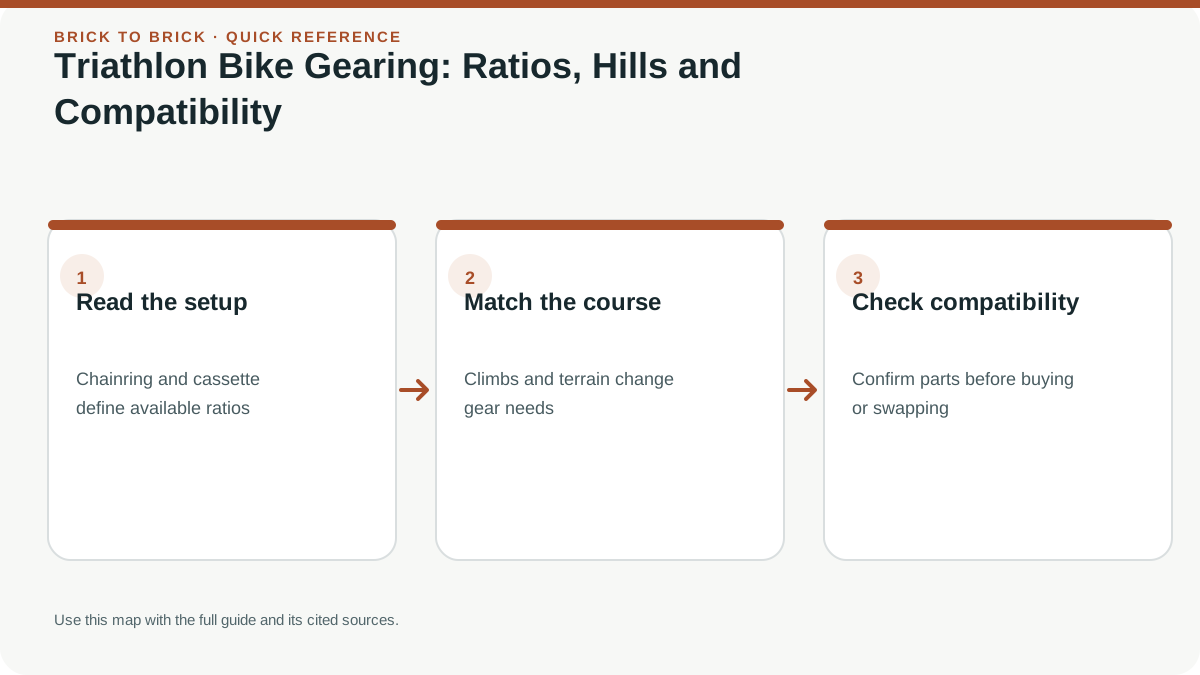
Bike gearing combines front chainring and rear cassette tooth counts. Use gear ratios and course demands to compare climbing and cruising options, then verify compatibility against the exact component documentation before changing parts.
Key takeaways
- 1Gear ratio equals chainring teeth divided by rear sprocket teeth; a lower ratio is an easier gear.
- 2Compare the actual sprocket sequence and course demands, not only the cassette's advertised range.
- 3Cassette compatibility depends on exact shifter, derailleur, chain, crank and freehub models.
In this article
- 1Read the numbers on the drivetrain
- 2Compare climbing gears with arithmetic
- 3Convert cadence into a speed estimate
- 4Choose range for the course you can actually ride
- 5Check the complete compatibility chain
- 6Rehearse shifts before racing
- 7Compare climbing options before replacing the whole drivetrain
- 8Compare neighbouring sprockets as well as the easiest gear
- 9Use development to check cadence and speed units
- 10Separate climbing comfort from top-speed gearing
- 11Ask a shop to verify the proposed combination in writing
- 12Practise selecting the gear before the demand arrives
- 13How a 2x and 1x drivetrain feel on a triathlon course
- 14Worked example: decide whether the lowest gear is low enough
- 15Small gear steps can matter more than the headline range
- 16Use cadence and rollout for an approximate speed calculation
- 17Check the whole drivetrain before changing a cassette
- 18A practical pre-race gearing check
- 19Test a gearing choice on a repeatable climb
- 20Treat labels like compact or climbing gears as shorthand
- ?Frequently asked questions
Read the numbers on the drivetrain
A chainring marked 50 has 50 teeth; a rear sprocket marked 34 has 34 teeth. Gear ratio equals front chainring teeth divided by rear sprocket teeth. A lower ratio makes each pedal revolution move the wheel fewer times, which can help maintain a manageable cadence on a climb.
An 11–34 cassette label gives the smallest and largest rear sprockets, not every intermediate step. Two cassettes with similar range may have different jumps between the gears you use most.
Write down the exact chainrings, cassette, number of speeds, chain and derailleur model on your bike. A model-family name alone may not establish compatibility.
Compare climbing gears with arithmetic
A 34-tooth chainring with a 28-tooth rear sprocket gives 34 ÷ 28 = 1.214. The same chainring with a 34-tooth rear sprocket gives 1.000. The second ratio is about 17.6% lower: (1.214 − 1.000) ÷ 1.214 × 100.
That is a reduction in the gear ratio, not a guaranteed reduction in physical effort or an increase in climbing speed. Rider power, gradient, load and rolling conditions still determine what happens.
For another comparison, 36 ÷ 32 = 1.125. Comparing the ratios is clearer than describing every “compact” or “mid-compact” setup as automatically easy or hard.
Convert cadence into a speed estimate
Approximate speed in km/h = cadence in revolutions per minute × gear ratio × wheel rollout in metres × 60 ÷ 1,000. Use measured rollout for your tire if precision matters.
With an illustrative 2.10 m rollout, 70 rpm and a 1.00 ratio, speed is 70 × 1.00 × 2.10 × 60 ÷ 1,000 = 8.82 km/h. At the same cadence with a 1.214 ratio, it is about 10.71 km/h.
The equation explains why a lower gear lets you keep turning the pedals at a slower climbing speed. It does not prove you can sustain that cadence on a particular gradient.
Choose range for the course you can actually ride
Look at the longest and steepest climbs, not just total elevation. Consider race bottles, tools, fatigue and the need to run afterward. An easy gear that remains unused is usually less troublesome than discovering you cannot turn the pedals comfortably on the final climb.
Also inspect your ordinary riding speeds. A wide-range cassette may create larger cadence changes between adjacent sprockets. If a course is mostly flat, the spacing in the middle of the cassette may matter more often than the highest gear.
Use recent rides on comparable terrain to identify where your current setup falls short. Record the gear and how the climb felt rather than choosing from a professional athlete's setup.
Check the complete compatibility chain
A larger cassette may require a compatible derailleur, adequate chain capacity, correct chain length, an appropriate freehub and suitable adjustment. Maximum sprocket size and total capacity are different specifications. Electronic and mechanical groups can also have generation-specific requirements.
A chainring change can affect front shifting, chainline, clearance and chain length. Do not assume that the same bolt pattern makes every ring combination supported.
Use the drivetrain maker's compatibility documentation or a mechanic. The price comparison should include all required parts and labour, not just the advertised cassette.
Rehearse shifts before racing
On a familiar route, practise selecting an easier gear before the gradient forces a heavy effort. Reduce load appropriately during shifts and follow your drivetrain's operating guidance. Avoid first testing a new lowest gear on a race-day climb.
Check that shifting works through the permitted combinations and that the chain does not rub or overshift. After installation, complete several ordinary rides and address noise or hesitation early.
Use cadence explained to interpret pedal rate, and bike handling for course control. Gearing is a way to make your available effort usable, not a substitute for either skill.
Compare climbing options before replacing the whole drivetrain
Suppose a bike has a 34-tooth small chainring and a 28-tooth largest rear sprocket. Its lowest ratio is 34 ÷ 28 = 1.21. A 34/34 option gives 1.00. At the same cadence and wheel circumference, the second combination travels about 18% less distance per minute; this is gearing arithmetic, not a predicted climbing time or a measured reduction in effort.
A lower gear can let you maintain a manageable cadence on a climb, but installing the larger cassette requires more than matching the number of sprockets. Check derailleur maximum sprocket size, total capacity, chain requirements and the drivetrain's compatibility chart.
Also compare gaps between adjacent gears. A wide range may solve a steep climb while changing how closely you can match cadence on flatter roads. The right question is which compromise fits your course and current riding, not which cassette looks most advanced.
Compare neighbouring sprockets as well as the easiest gear
The range of a cassette tells you its smallest and largest sprockets, but not every step between them. At a constant road speed and chainring, shifting to a larger rear sprocket increases the cadence required to maintain that speed. A shift from 15 to 17 teeth represents a ratio change of 17/15, or about 13.3%. This calculation describes the gears, not an instruction to make that jump under heavy load.
A rider choosing a wider cassette may gain a useful climbing gear while finding some cadence steps more noticeable on flat roads. Compare the actual tooth sequence rather than the number of speeds alone. Two cassettes with the same endpoints need not have identical intermediate steps.
Likewise, changing the front chainring affects every rear gear. Compare the lowest combination for climbing and a realistic high combination for the speeds you actually ride. An enormous top gear that you rarely use may add little practical value if the lowest gear makes ordinary climbs difficult to manage.
Use the course profile and training observations to choose the compromise. If the issue is an unusually steep section, identify its gradient, duration, approach and safe alternatives. Do not choose the whole drivetrain from a flat-course average speed or a professional athlete's chainring size.
Use development to check cadence and speed units
Development is the approximate distance travelled for one crank revolution. With an assumed wheel circumference of 2.10 m and a 50/25 gear ratio, development is 2.10 × 2 = 4.20 m per revolution. At 80 crank revolutions per minute, that is 336 m/min, or 20.16 km/h. The circumference is an illustrative input; measure or obtain the appropriate value for your actual wheel and tire.
The same calculation with a 34/34 gear gives 2.10 m per revolution. At 80 rpm, the estimate is 10.08 km/h. The lower gear does not create extra power; it changes how crank rotation relates to wheel travel.
This is useful when checking whether a proposed gear provides a manageable cadence at the speed you expect on a climb. It does not predict what speed you can sustain, because that also depends on effort, gradient, mass, rolling resistance and wind. Keep the mechanical calculation separate from the physiological assumption.
Before purchasing, bring the current component models and the proposed combination to a mechanic or the manufacturer's compatibility documentation. A mathematically attractive ratio is not useful if the derailleur, chain, cassette or frame cannot support it.
Separate climbing comfort from top-speed gearing
Two questions often get combined when choosing gears: can I ride the steepest relevant section at a manageable effort and cadence, and do I have an appropriate high gear for the speeds I actually use? Write them separately before comparing components.
For a hypothetical rider, changing from a 34/28 lowest gear to 34/34 changes the low ratio from about 1.21 to 1.00. Changing a large chainring affects the high end as well. Those ratios describe mechanical relationships; they do not establish the rider's sustainable power or guarantee that every climb becomes manageable.
A very high top gear may be used rarely on a technical course where safe control limits speed. Conversely, close intermediate steps can matter during sustained flatter riding. The course and your current riding determine which compromise deserves attention.
Avoid choosing gearing only from a professional's bicycle photograph. Their power, course, race tactics and equipment support may differ. The useful comparison starts with the situations in which your current setup leaves you struggling to find a comfortable gear.
Ask a shop to verify the proposed combination in writing
Provide the exact shifter, derailleur, crank, chainring, chain, cassette and wheel or freehub models where relevant. A speed count such as eleven-speed or twelve-speed is not a complete compatibility specification. Components from different families can have restrictions even when the names appear similar.
Ask the mechanic or manufacturer to confirm the intended cassette range, derailleur requirements, chain length and any related parts that must change. Maximum sprocket size and total chain take-up capacity describe different constraints; do not use one figure as a substitute for the other.
Include installation and adjustment in the quote. A cassette change may also expose chain wear or require a different chain, and an electronic system may have its own setup process. Price the complete working change before comparing it with replacing larger parts of the drivetrain.
After installation, test shifting in a safe setting and follow the mechanic's instructions for checking the work. Do not wait until a steep race climb to discover that a shift is unreliable or that you are uncertain about the controls.
Practise selecting the gear before the demand arrives
On a familiar suitable route, look ahead for a change in gradient or speed and choose an appropriate gear before the effort becomes difficult to manage. Practise the control sequence at a modest pace. Different drivetrains have different operating instructions, so learn yours rather than forcing a universal shifting rule.
If you repeatedly run out of an appropriate climbing gear, record where it happens, the slope or terrain context and what cadence and effort felt like. That gives a mechanic or coach a useful problem to evaluate. The answer might involve gearing, pacing, skill, fitness or choosing a different route; a larger cassette is not automatically the only solution.
For an unfamiliar race course, study the profile and identify the sections that deserve rehearsal. Do not assume average elevation gain tells you how steep the hardest short section is. Combine the available official information with suitable practice and an execution plan that preserves control.
After the change, evaluate whether the original problem improved. A new component is successful when it provides a useful, compatible gear choice you can execute reliably, not merely because the specification includes a wider range.
How a 2x and 1x drivetrain feel on a triathlon course
A 2x drivetrain has two front chainrings and a wider set of possible ratios, often with smaller changes between neighboring gears. A 1x system uses one front chainring, so it removes the front shift and simplifies operation; the cassette must provide the useful range, and the gaps between some rear sprockets may be larger. Neither layout is automatically faster. Consider the roads you ride, your preferred cadence, the course's steepest sustained climb, how closely you want gears spaced and whether you can shift confidently under effort. Triathlon courses can have repeated rollers, headwinds and sharp turnarounds as well as climbs. A close-spaced cassette can make it easier to find a comfortable cadence on steady terrain, while a wider low gear can help on steep sections or when fatigued. Manufacturer model families have different chainring, cassette and derailleur pairings, so do not assume a 1x cassette will work with a road rear derailleur just because the chain fits. Shimano's GRX documentation, for example, lists specific combinations for its 1x and 2x systems; check the documentation for the exact parts on your own bike before changing anything.
Worked example: decide whether the lowest gear is low enough
Suppose a road bike has a 50/34-tooth crankset and an 11–34-tooth cassette. Its easiest combination is 34 ÷ 34 = 1.00: the chainring and rear sprocket have the same tooth count, so the crank turns once for approximately one rear-wheel revolution. With a 34/28 combination, the ratio is about 1.21, which is roughly 21% higher than 1.00. If the same rider and wheel are used at the same cadence, the 34/34 gear travels less distance per crank turn. That can make a climb more manageable, but it does not guarantee a particular climbing speed: gradient, total load, tire size, wind and the rider's sustainable effort all matter. A practical comparison is to take the steepest section you expect to ride and ask whether your current easiest gear lets you keep a controlled cadence without straining or weaving. If not, compare an approved larger rear sprocket, smaller chainring or different crankset with a mechanic. This example uses tooth ratios only; it is not a promise about speed or required cadence.
Small gear steps can matter more than the headline range
Two cassettes may both span eleven to thirty-four teeth but use different sprockets between those endpoints. The gaps affect how much cadence changes when you shift at the same road speed. If cadence is already comfortable, a large jump may feel like too much of a change; a tightly spaced cassette can offer finer adjustments on flatter or rolling terrain. Conversely, the easiest gear and the ability to keep moving on a climb may matter more than close spacing for a hilly route. Compare the actual tooth sequence printed in the manufacturer's specification, not only the smallest and largest numbers. For example, Shimano lists particular sprocket sequences for its 12-speed 11–34 cassettes, but other products with a similar stated range can differ. Also remember that a front shift changes cadence and effort more than a single small rear shift, so practice the controls until you can make a deliberate change before a gradient forces it. Choose for the terrain and the cadence changes you can ride smoothly, not for a broad range percentage alone.
Use cadence and rollout for an approximate speed calculation
A simple estimate connects gearing to road speed: cadence in crank revolutions per minute × front teeth ÷ rear teeth × wheel circumference in metres × 60 ÷ 1,000 = approximate kilometres per hour. For example, with a 50-tooth chainring, a 25-tooth rear sprocket, 80 rpm and an assumed 2.10-metre wheel rollout, the calculation is 80 × 2 × 2.10 × 60 ÷ 1,000 = 20.16 km/h. At the same cadence and rollout, a 34/34 combination gives 8.57 km/h. Those values show how ratios relate; they do not model a real course or predict what an athlete can sustain. Actual rollout varies with tire size, pressure, wheel and load, and speed changes with terrain, wind and stops. To estimate more accurately, roll the bike one full wheel revolution on level ground with the rider and normal tire pressure, then measure the distance. A GPS speed display may lag or fluctuate, so do not use a single reading to choose race gearing. The gearing calculation is most useful for comparing two setups under the same assumptions.
Check the whole drivetrain before changing a cassette
A cassette swap can require more than matching the number of speeds. Confirm the shifter's indexing, cassette and freehub interface, derailleur's maximum sprocket and total capacity, chain length, chain condition and whether the crankset and front derailleur remain within their documented limits. Maximum sprocket size and derailleur capacity are different checks: the first concerns the largest individual cog the derailleur can clear, while capacity concerns how much chain slack it must take up across the combinations. A longer chain does not make an incompatible derailleur safe, and adjusting a limit screw does not create capacity that the part lacks. Also confirm whether the wheel body accepts the cassette; some systems need a different freehub body or spacer. Look up exact model numbers in the component maker's technical documents, or ask a qualified mechanic to verify the proposed combination in writing. Shimano product pages illustrate why a group name alone is not enough: a specific rear derailleur lists its compatible cassette range and chain requirements. Never force the chain onto a combination that causes rubbing, poor shifting or a jammed drivetrain.
A practical pre-race gearing check
Before race week, check that all intended gears shift under light and moderate pedaling load, the chain stays on the chainrings, the rear derailleur does not contact the spokes and the chain is not excessively worn. Make adjustments on a safe stand or have a mechanic do them; do not test a new cassette or crank on a technical descent. On a familiar route, shift before the hill steepens, reduce pedal pressure briefly while the shift completes and listen for persistent noise. If the bike has electronic shifting, confirm battery state and understand the system's low-battery behavior from its manual. Carry only tools and spares you know how to use, and make sure any spare tube, tire plug or quick link matches the wheel and chain system. Avoid a major drivetrain change immediately before a race if you cannot validate fit and function. A low gear that you have practiced using is more valuable than a theoretically ideal combination that has never been tested. For a broader mechanical checklist, use the beginner bike-maintenance guide.
Test a gearing choice on a repeatable climb
If you are unsure whether a climbing gear is suitable, use a familiar, safe hill as a comparison rather than judging from a single race effort. Record the gear combination, cadence range, perceived effort and whether you can pedal smoothly while keeping the bike controlled. Repeat the climb on another day only when rested enough to make a useful comparison; wind, temperature, traffic and fatigue can change how a gear feels. Try a lower gear before the steep section rather than waiting until cadence collapses. You are looking for a combination that lets you manage effort and keep a stable line, not a target cadence that every rider must hit. A power meter can add context, but power does not make an unsafe or mechanically incompatible setup appropriate. If a new combination solves the steep climb but leaves awkward gaps on the rest of the course, consider whether a smaller change—such as a different chainring or cassette sequence—is possible within manufacturer limits.
Treat labels like compact or climbing gears as shorthand
Terms such as “compact,” “semi-compact,” “standard” and “climbing cassette” are commonly used, but they do not identify every detail of a drivetrain. A compact crank often refers to a 50/34 combination, while other cranksets may use different sizes; manufacturers and markets can use labels differently. A cassette advertised as wide-range may still have a largest sprocket that is too small for a particular course or too large for a specific derailleur. When comparing bikes or replacement parts, write down the actual tooth counts, model numbers and speed count. That makes comparisons measurable and lets a mechanic check compatibility without guessing what a marketing label means. If a listing does not show the exact cassette or chainring, ask the seller or manufacturer before using it to plan a race setup. Treat the label as a quick description, then make the decision from the actual specification and a safe test ride.
Sources
Sources are listed so readers can verify consequential claims and dated details.
- Road AXS component compatibility map — SRAM (accessed September 13, 2026)
- GRX drivetrain combinations and gearing options — Shimano (accessed September 25, 2026)
- SHIMANO GRX RD-RX820 product specifications — Shimano (accessed September 25, 2026)
- SHIMANO 105 mechanical drivetrain overview — Shimano (accessed September 25, 2026)
Frequently asked questions
What is a good gear ratio for a triathlon bike?
There is no single best ratio. Choose a low gear that suits the steepest course sections and your current climbing ability, and consider how closely spaced the other gears are for the terrain you ride.
Is a 1:1 gear easy enough for hills?
A 1:1 ratio means one crank revolution for about one rear-wheel revolution. Whether it is easy enough depends on gradient, bike load, cadence, fitness, wheel size and conditions.
Can I put a larger cassette on my road bike?
Only if the cassette interface and speed match and the derailleur, chain length, capacity and other drivetrain parts support it. Check exact manufacturer specifications or ask a qualified mechanic.