Running Shoes for Triathlon: How They Work and How to Build a Rotation
How a running shoe actually works — foam, plates and drop explained — why running off the bike changes what you need, and how to build a shoe rotation that lasts.
By Lotte
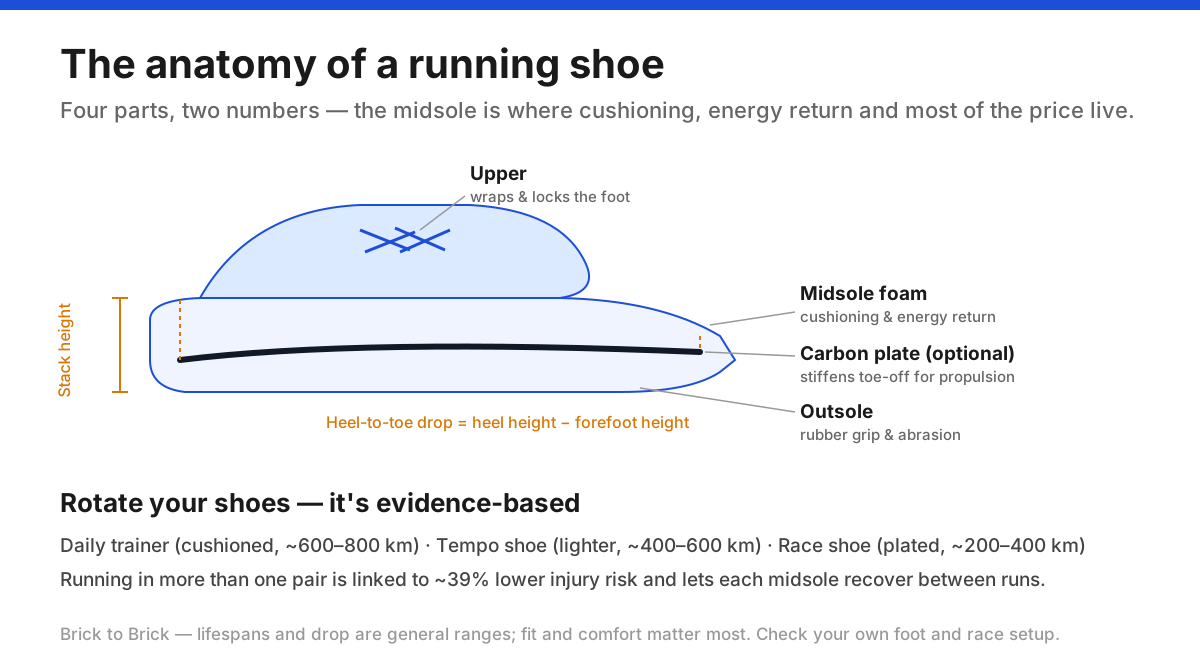
Choosing a running shoe gets far easier once you understand what you're actually looking at. This guide explains how a running shoe is built — the foam, the plate, the drop and the stack — and what each part does; what carbon 'super shoes' really change, with the evidence; why running off the bike makes triathlon different from open running; and how to build a small rotation of shoes that lasts longer and lowers injury risk. It's the foundation to read before you dive into fit or start comparing models, and it links you to both when you're ready.
Key takeaways
- 1A running shoe is a system — upper, midsole foam, optional plate and outsole — and the spec that tells you most about how it runs is the midsole, not the brand
- 2Carbon-plated 'super shoes' with supercritical foam improve running economy by around 4% in lab testing, but they cost more, wear faster and aren't needed for easy training
- 3Triathlon running happens on tired legs off the bike, so cushioning, comfort and quick sockless entry matter more than they do for a fresh open run
- 4Running in more than one pair of shoes is associated with a roughly 39% lower injury risk — a rotation is evidence-based, not just marketing
- 5Match the shoe to the job: a cushioned daily trainer for volume, a lighter tempo shoe for speed, and a race-day shoe you've rehearsed in — then replace each when the foam is done
In this article
- 1What a running shoe is actually made of
- 2Foam and plates: what 'super shoes' actually do
- 3Why triathlon running is different
- 4Building a shoe rotation (and why it isn't just marketing)
- 5How long shoes last, and when the foam is dead
- 6Getting the fit and the specs right
- 7How to choose yours — and where to look next
- ⚖The three roles in a triathlete's shoe rotation
- ?Frequently asked questions
What a running shoe is actually made of
Before comparing models, it helps to know what the parts are and which ones change how a shoe feels. Every modern running shoe is built from four elements plus two numbers on the spec sheet.
- Upper — the fabric that wraps your foot. Triathletes care about a quick, secure lockdown, breathability, and whether it's comfortable without socks for fast transitions.
- Midsole — the foam between your foot and the ground. This is the heart of the shoe and the single biggest driver of how it rides. It's where cushioning, energy return and most of the price live.
- Plate (optional) — a stiff insert, usually carbon fibre, embedded in the midsole of racing and 'super-trainer' shoes to add propulsion.
- Outsole — the rubber on the bottom that provides grip and takes the abrasion.
And the two numbers worth learning:
- Stack height — how much foam sits under your foot. More stack means more cushioning (and often more shoe); less means a lower, more connected feel.
- Heel-to-toe drop — the height difference between heel and forefoot, in millimetres. A higher drop (8–12 mm) shifts load toward the heel and calf/Achilles less; a low drop (0–6 mm) loads the calf and Achilles more. Neither is 'correct' — it's about what your body is used to, and big sudden changes are what cause trouble.
Once you can read those, a wall of shoes stops being a mystery and becomes a set of trade-offs.
Foam and plates: what 'super shoes' actually do
The biggest change in running shoes over the last decade is the midsole, so it's worth understanding what you're paying for.
Foam has gotten better. Older shoes used EVA foam — durable but relatively heavy and less springy. Newer performance shoes use supercritical foams (often PEBA- or TPU-based) that are lighter, softer and return more energy per stride. That's why a modern shoe can be both more cushioned and lighter than one from a few years ago.
The carbon plate adds propulsion. A curved, stiff plate embedded in that foam acts as a lever, stiffening the toe-off and smoothing your stride so less energy is wasted. In a landmark laboratory study, curved carbon-plated racing shoes reduced the energetic cost of running by about 4% on average compared with established racers — a meaningful edge over a long race.
But 'super shoes' aren't a free upgrade for everyone:
- They're expensive and the race foams wear out faster — often flat after a few hundred kilometres — so racing in them daily is costly.
- The propulsive feel suits faster paces; on easy runs they offer less and can even feel unstable.
- The plate and geometry load your feet and calves differently, so introduce them gradually to avoid new aches.
The honest takeaway: super shoes earn their place on race day and hard sessions, not on every easy run. For beginners weighing whether to buy one at all, our best triathlon running shoes for beginners guide puts it in a buying context.
Why triathlon running is different
A triathlon run follows the swim and bike, so race-day clothing and transition routines may differ from a standalone run. How tired or coordinated your legs feel after the bike varies; a shoe cannot guarantee that a transition sensation will be prevented. Choose footwear by fit and comfort for your own running, and test the planned socks or sockless setup in training before race day.
If your race setup includes wet feet, check whether the shoe remains comfortable when damp. Elastic laces or a heel loop may suit some athletes, but they are optional and do not guarantee a specific time saving. Follow event rules and practise familiar equipment safely. The run training guide explains how to build running sessions around the other disciplines.
Building a shoe rotation (and why it isn't just marketing)
One of the most useful things you can do for your running is own more than one pair of shoes and rotate them — and there's evidence behind it, not just a sales pitch.
A 22-week study of 264 recreational runners found that those who ran in more than one pair of shoes had roughly a 39% lower risk of running-related injury than single-shoe runners. The likely reason: different shoes load your legs slightly differently, so alternating spreads the repetitive stress across more tissues instead of hammering the same structures every run.
A practical triathlon rotation has three roles (you don't need all three to start):
- Daily trainer — cushioned and durable, for the bulk of your easy and long runs. This is the pair to buy first.
- Tempo / super-trainer — lighter and more responsive for faster sessions and brick runs; increasingly these have a plate too.
- Race-day shoe — your lightest, springiest shoe, saved for races and a few key workouts so it lasts.
Rotation has a second benefit: foam needs time to decompress and recover between runs, so alternating pairs also makes each one last longer. Start with one good daily trainer, then add a faster shoe as your training builds.
How long shoes last, and when the foam is dead
Shoes don't fail suddenly — they fade, and the cushioning is usually gone long before the outsole looks worn. Knowing when to retire a pair protects your legs.
Rough lifespans by type:
- Daily trainers: about 600–800 km before the midsole loses its bounce.
- Lightweight tempo shoes: roughly 400–600 km.
- Carbon race shoes: often just 200–400 km of quality foam, less if you train in them.
These are guides, not guarantees — heavier runners, rougher surfaces and hot storage all shorten foam life. The most reliable signals aren't the numbers but your body and the shoe: aches creeping into your shins, knees or feet that weren't there before; a midsole that looks compressed or creased; and a ride that feels flat and dead compared with a fresh pair. Track mileage per pair (most watches and apps do this automatically) so you're not guessing. Replacing a tired shoe is far cheaper than treating the injury a dead one can cause.
Getting the fit and the specs right
Technology means nothing if the shoe doesn't fit, and fit is where most people should spend their attention. The essentials:
- Size for running, not walking. Feet swell over a run, so leave about a thumb's width of room at the toe and shop later in the day.
- Comfort is the best predictor. Research consistently finds that the shoe that feels most comfortable underfoot tends to be the one that serves you best — trust that over marketing claims.
- Change drop and stack gradually. If you're used to a 10 mm drop, don't jump straight to a 4 mm shoe; your calves and Achilles need time to adapt.
- Get a gait check if you're unsure. A specialty running store can watch you run and steer you toward neutral or supportive shoes, though the line between the two is less clinical than it's often sold as.
Fit deserves more depth than a pillar page can give, so when you're ready to choose a specific shoe, our dedicated triathlon running shoe fit guide walks through fit, stability and transition usability in detail. And because the run is where triathletes pick up most of their injuries, pair your shoe choice with our running injury prevention guide.
How to choose yours — and where to look next
This guide is deliberately about understanding the shoe, not ranking models — because once you know how foam, plates, drop and rotation work, the choice is mostly about matching a shoe to a job and a foot.
A simple starting path:
- Buy one well-fitting, cushioned daily trainer for the majority of your running. Comfort first.
- Add elastic no-tie laces to whatever you'll race in — the cheapest, highest-value triathlon running upgrade there is.
- Add a faster shoe only when you're training hard enough to use it, and rehearse racing in it before race day.
- Consider a super shoe for racing once you're chasing times — not before.
When you're ready for specifics, use the guides built for those decisions: the fit guide for choosing the right shoe for your foot, and the beginner shoe roundup for current model picks. Buy for how you actually train and race — a comfortable, well-fitted trainer you rotate and replace on time will do more for your running than any single spec on the box.
The three roles in a triathlete's shoe rotation
| Role | Foam & plate | When you run in it | Rough lifespan |
|---|---|---|---|
| Daily trainer | Cushioned foam, no plate | Most easy and long runs — buy this first | 600–800 km |
| Tempo / super-trainer | Responsive foam, often a plate | Faster sessions and brick runs | 400–600 km |
| Race-day super shoe | Supercritical foam + carbon plate | Races and a few key workouts only | 200–400 km |
| Trail shoe (optional) | Grippy outsole, protective foam | Off-road running | 500–700 km |
Sources
Sources are listed so readers can verify consequential claims and dated details.
- A Comparison of the Energetic Cost of Running in Marathon Racing Shoes (Hoogkamer et al., 2018) — Sports Medicine (accessed September 17, 2026)
- Can parallel use of different running shoes decrease running-related injury risk? (Malisoux et al., 2015) — Scandinavian Journal of Medicine & Science in Sports (accessed September 17, 2026)
Frequently asked questions
What's the difference between a training shoe and a racing shoe?
A training shoe prioritises cushioning and durability for everyday mileage, so it lasts longer and protects tired legs. A racing shoe is lighter and springier — usually with supercritical foam and often a carbon plate — built for speed rather than longevity, so it wears out faster. Most triathletes train in a cushioned daily trainer and save a lighter shoe for races and key sessions.
Are carbon-plate super shoes worth it for triathlon?
For racing, they can be. Lab testing shows curved carbon-plated shoes improve running economy by around 4%, which adds up over a long run split. But they're expensive, the foam wears out quickly, and the benefit is smaller at easy paces — so they're best reserved for races and hard workouts, not daily training. Beginners should nail fit and consistency first.
Do I need triathlon-specific running shoes?
No. Regular running shoes work fine — the triathlon-specific part is mostly setup: add elastic no-tie laces for a fast T2, choose an upper that drains and dries if you race sockless off the swim, and make sure the shoe is comfortable without socks. A shoe that's easy to get on in a hurry matters more than any 'tri' label.
How many pairs of running shoes should I own?
At least start with one good daily trainer. But rotating two or more pairs is genuinely worthwhile: a 22-week study found runners using multiple pairs had about a 39% lower injury risk, likely because different shoes distribute impact differently. A common triathlon rotation is a daily trainer plus a lighter tempo/race shoe.
How often should I replace running shoes?
It depends on the shoe: roughly 600–800 km for a daily trainer, 400–600 km for a lightweight tempo shoe, and as little as 200–400 km for a carbon race shoe. Numbers aside, replace them when the ride feels flat, the midsole looks compressed, or you notice new aches — track mileage per pair so you're not guessing.
What is heel-to-toe drop, and does it matter?
Drop is the height difference between the heel and forefoot of the shoe, measured in millimetres. Higher drop (8–12 mm) tends to load the calf and Achilles less; lower drop (0–6 mm) loads them more. There's no universally 'correct' drop — what matters is not changing it drastically overnight, because a sudden switch is a common cause of calf and Achilles complaints.