Triathlon Off-Season Training: Recover, Reset and Rebuild
Plan a triathlon off-season around recovery, the next event, skills, strength and real-life constraints without fixed week counts or intensity percentages.
By Lotte
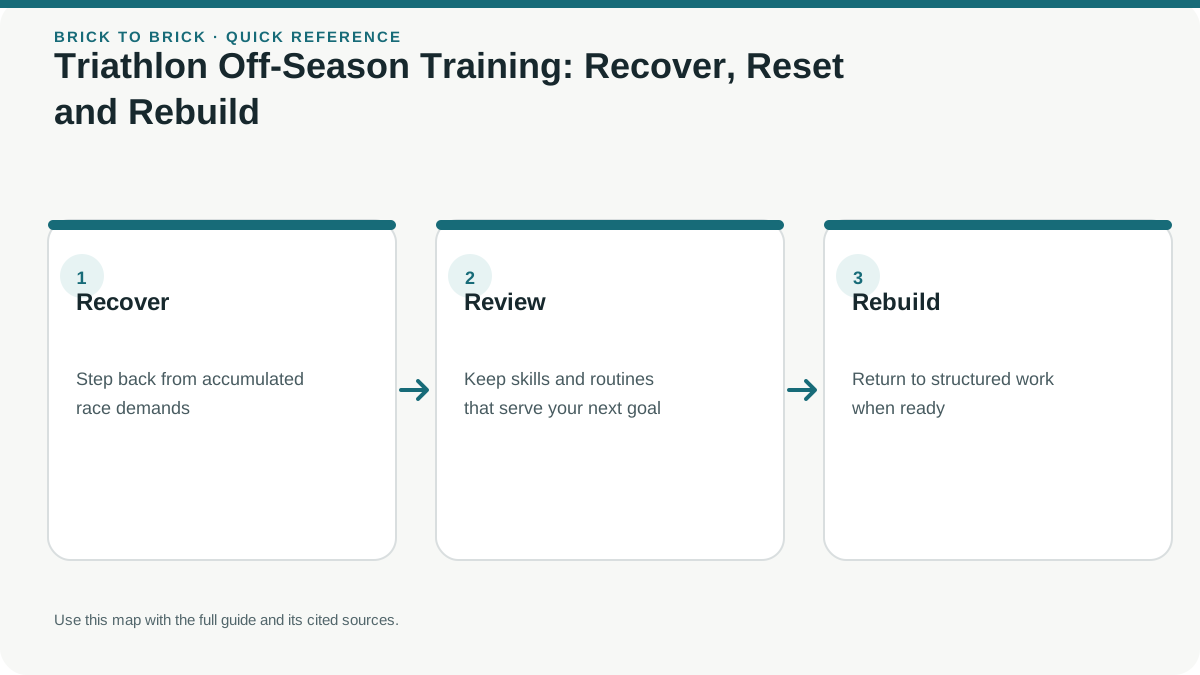
An off-season is a flexible period between race-specific blocks, not a fixed 22-week plan. Recover as needed, review the season, choose a small number of priorities, and rebuild training around current capacity and the next event. Rest duration, training hours, and intensity distribution vary by athlete.
Key takeaways
- 1An off-season can include full rest, light activity, or a gradual return; no single pattern suits every athlete.
- 2Choose priorities from the previous season and the next event's course and rules.
- 3Fixed week counts, training-hour targets, and Zone 2 percentages are not universal prescriptions.
- 4Reintroduce training complexity gradually after a break, illness, injury, or high-fatigue season.
- 5Strength, technique and recovery can be planned alongside swim, bike and run training without overhauling everything.
In this article
- 1Quick answer: what should I do in the triathlon off-season?
- 2What 'off-season' actually means for a triathlete
- 3Early off-season: recover and review
- 4Foundation work: rebuild routines and skills
- 5Bridge toward the next race-specific block
- 6What to fix in the off-season (the big four)
- 7Choose training load for your current capacity
- 8Common off-season mistakes
- 9An illustrative week structure, not a prescription
- 10Begin with a post-season review that leads to a decision
- 11Plan around the next event rather than a calendar template
- 12Return from a break with consistency before complexity
- 13Use the off-season to build skills that need attention
- 14Strength work can fit without taking over the season
- 15Protect recovery and mental space as well as fitness
- 16Outdoor and indoor options can keep the routine practical
- 17A weekly structure can be a menu instead of a calendar
- ⚖Flexible off-season decisions
- ?Frequently asked questions
Quick answer: what should I do in the triathlon off-season?
Use the off-season to recover from the previous race block, review what you learned, and prepare for the next goal without copying a fixed 22-week template. The off-season may be short or long, and some athletes do not have a clear break between races because of work, climate, or event calendars. Your training history, health, race date, and available time determine the right structure.
Start by reducing the demands that accumulated during the prior season. That may mean full rest, unstructured activity, or a lighter version of normal training, depending on fatigue and health. Then choose a small number of useful priorities: technique, strength, comfortable aerobic routine, equipment skills, or a weakness revealed by the last race. Reintroduce sessions gradually and leave room to adjust.
There is no universal rest duration, weekly training-hour target, or Zone 2 percentage that fits every triathlete. Research on detraining and reduced training describes different responses depending on duration and what training is maintained. Treat examples in this guide as planning ideas, not an individual prescription. If illness, injury, or concerning symptoms are involved, ask a qualified clinician or coach for appropriate guidance.
What 'off-season' actually means for a triathlete
The off-season is a period when the next priority race is not immediately driving every swim, ride, and run. It can create space to recover, rebuild skills, develop strength, enjoy other activities, and address practical constraints. It does not have to mean stopping all exercise, nor does it require maintaining race-specific intensity all year.
For one athlete, the off-season may follow the final race of the year. Another may move directly from a summer triathlon to a fall running event or from northern winter to a warm-weather race. A parent, shift worker, or athlete rehabbing an injury may have different periods of availability from someone with a predictable calendar. Define the season by the next meaningful goal and your current recovery, not by a universal month count.
Distinguish a post-race recovery period from an entire off-season. The immediate days after an event are a separate question from a longer training transition. See triathlon recovery after a race for the post-event context. If you have multiple races close together, a coach can help decide what to maintain and what to let go.
Early off-season: recover and review
After a demanding season, reduce structure before adding a new block. Some athletes benefit from several days of complete rest; others prefer easy walks, casual cycling, or relaxed swims. The choice depends on how you feel, what the prior event demanded, and whether an injury or illness needs care. There is no rule that every athlete must take exactly one to three weeks off.
Use this early period to notice unresolved pain, sleep debt, low motivation, and the practical reasons training became difficult. Do not try to “earn” rest by completing one more hard workout. If you are ill or injured, follow medical guidance and return to activity only when appropriate. If you feel well, relaxed movement can continue without a watch target or race pace.
There is also no need to make a complete break into a test of discipline. The purpose is to reduce the pressures of race-specific training and allow recovery. If maintaining a light routine helps your well-being, keep it easy and flexible. If rest is what you need, take it and plan a gradual return when ready.
Foundation work: rebuild routines and skills
A foundation period is an opportunity to restore regular movement and develop skills that the next race block will rely on. It does not have to last ten weeks, and it does not require that a fixed share of training be in one intensity zone. Choose sessions that match your current capacity and leave enough recovery to repeat them.
Possible priorities include comfortable swim technique, bike handling, easy running consistency, strength instruction, or mobility that addresses a specific limitation. Focus on one or two priorities at a time so that new demands do not accumulate unnoticed. If you have been away from a discipline, begin below your previous workload and build in response to how you feel.
Use the foundation period to practise pacing, fueling basics, equipment care, or pool skills without event-day urgency. Keep some sessions unstructured if that improves enjoyment. The aim is not to “bank” maximum volume before winter; it is to arrive at the next race-specific block with a sustainable routine and clear priorities.
Bridge toward the next race-specific block
As the next event approaches, gradually reconnect training with its demands. The timing and amount of race-specific work depend on the event, training history, and time available. A 22-week off-season is not a universal prerequisite, and an athlete with a nearer race may need to move into specific preparation sooner.
Review the current course and event guide, then identify which skills or sessions need to return: open-water practice, hills, longer rides, run durability, transitions, or fueling rehearsal. Reintroduce intensity only when it fits your current preparation and recovery. Do not jump from a relaxed off-season directly to race pace in all three sports.
If your next race is still far away, continue developing general capacity and enjoyment rather than forcing a pre-build phase early. If the event is close, consult a coach about what can be prepared realistically; cramming missed work can add risk without recreating a full training history.
What to fix in the off-season (the big four)
The off-season can help address a few problems that were visible during the racing season, but avoid treating every race observation as a defect. Choose priorities that are specific and controllable. For example, “learn to sight calmly in open water” is more actionable than “be a better swimmer.” “Practise braking and shifting on safe hills” is more useful than buying equipment because the bike leg felt hard.
Technique work may be useful in any discipline. Strength training can be considered when it matches your experience and health; use a qualified instructor if you are unfamiliar with resistance exercise. Recovery and fueling habits may need attention as well, but individualized nutrition questions belong with a registered sports dietitian or clinician.
Do not diagnose an injury from a race result or try to fix persistent pain with strength exercises from an article. Seek appropriate assessment. A coach can help distinguish a pacing or skills issue from a training-volume issue. Rank priorities by expected usefulness, access, and readiness, then work on one or two at a time instead of launching a complete overhaul.
Choose training load for your current capacity
A fixed number of weekly training hours is not a reliable off-season target for every athlete. A beginner rebuilding after a break, a high-volume age-group competitor, and an athlete managing a health condition have different needs. Time available, training history, work, family care, sleep, climate, and recovery all influence what is sustainable.
Use recent training as a reference, not a quota. If you have reduced training for several weeks, do not immediately resume the previous peak schedule. Start with sessions you can complete comfortably and repeat, then adjust one aspect at a time. If you maintained activity, a small shift in structure may be more appropriate than a full restart.
Monitor more than total hours: note how sessions feel, whether pain is present, and whether the routine fits life. A watch's load score does not determine whether your body has recovered. Ask a coach to help when you need a plan; consult a clinician for symptoms or health questions. The correct volume is individual and may change from week to week.
Common off-season mistakes
Common traps include keeping every race-season session because stopping feels like losing fitness, taking complete rest as a universal rule, increasing strength and running at the same time, and copying a professional athlete's off-season hours. Another is treating the off-season as an opportunity to catch up on every weakness before the next race.
Avoid fixed intensity percentages and dated phase calendars when they do not fit your next event or current condition. Do not use one test result to set every sport's training zones, and do not interpret short-term changes in pace or heart rate as permanent fitness loss. Research on reduced training shows that different adaptations change on different timelines; a brief reduction is not the same as complete detraining.
Set a small, realistic plan and review it after a few weeks. If routine is not working, adapt it rather than forcing more hours. If an injury, illness, persistent fatigue, or low mood is affecting training, seek appropriate support. Rest and flexibility are training decisions, not proof of weakness.
An illustrative week structure, not a prescription
Use this as a menu of session types, not a schedule to copy. One week might include a technique-focused swim, an easy ride, a short run or run-walk, one coached strength session, and a second relaxed swim or outdoor activity. Another athlete may choose fewer sessions, a different balance, or complete rest on several days.
Place demanding work only if it matches your current readiness and leave space for sleep and recovery. Keep new strength movements separate from the hardest run or ride until you know how you respond. If you are returning from injury, follow the clinician's progression rather than this example. If the weather makes outdoor cycling unsafe, choose an indoor alternative or rest.
At the end of the week, ask: which sessions felt restorative, which were harder than expected, and what needs to change next week? The best sample week is one that fits your life and can be repeated without accumulating pain or excessive fatigue. A coach can adapt the structure to a specific race and training history.
Begin with a post-season review that leads to a decision
Before choosing workouts, review the season while you still remember it. What did you enjoy? Which event demands surprised you? Did the calendar allow enough recovery? Were there skills you avoided, equipment problems, or sessions that repeatedly clashed with work and family life? Keep the review factual and avoid labeling yourself as disciplined or undisciplined based on one difficult block.
Separate outcomes from causes. A slower run could reflect pacing, heat, course, illness, or training; it does not prove one single weakness. A missed swim could reflect pool access rather than motivation. Write down questions rather than diagnoses, then choose one or two priorities that you can influence in the coming months.
Use the review to select an off-season goal that does not have to be a race: become more comfortable in open water, learn basic bike maintenance, attend strength instruction, or rebuild a routine that fits your schedule. If a concern involves persistent pain, illness, or a major change in mood, consult the right professional rather than turning the issue into a training challenge.
Plan around the next event rather than a calendar template
Work backward from the next event's current course and race date. Note whether it is a sprint, standard, middle, long-course, or nonstandard format; whether the swim is open water; what terrain the bike includes; and which conditions are likely. The current athlete guide and course map are more useful than an old plan built for another event.
Then estimate how much time is available for general preparation, event-specific practice, and tapering, leaving room for holidays, travel, work peaks, and recovery. These are planning blocks, not fixed-duration phases. If the race is far away, a general skill or strength focus may fit. If it is near, set realistic priorities rather than compressing months of training into a few weeks.
Event details can change and exact distances or rules vary by organizer. Recheck the athlete guide as race day approaches. If your race calendar includes several events, choose which one is the main priority and decide whether others are training experiences or goals in their own right. A coach can help reconcile competing demands.
Return from a break with consistency before complexity
A break may be full rest, light activity, travel, illness, injury, or a gradual reduction in structure. Those situations do not call for the same return plan. Use your recent activity and current health as the starting point, not the highest volume you reached last season.
Reintroduce routine with manageable sessions in the disciplines you can currently do comfortably. If running has been interrupted, consider shorter run-walk sessions or other low-impact options while you rebuild. If swimming has lapsed, prioritize safe technique practice and pool confidence. If cycling skills feel rusty, practise starts, stops, shifting, and braking in a safe area before riding in traffic.
Add only one meaningful training change at a time and observe the response across several sessions. If pain appears, movement changes, or fatigue persists, reduce load and seek appropriate guidance. There is no universal weekly percentage that guarantees a safe return. A coach can build progression; a clinician should address health restrictions or symptoms.
Use the off-season to build skills that need attention
Technical skills often benefit from low-pressure practice. In the pool, a coach can help refine breathing, body position, and lane confidence. On the bike, a quiet parking area or skills session can support braking, cornering, and shifting. For running, short strides or form cues may fit some athletes, but they are not mandatory and should not override comfort or injury advice.
Skills are distinct from fitness. A stronger aerobic base does not automatically make a swimmer comfortable in open water or a cyclist confident around traffic. Choose one situation to practise and keep it safe. Use the right venue, follow local rules, and practise with a buddy or coach when appropriate.
Avoid turning technique work into endless drill volume. A drill should have a cue and a way to check whether it transfers to normal movement. If it does not help, ask for feedback or choose a different approach. A short coached session may provide more useful information than buying several tools or repeating an online routine without knowing what to look for.
Strength work can fit without taking over the season
The off-season can provide room to learn resistance exercises, but it does not require a bodybuilding program or a fixed number of heavy sessions. Choose strength work that fits your experience, health, equipment, and next event. If you are new to lifting, a qualified instructor can teach safe technique and help you progress.
Start with a manageable amount so that muscle soreness does not disrupt swimming, cycling, or running. Add load gradually and leave recovery between unfamiliar sessions. When strength work becomes more demanding, consider how it fits alongside the rest of the week instead of adding it on top of every other workout.
If you have a current injury, chronic condition, pregnancy-related concern, or previous medical restriction, seek appropriate guidance before beginning a new program. Stop for sharp pain or symptoms that concern you. The triathlon strength training guide covers exercise selection and progression in more depth. This off-season page focuses on how strength fits into a training year, not a universal prescription.
Protect recovery and mental space as well as fitness
The end of a racing block can leave physical fatigue, emotional letdown, or relief. Athletes differ in whether they want structure immediately or time away from a training calendar. A short break, a light routine, or a gradual return can all be reasonable depending on health, symptoms, and preferences. Do not turn the off-season into another performance test.
Notice persistent low mood, loss of interest, sleep disruption, or anxiety that affects daily life. These signs have many possible causes and cannot be diagnosed by this guide. If they continue or feel severe, contact a qualified health professional. For urgent mental-health concerns, use local emergency or crisis support.
Recovery also includes ordinary life: sleep opportunity, adequate food, social connection, and manageable commitments. A plan that leaves no room for these needs may not be sustainable. The goal of the off-season is not only to preserve race fitness; it is to arrive ready and willing to train for the next season.
Outdoor and indoor options can keep the routine practical
Weather, daylight, pool closures, and road access change across the year. Adapt the session to the setting rather than forcing an unsafe workout. Indoor cycling can preserve a ride when roads are icy or visibility is poor, while outdoor rides can maintain handling practice when conditions are safe. A pool session may be replaced by technique or dryland work during a closure, but dryland exercise is not a full replacement for learning to swim.
Keep an alternate plan for common disruptions: a short mobility or strength session, an easy indoor ride, a walk, or rest. Do not turn every missed workout into a double session later. Use the flexibility to protect the routine and recovery, not to create a larger total load.
If you train in extreme cold, heat, poor air quality, or an unfamiliar environment, follow local safety advice and adjust or stop when conditions are unsuitable. Indoor cooling, bike stability, and ventilation matter too. Choose options you can do safely with the equipment and skills you have.
Flexible off-season decisions
| Period | Useful question | Possible focus | Avoid assuming |
|---|---|---|---|
| After the last race | What needs recovery or attention? | Rest, easy movement, season review, health follow-up | Every athlete needs the same number of rest days |
| General preparation | Which skills or routines would help next season? | Technique, comfortable aerobic work, strength instruction, enjoyment | A fixed share of minutes must be in one zone |
| Before a race-specific block | What does the next event require? | Course review, sport-specific practice, gradual structure | Every off-season lasts 22 weeks or follows the same phases |
Sources
Sources are listed so readers can verify consequential claims and dated details.
- Physical Activity Guidelines for Americans, second edition — U.S. Department of Health and Human Services (accessed August 19, 2026)
- Training intensity distribution network meta-analysis — PubMed (accessed August 19, 2026)
- Cardiorespiratory and Metabolic Consequences of Detraining in Endurance Athletes — Frontiers in Aging Neuroscience / PubMed (accessed September 24, 2026)
- Work, Training and Life Stress in ITU World Olympic-Distance Age-Group Championship Triathletes — International Journal of Sports Physiology and Performance / PubMed (accessed September 24, 2026)
- Effectiveness of Reverse vs. Traditional Linear Training Periodization in Triathlon — Journal of Strength and Conditioning Research / PubMed (accessed September 24, 2026)
- Training and Competition Readiness in Triathlon — Frontiers in Physiology / PubMed Central (accessed September 24, 2026)
Frequently asked questions
How long should a triathlon off-season be?
There is no universal duration. It depends on the next race, the prior season, training history, recovery, health, and available time.
Should I stop training completely in the off-season?
Not necessarily. Some athletes need complete rest while others prefer light activity or an unstructured routine. Choose based on how you feel and any medical or injury guidance.
Will I lose fitness if I reduce training?
Training adaptations can change when training is reduced or stopped, but the response depends on what activity is maintained and for how long. A short reduction is not the same as complete detraining.
Should I race during the off-season?
A low-pressure event can be enjoyable if it fits your recovery and goals, but it is optional. Check the event's demands and avoid using it to replace an appropriate recovery period.
How many strength sessions should I do?
There is no universal off-season number. Choose a strength plan that fits experience, health, other training, and the next event; seek qualified instruction if you are new to lifting.