A Minimum Triathlon Week for Busy Periods
Use a flexible five-window example week to maintain swim, bike and run practice during a short busy period, and know when to change your race plan.
By Lotte
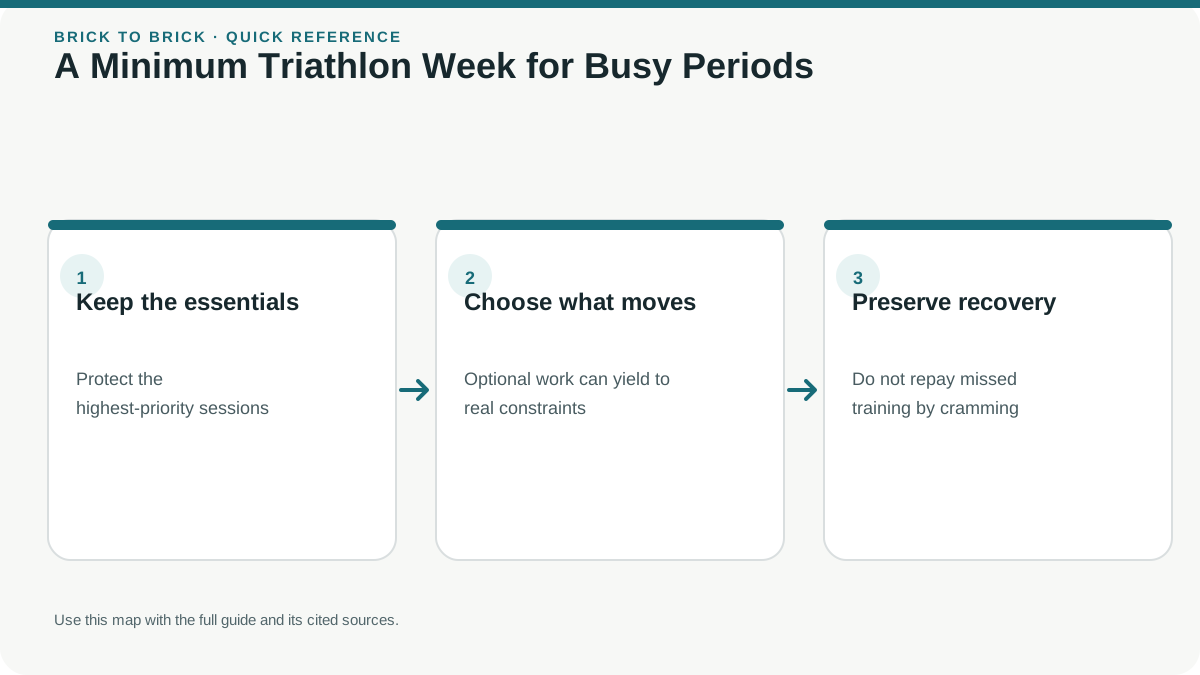
A short busy period can use a reduced week to preserve useful swim, bike and run practice, but no small template prepares every athlete for every distance. Start from recent training, protect recovery and safety, and reconsider the race if limited availability becomes the normal schedule.
Key takeaways
- 1A fallback week is for a temporary constraint, not an all-purpose race-ready plan.
- 2Choose sessions by current skill needs, race demands, safety and recoverability rather than maximizing intensity.
- 3The five-window example is illustrative and assumes a basic foundation; new or returning athletes may need another approach.
- 4Do not stack missed sessions into a weekend or use a fixed weekly percentage as a universal progression rule.
- 5If the reduced schedule keeps repeating, revise the plan, event date or distance.
In this article
- 1Quick answer: a useful busy-week template
- 2First decide whether a fallback is the right tool
- 3Why five workout windows are an example, not a universal minimum
- 4Choose the session that is hardest to replace
- 5How to make the five sessions simple
- 6Short sessions still need recovery and sensible intensity
- 7What to do when only three or four slots are available
- 8Keep swimming safe and purposeful
- 9Use bricks sparingly and for a clear reason
- 10Strength work without creating another complicated workout
- 11How to return after a reduced week
- 12When a temporary minimum becomes the usual week
- 13A quick decision checklist for the next seven days
- 14Sources and scope
- ⚖Keep or remove sessions by the problem they solve
- ?Frequently asked questions
Quick answer: a useful busy-week template
For a short, unexpectedly busy period, a practical starting template for an adult who already trains in all three sports is five weekly workout windows: two swims, two rides and two runs, with one short run attached to an easy ride as an optional brick. Keep the sessions mostly comfortable, protect at least one full rest day, and shorten a familiar session before turning it into a hard one. This is an example week to adapt, not a minimum proven to prepare every triathlete for every distance.
| Day | Example session | Main purpose |
|---|---|---|
| Monday | Rest | Recover and reset the week |
| Tuesday | Swim, about 30–45 minutes | Water comfort or technique |
| Wednesday | Easy run or run–walk, about 25–40 minutes | Keep familiar running practice |
| Thursday | Comfortable bike, about 40–60 minutes | Aerobic riding or a short planned workout |
| Friday | Rest; optional brief familiar strength work | Keep space for recovery |
| Saturday | Easy longer ride, about 60–90 minutes; optional 5–10 minute gentle transition jog only if already accustomed to it | Maintain bike time and rehearse an easy transition |
| Sunday | Swim, about 25–40 minutes | Repeat skill practice or relaxed endurance |
The durations are illustrative calendar blocks, not required targets or guarantees of readiness. Start from what you currently tolerate; a new or returning athlete may need shorter sessions, a lesson, or a different schedule. If open-water swimming is unfamiliar, safety and instruction take priority over trying to squeeze in a solo practice. For a lasting work-life constraint, use the separate triathlon training with full-time work guide to design a sustainable routine rather than repeating this temporary fallback.
First decide whether a fallback is the right tool
A compressed week solves a short-term scheduling problem. It does not replace a complete training plan. Work travel, a deadline, caregiving or an unusually crowded calendar may justify a reduced week. A long pattern of missing sessions points to a different decision: revise the plan, choose a different event date or consider a shorter distance.
Before changing the schedule, write down what you have actually been doing for the last several weeks. Note which disciplines are familiar, what sessions you can safely complete, what time is available including transport and setup, and whether you are preparing for a specific race. Do not build a reduced week around your most ambitious recent week if that workload was never consistent.
Then name the main purpose of the next seven days. It may be maintaining routine, preserving swim confidence, getting a key session done, protecting recovery, or simply staying active during a demanding period. A reduced week cannot preserve every race-specific quality at once. Choosing a purpose makes it easier to keep the sessions that matter and drop the rest without guilt.
If pain, illness, unusual fatigue or inadequate sleep caused the scheduling problem, a workout template may not be the answer. Rest, appropriate medical advice or a revised training load can be more useful than preserving every discipline at any cost.
Why five workout windows are an example, not a universal minimum
Triathlon combines three skills and endurance demands. A swim is not interchangeable with a run because both last 30 minutes; water confidence and technique require time in the water. A bike session cannot substitute for practicing comfortable running. How often to train each sport depends on background, race distance, health, equipment access and which skill needs attention.
The sample week therefore includes two swims, two rides and two runs while combining one short easy run with an existing ride. The combination reduces calendar changes for an athlete already accustomed to both activities. It is not a trick that turns two strenuous workouts into one easy session, and it is not required every week. If you are new to running after cycling, first establish that each sport is comfortable on its own before adding a transition run.
Some athletes need a coached swim more than a second ride. Others need a second short run or an additional recovery day. A person with strong cycling experience and limited swim ability should not copy a template that treats water skill as an optional detail. The best short week depends on the gap that presents the greatest practical or safety concern.
There is no universal number of sessions or weekly hours that prepares everyone for a triathlon. Public-health activity recommendations describe general health targets, not the event-specific training needed to race safely or comfortably. The CDC notes that adults can accumulate activity in smaller portions and that some movement is better than none, but that guidance is not a triathlon plan.
Choose the session that is hardest to replace
When time disappears, ask what is difficult to recreate later. A supervised swim lesson may be the most valuable session for a novice. A familiar outdoor ride may be useful before a course-specific event. For a runner with a history of ramping up too quickly, an extra run may be the least sensible session to force into the week.
A simple priority order can help, but it should be personalized:
- Safety and health needs: address pain, illness, fatigue or skill gaps before adding training.
- Event-specific constraints: retain practice relevant to the race, such as a safe swim setting or handling a course feature.
- The current plan's key session: preserve one important workout if it can be completed safely and without displacing recovery.
- Short familiar sessions: keep an easy session when it maintains routine without creating extra stress.
- Optional volume: remove this first if the week is overloaded.
Do not automatically preserve the longest workout because it looks most impressive in a training log. A long ride that requires a rushed start, unsafe route or missed sleep may cost more than it returns. Likewise, cutting every swim because the pool is inconvenient can allow water confidence to erode. Think about purpose, skill, logistics and recovery together.
How to make the five sessions simple
The template works best when each session has a clear job. For a swim, choose one focus such as relaxed breathing, a lesson, or steady continuous swimming at a comfortable effort. Do not add complicated speed sets simply because the session is short. USA Triathlon's beginner swim guidance emphasizes that learning proficiency takes time; if swimming is the limiting skill, regular access to instruction and a suitable pool may matter more than a watch metric.
For the easy run, use a pace at which conversation is possible, or alternate easy jogging and walking if that matches your current ability. The short brick after the ride, if included, can be a very gentle transition rehearsal. It does not need to be fast or long. If you have not been running consistently, omit the brick and ask a qualified coach or clinician how to build running safely.
For the bike, an easy indoor session can save travel time if the equipment is already available and correctly set up. Keep road riding for times when you can be alert, visible and in control. A trainer builds fitness but does not teach cornering, braking, traffic awareness or riding in a group. If those skills matter for your event, make room for safe practice rather than assuming indoor cycling covers everything.
For the longer ride, use a comfortable duration appropriate to your established routine. The calendar example says 60–90 minutes to show a possible block; it is not a distance-specific benchmark. If this would be a jump from your usual ride, shorten it or keep the familiar ride and consult your wider plan.
Short sessions still need recovery and sensible intensity
A time-limited week can tempt athletes to make every remaining minute intense. That is not automatically a more effective use of time. Hard sessions bring recovery demands, and a demanding work week can add stress before the workout begins. Preserve the intended easy effort on easy days and avoid stacking missed intensity into a single weekend.
Use simple effort cues if you do not have tested training zones. On an easy aerobic session, breathing should remain controlled enough for conversation. A planned hard interval workout should follow the structure and recovery specified by an appropriate plan or coach; do not improvise an all-out test because you have fewer sessions. Heart-rate zones and power can provide context, but consumer estimates and generic formulas are not precise prescriptions for every athlete.
When sessions are shortened, retain the most relevant part only if you know what it is and can do it safely. For example, an experienced athlete might keep the warm-up and one familiar interval set while dropping extra repetitions. A novice may be better served by a complete comfortable session. A short session should not become a test of how much discomfort you can tolerate. If you use recovery data, treat heart rate variability as one context clue rather than a pass-or-fail rule; see the triathlete guide to HRV.
If you feel ill, develop sharp or worsening pain, become unusually breathless, dizzy or faint, stop and seek appropriate advice. Do not use the desire to maintain a streak as a reason to train through concerning symptoms.
What to do when only three or four slots are available
A week with fewer than five appointment windows requires more prioritizing, not a more aggressive workout. Start by identifying which discipline or skill would be most costly to neglect for seven days. If you are still learning to swim, keep supervised water time. If you are returning after a break, use brief familiar sessions and build back gradually rather than trying to make one session represent an entire sport.
An athlete who already has a solid short-course base might combine an easy bike with a brief transition jog during one appointment. That can reduce setup time, but it does not create a safe shortcut for someone unaccustomed to either sport. Another athlete might use a short swim and run on the same day only if the facility and recovery allow it. Choose combinations based on access and experience; no pairing is universally best.
If you can keep only three sessions because of travel or caregiving, an example might be one swim, one easy ride and one comfortable run for an already experienced short-course athlete. This maintains some contact with each sport for a brief period, but it does not maintain every quality, replace a coach's plan or establish readiness for an event. If the disruption lasts, reconsider the event goal rather than treating three sessions as an invisible long-term commitment.
Do not compress sessions by removing warm-ups, travel safety, meals or sleep. A shorter safe workout is more useful than a longer rushed one.
Keep swimming safe and purposeful
Swimming is often the least flexible part of a busy schedule because it depends on pool hours, travel and changing. Reduce friction by choosing a convenient facility, packing the kit in advance, or arranging a lesson that addresses a known problem. If you can only make one pool visit this week, decide whether its main purpose is instruction, water comfort or endurance rather than trying to do everything at once.
A pool and open water have different demands. Open-water practice may include sighting, navigating without lane lines, dealing with other swimmers and managing temperature or currents. A pool session does not automatically prepare you for every open-water condition. Conversely, a beginner should not attempt open water alone just to save time or imitate a race. USA Triathlon advises beginners to swim with a partner or appropriate support, be visible and check conditions and water quality.
If you are not yet comfortable swimming the required distance, can only swim with frequent stops, or feel panic in deep water, get instruction and choose a race format that fits your current ability. A pool-based beginner event may be a more appropriate first step than trying to solve water confidence with a compressed training week. See how to learn to swim for triathlon and the open-water safety guide for more detail.
Use bricks sparingly and for a clear reason
A brick links two disciplines, often a bike followed by a run. It can familiarize you with the transition sensation and help rehearse race logistics. A brick does not have to be fast, and adding one does not mean every bike should end with a run.
For a busy athlete, a short easy transition segment can combine two disciplines in one calendar window. In the sample week, it is optional and follows a familiar ride. Keep it gentle and brief, and skip it if you are new to running, already sore or unusually tired. If the run changes your mechanics or becomes painful, stop rather than forcing the planned minutes.
A brick also has hidden costs: changing shoes, preparing equipment, route safety and the extra impact of running after cycling. If those costs make the session rushed or compromise recovery, complete the ride by itself. Use a structured brick workout guide when a planned transition session fits your training phase. Bricks are a specific training choice, not a shortcut that replaces separate bike and run practice.
Strength work without creating another complicated workout
General physical-activity guidance encourages adults to do muscle-strengthening activity on at least two days per week. That is a public-health recommendation, not a claim that every triathlete must complete two full gym sessions to prepare for a race. Strength training can be useful, but a new routine also has a learning and recovery cost.
During an unusually busy week, an athlete already familiar with strength work may attach a short, low-complexity routine to one or two easier days. Keep it within your experience and avoid introducing heavy or unfamiliar exercises immediately before a demanding race or hard session. Someone completely new to strength training can learn technique with qualified instruction and build gradually when time and recovery allow.
If you must choose between completing a strength session and addressing an important swim-safety skill, sleep deficit or unresolved pain, do not treat the strength checkbox as more important. A small routine done consistently over time is more practical than an ambitious session that makes the rest of the week harder to manage.
How to return after a reduced week
When the busy period ends, resume the next appropriate week in your plan rather than performing all the sessions you missed. Training does not create a debt that should be repaid with a crowded weekend. If you feel normal and the reduced week was short, the return may be straightforward; after a longer interruption or illness, the appropriate adjustment depends on the athlete and the reason for the break.
Use these checks before returning to hard work:
- Did the disruption involve illness, injury, poor sleep or marked fatigue?
- Have you maintained comfortable contact with each sport?
- Does the planned session match what you have recently tolerated?
- Can you fit the workout without removing recovery or making travel unsafe?
- Does the next race still leave enough preparation time?
If the answer reveals a larger gap, reduce the training demand, extend the plan or choose a different event date. Do not let sunk cost or a registration fee force an unsafe return. A coach can help modify a plan; a clinician is appropriate when symptoms or an injury concern remain.
When a temporary minimum becomes the usual week
A temporary plan is useful only if it reflects a temporary constraint. After several weeks, compare the calendar you intended with what actually happened. If the five-window example repeatedly exceeds your available time, reduce the training burden in a deliberate way and reassess the race distance. Do not keep naming an unsustainable schedule “temporary” while accumulating fatigue and frustration.
For each possible event, compare the required swim, bike and run demands, course, cutoffs, travel and training runway with the time you can realistically protect. A shorter event, later date or non-race goal can keep triathlon enjoyable and safe. Choosing a smaller goal is not a judgment about commitment; it is a match between current life constraints and preparation requirements.
Use the 12-week training plan or training-week overview only if their assumptions match your background and event. The first triathlon guide can help you choose an appropriate entry point. This page is specifically a temporary fallback for a busy week, not a substitute for those broader planning decisions.
A quick decision checklist for the next seven days
Before you put sessions on the calendar, answer these questions:
- Is this a short disruption or the schedule I can repeat for months?
- What race distance and course am I preparing for?
- Which skill or discipline needs attention most right now?
- What can I safely complete with my recent training history?
- How much time does each session consume including travel and preparation?
- Which one or two sessions can I remove without changing the plan's main purpose?
- Can I maintain sleep, recovery, meals and safe travel with this schedule?
- What will I do with missed workouts when normal availability returns?
- What date will I review the reduced plan and reconsider the event if needed?
If you cannot answer the last two questions, the fallback may be turning into an informal long-term plan. Decide on a review point now. That small action keeps a busy week from silently becoming a race-preparation promise it was never designed to make.
Sources and scope
The general adult activity context is based on the U.S. Centers for Disease Control and Prevention summary of current physical activity guidance. These recommendations support population health and should not be mistaken for a distance-specific triathlon preparation plan. Swim-learning and open-water safety details draw on USA Triathlon beginner resources. Injury context is informed by a systematic review of short-course triathlon injury and illness; the authors note limitations in the available injury research.
The weekly schedule and session windows on this page are editorial examples, not a clinical prescription, validated training plan, coaching service or guarantee of race readiness. They assume an athlete already has a basic foundation and can complete the listed activities comfortably. Training volume, intensity, progression and race choice should reflect the athlete's background, health, event and qualified professional guidance when needed.
Keep or remove sessions by the problem they solve
| Situation | Session to consider keeping | Important limit |
|---|---|---|
| New or uncertain swimmer | A supervised swim lesson or comfortable pool session | A short week cannot replace instruction or safe open-water preparation |
| Already active short-course athlete | One skill swim, one easy run, two rides and another swim if time allows | A template still has to match recent training and recovery |
| Unexpected travel week | Sessions using safe, familiar routes or available facilities | Do not force a rushed road ride or solo open-water swim |
| Several weeks with the same time limit | A sustainable schedule and event review | Do not keep treating a permanent constraint as a temporary fallback |
Sources
Sources are listed so readers can verify consequential claims and dated details.
- Adult Activity: An Overview — U.S. Centers for Disease Control and Prevention (accessed September 24, 2026)
- What Do I Do in the Pool? — USA Triathlon (accessed September 24, 2026)
- The What, Why, and How of Open Water Swimming Training for Triathletes — USA Triathlon (accessed September 24, 2026)
- Injury and illness in short-course triathletes: A systematic review — International Journal of Sports Medicine (accessed September 24, 2026)
Frequently asked questions
Can three workouts a week prepare anyone for an IRONMAN?
No. Session count alone does not describe training history, duration, skills, recovery, course or event demands. Three sessions may be a temporary way to maintain some routine, but they do not establish full-distance readiness.
What is the simplest weekly triathlon plan for a busy athlete?
For a short busy period, one adaptable example uses two swims, two rides and two runs, with a brief easy run attached to one familiar ride. The schedule must be adjusted to your current ability and race, and it is not a guaranteed race-ready plan.
Can I combine a bike and run into one workout?
An easy short transition run can reduce calendar changes for an athlete already accustomed to both sports. It does not replace all separate practice, and beginners should first build comfortable bike and run routines.
Should I make missed workouts up at the weekend?
Usually do not stack every missed session into one weekend. Resume the next appropriate workout when availability returns, adjusting for the length of the disruption, illness, injury and how you feel.
Can I train for an Ironman with only four hours a week?
There is no reliable universal minimum that establishes readiness for a full-distance event. If your available time remains far below what your suitable plan requires, reassess the event date or distance with a qualified coach.
What should I keep if I only have three sessions this week?
Keep the safest and most useful sessions for your current priority, such as supervised swim practice if water confidence is a gap. Any three-session example is temporary and does not maintain every skill or guarantee preparation.
Is indoor cycling enough for a triathlon?
An indoor trainer can save travel time and build cycling fitness, but it does not teach road handling, braking, traffic awareness or riding in a group. Include safe outdoor practice when those skills matter for your race.
How quickly should I increase training after a busy week?
There is no universal percentage that is safe for every athlete. Consider how long the disruption lasted, what training you maintained, your health and your recent workload. Seek individualized advice if illness, pain or unusual fatigue was involved.