Triathlon Training After 50: Build From Your Starting Point
Adapt triathlon training over 50 to your current starting point, discipline skills, health, recovery observations, schedule and chosen event.
By Lotte
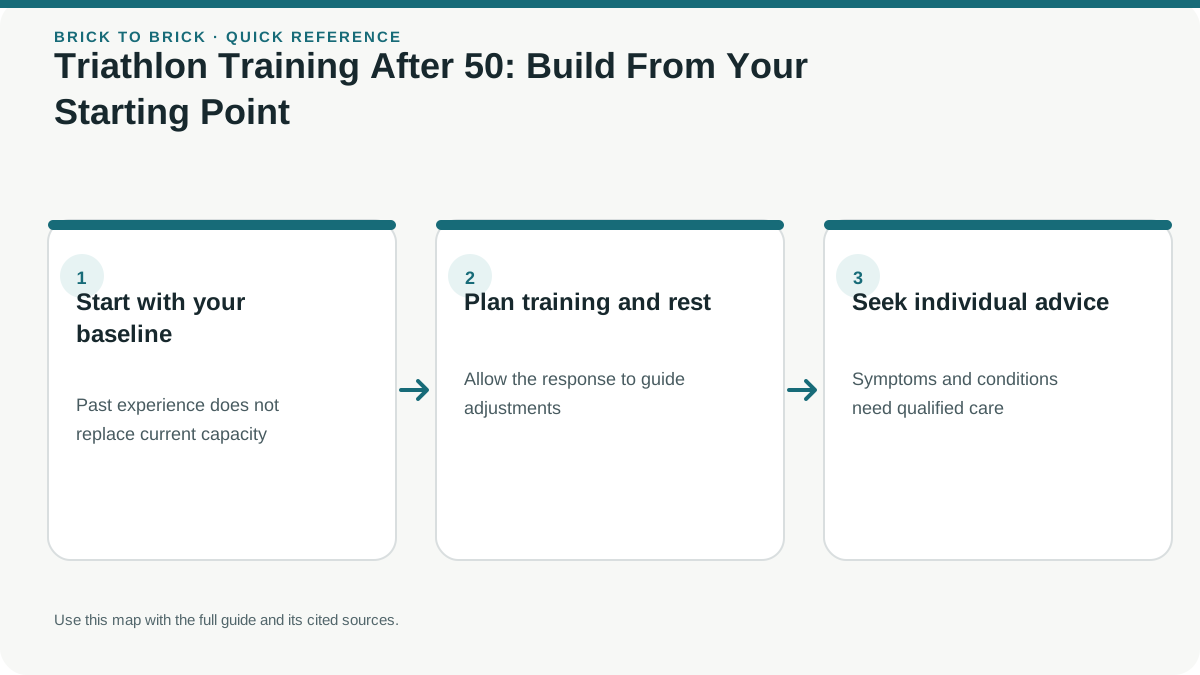
Triathlon training after 50 should be based on current capacity, sport-specific skill, health, training history and the event—not age alone. Research on masters athletes describes group patterns but does not set a personal weekly schedule, intensity rule or recovery interval. Choose a realistic event, build relevant skills and seek qualified clinical advice when symptoms or health conditions affect exercise.
Key takeaways
- 1Age 50 does not create one universal training plan or require every athlete to avoid hard sessions.
- 2Current ability in swimming, cycling and running should be assessed separately from general fitness and past performance.
- 3Public-health guidance and studies of lifelong masters athletes have specific populations and purposes; they are not individualized triathlon plans.
- 4Use recovery, comfort, skill and schedule observations to adjust training, and seek clinical advice for concerning symptoms or medical questions.
- 5Choose the event and preparation route that fit your health, access, goals and life.
In this article
- 1Audit experience and health separately
- 2Build consistency before adding demanding sessions
- 3Include strength and balance with an appropriate entry point
- 4Use recovery observations to set spacing
- 5Review gear and skills for confidence
- 6Measure progress against your own baseline
- 7Compare recovery with your own recent pattern
- 8Separate three common starting situations after 50
- 9Make the event and equipment support continued participation
- 10Fifty is not a physiological switch or a training category
- 11What the masters-athlete evidence actually covers
- 12Choose the goal before choosing a weekly plan
- 13Build the week around your real life and training history
- 14Intensity is a tool, not an age test
- 15Keep strength work proportional to the overall load
- 16Treat recovery as information, not a prescribed extra day
- 17Manage the three disciplines as different skill and load problems
- 18Adjust for health conditions and medication without self-diagnosing
- 19Consider body composition, menopause and other life-stage changes individually
- 20Keep nutrition and hydration advice specific to the athlete
- 21Use the equipment and course to reduce avoidable barriers
- 22Choose a coach or training group that respects your context
- 23Review a training block without chasing a younger version of yourself
- 24A practical checklist for your next decision
- ⚖Start by identifying your current training situation
- ?Frequently asked questions
Audit experience and health separately
Start with a current picture of each discipline, not a memory of what you could do years ago. Note recent swimming, cycling and running practice; how long you have trained consistently; any recent interruption; access to safe practice; and what the target event requires. A strong history in one sport does not establish swimming skill, road-bike control or tolerance for running impact.
Health context is a separate question from age and fitness. Record new or recurring symptoms, relevant diagnoses, medications, prior injuries and any advice already given by a clinician. If exercise is new or you have a medical condition, discuss the intended training and event demands with a qualified healthcare professional as appropriate. There is no universal medical-test requirement created by turning 50, and this guide cannot determine an individual's clearance.
Choose a target with a realistic route from your present skills and schedule. If a gap is large, create a learning step or select another event date instead of compressing preparation. The first-race selection guide helps compare event conditions and practical demands.
Build consistency before adding demanding sessions
Begin with activity you currently tolerate and can repeat while meeting ordinary responsibilities. Add or change one part of the routine at a time so that you can notice how it affects comfort, fatigue, sleep and the next session. This is a practical way to learn your response, not a rule that age requires a particular progression rate.
A plan labelled masters, senior or over-50 is not automatically suitable. The phrase may describe an event category rather than a training method. There is no mandatory amount of interval work that every athlete should add, and a new athlete does not need to imitate the workload of an experienced age-group racer.
A former athlete returning after a break should use present capacity rather than an old training log as a starting target. If running is new, instruction and an appropriate gradual entry may be more useful than a long run. If swimming is unfamiliar, lessons and supervised practice address different needs than adding metres. Use a weekly layout only after matching the sessions to your own history and event.
Include strength and balance with an appropriate entry point
Triathlon training centers on swim, bike and run skills, but strength work can be included for broader function and sport preparation. Public-health recommendations differ by age group and jurisdiction; for example, US guidance for adults 65 and older includes aerobic, muscle-strengthening and balance activity. That recommendation is not a ready-made strength plan for a 50-year-old triathlete, nor does it establish that every person over 50 needs the same exercise selection.
Choose movements and an entry point that match your experience, health, equipment and any limitations. Learn unfamiliar exercises from a qualified professional where appropriate. Strength sessions also use time and recovery capacity, so count them as part of the week's workload rather than treating them as consequence-free additions.
If you have osteoporosis, a history of fracture, joint replacement, persistent pain or another relevant condition, ask a clinician or qualified exercise professional which movements suit your situation. The running-strength guide and stability guide describe different purposes; choose deliberately rather than stacking similar exercises.
Use recovery observations to set spacing
Recovery is a personal pattern, not an age-based countdown. Record whether ordinary daily activity, sleep and the next planned session feel typical for you after a workout. Consider the session type and the rest of life that week: travel, work, caregiving, illness, heat and sleep interruption can all affect how you respond.
If fatigue or soreness persists, reduce or repeat a manageable workload rather than automatically adding more. If a symptom is severe, unusual or recurring, stop and seek appropriate health advice. Do not diagnose the cause from a training app or decide that pain is an inevitable part of being over 50.
Research specifically measuring recovery in masters athletes remains limited. A review noted that the evidence was insufficient to prescribe one age-specific recovery rule. That supports observation and individual adjustment, not a claim that age has no relevance. Keep easier days genuinely easier when your plan calls for recovery, and ask a coach to help if the weekly spacing is repeatedly difficult.
Review gear and skills for confidence
Check the skills and equipment the actual event requires. For cycling, that includes a roadworthy bicycle, reliable brakes, suitable gearing, safe handling and a comfortable position. Practise starts, stops, turns and bottle access in a safe setting before adding race-speed tasks. For swimming, distinguish pool competence from open-water preparation and use supervised conditions.
Comfort and access deserve attention at any age. A readable display, appropriate lighting, a manageable zipper or a change in bike contact points may make regular training easier. These changes should be checked for fit and safety; persistent bike discomfort may call for a qualified fitter or clinician rather than an assumption that pain is normal.
A wetsuit, tow float or visibility accessory can support a specific practice situation but does not replace open-water safety planning or event rules. Running shoes need to fit and feel appropriate; no shoe can guarantee injury prevention. Ask the organizer about accommodations, accessible facilities or category requirements instead of assuming that a need rules out participation.
Measure progress against your own baseline
Track repeatable indicators that matter to the goal: whether you can complete planned sessions, how controlled they feel, a developing technical skill, equipment comfort, consistency and recovery. Compare similar sessions under reasonably similar conditions. A change in weather, pool, route or device can change a recorded pace without reflecting a change in fitness.
Age-group results can be interesting context, but they are not a personal ceiling or prescription. A category benchmark does not show your medical history, course, training background or reason for participating. Set a goal you can act on, such as learning open-water navigation or building a manageable routine, as well as any time goal you choose.
Keep a record of what the event requires and what you can currently practise. If that gap is large, extend the timeline, choose a different course or get coaching support. Use the training-week guide to organize an appropriate plan, not to prove that a birthday predicts a particular performance.
Compare recovery with your own recent pattern
A short weekly note can help separate one unusual week from a pattern. Record the session, how it felt, whether normal activities were affected, sleep quality and any symptoms. You do not need a recovery score. If a demanding workout repeatedly disrupts the next few days, ask whether the session, total weekly load, spacing or outside commitments should change.
Keep other variables as steady as practical while making an adjustment, so you can see what changed. For example, you might revise one session or its placement rather than replacing the whole plan. This is not a medical experiment; stop and seek professional advice for concerning or persistent symptoms.
Access can improve consistency without adding intensity. Better light for an early run, a safe route, a comfortable bike position, a pool closer to home or a group at a suitable pace may help you practice more reliably. Relevant conditions and medications can affect choices, so discuss those specifics with a clinician familiar with your situation.
Separate three common starting situations after 50
An experienced athlete continuing to train can begin with current practice and what has changed. A long training history may provide useful self-knowledge, but it does not make new symptoms or a new course irrelevant. Review the event demands, recovery pattern, equipment and health context rather than assuming that an old personal best is today's training target.
A returning athlete has both experience and a gap in recent practice. Familiarity can make skills come back, but endurance, movement tolerance and confidence may not return at the same rate. Revisit swim safety, bike handling and repeated-session comfort from the present baseline. A coach can help identify what can resume and what needs more gradual practice.
A new triathlete may bring experience from another sport. That background can help with general conditioning, but it does not establish competence in all three disciplines. A runner still needs swim instruction and bike handling; a cyclist still needs an appropriate introduction to running. These differences apply at every age. The useful starting question is what you can safely do now and what needs to be learned next.
Make the event and equipment support continued participation
Consider the whole event experience: course surface and profile, water conditions, start time, travel, access, event duration and the recovery space you need afterward. The longest advertised distance is not automatically the most meaningful goal. A local event or familiar format may make it easier to enjoy the preparation and understand the course.
Inspect equipment for reliability and comfort in ordinary sessions before relying on it at a race. Check braking, fit, clothing, footwear and the ease of managing small tasks such as opening a bottle or removing a layer. If movement or comfort changes, reassess rather than accepting pain or instability as an unavoidable age effect. Use a qualified mechanic or fitter for safety-critical equipment issues.
Social support can make a plan more welcoming, but a club should offer ability-appropriate groups and a respectful way to adapt sessions. Ask about routes, pool arrangements and expected pace before joining. Evaluate progress with repeatable practice, confidence and recovery. Individual clinical guidance matters where symptoms or health conditions affect training decisions.
Fifty is not a physiological switch or a training category
The phrase “training over 50” is useful for finding relevant questions, but it does not identify one body, history or plan. Fifty-year-olds differ in years of sport, recent activity, health, access, work and family responsibilities, as do younger and older athletes. Turning 50 does not create a universal requirement to stop intensity, add a particular recovery day or train from a fixed weekly template.
Public-health recommendations commonly define older-adult age bands at 65 and above, not at 50. Those guidelines address health-oriented activity across populations and should not be presented as triathlon programming. The US Centers for Disease Control and Prevention overview explains its 65-plus recommendations. An athlete aged 50–64 may still find broad principles useful, but event preparation has its own demands.
Research on masters athletes can help describe group patterns; it cannot tell one person what to do. Cohorts may consist of highly trained athletes with decades of experience and may not represent a new participant or someone returning after illness. Use age as one piece of context alongside current capacity, training history, health and the specific event.
What the masters-athlete evidence actually covers
Masters-athlete research often studies people who have trained and competed for many years. A systematic review of muscle morphology and performance, for example, included cohorts with an average age above 59 and at least 20 years of training. Those participants are different from someone beginning triathlon at 52 or returning after a long break. It would be a mistake to apply elite or lifelong-athlete results as a ready-made plan for every adult over 50.
A review focused on performance and recovery kinetics reported that the evidence on age-related recovery differences was limited and called for more research. A later review of masters endurance athletes examined how training patterns relate to cardiorespiratory fitness across aging, but it does not produce an individualized safe weekly increase. These reviews describe research questions and population trends, not clinical guidance.
This distinction helps evaluate strong online claims. Ask whether a recommendation is based on trials with recreational triathletes of similar history, a small laboratory study, observations of elite masters or a public-health guideline. Note the population before deciding whether it applies. If a claim says all older athletes recover more slowly or must avoid a training method, look for evidence that supports that exact statement.
Choose the goal before choosing a weekly plan
Start with why you want to participate. You may want to finish a first super-sprint, return to racing with a friend, learn open-water swimming, improve a personal time, make a regular social activity or explore longer distances. Each goal suggests different event demands and preparation. The goal can also change as you learn more about the sport.
Next, select the event and date only after checking its exact course, water setting, cutoffs, bike requirements and access arrangements. A pool swim and an exposed sea swim do not require the same preparation. A hilly bike course changes the handling and terrain skills to practise. The event's athlete guide is more useful than a generic “over 50” calendar.
Then match training to the goal and present starting point. A qualified coach can help if you are uncertain how to combine sports, intensity and recovery. If you do not use a coach, choose a plan whose assumptions match your history and schedule, and know how to adjust if you miss training or develop a problem. The point is not to do the maximum work possible; it is to prepare for the event you chose.
Build the week around your real life and training history
A suitable week fits around sleep, employment, caregiving, access to facilities and recovery—not just the blank spaces on a calendar. First list fixed commitments and realistic travel or setup time. Then identify the sessions in your plan that depend on a coach, pool opening hours, safe daylight or a longer uninterrupted window. Add flexible practice only where it can be completed without routinely sacrificing rest.
Training history changes how a schedule should be interpreted. Someone already comfortable with frequent swim, bike and run sessions may have a different feasible calendar from a person learning two disciplines. A returned athlete may need time to re-establish routine even if the old volume once felt normal. The same weekly total can contain very different workloads and risks.
Keep a fallback for ordinary disruptions. If a session is missed, ask which parts of the plan can move and which should be dropped rather than cramming everything into the following days. If the calendar repeatedly fails, reconsider the event date, distance or plan. The busy-professional planning guide offers a calendar method that can be adapted to different life stages.
Intensity is a tool, not an age test
Intervals, hills, strides and faster swimming can have a place in some triathlon plans, but neither including nor avoiding them is an age test. Whether a session is suitable depends on your experience, health, training history, current base, event goal and ability to recover. A plan should state the purpose and allow for appropriate preparation rather than using “over 50” as its only adjustment.
If you have not done a type of hard session before, a coach can help you choose an entry point and the conditions to practise it safely. Use an appropriate warm-up and environment, and do not convert every ordinary workout into a test because a watch labels it productive. Easy training, technique and skill practice can be important parts of a balanced week.
If hard exercise triggers symptoms such as chest discomfort, faintness or unusual breathlessness, stop and seek medical advice rather than treating the sensation as a normal interval response. This page cannot assess medical suitability. The threshold and sweet-spot guide discusses how those workout concepts differ; it is not an instruction that every athlete needs them.
Keep strength work proportional to the overall load
Strength training can complement endurance work, but adding a new programme increases the total demand on the week. Consider what you already do, the movements you know, the event timeline and whether strength work leaves you able to complete the swim, bike and run sessions that matter. More exercises or heavier weights are not automatically more protective or more useful.
Focus on learning controlled movement and selecting an amount you can recover from. If you have not lifted before, professional instruction can help with equipment, movement and progression. A plan can include rest between strength sessions or place work in a way that does not create unnecessary conflict with key endurance sessions, but exact scheduling depends on the athlete.
Balance exercises may be relevant to general function, particularly under older-adult public-health guidance, but triathletes should not infer that they will prevent all falls or injuries. Ask a clinician or qualified exercise professional for advice after a fall, with persistent pain or when a condition changes which movements are suitable. Explore strength training for triathletes for the sport-specific role of strength and use this page for age-related decision context.
Treat recovery as information, not a prescribed extra day
A longer recovery interval may be appropriate after one session and unnecessary after another. The relevant question is how you respond to the actual training, not how many birthdays you have had. Note whether fatigue resolves in time for the next session, whether movement feels normal and whether your ordinary routines remain manageable. This helps you and a coach see a pattern instead of reacting to one data point.
Training stress is only part of recovery. Travel, poor sleep, illness, a demanding work week or an unfamiliar course can change how a session feels. If several factors coincide, reduce the plan or ask for advice rather than assuming the training plan is the only cause. A watch's recovery estimate is not a diagnosis and should not overrule concerning symptoms.
Persistent fatigue, recurring pain, unusual weakness or symptoms that affect daily life need attention. Seek a qualified clinician if you are concerned. Do not try to resolve a health problem by adding supplements, increasing training or accepting a fixed recovery rule from a general age guide.
Manage the three disciplines as different skill and load problems
Swimming, cycling and running do not respond identically to your history. Pool comfort does not guarantee open-water readiness. Cycling fitness does not prove that you can handle a fast descent or ride safely in a group. Running introduces a different movement and impact pattern, so a strong aerobic base from another activity is not by itself a run progression plan.
Make a separate inventory for each discipline: current practice, technique confidence, environmental access, equipment and the next skill to learn. For example, a returning cyclist might begin by checking bike fit and handling; a new swimmer may need lessons before extending distance; an experienced runner who has not cycled should practise basic control before joining traffic. This prevents a strong sport from masking an important gap.
Choose one or two priorities for the next block rather than attempting to fix every weakness at once. Keep sessions in conditions where you can focus on the skill. If a practice environment is unsafe or unavailable, choose a different race, facility or timeline. The first-triathlon training guide covers beginner sequencing, while this page asks how to adapt decisions to varied histories after 50.
Adjust for health conditions and medication without self-diagnosing
Many adults train while managing health conditions or taking medication. The appropriate plan depends on the condition, treatment, symptoms and intended exercise; a general age guide cannot account for these. Bring the actual event demands to a clinician when you need advice, including distance, temperature exposure, intensity, travel and the type of training you plan to do.
Ask about practical boundaries: symptoms that mean stop, whether medications affect heat tolerance, heart rate or balance, and how to handle a change in treatment. Do not change medication timing or dose to fit training without consulting the prescriber. A coach can adapt sessions but cannot replace clinical assessment.
New, worsening or unexplained symptoms deserve evaluation, especially if they occur with exercise. Stop the session if you feel unsafe and obtain appropriate medical help. An athlete does not have to disclose private health information to a club or every supporter, but should share relevant emergency information with people who need it and consent to receive it. Respecting privacy and planning safely can coexist.
Consider body composition, menopause and other life-stage changes individually
Some people notice changes in sleep, temperature comfort, joint symptoms, recovery, strength or day-to-day energy during midlife. These changes are not uniform, and age alone cannot identify their cause. Menopause, hormone treatment, medication, work stress, illness and other factors may affect an individual; the same training response should not be presumed for everyone of a given sex or age.
Avoid advice that treats weight loss as the main goal of training or recommends restricting food to compensate for a slower pace. Adequate nutrition and individualized medical care matter for health and performance. If symptoms are disrupting sleep, exercise or daily function, discuss them with a qualified clinician rather than self-adjusting medication, supplements or training based on an online checklist.
A coach can help separate a training adjustment from a medical question, but should not diagnose. Athletes may find that flexible scheduling, strength support, cooling options or an adjustment in workload makes activity more manageable; what helps varies. Keep the decision grounded in your symptoms, preferences and professional advice, not in a stereotype about midlife.
Keep nutrition and hydration advice specific to the athlete
The needs of a short morning swim, long ride and race day are different. Age does not produce one universal calorie target, supplement requirement or drinking schedule. Appetite, medical conditions, medication, temperature, session duration and personal tolerance all matter. Avoid strict weight-loss plans or fixed electrolyte doses copied from another athlete.
For ordinary training, plan food and fluid in a way that supports the session and your broader health. For longer or demanding events, practise the products and timing you intend to use. If you have diabetes, kidney or cardiovascular disease, gastrointestinal concerns, a history of disordered eating or medication that affects fluid balance, seek individual guidance from a clinician or qualified sports dietitian.
Do not force fluid beyond thirst or assume that a supplement replaces a sound meal plan. The fueling during training guide explains general practice considerations and uncertainty; it does not prescribe a personal intake. If your appetite, weight or energy changes unexpectedly, consult a qualified professional rather than increasing training to compensate.
Use the equipment and course to reduce avoidable barriers
A helpful equipment choice solves a specific access, comfort or safety problem. Examples include a bike fit adjustment, gearing suited to the route, clearer lights for early sessions, a wetsuit that fits if it is permitted, or a display you can read while exercising. No purchase guarantees injury prevention or a faster finish, and new equipment needs practice before an event.
Select races with course, start time and facilities that fit your needs. Check whether the transition area is accessible, whether the swim exit is manageable, what the course surface is like and how support arrangements work. Contact the organizer about accommodations early; availability can depend on the race, location and rules. If you use adaptive equipment, verify both fit and event compliance.
Maintenance is part of reliability. Keep brakes, tires, chain and fasteners in sound condition and ask a qualified mechanic about safety-critical concerns. Check that clothing and shoes remain comfortable during a representative session. If vision, hearing, mobility or balance changes, get appropriate professional advice and consider practical route changes rather than ignoring the change.
Choose a coach or training group that respects your context
A coach or club can help with technique, scheduling and deciding how to adjust training, but fit matters. Ask a prospective coach how they handle medical limitations, missed sessions, age-related assumptions, work stress, recovery, strength training and individual goals. A useful plan should change when the athlete's situation changes; it should not treat chronological age as a complete description.
At a club session, confirm pace, terrain, group size, traffic exposure and whether there is a beginner or steady option. Ask how the group handles drop-offs and mechanical issues. You should be able to opt out of a session or turn back without pressure. Social support is valuable only when the environment is safe and respectful.
If a coach makes medical claims, recommends changing medication or pressures you to train through symptoms, seek independent professional advice. A coach can guide sport preparation but cannot replace a clinician. Compare credentials and communication style, and start with a clear discussion of your event, experience and expectations.
Review a training block without chasing a younger version of yourself
At the end of a training block, look at what you could repeat, which skills improved, how the schedule worked and whether recovery remained manageable. Compare with your own recent baseline and the demands of the next event. A past personal best or another athlete's age-group result can be motivating, but it cannot tell you what your body should do now.
Ask what changed: training consistency, course conditions, equipment, health, time available or pacing. If performance differs, avoid assigning the cause to age without evidence. Choose one adjustment you can evaluate, such as changing a session's placement, practising a skill or seeking professional input. If the event goal no longer fits, changing it is a valid outcome of the review.
Keep a record that includes non-time progress: confidence in open water, reliable bike handling, attendance at a suitable group and a plan that fits ordinary life. Those measures support participation even if a race time stays stable or changes. The purpose of training is set by you; finishing faster is only one possible measure.
A practical checklist for your next decision
Before changing your plan or registering, answer five questions. First, what can I comfortably and safely practise in each discipline now? Second, what does this specific event require, including water, terrain, rules and cutoffs? Third, what time and facility access do I truly have for preparation and recovery? Fourth, are there symptoms, diagnoses, medication or previous injuries that call for professional input? Fifth, what would I do if the plan stopped fitting?
Write down the largest gap and the smallest useful next step. That could be a swim lesson, a bike safety check, an accessible event inquiry, a conversation with a clinician or a coach review. The next step should provide information or develop a relevant skill; it does not have to increase training volume.
Revisit the answers after a few weeks of ordinary life, not only when everything goes smoothly. If the plan is sustainable and useful, continue according to your agreed training approach. If not, modify the event, date, schedule or goal. Adaptation is a normal part of endurance sport at any age.
Start by identifying your current training situation
| Starting point | Useful first review | Planning implication |
|---|---|---|
| Continuing athlete | Recent sessions, event course, health changes and recovery pattern | Adjust the current plan to today's context rather than an old best |
| Returning after a break | Current tolerance, skill confidence, equipment and facility access | Rebuild the routine from present capacity |
| New to triathlon | Skills and safe practice access in each discipline | Get instruction where needed and choose a suitable event |
| Managing a health condition | Symptoms, treatment and planned course demands | Discuss individual exercise questions with a clinician |
Sources
Sources are listed so readers can verify consequential claims and dated details.
- Physical activity guidelines for older adults — NHS (accessed September 14, 2026)
- WHO guidelines on physical activity and sedentary behaviour — World Health Organization (accessed September 24, 2026)
- Older adult activity overview — US Centers for Disease Control and Prevention (accessed September 24, 2026)
- Age-related changes in performance and recovery kinetics in masters athletes: a narrative review — Journal of Aging and Physical Activity / PubMed (accessed September 24, 2026)
- Muscle morphology and performance in master athletes: systematic review and meta-analyses — Ageing Research Reviews / PubMed (accessed September 24, 2026)
- The impact of training on loss of cardiorespiratory fitness in aging masters endurance athletes — Sports Medicine / PubMed (accessed September 24, 2026)
Frequently asked questions
Is 50 too old to start triathlon?
Age alone does not determine whether you can participate. Consider your present health, experience in each discipline, event demands and access to safe preparation. Ask a clinician about individual medical concerns and a coach about sport-specific planning.
Should people over 50 avoid interval training?
There is no universal age rule. Intensity depends on training history, current capacity, health, goals and recovery. Seek individual medical advice if symptoms or a condition affect exercise.
Do athletes over 50 need more recovery days?
There is no fixed age-based recovery interval that applies to everyone. Observe your response to the actual sessions and adjust for training history, sleep, health and life stress.
What strength training should a triathlete over 50 do?
There is no single routine for everyone. Choose exercises and an entry point that fit experience, health and event preparation; seek qualified instruction or clinical advice for relevant conditions or limitations.
Are recommendations for adults 65 and older the same as triathlon training advice for people over 50?
No. Public-health guidelines address activity for defined populations and broad health outcomes. They can inform general context, but they are not a triathlon schedule or an individualized prescription for every athlete aged 50 or older.
Should I get medical clearance before training?
Turning 50 alone does not establish one universal testing requirement. If you have new symptoms, relevant medical conditions, medication questions or uncertainty about increasing exercise, discuss your specific plan with a qualified clinician.