Triathlon Training for Busy Parents: A Flexible Planning Guide
Build a realistic triathlon training calendar around work, caregiving, sleep and family logistics without relying on fixed weekly-hour promises or perfect weeks.
By Lotte
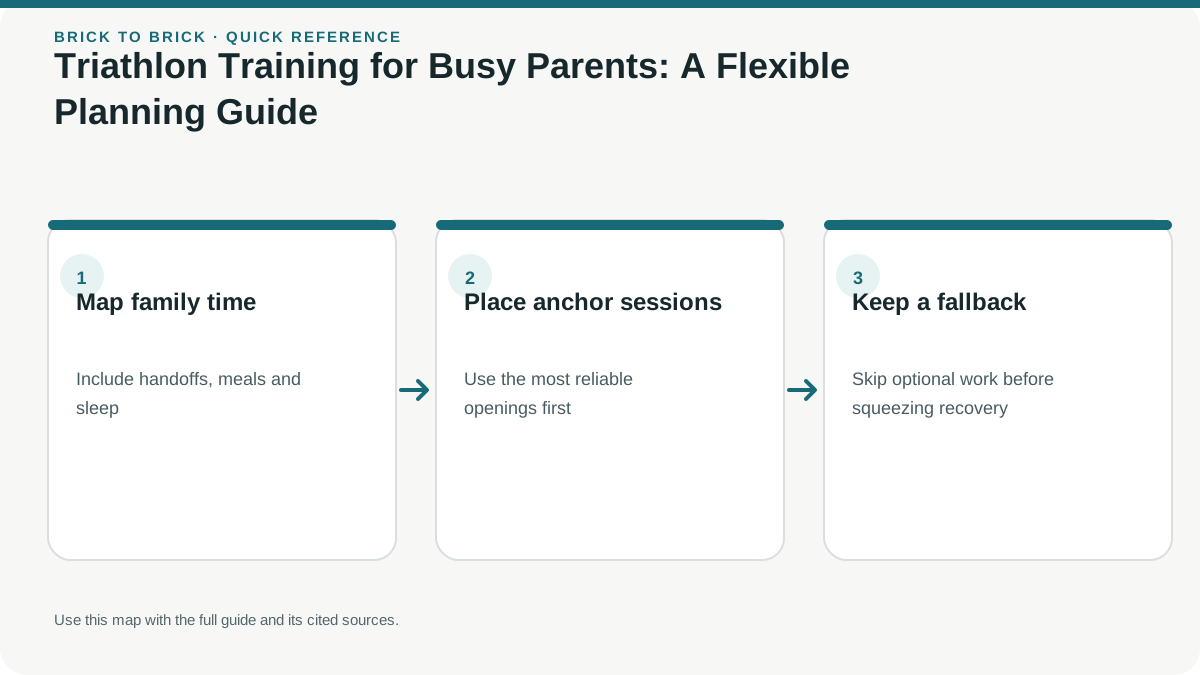
The right triathlon plan for a busy parent depends on current ability, race demands and the time that can be protected without compromising care or recovery. Map the full weekly logistics, use flexible training windows, arrange dedicated child supervision and adjust the race goal when the workload does not fit.
Key takeaways
- 1There is no universal weekly-hour minimum that guarantees readiness for a triathlon distance.
- 2Count travel, changing, childcare and recovery needs when estimating how much time training requires.
- 3Use reliable training windows, backup choices and a plan for disrupted weeks; do not automatically double missed workouts.
- 4Children need dedicated adult supervision around water and safe, age-appropriate arrangements on bike rides.
- 5Choose the race date and format only after checking the training calendar, family logistics and event requirements.
In this article
- 1The Parent's Triathlon Reality Check
- 2How Much Training Do You Actually Need?
- 3The Best Training Schedule for Parents
- 4Family Integration Strategies
- 5The Conversation with Your Partner
- 6Sample 7-Hour Olympic Training Week
- 7Common Mistakes Parent-Athletes Make
- 8Making Race Day Work with Kids
- 9Make a time budget before selecting the training plan
- 10Use anchor sessions and a fallback plan, not a perfect week
- 11Balance training with sleep, recovery and care responsibilities
- 12Plan with different family and work arrangements in mind
- 13Keep shared activities safe and genuinely optional
- 14Choose a race around the whole family calendar
- 15A sample scheduling worksheet, not a workout prescription
- 16Revisit the plan when family life changes
- ?Frequently asked questions
The Parent's Triathlon Reality Check
Training around parenting is a scheduling problem with real people and commitments, not a test of how disciplined you are. Work, caregiving, school hours, sleep, money, transport, health and available pool times all shape what can fit. Those constraints vary widely, so there is no single “parent schedule” that works for everyone.
Start by deciding what you want from the event and how much family time you are willing to reserve. Then check whether the race's distance, swim environment, course cutoffs and travel fit the time you can realistically repeat. A smaller goal or later date can be a better choice than squeezing an unsuitable plan into an already full week. The first triathlon guide covers how to choose a suitable format.
How Much Training Do You Actually Need?
There is no universal minimum number of weekly hours that guarantees a safe or successful finish at any triathlon distance. Preparation depends on your current swim, bike and run abilities, training history, health, event course, race date and how consistently you can train. A week that works for an experienced athlete may be inappropriate for a beginner or someone returning after time away.
Use an established plan or qualified coach to match training to your event and experience. The WHO adult physical-activity guidelines describe population-level health recommendations; they are not a triathlon training plan or a readiness standard. If the plan's workload cannot fit alongside sleep, caregiving and recovery, revisit the race or plan rather than assuming that missed sessions must be made up.
The Best Training Schedule for Parents
There is no best time of day for all parents. Some can train at lunch, others use a pool session after another adult is home, and some have shift work, shared custody or unpredictable care needs. Early mornings can work, but repeatedly cutting into needed sleep is not automatically a good trade.
Build a calendar around reliable windows, travel time, changing time and who is responsible for children. Mark one or two fallback options if a session is displaced, then leave some workouts optional instead of making every hour non-negotiable. The training-week overview can help you see how disciplines and recovery fit together; a coach should adapt the actual sessions.
Family Integration Strategies
Family participation can make activity social, but it is optional and should not replace childcare or supervision. Do not lap swim while you are the only adult responsible for children in the pool. The American Red Cross advises close, constant attention to children in and around water even when a lifeguard is present, and recommends a designated water watcher in group settings. Arrange another responsible adult to supervise if you need to swim.
If a child joins you on a bike ride, use a route, equipment and supervision appropriate to that child's age and ability, follow local rules, and do not assume a child can safely ride beside you on a training route. A family walk, playground visit or race-day cheering can be a shared activity without turning children into training partners.
The Conversation with Your Partner
If another adult shares caregiving, discuss the plan as a practical division of time rather than asking them to approve an already-fixed schedule. Talk about which windows are realistic, what household or care duties need coverage, how each adult gets personal time, and how you will handle illness or a changed work shift. A partner is not required for every family structure; single parents can plan with relatives, friends, a co-parent, community resources or their own available time.
Be specific and revisit the arrangement. A calendar invite does not guarantee that care is covered. If a session depends on another person being available, confirm the handoff before leaving. Keep the plan flexible enough that family responsibilities can take priority without creating a second workout later as punishment.
Sample 7-Hour Olympic Training Week
The inherited seven-hour schedule is an example, not a minimum prescription or a guarantee that an Olympic-distance race is suitable. It also assumes pool access, a lunch break, early-morning availability and a weekend window that many families do not have. Do not copy it without matching the workload to your background, health and race demands.
Instead, build a time map first. List the windows you can protect most weeks, include the full door-to-door cost of each session, then compare that capacity with a suitable coach-written plan or race preparation guide. If your plan has more sessions than available windows, ask a coach which priorities matter for your situation. Do not combine hard sessions or double up simply to preserve the calendar.
Common Mistakes Parent-Athletes Make
A common trap is treating every missed workout as debt. Moving or skipping a session is often a reasonable response to caregiving, illness, work or poor recovery; adding two sessions later can produce a workload the plan did not intend. Ask your coach how to adjust repeated disruptions, and choose a later race if the available preparation time no longer fits.
Another trap is comparing your week with an athlete whose job, care responsibilities or training history are different. A lower-volume week is not automatically a failure, and a high-volume week is not automatically sustainable. Track whether the plan is repeatable and whether it leaves room for family, work and rest.
Making Race Day Work with Kids
Race-day logistics need a dedicated child-care plan. Check parking, road closures, start and finish times, course access, toilets, food options, weather exposure and whether children can safely watch from the intended location. Ask the organizer about spectator rules and where crowds can stand; course maps and transition areas may restrict access.
If one adult is racing, name the adult who is responsible for the children throughout the event. Do not assume that kids can move between course points alone, enter transition, or wait unattended while a parent competes. Pack ordinary family essentials and a plan to leave if the weather, noise or schedule is difficult. Children may enjoy the day, but participation or cheering should remain their choice.
Make a time budget before selecting the training plan
Start with a two-week calendar that includes work, school and care handoffs, meals, household tasks, sleep opportunities, commute time and the family activities you do not want to give up. Then mark the training windows that are genuinely available. Include what a pool session costs beyond time in the water: travel, parking, changing and lane availability. An advertised 45-minute workout may need a much larger block.
Separate reliable windows from conditional ones. A reliable window might be a scheduled class while another adult is home; a conditional window might depend on a child napping or a meeting ending early. Build key sessions around the reliable windows, and treat the rest as optional. If the plan only fits by relying on every nap, every early alarm and every weekend morning, it is probably too brittle.
Now compare that capacity with a plan appropriate to your current abilities and race. If the plan needs more time than you can protect, you have choices: select a later event, choose another format, seek coaching to prioritize, or decide not to race this season. This is useful planning, not a judgment about commitment. The event should fit the life you have, not require your family to absorb an undisclosed workload.
Use anchor sessions and a fallback plan, not a perfect week
A flexible week can still have structure. Identify the sessions your plan treats as priorities and place them into the most reliable openings. Keep a second choice for a session that can move safely, such as swapping a pool day with a run day if the facility closes. Some sessions cannot be shifted without affecting recovery or another workout; ask your coach which ones are movable rather than assuming every workout is interchangeable.
Write down what happens when a session is displaced: skip it, move it once, or contact your coach if several key sessions disappear. Do not automatically double the next day or turn an easy session into a hard one. A flexible plan protects the larger pattern from a chaotic Tuesday; it does not promise that every missed workout can be recovered.
Review the arrangement periodically, especially when school terms, work shifts, travel or custody schedules change. For a week with unusually high family demands, use a pre-agreed reduced option or take the recovery your situation requires. Consistency means having a plan you can return to, not never changing it.
Balance training with sleep, recovery and care responsibilities
A calendar can show a free hour without showing whether you have the energy to use it. A newborn, night shifts, a sick child, a demanding job or a family emergency can change recovery needs. Do not treat a plan's workout count as more important than safety, sleep or a clinician's advice. If fatigue, pain or illness is affecting normal life, adjust training and seek appropriate medical guidance when needed.
Avoid the “train before everyone wakes” rule as a universal solution. An early session may work when you are rested and the home arrangement is clear; it may be a poor choice when it repeatedly shortens sleep. Likewise, late-night trainer rides may disrupt the routine for some people. Test the effect on your own day and make adjustments rather than assuming a certain time slot is inherently superior.
Recovery can also mean protecting a genuinely free block, sharing a household task or choosing a shorter goal race. Ask your coach how to handle a missed key workout and how much recovery the plan expects. If you are returning after pregnancy, illness, injury or another major health change, get individualized guidance rather than applying a generic parent-athlete schedule.
Plan with different family and work arrangements in mind
Not every parent has a co-parent or a predictable Monday-to-Friday schedule. A useful plan can be built around rotating shifts, shared custody, travel, single parenting, elder care, disability-related appointments or an uneven division of household work. Start with the handoffs and responsibilities that cannot move, then identify only the time that remains. Do not build a race plan on unpaid or invisible labor someone else has not agreed to take on.
For rotating work or custody, a repeating seven-day schedule may not fit. Use a repeating pattern that matches your real cycle, or ask a coach to help you place sessions around the next set of available windows. For travel, identify which sessions can be done with the equipment and space available, and which should be skipped rather than improvised in an unsafe location. A hotel treadmill or gym access is never guaranteed.
If transport, pool hours or care costs are the main barriers, contact the facility about public lanes, lessons, childcare policies and accessibility before paying for a membership. A local club may know about community pools or beginner-friendly sessions, but verify details directly. If no safe swim option exists, revisit the event format or date. The guide to training without a pool explains why dryland work cannot replace water practice.
Choose a race around the whole family calendar
The race itself is only one date in the plan. Check registration deadlines, travel, hotel costs, packet pickup, transition opening, start waves, finish-time cutoffs, school or care schedules and the likely return-home time. A local race may reduce travel but still require a very early start; a destination race may need several days away. Verify those details in the current organizer guide before choosing the event.
Consider how the training period overlaps with known family events and work seasons. If the longest sessions fall during an important caregiving period, ask whether the event date or distance can change. There is no obligation to register for a race before you have a plausible preparation calendar. Some athletes benefit from a goal date; others would prefer to build a routine first and choose an event later.
Include a financial and logistics check: entry, travel, equipment, pool access, childcare and lost work time may all matter. Do not let sunk costs force an unsafe start or an unsustainable training block. If the event is not workable this season, a later race or non-race goal is still a valid choice.
A sample scheduling worksheet, not a workout prescription
Use this worksheet to test logistics before copying anyone's training plan:
| Question | Your answer |
|---|---|
| Which event and date am I considering? | Confirm distance, swim setting, travel and cutoffs |
| What care and work windows are fixed? | Add handoffs and commute time |
| Which training windows are reliable? | List door-to-door time, not just workout length |
| Who is affected by each session? | Confirm coverage and reciprocal time where relevant |
| Which sessions can move? | Ask the coach or plan author |
| What happens during a disrupted week? | Decide what to skip or reschedule; do not double by default |
| What would make me change the race plan? | Record a date or constraint to reassess |
After filling it in, share the plan with the people who need to coordinate around it. Check whether the available windows include the event's actual swim preparation and whether there is enough recovery. If the answer is no, change the goal or timeline before the week becomes a cycle of guilt and catch-up workouts.
Revisit the plan when family life changes
A plan that worked during a quiet school term may stop working during holidays, illness, a new job, a care change or a child's activity season. Set a recurring calendar point to ask whether the arrangement still fits. Look at missed key sessions, how often family handoffs changed, whether you have recovered, and whether the goal still feels worthwhile. The review should lead to a practical adjustment, not a score for how well you followed the plan.
If the plan repeatedly collides with the same responsibility, treat that as information. A different pool time, shorter commute, club session, trainer setup, coach adjustment or later event may help. If the barrier is not solvable, you can pause or change the goal. Do not continue training through worsening pain or illness simply because the race is already paid for.
Children's needs change over time, and training can change with them. The goal is not to prove that a parent can fit every distance into every season; it is to choose an approach that respects both personal interests and care commitments. When the plan feels sustainable for the household as well as the athlete, it is more likely to remain workable beyond one unusually good week.
Sources
Sources are listed so readers can verify consequential claims and dated details.
- WHO 2020 guidelines on physical activity and sedentary behaviour — British Journal of Sports Medicine / World Health Organization (accessed September 24, 2026)
- How to Fit Triathlon into Your Busy Schedule — USA Triathlon (accessed September 24, 2026)
- Swimming Safety — American Red Cross (accessed September 24, 2026)
- Bicycle Safety — U.S. National Highway Traffic Safety Administration (accessed September 24, 2026)
Frequently asked questions
How many hours a week does a parent need to train for a triathlon?
There is no universal number that guarantees readiness. The time needed depends on current ability, race demands, health and the plan. A qualified coach can adapt training to the athlete; if the workload does not fit family life, consider a different date or format.
Is it best to train before the kids wake up?
Only if that time is realistic and does not repeatedly cut into needed sleep or leave care responsibilities uncovered. Parents have different schedules; choose a reliable window that works for the household.
Can I swim laps while my children play in the pool?
Do not do this if you are the only adult responsible for supervising them. The American Red Cross advises close, constant attention to children in and around water even when a lifeguard is present. Arrange another responsible adult to supervise.
Should I make up a workout I missed because of family responsibilities?
Do not automatically double the next day. Follow your plan's adjustment guidance or ask your coach, especially if several important sessions are disrupted. Skipping or moving one workout can be more appropriate than adding unplanned load.
Can I train for a long-distance triathlon while parenting?
Some parents do, but there is no one-size-fits-all time requirement. Check the actual event demands, available training time, care support, recovery and cost before committing. A shorter or later event may fit better in a particular season.